You Eat an Apple Every Day… But Did You Know It Might Support Thyroid Health?
Thyroid cancer is one of the most common endocrine cancers. After receiving a diagnosis, many people ask a natural next question: “What else can I do—besides medical treatment?” For advanced or recurrent cases, that uncertainty can feel even heavier.
What if, in the future, natural compounds found in everyday foods could help inspire new supportive strategies alongside standard care?
Keep reading to learn about a recent scientific finding—and how you can safely include these foods in your routine while research continues.
Thyroid Cancer: Why Researchers Keep Looking for Supportive Approaches
The thyroid is a small, butterfly-shaped gland at the base of the neck. It helps regulate key functions such as metabolism, energy levels, and heart rate. Many thyroid cancer cases respond well to established treatments like surgery and hormone therapy, but more aggressive forms can still be difficult to manage.
Because of this, scientists continue investigating how thyroid cancer cells grow and behave—while also exploring whether bioactive compounds in foods may influence certain cellular pathways.
What Science Found About Quercetin
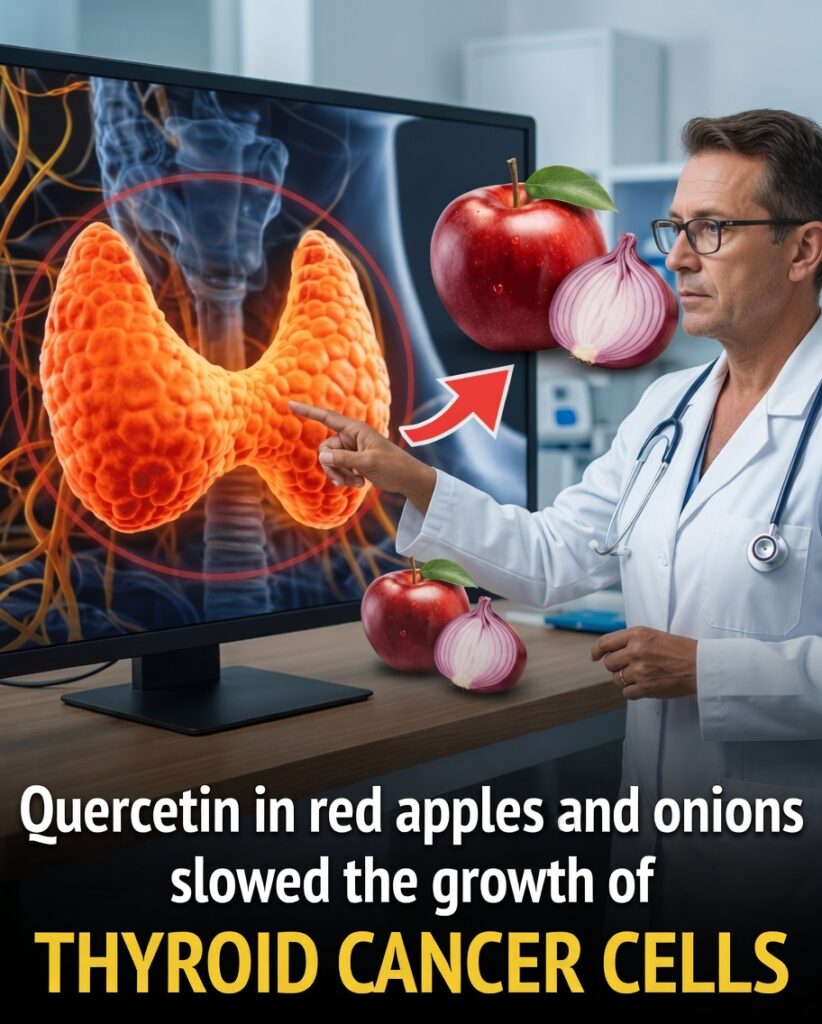
A 2026 laboratory study examined quercetin, a naturally occurring flavonoid known for its antioxidant properties and found in many fruits and vegetables.
Researchers looked at quercetin’s effect on a protein called DPP4, which is often linked to thyroid cancer growth. The main observations were:
- Quercetin appeared to reduce DPP4 activity
- In lab conditions, there was a decrease in thyroid cancer cell growth
- The effects seemed stronger with higher doses and longer exposure
- When DPP4 was reduced directly, cell proliferation also dropped
These results are early-stage and not tested in humans. They do not prove prevention or treatment—but they do point to promising directions for further research.
Foods Naturally High in Quercetin
One practical advantage is that quercetin is widely available in common foods, including:
- Apples (with the peel), especially red varieties
- Red onions, with higher levels in the outer layers
- Berries, such as blueberries, blackberries, and cranberries
- Other sources, including kale, broccoli, capers, green tea, and citrus fruits
Simple nutrition tips
- Keep the peel on when possible (washed well)
- Choose whole foods over packaged juices or highly processed options
- Rotate different sources to support broader nutrient intake
Easy Ways to Add These Foods to Your Day
You don’t need a complicated diet to benefit from nutrient-rich choices. Here are simple, realistic ideas:
- Add apple slices to oatmeal or yogurt at breakfast
- Use red onion in salads, bowls, or cooked dishes
- Snack on berries or blend them into a smoothie
- Eat broccoli or kale a few times per week
- Swap an afternoon drink for green tea
Small steps like these can help support overall health in a steady, sustainable way.
Safety Notes and Important Considerations
Getting quercetin through food is generally considered safe. However:
- Avoid quercetin supplements unless guided by a healthcare professional
- High-dose supplements may interact with medications
- Dietary choices do not replace medical treatment for thyroid cancer
If you’re making major dietary changes—especially during treatment—check in with a qualified clinician.
Small Actions You Can Start Today
Try one or more of these practical steps:
- Weekly challenge: include one quercetin-rich food per day
- Make a quick salad featuring apple + red onion
- Choose more colorful produce—deep colors often indicate higher levels of plant compounds
- Pay attention to how your body feels when you increase vegetables and whole foods
Conclusion
Science has not confirmed quercetin as a treatment for thyroid cancer, and the current findings remain preliminary. Still, early results are intriguing and may help guide future research. The most reliable approach today is to focus on a balanced, nutrient-dense diet built around whole foods.
Sometimes, meaningful support for your health really can start with what’s on your plate.
Which of these foods do you already eat regularly—and which one could you make room for this week?