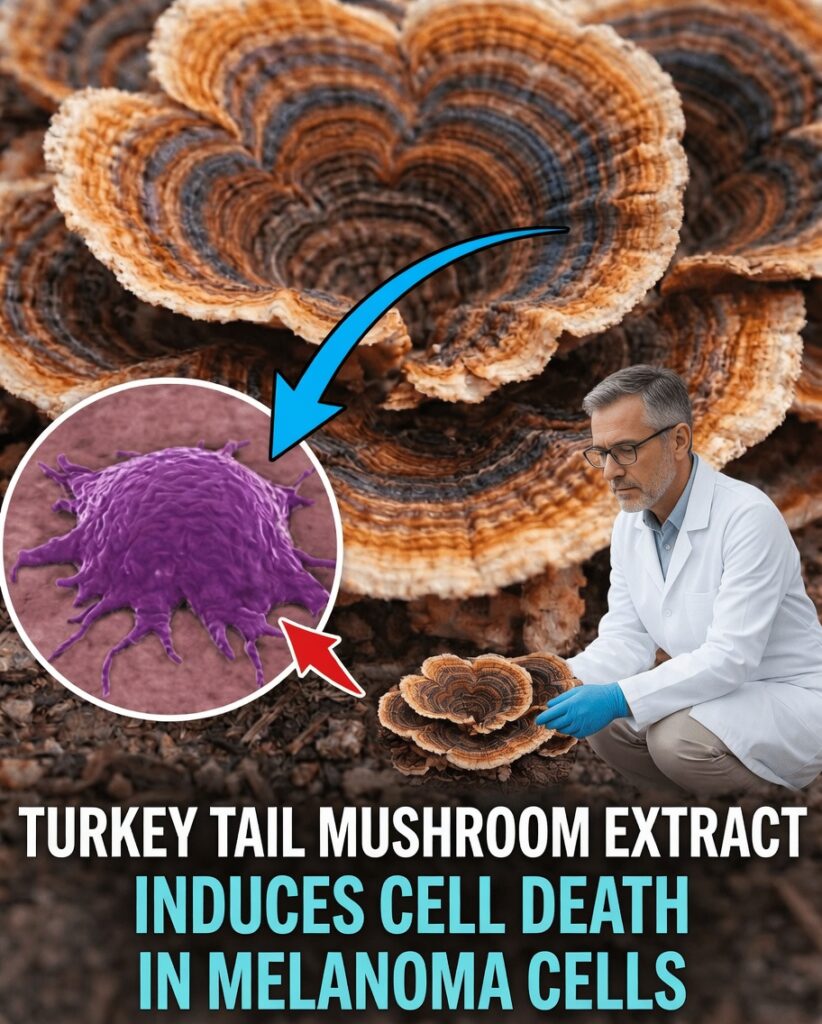
Can a Traditional Mushroom Help Support Immune Health Against Serious Disease? Here’s What Science Says
Melanoma remains one of the most dangerous forms of skin cancer. For many people, the fear is constant—new spots, changes in existing moles, and uncertainty about what comes next can be deeply stressful. Even when medical care is followed correctly, a common question appears: is there any natural option that might contribute to understanding cellular health and supporting overall wellness?
That is exactly why researchers continue to explore natural compounds with potential biological activity. One standout is the turkey tail mushroom—famous for its colorful bands and long history in East Asian traditional practices. Below, you’ll learn what a 2023 laboratory study observed and, at the end, you’ll find practical tips for adding turkey tail to a wellness routine in a responsible way.
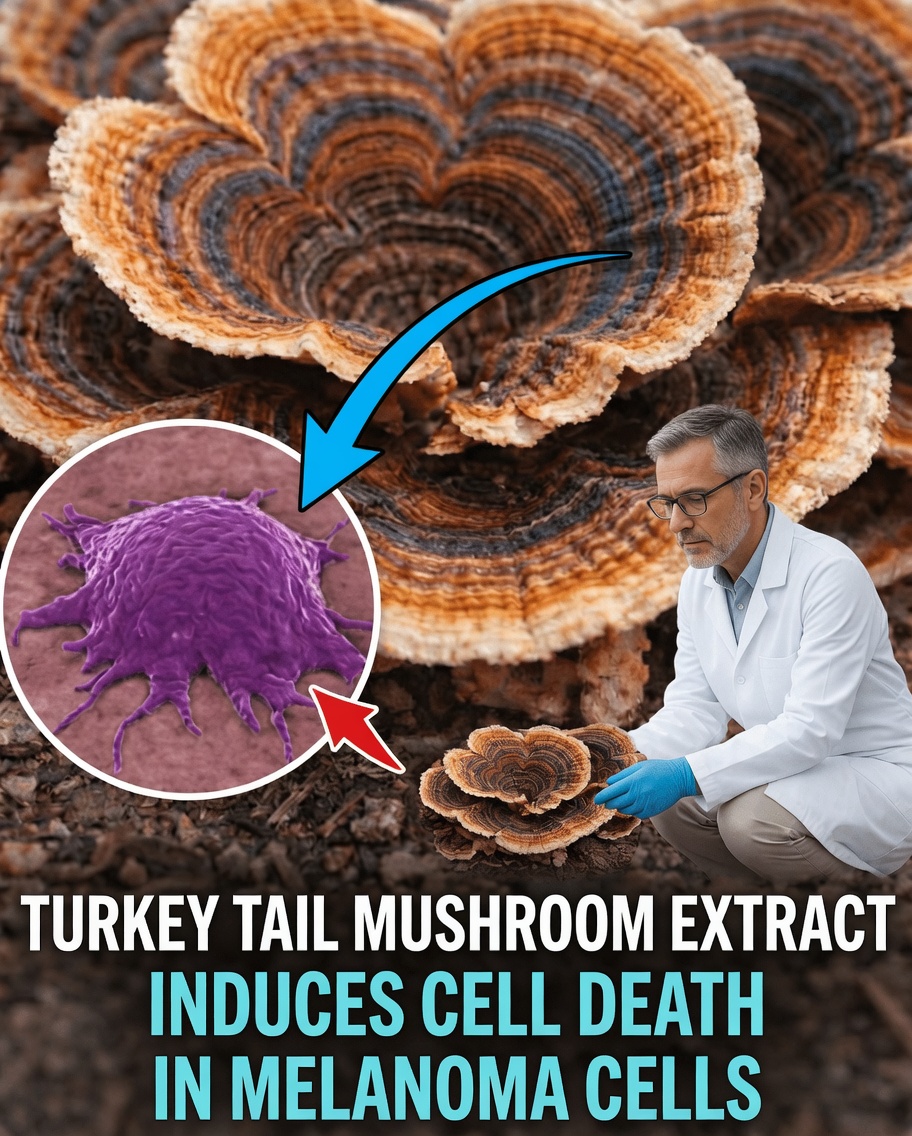
What Is Turkey Tail Mushroom (Trametes versicolor), and Why Is It Trending?
Turkey tail (Trametes versicolor) is a fan-shaped mushroom that grows on decaying wood. Its layered, multicolored rings resemble a turkey’s tail—hence the name.
For centuries, it has been used in traditional Chinese and Japanese health practices, commonly prepared as tea or powder, often with the goal of supporting vitality and immune function.
Modern interest has increased because turkey tail contains a range of bioactive components, including:
- Polysaccharides
- Beta-glucans
- Other naturally occurring compounds being studied for potential immune and cellular interactions
What Did the 2023 Lab Study Find?
A study published in 2023 evaluated turkey tail extracts derived from two different sources:
- The fruiting body (the visible mushroom)
- The mycelium (the root-like fungal network)
Researchers tested these extracts on human melanoma cells in the lab. Key observations included:
- Both extracts affected the viability of melanoma cells under laboratory conditions
- The mycelium extract showed a stronger effect
- The amount needed to reduce cellular activity differed significantly depending on the extract type
The team also examined how these extracts influenced processes inside the cells.
How Did the Mycelium Extract Affect Melanoma Cells?
In laboratory testing, the mycelium extract was associated with several cellular changes, including:
- Apoptosis, often described as programmed cell death
- Activation of autophagy, a process sometimes referred to as “cellular cleanup”
- Shifts in markers linked to immune-related pathways
- Reduced cell migration capacity
These findings suggest multiple possible mechanisms of interaction—however, it’s crucial to remember that all of these results were observed only in lab-grown cells, not in humans.
Mycelium vs. Fruiting Body: What’s the Difference?
In this study’s experiments, the differences were clear:
- Mycelium appeared more potent in laboratory measurements
- It showed broader effects across cellular processes
- The fruiting body extract produced milder changes comparatively
This helps explain why mycelium-based extracts have attracted growing research attention.
Why Do These Findings Matter?
Studies like this help scientists better understand how natural bioactive compounds might interact with human cells. That knowledge can guide future research and may inform later clinical investigations.
That said, two points must be emphasized:
- Lab results do not guarantee the same outcomes in humans
- These findings do not replace proven medical treatments
Significant additional research—including clinical trials—would be needed before any real-world medical use could be determined.
How to Add Turkey Tail Mushroom to a Wellness Routine Safely
If you’re interested in turkey tail for general wellness support, consider the following practical guidelines.
1. Choose High-Quality Products
Look for reputable brands that provide:
- Purity testing (e.g., contaminants)
- Transparent labeling
- Information about beta-glucan content
2. Common Ways People Use Turkey Tail
Typical formats include:
- Tea: simmer about 1–2 teaspoons for 20–30 minutes
- Capsules: often 1–3 g per day, but follow the product label
- Tinctures: sometimes made using combined extraction methods to capture a wider range of compounds
3. Start Low and Observe
Begin with a smaller amount and pay attention to how your body responds over the first couple of weeks.
4. Pair It With Evidence-Based Health Habits
Supplements are not a substitute for fundamentals. Prioritize:
- Balanced nutrition
- Consistent sun protection
- Adequate sleep
- Stress management
5. Keep Your Doctor Informed
Always tell your healthcare provider about any supplement you use—especially if you have a history of cancer or are currently under medical care.
Important Precautions
Turkey tail is often well tolerated, but some people may notice mild digestive discomfort when starting.
Avoid turkey tail if:
- You have a mushroom allergy
Use extra caution and consult a clinician first if you:
- Are taking immune-modulating therapies
- Have medical conditions where immune activity must be carefully managed
Conclusion
The 2023 laboratory study provided interesting evidence that turkey tail mycelium extract can influence melanoma cells in a controlled lab setting, including changes related to cell survival, cellular processes, and migration.
Even so, this does not mean turkey tail prevents or treats melanoma in humans. The most reliable approach remains:
- Appropriate medical follow-up
- Information from credible sources
- A consistent, health-protective lifestyle
Stay informed, protect your skin, and always prioritize professional medical guidance.
Frequently Asked Questions
1. What’s the difference between mycelium and fruiting body?
Mycelium is the underground (or substrate-based) fungal network, while the fruiting body is the visible mushroom. In some lab studies, mycelium extracts show stronger activity, depending on how they’re produced and tested.
2. Can I take turkey tail alongside conventional treatment?
This should be discussed with your doctor, because interactions are possible—especially in therapies involving immune function.
3. How long has turkey tail been used traditionally?
It has been used for centuries in traditional East Asian practices, often as a vitality and wellness tonic.
Disclaimer: This article is for informational purposes only and is not a substitute for medical advice. Always consult a qualified healthcare professional before starting any supplement.