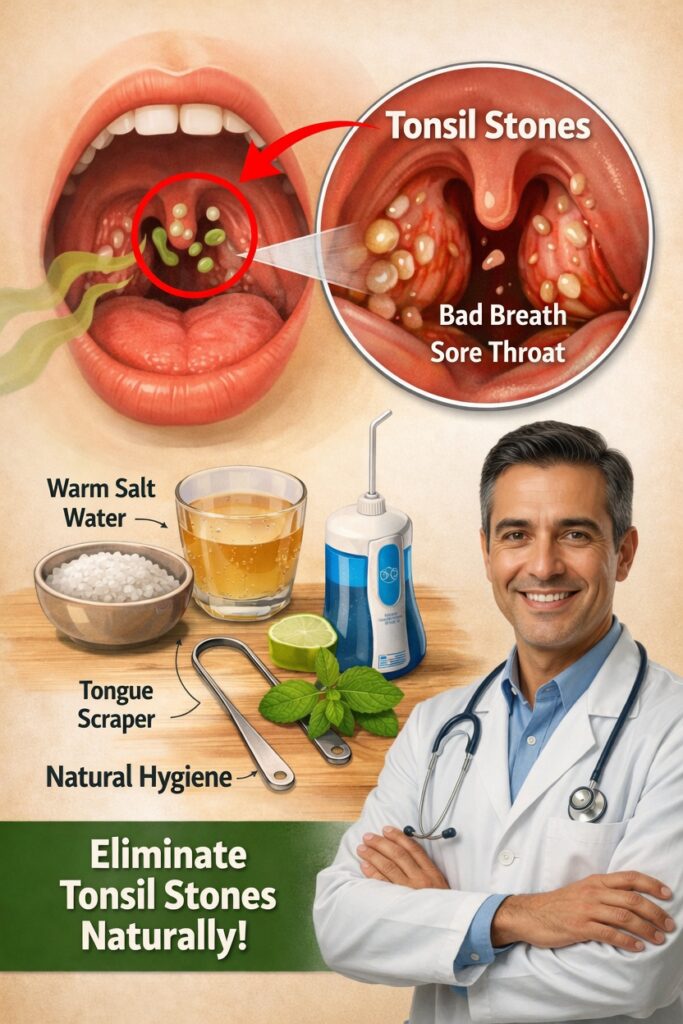
These Tiny White Stones Could Be Ruining Your Breath — Here’s How to Remove Them Gently at Home
Have you ever coughed and noticed small white or yellowish lumps at the back of your throat with a truly foul smell—like rotten eggs (or worse)? If that has ever made you feel embarrassed, uncomfortable, or even disgusted, you’re far from alone. These little formations are called tonsil stones (also known as tonsilloliths). They develop when food debris, dead cells, mucus, and bacteria get trapped in the tonsils’ natural crevices. The result can be strong, lingering bad breath that brushing and mouthwash don’t fully fix.
The good news: once you understand why tonsil stones form, it becomes much easier to manage them. Even better, a few everyday habits can significantly reduce how often they show up, and there are gentle ways to remove visible stones at home without complicated tools.
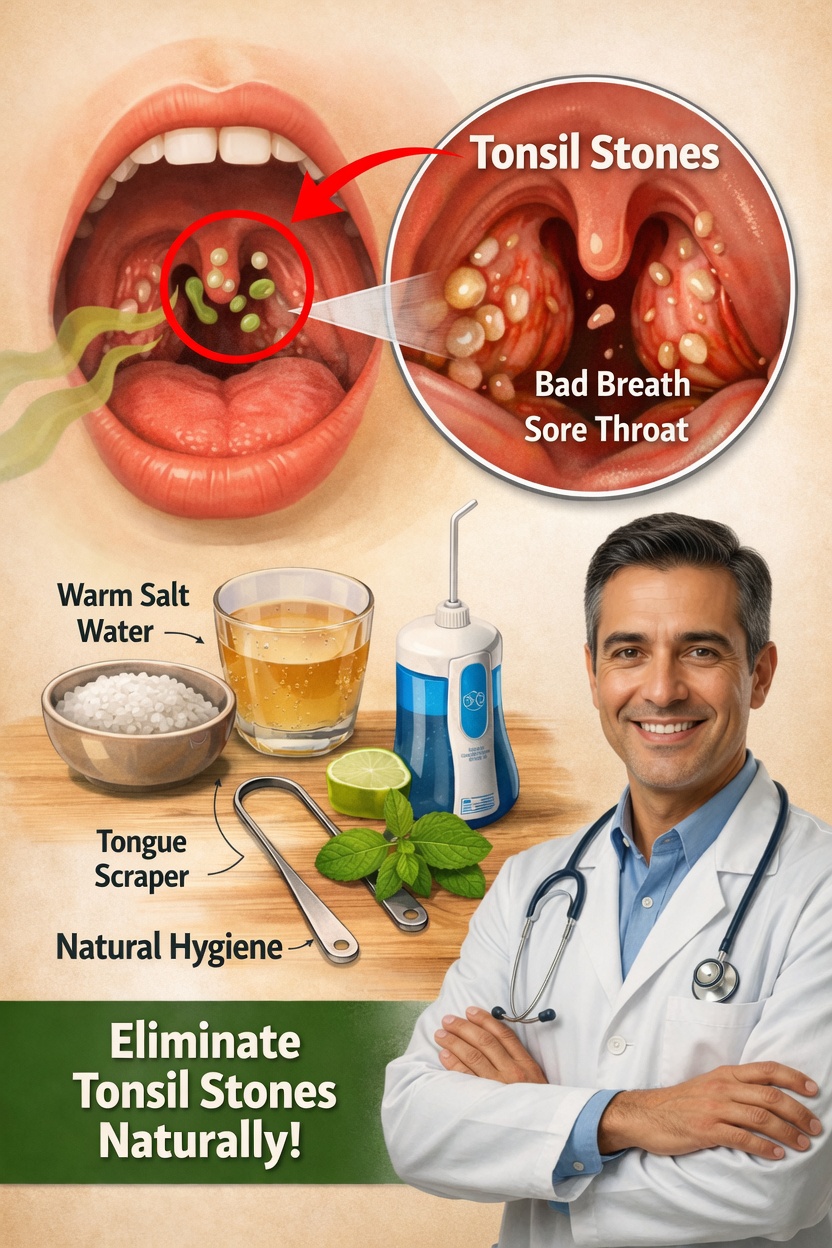
What Are Those “White Stones” in the Tonsils?
Tonsil stones are small, firm, sometimes crumbly lumps that form inside the tonsils. Tonsils contain tiny pockets called crypts, which are part of your body’s defense system—helping trap germs and particles before they move deeper into the body.
Sometimes, however, those crypts also trap:
- Food particles
- Mucus
- Dead skin cells
- Bacteria
Over time, minerals in saliva (especially calcium) can harden this trapped material, creating stones that may look white, yellow, or gray. In most cases, tonsil stones are common and harmless, especially in people whose tonsils have deeper or more irregular crypts.
Why Do Tonsil Stones Smell So Bad?
The odor isn’t just from “stuck debris.” It largely comes from anaerobic bacteria—microbes that thrive in low-oxygen areas like tonsil crypts. These bacteria break down proteins in the trapped material and release volatile sulfur compounds, which are the same chemicals behind the smell of rotten eggs.
Even a very small tonsil stone can cause persistent halitosis, sometimes described as:
- Metallic
- Sour
- Rotten or putrid
Common Signs of Tonsil Stones
Not everyone feels symptoms, but typical signs include:
- Ongoing bad breath
- An unpleasant taste in the mouth
- A “something stuck” sensation in the throat
- Mild soreness or irritation
- White spots or tiny lumps visible on the tonsils
- Occasionally, mild ear discomfort (referred pain)
Who Is More Likely to Get Tonsil Stones?
You may be more prone to tonsilloliths if you have:
- Large tonsils or many deep crypts
- A history of frequent tonsil inflammation
- Teen or young adult age (commonly affected groups)
- Poor oral hygiene or high bacterial buildup
Natural Ways to Help Prevent and Control Tonsil Stones
You can’t always prevent tonsil stones completely, but these habits often reduce their frequency and severity:
-
Upgrade your oral hygiene routine
Brush twice daily, floss consistently, and clean your tongue to reduce bacterial load—one of the biggest contributors to bad breath. -
Gargle with warm salt water
Dissolve ½ teaspoon of salt in a glass of warm water and gargle for 20–30 seconds. This may help loosen trapped debris and soothe irritation. -
Stay well hydrated
Drinking enough water supports healthy saliva flow, which helps naturally cleanse the mouth and throat. -
Gentle removal (only if clearly visible)
If a stone is easy to see, some people carefully remove it using a cotton swab or a low-pressure water flosser. Go slowly, avoid digging, and stop if there’s pain or bleeding. -
Consider dietary adjustments
Some people notice fewer tonsil stones when reducing dairy and added sugar, which may increase mucus or bacterial growth for certain individuals.
When to Seek Professional Help
Consult a qualified healthcare professional if you experience:
- Frequent or recurring tonsil stones
- Significant pain or swelling
- Repeated throat infections
- Bleeding, fever, or worsening symptoms
- Bad breath that persists despite good hygiene
A clinician can assess whether there’s an underlying issue and recommend appropriate options.
Conclusion: Take Control of Your Breath Again
Tonsil stones are more common than many people realize, and they’re usually not a serious health threat. With consistent habits—thorough oral care, good hydration, and regular salt-water gargles—you can often reduce their appearance and the unpleasant breath they cause.
Pay attention to your body and stay consistent with care—it truly makes a difference.
Disclaimer: This content is for informational purposes only and does not replace medical advice. If symptoms persist or worsen, seek guidance from a qualified healthcare professional.