Breast Cancer Can Occur Without a Lump: Know the Subtle Warning Signs
Many women assume that if they can’t feel a lump in their breast, everything is fine. However, medical experts highlight an important reality: about 1 in 6 breast cancer cases may develop without a noticeable lump. These quieter changes often appear gradually and, because they’re less discussed, they can be dismissed as temporary or harmless.
That’s why understanding the full range of possible breast cancer symptoms matters—not to create fear, but to support early detection, peace of mind, and proactive health habits. In this guide, you’ll learn the lesser-known signs to watch for, simple ways to monitor changes, and what to do if something doesn’t feel right.
The more you understand your body, the easier it becomes to recognize what it may be trying to tell you.
Why a Lump Isn’t the Whole Story
For a long time, a breast lump was treated as the main red flag for breast cancer. While it’s still an important sign, it isn’t the only one. Some breast changes may signal something that needs medical evaluation even when they’re painless or seem minor.
Awareness has improved early detection overall, but fewer than half of people recognize warning signs beyond a lump. As a result, key changes may be overlooked—especially by younger women or during the time between routine screenings.
It’s also worth remembering: most breast changes are not cancer. Still, knowing what to look for helps you stay calm, informed, and ready to act if needed.
Lesser-Known Symptoms That Deserve Attention
1) Changes in Breast Skin
Skin can show early clues, including:
- Dimpling or puckering, sometimes resembling an orange peel texture
- Thickening or swelling in one specific area
- Redness, flaking, or scaling, especially near the nipple
- Warmth or a bruise-like appearance that doesn’t have a clear cause
These changes may develop slowly—or appear more suddenly in some cases.
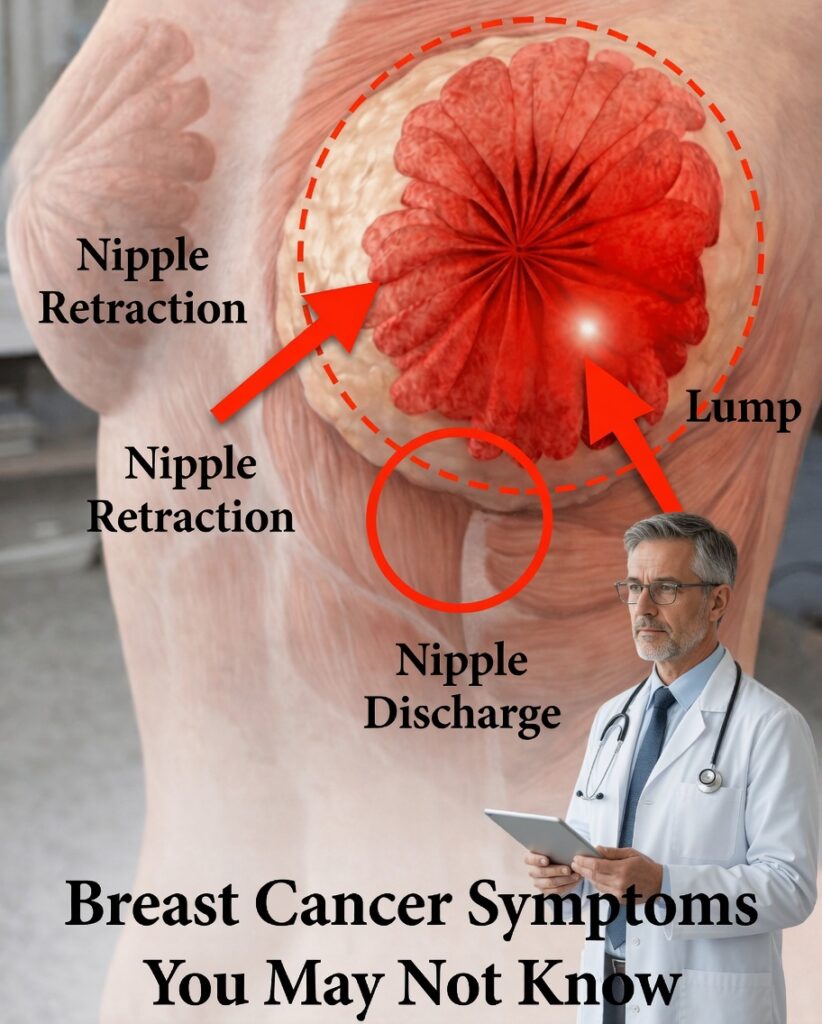
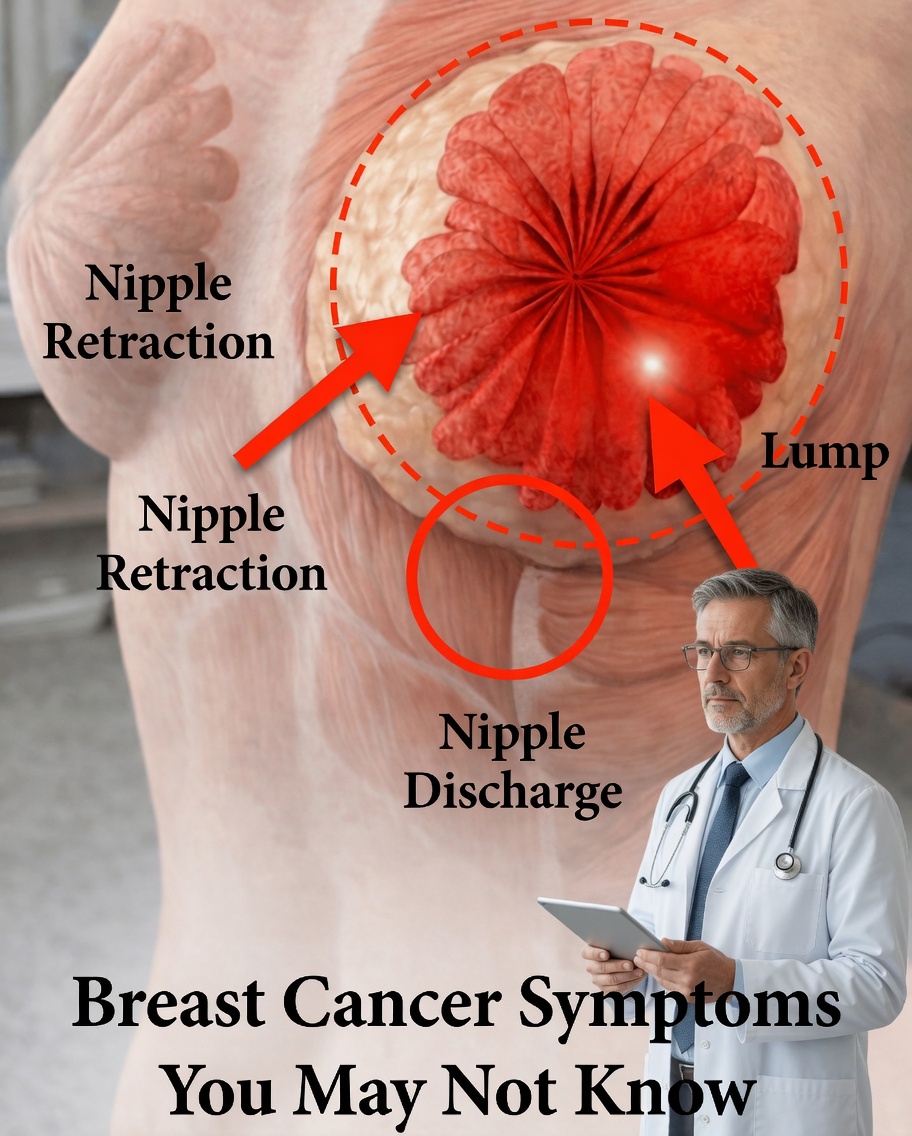
2) Nipple Changes
Nipple symptoms can also be meaningful, such as:
- A new inward turning (inversion) or sudden flattening
- Noticeable changes in color or shape
- Persistent itching, scaling, crusting, or irritation
- Nipple discharge that isn’t breast milk—especially if clear or blood-tinged
If any of these occur in only one breast, it’s even more important to get checked.
3) Unusual Pain or Ongoing Discomfort
Breast pain is common and often linked to hormonal cycles. Still, consider medical advice if the pain is:
- Persistent
- Focused in one spot
- Unrelated to your menstrual cycle
Some people also report nipple sensitivity or discomfort extending to nearby areas.
4) Swelling or Lumps in the Armpit Area
Sometimes lymph nodes react before obvious breast changes appear. Watch for:
- A small lump or swelling in the armpit
- Tenderness, heaviness, or fullness in that region
5) Changes in Size or Shape
If one breast becomes larger, heavier, or differently shaped without an obvious explanation—especially if the change is new—take note and consider an evaluation.
What You Can Start Doing Today
You don’t need anything complicated to take better care of your breast health:
- Learn what’s normal for you: check your breasts monthly, ideally after your period
- Track new or lasting changes: anything unusual that persists should be noted
- Keep up with routine screening: follow medical guidance based on your age and risk factors
- Seek help promptly: if something feels off, talk to a healthcare professional
Building this habit increases confidence and often reduces anxiety over time.
Why This Awareness Matters
Breast cancer is common, but when detected early, treatment success rates are much higher. Paying attention to warning signs—including the less obvious ones—can make a real difference.
There’s also an emotional benefit: that lingering feeling of “something isn’t right” can be stressful. Clear information helps turn uncertainty into thoughtful, timely action.
Frequently Asked Questions
Can breast pain mean cancer?
Usually, no. Breast pain is most often linked to hormones or other non-cancer causes. But if pain is persistent, localized, or unusual for you, it’s worth discussing with a clinician.
Are symptoms the same for everyone?
No. Breast cancer symptoms vary widely. Some people notice multiple changes, while others only see subtle differences.
How often should I check my breasts?
A common recommendation is once per month, alongside routine clinical visits and screening tests as advised by your healthcare provider.
Final Thoughts
Breast care doesn’t have to be complicated. Understanding that a lump is only one possible sign—and paying attention to changes in the skin, nipple, or breast shape—can help you act with greater clarity and confidence.
The most important habit is simple: stay aware of your own body and don’t hesitate to seek professional guidance if something changes.
Disclaimer: This article is for informational purposes only and does not replace medical advice. Always consult a qualified healthcare professional for proper evaluation and guidance.