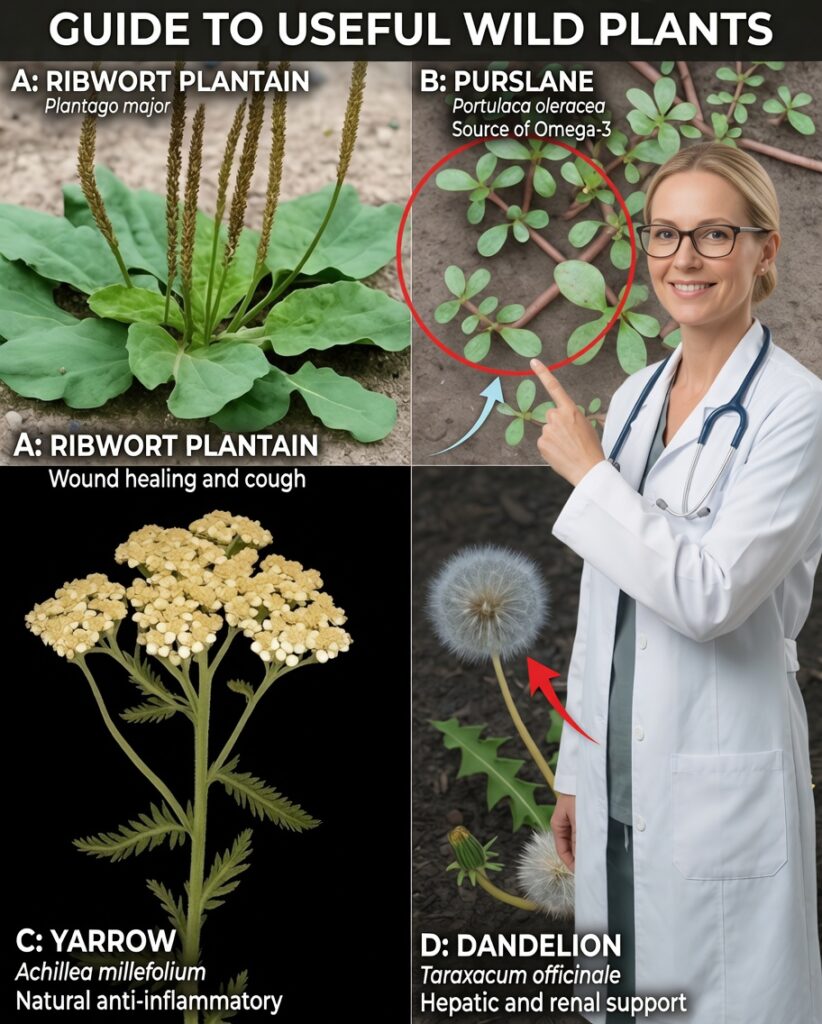
Dandelion, Purslane, Plantain, and Yarrow: “Weeds” That Have Supported Health for Centuries
When people think of weeds, they usually picture the plants that ruin flower beds, take over lawns, or push through sidewalk cracks. Many spend hours pulling them out, assuming they’re useless.
But what if some of those “unwanted” plants are actually valuable sources of nutrition and traditional wellness support? What if they could gently aid digestion, help the immune system, improve circulation, and even support the body’s natural detox pathways?
Across many cultures, plants like dandelion, purslane, plantain, and yarrow have been used for generations in traditional herbal practices. They’re easy to find in nature, yet they contain vitamins, antioxidants, minerals, and bioactive compounds that may offer meaningful benefits.
Keep reading to learn how these humble plants can become practical allies for natural well-being.
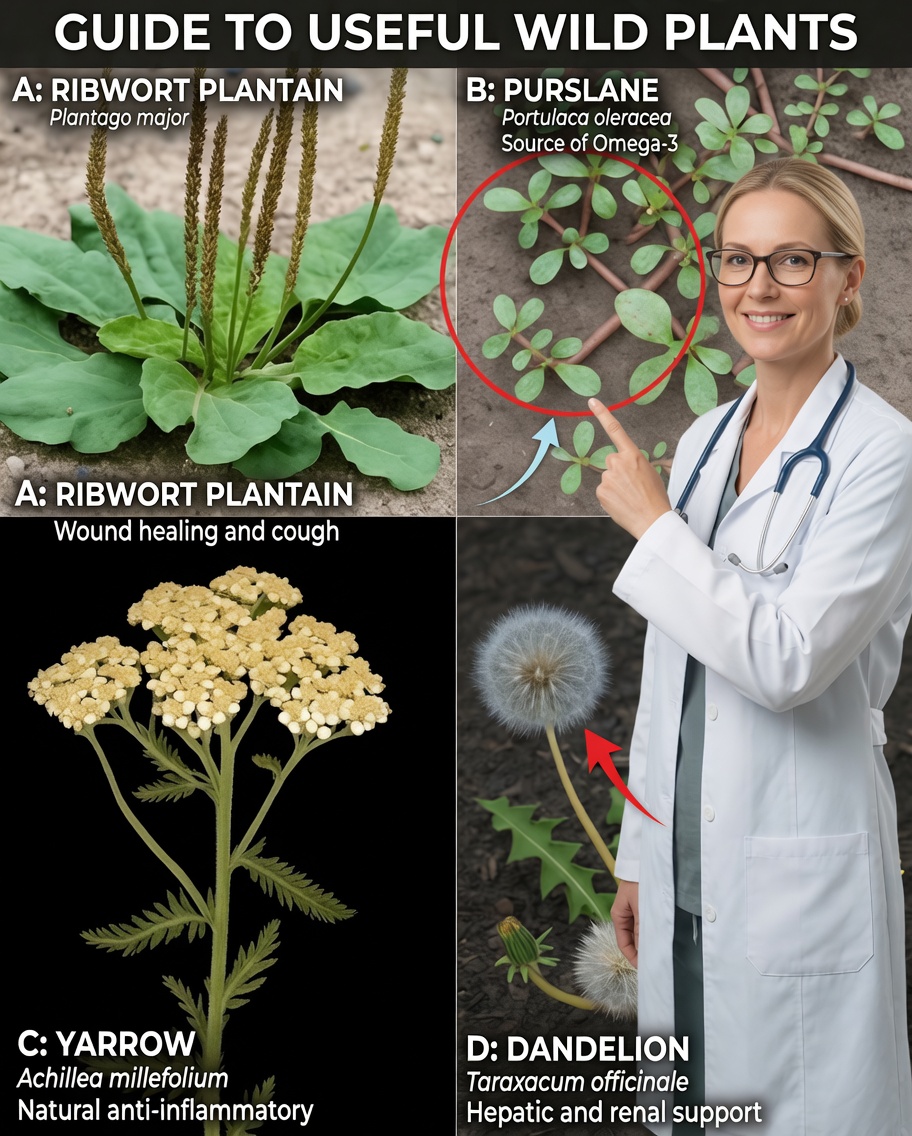
Dandelion (Taraxacum officinale): A Classic Detox-Support Herb
Dandelion is one of the most common garden and field plants. Although it’s often pulled out as an “invasive weed,” every part of the plant—from root to flower—has been valued in traditional use.
Key nutrients
- Vitamins A, C, and K
- Potassium, calcium, magnesium, and iron
- Natural antioxidants, including flavonoids and carotenoids
Potential health benefits
Dandelion is especially known for supporting liver function. Traditionally, it’s used to encourage bile production, which plays a role in digestion and the body’s natural detox processes.
It may also help:
- Promote healthy digestion
- Reduce bloating
- Support balanced blood sugar levels
- Provide antioxidant protection against free-radical damage, which is linked to chronic disease risk
How to use dandelion
- Tea: Steep leaves or roots for 10–15 minutes
- Salads: Use young leaves fresh
- Powdered root: Add to smoothies or use as a coffee alternative
Purslane (Portulaca oleracea): A Nutrient-Dense Omega-3 Green
Often overlooked in gardens, purslane is widely recognized as one of the most nutrient-rich leafy plants available.
Key nutrients
- High in omega-3 fatty acids
- Vitamins A, C, and E
- Calcium, magnesium, and potassium
- Antioxidants such as glutathione
Potential health benefits
Thanks to its omega-3 content, purslane may support:
- Heart health
- Lower inflammation throughout the body
It’s also commonly valued for its potential to:
- Support skin health
- Aid digestion
- Contribute to bone strength due to its mineral content
How to use purslane
- Fresh in salads: Lightly tangy, crisp flavor
- Sautéed: Cook with olive oil and garlic
- Smoothies: Blend into nutrient-packed drinks
Broadleaf Plantain (Plantago major): A Traditional Wound-Soothing Herb
Broadleaf plantain grows in lawns, gardens, and even along roadsides. For centuries, it has been used in folk traditions for a wide range of everyday concerns.
Key nutrients
- Vitamins A, C, and K
- Minerals including potassium, calcium, and iron
- High in soluble fiber
- Antioxidant flavonoids
Potential health benefits
Plantain leaves are traditionally associated with anti-inflammatory and antibacterial properties. They’ve often been used topically to support:
- Minor wound care
- Insect bites and skin irritation
Internally, plantain is also used to:
- Soothe throat irritation
- Ease cough
- Support digestive health, partly due to its fiber content
How to use plantain
- Poultice: Crush fresh leaves and apply to bites or minor skin issues
- Tea: Infuse dried leaves to support the throat or cough
- Cooked greens: Sauté with garlic and olive oil
Yarrow (Achillea millefolium): An Ancient Herbal Staple
Yarrow has a long history of traditional use dating back to antiquity, especially for concerns involving wounds, mild fevers, and digestion.
Key nutrients
- Vitamin C
- Antioxidant flavonoids
- Anti-inflammatory essential oils
- Minerals such as calcium, magnesium, and potassium
Potential health benefits
In traditional herbal practice, yarrow is well known for helping to:
- Support the body’s ability to stop minor bleeding
- Encourage faster healing of small wounds
It’s also used to:
- Support digestion
- Reduce inflammation
- Promote healthy circulation
- Assist with mild fevers in some herbal traditions
How to use yarrow
- Tea: Infuse dried flowers for 10–15 minutes
- Poultice: Apply crushed leaves to the skin
- Herbal oil: Use in massage for sore muscles
Conclusion
Dandelion, purslane, plantain, and yarrow are often dismissed as ordinary weeds. In reality, they can be seen as nutrient-rich, traditional plants containing compounds that may support digestion, immune resilience, wound recovery, reduced inflammation, and overall well-being.
Next time you notice one of these plants in your yard or on a walk, it may be worth taking a second look. What seems like a common weed could be a surprisingly powerful part of natural wellness traditions.
Disclaimer
This article is for informational purposes only and does not replace professional medical advice. Before using any medicinal plant regularly—especially if you are pregnant, nursing, taking medication, or managing a health condition—consult a qualified healthcare professional.