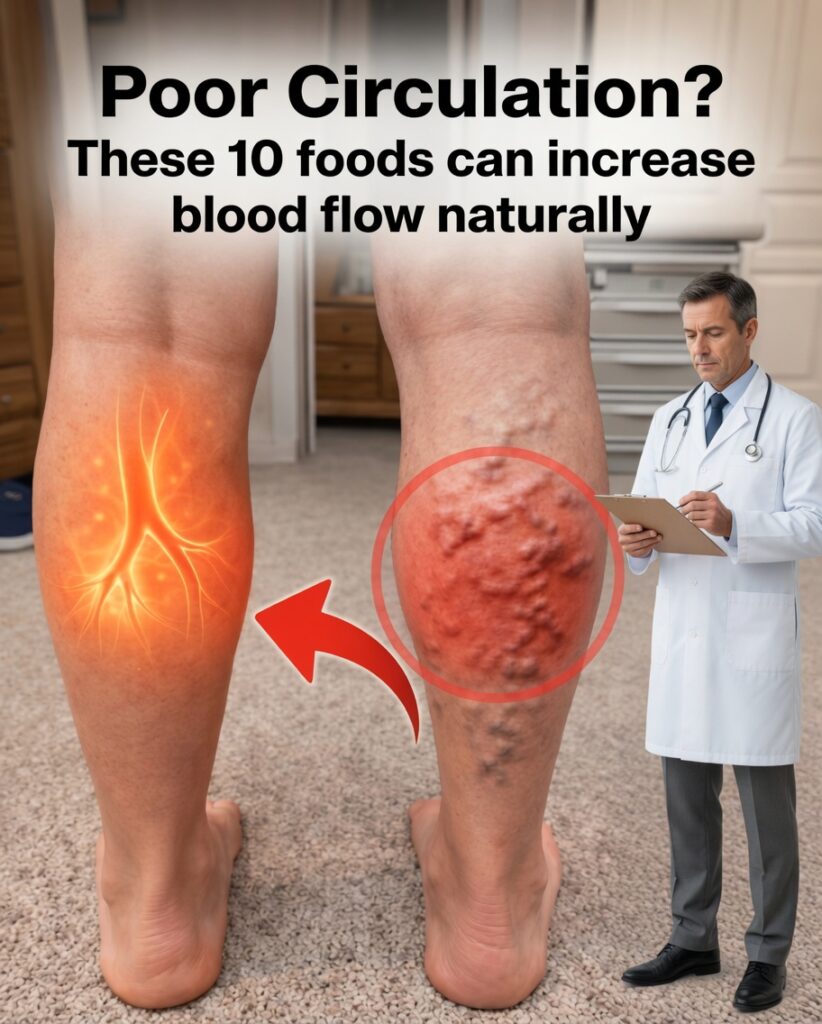
Cold Feet and Leg Pain? These 10 Foods Can Help Boost Circulation Naturally in Just Days
Do your feet feel cold all the time—even when the weather is warm? Do your ankles look puffy by the end of the day, or do your legs feel heavy enough to make a simple walk feel exhausting? These can be signs of poor circulation, a condition that’s far more common than many people realize. The encouraging part is that everyday nutrition can be a powerful, natural way to support healthier blood flow. Keep reading to discover 10 easy foods that can make a real difference for circulation in your legs and feet.
Understanding Poor Circulation in the Legs and Feet
Circulatory problems often develop quietly. Many people dismiss early symptoms as “just aging” or normal fatigue, but these clues are worth taking seriously.
Common signs include:
- Constantly cold feet
- Tingling or numbness
- Swelling in the ankles and feet
- Cramps or pain while walking
- More visible veins or changes in skin appearance
Diet matters because it directly influences blood vessel health and how efficiently blood moves through the body.
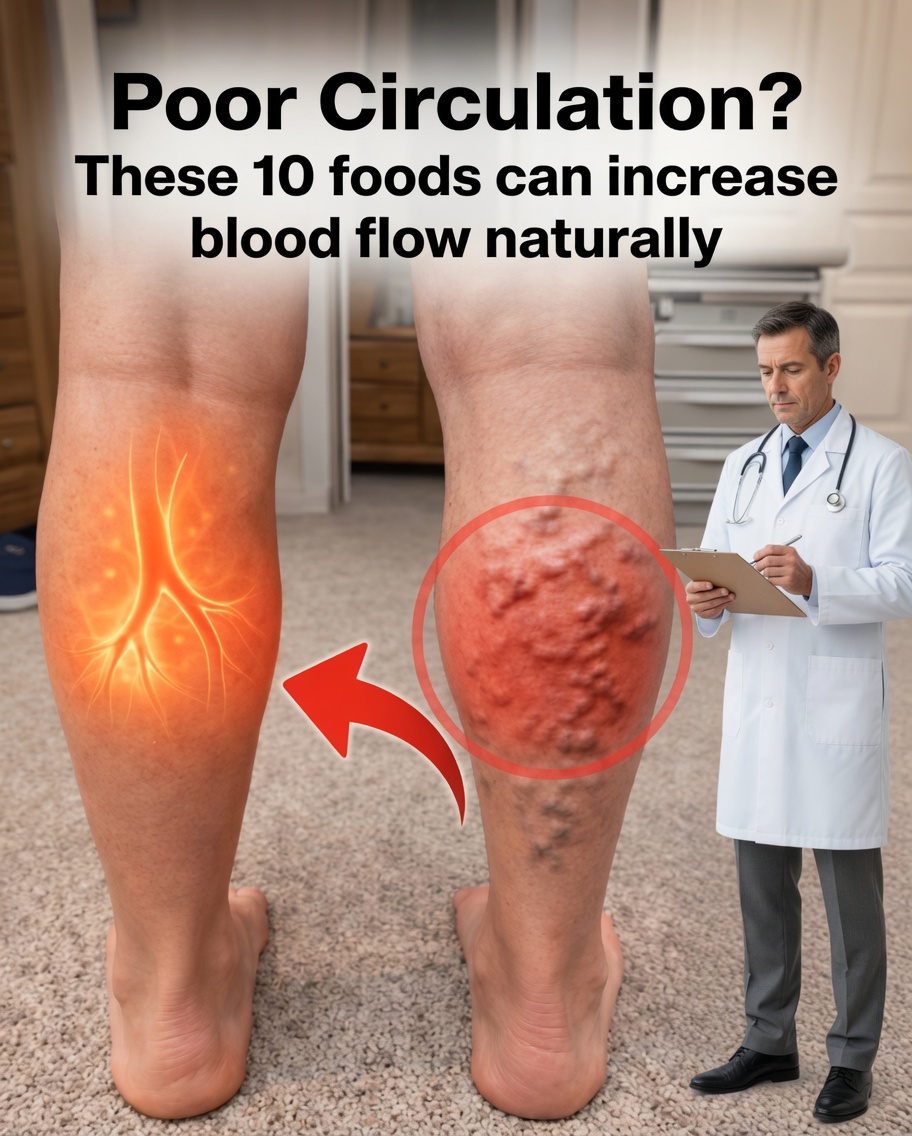
Why Your Diet Plays Such a Big Role
For strong circulation, blood vessels need to stay flexible and in good condition. Certain nutrients help the body produce nitric oxide—a compound that relaxes blood vessels and supports smoother blood flow. Other nutrients reduce inflammation and help protect artery walls.
Foods rich in antioxidants, natural nitrates, omega-3 fats, and flavonoids are especially helpful—and most are simple to add to your daily meals.
10 Foods That Support Better Circulation
1. Beets
Beets are packed with natural nitrates, which can help widen blood vessels and improve blood flow.
- Try them: in salads, roasted, or blended into juice/smoothies.
2. Berries
Strawberries, blueberries, and blackberries provide powerful antioxidants that support vascular health.
- Try them: mixed into yogurt, oatmeal, or smoothies.
3. Citrus Fruits
Oranges, lemons, and grapefruit help support blood vessels and overall circulation.
- Try them: as fresh juice, snacks, or in dressings and marinades.
4. Leafy Greens
Spinach, kale, and arugula are nutrient-dense choices that support circulation-friendly eating.
- Try them: in salads, sautéed sides, or blended into smoothies.
5. Garlic
Garlic contains allicin, a compound linked to healthier blood flow and vessel function.
- Tip: crush or chop garlic and let it sit briefly before cooking.
6. Cayenne Pepper
Cayenne can naturally stimulate circulation and support healthy blood flow.
- Use: small amounts in soups, eggs, roasted vegetables, or sauces.
7. Pomegranate
Pomegranate is rich in polyphenols, which may support tissue oxygenation and circulation.
- Try it: as fresh seeds or unsweetened pomegranate juice.
8. Fatty Fish
Salmon and sardines are excellent sources of omega-3s, which support heart and vessel health.
- Aim for: about twice per week.
9. Dark Chocolate
Dark chocolate (high cacao) can support blood vessel function thanks to its flavonoids.
- Choose: chocolate with 70% cacao or higher.
10. Walnuts
Walnuts help support artery elasticity and provide healthy fats.
- Try them: in snacks, salads, or oatmeal.
Simple Ways to Add These Foods to Your Routine
Small changes can add up quickly. Here are easy combinations:
- Breakfast: oatmeal with berries and walnuts
- Lunch: leafy green salad with beets and pomegranate
- Dinner: fatty fish with garlic and vegetables
- Dessert: a small piece of dark chocolate
Practical tips to stay consistent:
- Keep frozen berries on hand for quick meals
- Prep vegetables in advance to reduce effort during the week
- Use herbs, citrus, garlic, and spices to cut back on excess salt
With steady habits, many people notice improvements within a few weeks.
Natural Habits That Enhance Results
Food is a major piece of the puzzle, but these daily habits can amplify benefits:
- Walk every day (even short walks help)
- Elevate your legs when resting
- Drink enough water throughout the day
- Avoid staying seated or standing in one position for too long
Even brief movement breaks can help blood circulate more effectively.
Ready to Feel the Difference?
You don’t need extreme changes to get started. Add just two or three of these circulation-supporting foods to your routine and pay attention to how your body responds. Over time, many people experience lighter, more energized legs and improved comfort.
Your body has powerful repair mechanisms—you simply need to supply the right nutrients.