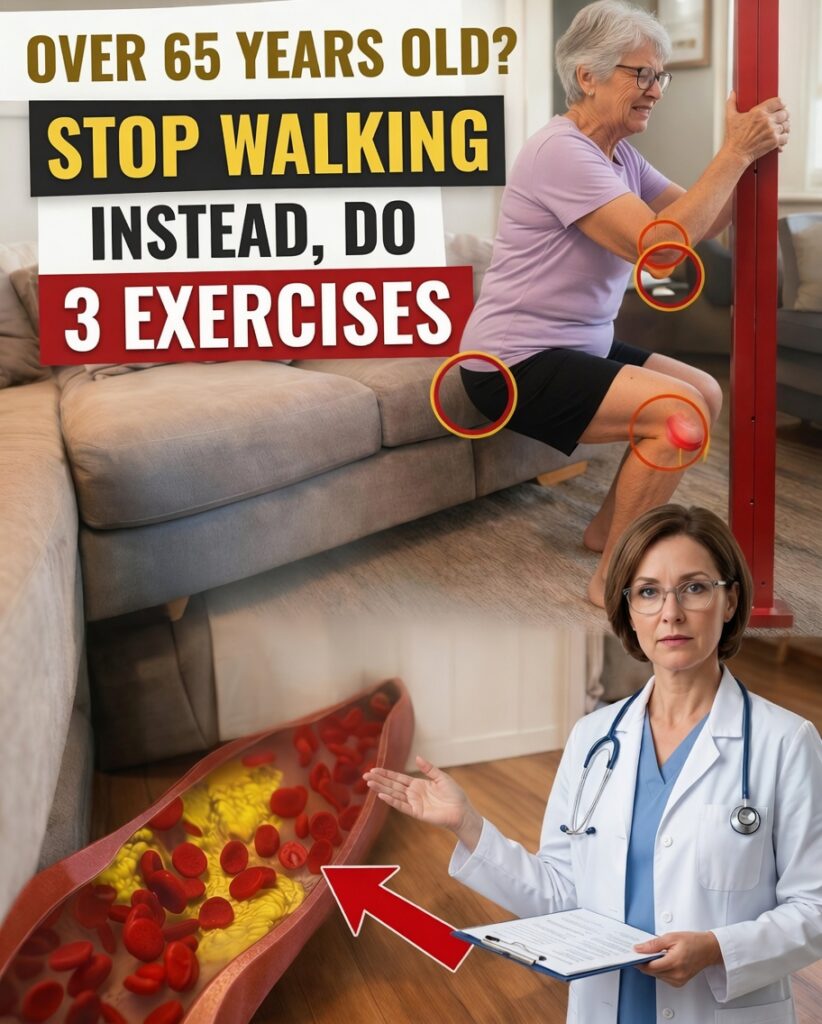
After 60, Walking Alone Isn’t Enough: 3 Simple Exercises to Build Stronger Legs, Better Balance, and Help Prevent Falls
Many adults over 60 lace up their sneakers for a daily walk and feel they’re doing something truly positive for their health—and they are. Walking supports circulation, boosts mood, and helps with weight management. It’s one of the best habits you can keep for life.
But there’s an important detail many people miss.
As the years pass, the body naturally changes: muscle mass gradually declines, balance becomes less steady, and joints may feel stiffer. Everyday tasks—climbing stairs, rising from a chair, or carrying groceries—can start to feel surprisingly challenging.
That raises a key question: is walking by itself enough to maintain strength and stability after 60?
Not entirely.
Aging and mobility specialists often point out that walking is excellent cardiovascular exercise, but it doesn’t adequately train muscle strength or the stabilizer muscles that protect balance. Research consistently shows that after age 60, adults can lose roughly 1–2% of muscle mass per year without resistance-style training.
The good news: you can complement your walks with three expert-recommended, beginner-friendly exercises that improve leg strength, posture, and balance. They take only a few minutes and can be done at home.
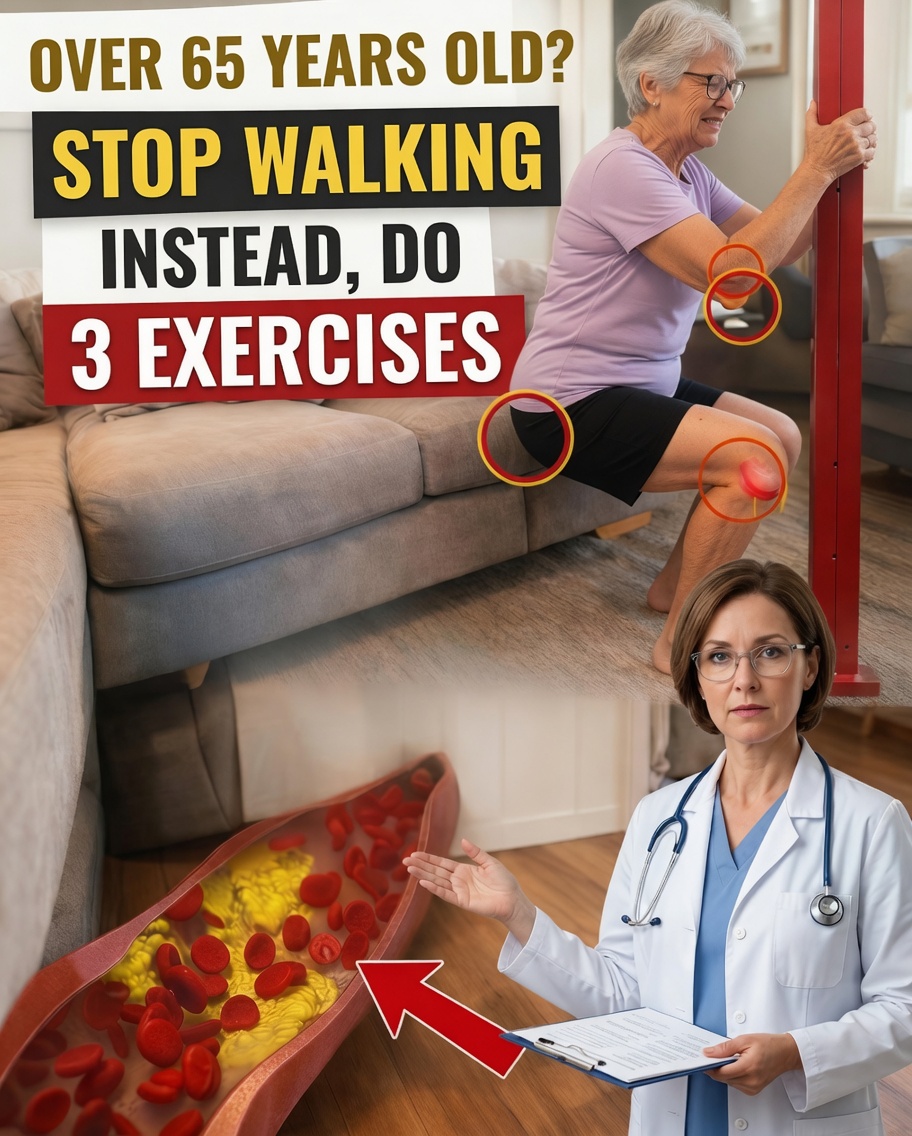
1) Chair Squat: Build Real-World Leg Strength
This movement closely matches what you do in daily life—standing up from a chair, getting out of bed, or lowering yourself safely.
How to do it
- Stand in front of a sturdy chair.
- Place your feet about shoulder-width apart.
- Slowly lower your hips back as if you’re going to sit.
- Lightly tap the chair (don’t fully sit down).
- Press through your feet and stand back up.
Form tips: Keep your chest lifted and your knees aligned with your feet.
Reps
- 2–3 sets of 8–12 repetitions
Benefits
- Strengthens quadriceps, glutes, and core
- Makes stairs and getting up from chairs easier
- Supports fall prevention by improving leg power
- Improves everyday mobility and confidence
2) Heel-to-Toe Walk: Train Your Balance System
This exercise looks simple, but it’s highly effective for improving stability and coordination—two skills closely tied to fall risk.
How to do it
- Stand tall with your posture upright.
- Place the heel of one foot directly in front of the toes of the other.
- Walk forward slowly as if you’re on a straight line.
- Keep your eyes focused on a point ahead (not down at your feet).
Do 10–20 steps, turn around, and repeat.
Need support? Use a wall or hold the back of a chair at first.
Benefits
- Improves coordination and body awareness
- Strengthens stabilizers around the ankles and hips
- Trains the body’s balance mechanisms
- Helps reduce the chance of falls
3) Resistance Band Row: Improve Posture and Upper-Back Strength
Over time, many people begin to round forward through the shoulders. Poor posture can contribute to back discomfort and even make breathing feel harder during activity.
The resistance band row strengthens the muscles that keep your upper back upright and supported.
How to do it
- Anchor a resistance band at about chest height.
- Hold one end in each hand.
- Pull your elbows back (as if rowing).
- Squeeze your shoulder blades together—like you’re holding a pencil between them.
- Return slowly with control.
Reps
- 2–3 sets of 10–15 repetitions
Benefits
- Encourages a more upright, healthy posture
- Strengthens shoulders and upper back
- Can reduce fatigue during walking
- May make breathing feel easier by opening the chest
Why These 3 Exercises Work So Well (When Walking Doesn’t Cover Everything)
Together, these movements train key areas that walking alone may not fully develop:
- Muscle strength: stronger legs and hips for daily tasks
- Balance: better stability and coordination
- Posture: more upright alignment and support
- Fall prevention: improved control and confidence
- Mobility: smoother, safer movement overall
This combination acts like a simple “full-body function” routine—ideal for staying independent and active as you age.
How to Start Safely (Simple Plan)
Follow this easy structure:
- Warm-up (3–5 minutes): march in place or gently swing your arms.
- Do the exercises: chair squats, heel-to-toe walk, band rows.
- Frequency: 3–5 days per week
- Total time: just 10–15 minutes per day
- Safety first: move slowly, breathe comfortably, and keep support nearby.
If you have arthritis, joint pain, dizziness, or a recent injury, consult a healthcare professional before starting.
How to Progress Over Time (Small Upgrades)
When the routine begins to feel easy:
- Hold light weights during chair squats
- Use a stronger resistance band
- Add variety by practicing a slow backward walk (only with support nearby)
- Do gentle stretching after your session
Consistency matters more than intensity.
What Many People Notice After a Few Weeks
With regular practice, many older adults report:
- steadier steps
- less fatigue during daily activities
- greater confidence when moving around
- easier stair climbing and chair standing
This isn’t about becoming an athlete—it’s about protecting independence and quality of life.
Conclusion
Walking remains a fantastic daily habit. But after 60, adding chair squats, the heel-to-toe walk, and resistance band rows can dramatically improve strength, balance, and posture—three essentials for staying safe and mobile.
Try doing these exercises before or after your walk. Within a few weeks, you may feel more stable, more energetic, and noticeably stronger.
Aging doesn’t mean stopping.
It means learning to move smarter.