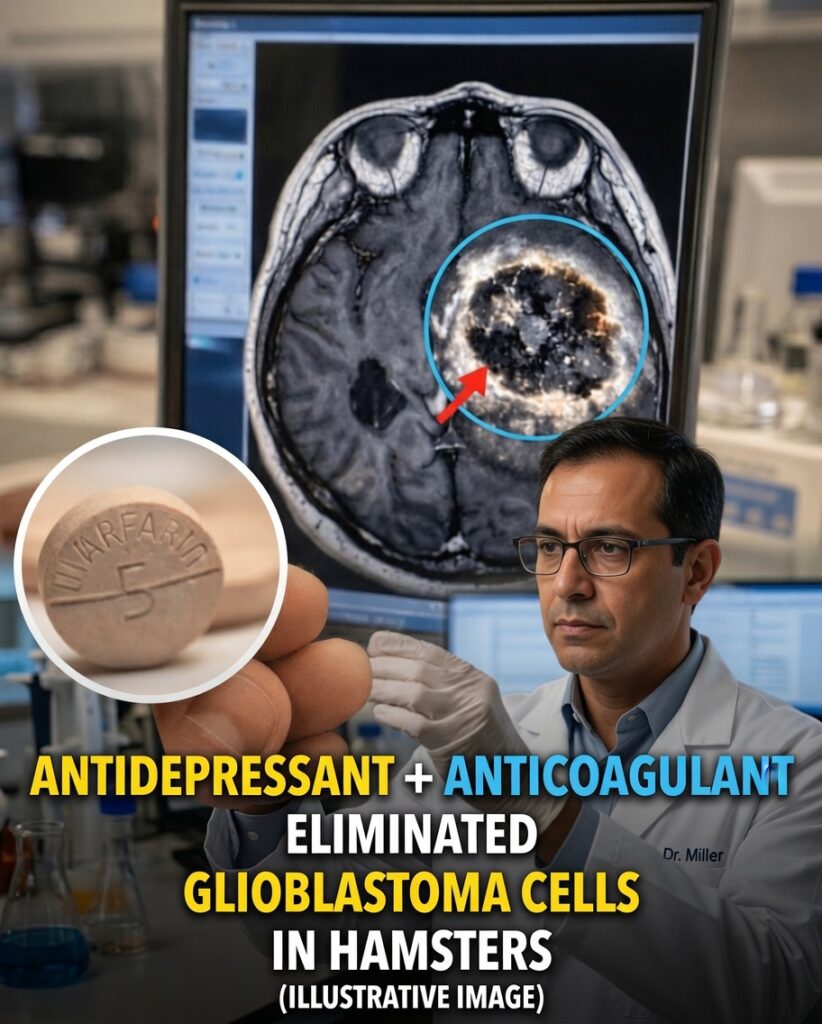
An Unexpected Finding: An Antidepressant + an Antiplatelet Drug May Trigger Cancer Cell “Self-Destruction”
Glioblastoma is one of the most difficult brain cancers modern medicine faces. It grows fast, spreads into surrounding tissue, and often leaves patients and families searching urgently for any meaningful sign of progress. The diagnosis can be emotionally overwhelming—especially when long-term treatment options remain limited. Even so, researchers continue to pursue new strategies, including the repurposing of well-known medications.
What if two widely used drugs—one prescribed for depression and another designed to prevent blood clots—could work together in a surprising way? A preclinical study led by scientists at the Swiss Federal Institute of Technology Lausanne (EPFL) suggests this combination may open new directions for brain tumor research.
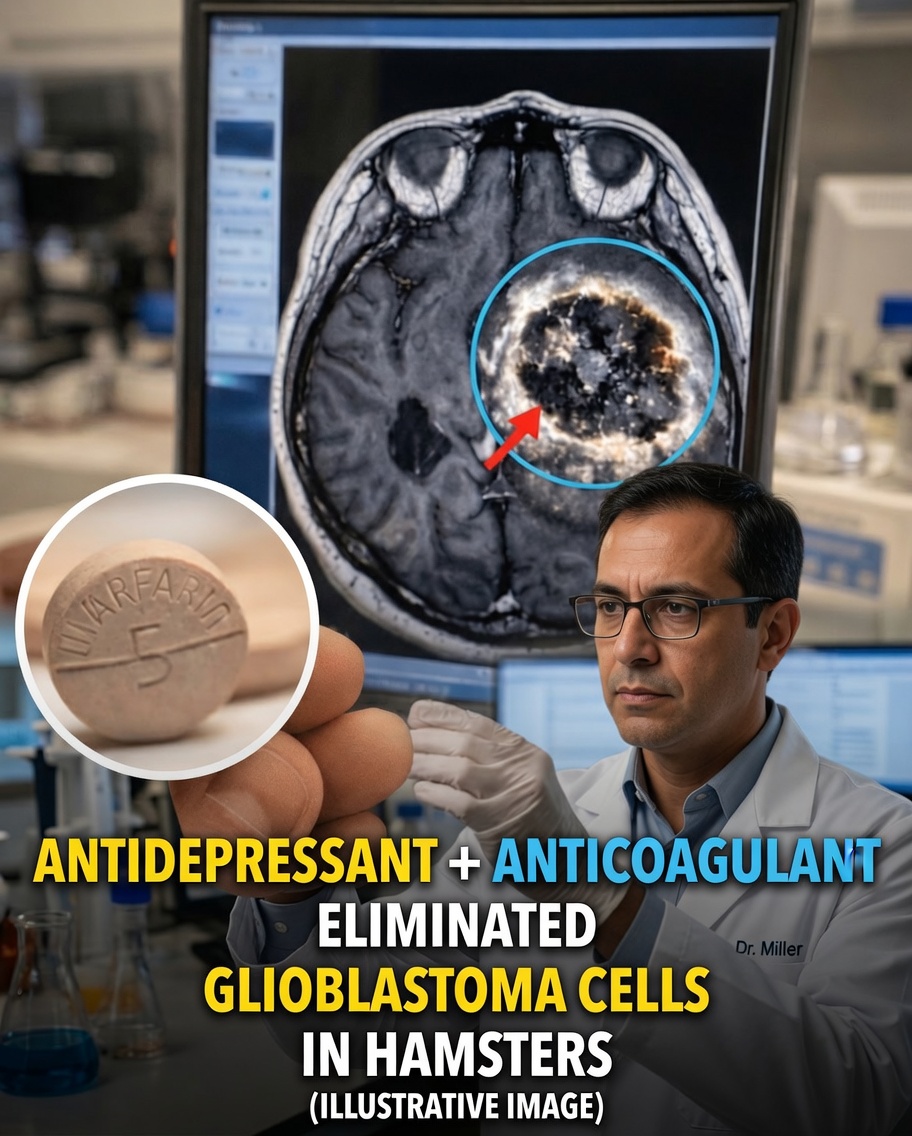
Glioblastoma (GBM): Why Treatment Remains So Challenging
Glioblastoma (GBM) is an aggressive brain tumor that arises from supportive brain cells. One of its most dangerous characteristics is how it infiltrates nearby tissue, making complete surgical removal extremely difficult. Standard care typically includes:
- Surgery
- Radiation therapy
- Chemotherapy
Despite these interventions, recurrence is common.
A major barrier to effective treatment is the blood–brain barrier—a protective filter that shields the brain but also blocks many drugs from reaching tumor tissue at therapeutic levels. On top of that, glioblastoma cells can adapt and become resistant to treatment, pushing scientists to explore alternative approaches, including drug repurposing (finding new anticancer effects in established medicines).
The Study: Pairing Two Existing Drugs
In the EPFL preclinical research, scientists investigated two long-used medications:
- Imipramine: a tricyclic antidepressant that has been prescribed for decades
- Ticlopidine: an antiplatelet (often grouped under “blood-thinning” medications) that acts on platelet receptors
When tested individually, neither drug showed meaningful effects against glioblastoma cells. However, when combined, the outcome changed dramatically.
A Key Mechanism: Over-Activated Autophagy
The drug pair strongly amplified autophagy, the cell’s natural recycling system. Under normal conditions, autophagy helps cells survive stress by breaking down and reusing internal components. But when pushed too far, this same process can become destructive—effectively driving the cell into a self-digesting collapse.
In lab experiments, the imipramine + ticlopidine combination reduced the viability of glioblastoma cells by pushing autophagy beyond a tolerable threshold.
Results in Animal Models
In mouse models implanted with human brain tumors, the combination produced encouraging outcomes:
- Tumor growth slowed down
- Survival time increased significantly compared with untreated animals
- The cancer was not fully eliminated
These findings are important, but they remain preclinical—meaning they cannot be assumed to work the same way in humans without further research.
Main Findings at a Glance
- Stronger autophagy activation: linked with increased signaling molecules such as cAMP, contributing to tumor cell breakdown
- Longer survival: treated animals lived longer than controls
- Slower tumor progression: tumor growth was delayed
- Not a complete cure: tumors did not fully disappear
Why This Research Matters
Repurposing established drugs can offer major advantages in cancer research:
- Known safety profiles from years of medical use
- Lower development costs than creating brand-new drugs
- Greater accessibility if proven effective
Because imipramine and ticlopidine have been used for decades, they represent a potentially faster route to clinical evaluation—if the science holds up.
That said, it is essential to be clear: no one should use these medications to treat cancer outside medical supervision. Rigorous clinical trials are still needed to evaluate safety, dosing, interactions, and real-world effectiveness for glioblastoma patients.
What This Could Mean for the Future of Glioblastoma Treatment
This study supports a broader idea in oncology: combining therapies that target different cellular survival mechanisms may be more effective than relying on a single pathway. Future research may explore this strategy alongside:
- Immunotherapy approaches
- Treatments that target tumor blood vessels
- New combinations designed to overcome drug resistance and improve brain delivery
Supporting Brain Health Today (While Research Continues)
While science advances step by step, everyday habits can help support overall brain health:
- Balanced nutrition: prioritize vegetables, healthy fats, and antioxidant-rich foods
- Consistent, high-quality sleep: important for cellular repair and brain function
- Regular physical activity: supports circulation and cognitive performance
- Stress management: meditation, breathing exercises, and gentle movement can help
- Medical follow-up: speak with qualified professionals before making health changes
Conclusion
The combination of imipramine and ticlopidine offers a compelling preclinical glimpse into how common medications might be redirected against glioblastoma by driving autophagy to a destructive extreme in tumor cells. Although the animal results are promising—slower tumor growth and longer survival—there is still a long journey before this approach could be considered for human treatment.
Progress in science is incremental, and findings like this add another meaningful step toward future options and renewed hope.
FAQ
-
What is autophagy?
Autophagy is a natural process where cells recycle their own components. When excessively activated, it can contribute to cell death. -
Can I take these medications to treat cancer?
No. Any off-label use must be medically supervised and should only occur within properly designed clinical research. -
Is this available as a treatment now?
Not yet. The evidence so far is preclinical and based on lab and animal studies.
Disclaimer: This content is for informational purposes only and does not replace professional medical advice. Always consult qualified healthcare providers before making decisions about treatment or medication.