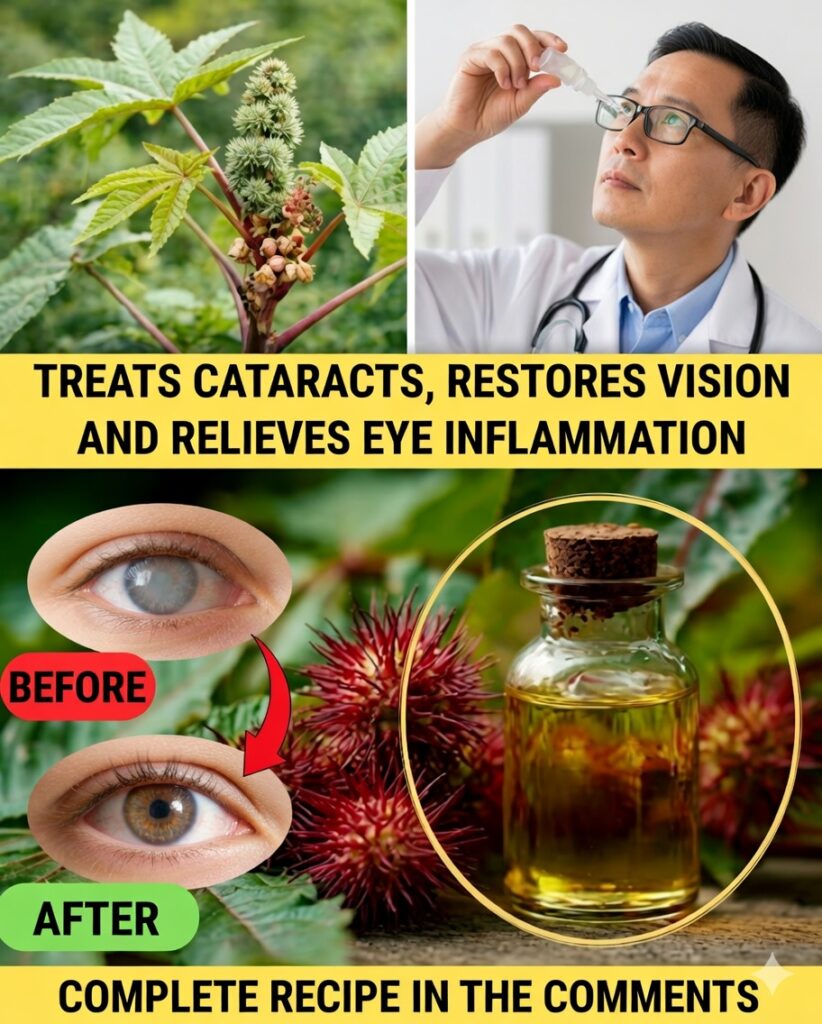
Dry Eyes? This Natural Remedy Could Quickly Improve Your Visual Comfort
Castor oil for eyes is gaining massive attention on social media and in natural health communities. Many people claim it can moisturize dry eyes, calm irritation, and even naturally restore vision.
But what does scientific research really say?
In this guide, you’ll learn what castor oil is, its potential effects on eye health, how it is commonly used, and the essential precautions you need to know before trying it yourself.
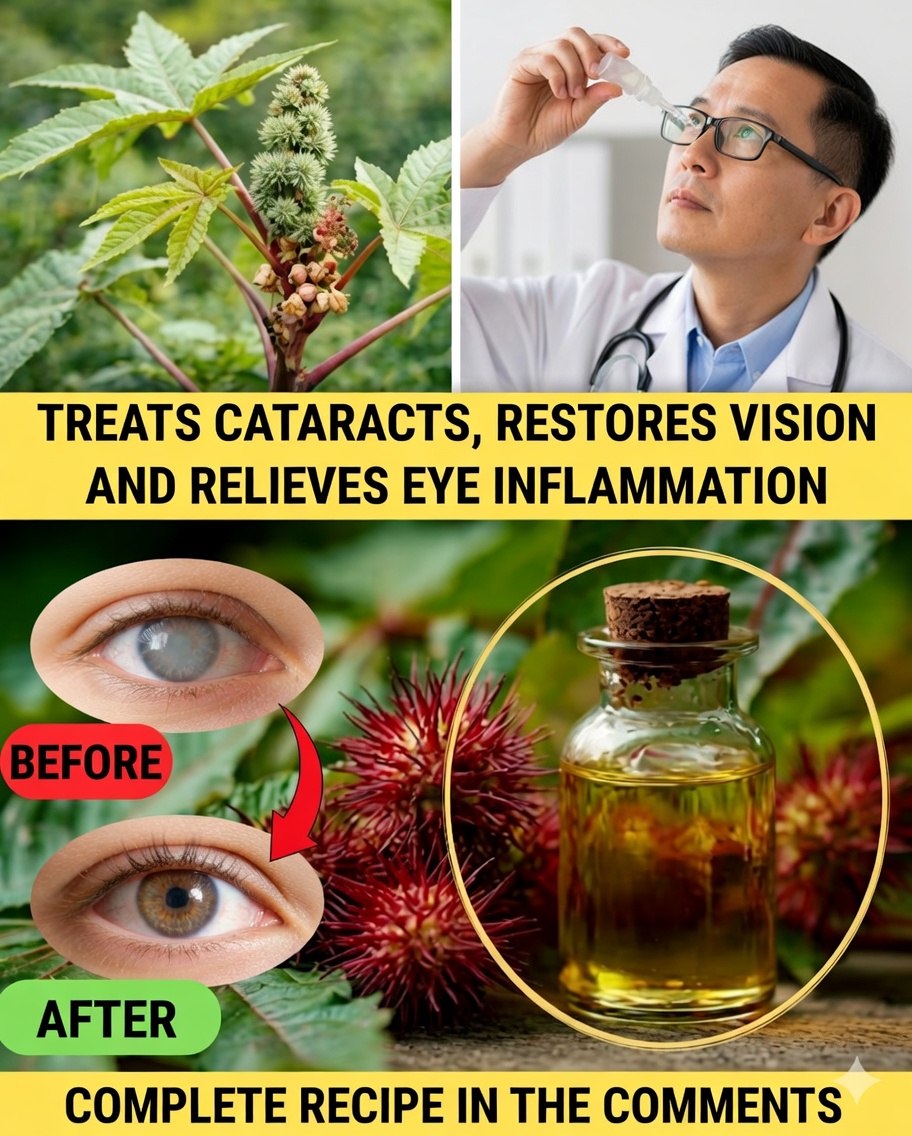
What Is Castor Oil and Why Is It Linked to Eye Care?
Castor oil is a vegetable oil extracted from the seeds of the Ricinus communis plant. It contains a high concentration of ricinoleic acid, a fatty acid known for its anti-inflammatory, moisturizing, and antimicrobial properties.
Traditionally, castor oil has been used to:
- Hydrate dry skin
- Support hair growth
- Ease certain types of inflammation
- Assist digestion in some natural medicine practices
When it comes to eye care, some people use castor oil as a natural option to relieve dry eyes and reduce eye strain.
Key Properties of Castor Oil for Eye Health
The growing interest in castor oil for eyes is mainly due to several natural properties:
- Deep moisturizing effect
- Anti-inflammatory action
- Lubricating effect on surfaces
- Supportive protection for the ocular surface
- Antioxidant activity
These characteristics have encouraged researchers to investigate its role in managing dry eye symptoms, especially when used in carefully formulated eye drops.
Castor Oil and Dry Eye Syndrome
Some studies have found that eye drops containing very low concentrations of castor oil can improve the stability of the tear film—the thin layer of fluid that keeps the eye surface moist.
In this context, castor oil may help:
- Reduce tear evaporation
- Improve lubrication of the eye surface
- Protect the cornea and conjunctiva
As a result, it may offer relief from symptoms such as:
- Burning sensation in the eyes
- Mild irritation or discomfort
- Fluctuating or unstable vision
- Persistent dryness
It’s important to note that these benefits are usually observed with specially formulated, sterile ophthalmic products—not with pure household castor oil.
Potential Benefits for Visual Comfort
Castor oil is not a miracle cure, but when used correctly, it may support overall comfort around the eyes.
-
Intense Hydration
Castor oil can form a protective barrier on the skin around the eyes, helping to lock in natural moisture and prevent excessive dryness. -
Soothing Mild Irritation
Thanks to its anti-inflammatory properties, it may help reduce redness and minor discomfort on the eyelids and surrounding skin. -
Improved Lubrication Sensation
By supporting moisture and reducing friction between the eyelid and the eye surface (indirectly, when used appropriately), it can enhance comfort—especially at night. -
Care for the Eye Contour and Lashes
Applied around the eyes, castor oil can hydrate the delicate under-eye area, help with the appearance of puffiness, and nourish the eyelashes, making them appear stronger and healthier over time.
Myths About Vision Restoration
Online, you may come across bold claims that castor oil can cure:
- Cataracts
- Glaucoma
- Nearsightedness (myopia)
- Age-related farsightedness (presbyopia)
Currently, there is no strong scientific evidence supporting these claims. These promises are more myth than medical fact. Castor oil cannot reverse structural eye conditions or replace professional eye treatment.
Risks of Applying Pure Castor Oil Directly in the Eyes
Putting pure, non-sterile castor oil directly into the eye is strongly discouraged.
This practice may cause:
- Irritation or burning
- Redness
- Infection
- Blurred vision
- Potential damage to the cornea
Most cosmetic or household castor oils are not sterile and are not formulated for direct contact with the eyeball. Using them as eye drops can be unsafe.
How to Use Castor Oil Safely Around the Eyes
If you want to benefit from castor oil without risking your eye health, it is safer to apply it only on the skin around the eyes and on the eyelashes—never inside the eye itself.
Recommended method for external use:
- Cleanse your face thoroughly before bedtime.
- Put a small amount of castor oil on a clean cotton pad or cotton swab.
- Gently dab it around the eye contour, avoiding the waterline and direct eye contact.
- Do not apply it inside the eye or on the eyeball.
- Rinse the area with lukewarm water the next morning.
This approach is mainly useful for hydrating the skin around the eyes and nourishing the lashes.
If you wear contact lenses, remove them before any application around the eyes and be extra careful to prevent oil from getting into your eyes.
Safer Alternatives for Eye Comfort and Dry Eyes
To support eye health and relieve dry eye symptoms more safely, consider:
- Using preservative-free lubricating eye drops recommended by a specialist
- Taking regular breaks from screens (the 20-20-20 rule: every 20 minutes, look 20 feet away for 20 seconds)
- Eating a diet rich in vitamin A and omega-3 fatty acids (e.g., carrots, leafy greens, fatty fish, flaxseeds)
- Protecting your eyes from blue light and excessive screen brightness
- Scheduling regular check-ups with an eye care professional
These strategies are backed by stronger scientific evidence and are generally safer for long-term eye health.
Why Castor Oil Remains So Popular
Despite the cautions, castor oil continues to be widely used because it is:
- Natural and plant-based
- Inexpensive
- Easy to find in pharmacies and stores
- Extremely versatile (skin, hair, brows, lashes, and more)
However, it’s crucial to distinguish traditional remedies and anecdotal experience from scientifically validated treatments—especially when it involves something as delicate as your eyes.
Conclusion: Can Castor Oil Help Your Eyes?
Castor oil can contribute to eye comfort—particularly for dryness—when used correctly and externally around the eyes or in specially formulated, sterile eye drops designed by professionals.
However:
- It cannot restore lost vision
- It does not cure eye diseases such as cataracts, glaucoma, myopia, or presbyopia
- Direct application of pure castor oil into the eyes carries real risks and should be avoided
To protect your vision, prioritize safe, tested solutions and consult an eye care professional if you experience persistent symptoms or are considering any new treatment.
Nature provides powerful resources, but they must be used wisely and safely—especially when it comes to protecting a sense as vital as sight.