
Understanding Amlodipine and Its Side Effects
Amlodipine is a calcium channel blocker commonly prescribed to treat high blood pressure and angina. It works by relaxing and widening blood vessels, allowing blood to flow more easily and reducing the strain on the heart.
This effect is highly beneficial for many people, but it can also trigger certain physical responses, such as fluid buildup or temporary changes in circulation. According to information from trusted sources including the NHS, Mayo Clinic, and Drugs.com, most amlodipine side effects are mild to moderate. They are often more noticeable when treatment first begins or when the dose is increased.
Still, some reactions can be unexpected, especially if they are not fully explained during a short medical appointment.

The Most Common Side Effects of Amlodipine
Below are the side effects most often reported by people taking amlodipine, starting with the most frequent:
-
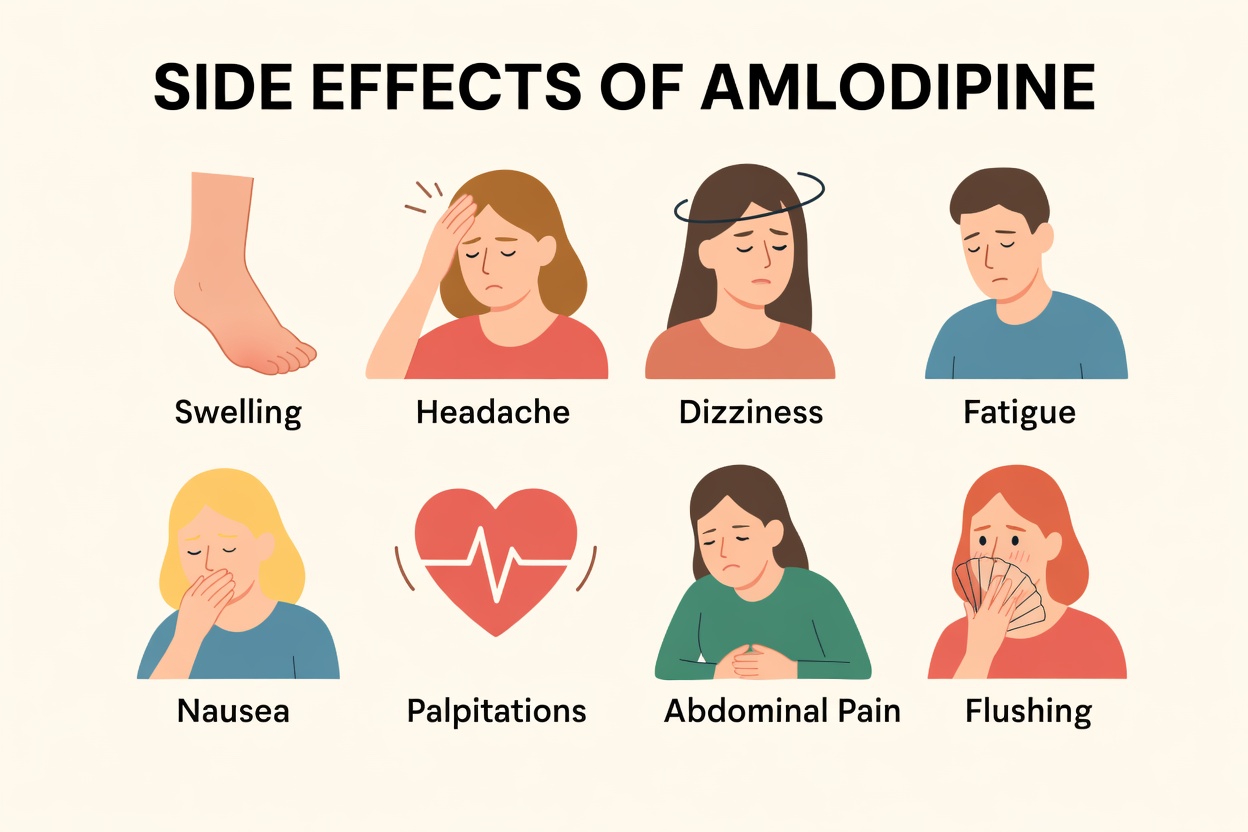
Swelling in the ankles, feet, or lower legs (peripheral edema)
- This is one of the best-known side effects and may affect around 10% to 15% of users, particularly at higher doses.
- It happens because widened blood vessels can allow fluid to collect in the lower body.
- Helpful steps may include:
- Elevating your legs when seated
- Cutting back on salt
- Using compression stockings if your doctor says they are appropriate
- For many people, the swelling improves after a few weeks.
-
Headaches
- Headaches are often among the earliest side effects.
- They may feel throbbing, dull, or persistent at first, but they usually ease as the body adjusts.
- Staying hydrated, resting in a calm space, and using pharmacist-approved pain relief may help.
-
Dizziness or lightheadedness
- This can happen because of changes in blood pressure, especially when standing up too quickly.
- It is more common in the early stages of treatment or when dehydration is present.
- Standing slowly and avoiding sudden movements can reduce this problem.

-
Flushing
- Some people notice warmth or redness in the face, neck, or chest.
- This occurs because blood vessels widen and increase blood flow near the skin.
- Flushing is usually brief and comes and goes.
-
Fatigue
- Amlodipine can leave some users feeling more tired than usual.
- This may affect concentration, motivation, or day-to-day energy.
-
Palpitations
- You may become more aware of your heartbeat, such as a fluttering, pounding, or fast-beating sensation.
- In many cases this is not dangerous, but it should still be monitored.
-
Nausea or stomach discomfort
- Some people report mild nausea, abdominal discomfort, or a reduced appetite.
- These symptoms are generally temporary.
-
Drowsiness
- Amlodipine may cause sleepiness or grogginess during the day in some individuals.
Other less common but reported reactions include:
- Muscle cramps
- Stuffy nose or nasal congestion
- Mild skin rash
More serious side effects are uncommon, but they need immediate medical attention. These include:
- Worsening chest pain
- Severe dizziness
- Fainting
- Swelling of the face or throat
- Trouble breathing
- Signs of an allergic reaction
How to Manage Amlodipine Side Effects
Most people do well with amlodipine, and many side effects become less noticeable over time. Small daily habits can make a real difference while your body adapts.
1. Monitor your symptoms
Keep a simple record of:
- When symptoms appear
- How long they last
- How severe they feel
- Whether they improve or worsen after certain activities
This can help you identify patterns and give your doctor clear information if a review is needed.
2. Make simple lifestyle adjustments
For swelling and dizziness, these measures may help:
- Reduce salty foods to limit fluid retention
- Drink enough water, unless your doctor has told you to restrict fluids
- Walk or move gently during the day to support circulation
- Raise your legs when resting
3. Take your dose consistently
Taking amlodipine at the same time every day may help keep its effects steady.
- Some people prefer taking it in the evening if daytime drowsiness is a problem.
- Others do better with a morning routine.
- Follow your doctor’s instructions and stay consistent.
4. Know when to contact your doctor
You should speak with your healthcare provider if:
- Swelling becomes painful
- It starts to affect walking or daily activities
- Headaches are intense or do not improve
- You notice chest pain
- You faint
- Your heartbeat feels irregular or unusually fast
In some cases, your doctor may adjust the dose or consider a different treatment.
Research suggests that most people tolerate amlodipine well over the long term, and many side effects lessen after the first few weeks or within the first month.
Less Common but Important Side Effects
Although uncommon, there are a few other side effects worth knowing about:
-
Gum swelling or gum overgrowth (gingival hyperplasia)
- Good oral hygiene and regular dental care may help reduce this risk.
-
Mood changes or sleep problems
- These have been reported in isolated cases.
-
Weight gain from fluid retention
- This is usually linked to swelling rather than body fat gain.
Any new, unusual, or concerning symptom should be reported to your healthcare provider.
What If the Side Effects Do Not Go Away?
Do not stop taking amlodipine suddenly unless your doctor tells you to. Stopping without guidance can cause your blood pressure to rise quickly.
Instead, arrange a follow-up appointment to discuss how you are responding to the medicine. Your doctor may recommend:
- A lower dose
- Dividing the dose differently
- Changing to another medication if necessary
Many people are able to continue treatment successfully with only minor adjustments.

Conclusion
Amlodipine is a well-established medication for managing high blood pressure and relieving angina symptoms. Knowing the possible side effects can help you respond early and manage them more effectively.
Most side effects are temporary and can often be eased through simple steps such as:
- Drinking enough water
- Elevating the legs
- Reducing salt intake
- Paying attention to how your body feels
By staying informed and maintaining good communication with your doctor, you can better manage side effects while benefiting from the heart-protective effects of amlodipine.
FAQ
What is the most common side effect of amlodipine?
The most frequently reported side effect is swelling in the ankles or feet, also known as edema. In many cases, it improves over time and can be managed with practical lifestyle changes.
Do amlodipine side effects go away?
Yes, they often do. Many side effects become milder or disappear after a few days or weeks as the body adapts. If symptoms continue or worsen, speak with your doctor.
Can amlodipine cause weight gain?
It may cause temporary weight gain due to fluid retention, not fat buildup. Staying active and reducing salt intake can often help.