
Garlic and Olive Oil for Gentle Ear Care: Traditional Use, Safety, and What to Know
Occasional ear discomfort is common. You might notice a blocked sensation, slight irritation, or sounds seeming less clear than usual. Everyday causes such as wax buildup, trapped moisture, or mild outer ear irritation can make normal tasks feel distracting and uncomfortable. Although ongoing or severe symptoms should always be checked by a medical professional, some traditional home remedies are still used as gentle ways to support overall ear comfort.
A well-known folk remedy is garlic infused in olive oil. This mixture has been used in home care traditions because of its soothing reputation and the natural properties linked to garlic. Below, we explore how it is traditionally prepared, what limited research says about its ingredients, and how to approach it carefully if considering it for basic ear wellness support.
Common Reasons for Mild Ear Discomfort
Minor ear complaints are often related to earwax accumulation. When wax collects in the canal, it can create pressure, dull hearing, or cause a feeling of fullness. Moisture from bathing or swimming, along with mild external irritation, may also contribute to discomfort.
In some situations, gentle supportive care may help maintain comfort. However, any problem that lasts, worsens, or comes with serious symptoms needs proper medical evaluation.
Research has looked at certain natural substances for supportive use in mild cases. Garlic compounds, for example, have been studied for antimicrobial activity against some microbes associated with ear-related concerns.

Garlic’s Traditional Role in Ear Support
Garlic (Allium sativum) has a long history in traditional wellness practices across many cultures. When garlic is crushed or chopped, it produces allicin, a compound that has shown antibacterial and antifungal activity in laboratory studies.
Some earlier research on naturopathic ear drop formulas that included garlic alongside other herbs suggested that these blends performed similarly to conventional options for easing discomfort in children with middle ear issues. Lab-based studies have also reported that garlic-derived compounds may slow the growth of organisms connected to outer ear canal problems and certain chronic middle ear conditions.
Still, the evidence is far from conclusive. Most findings come from laboratory experiments or small studies, and they should not be seen as proof that garlic alone can treat every ear problem. It does not solve deeper causes such as viral illness, structural issues, or more serious infections.
Why Olive Oil Is Commonly Used as the Base
Olive oil is often chosen as a carrier because it is mild and easy to use. Traditionally, it has been used to soften and lubricate, which may support the natural loosening of wax or minor debris in the outer ear.
Slightly warmed olive oil is also sometimes used on its own for outer ear comfort, as it can provide a gentle coating when applied carefully. When combined with garlic, it becomes a simple infused oil that draws on the traditional uses of both ingredients.
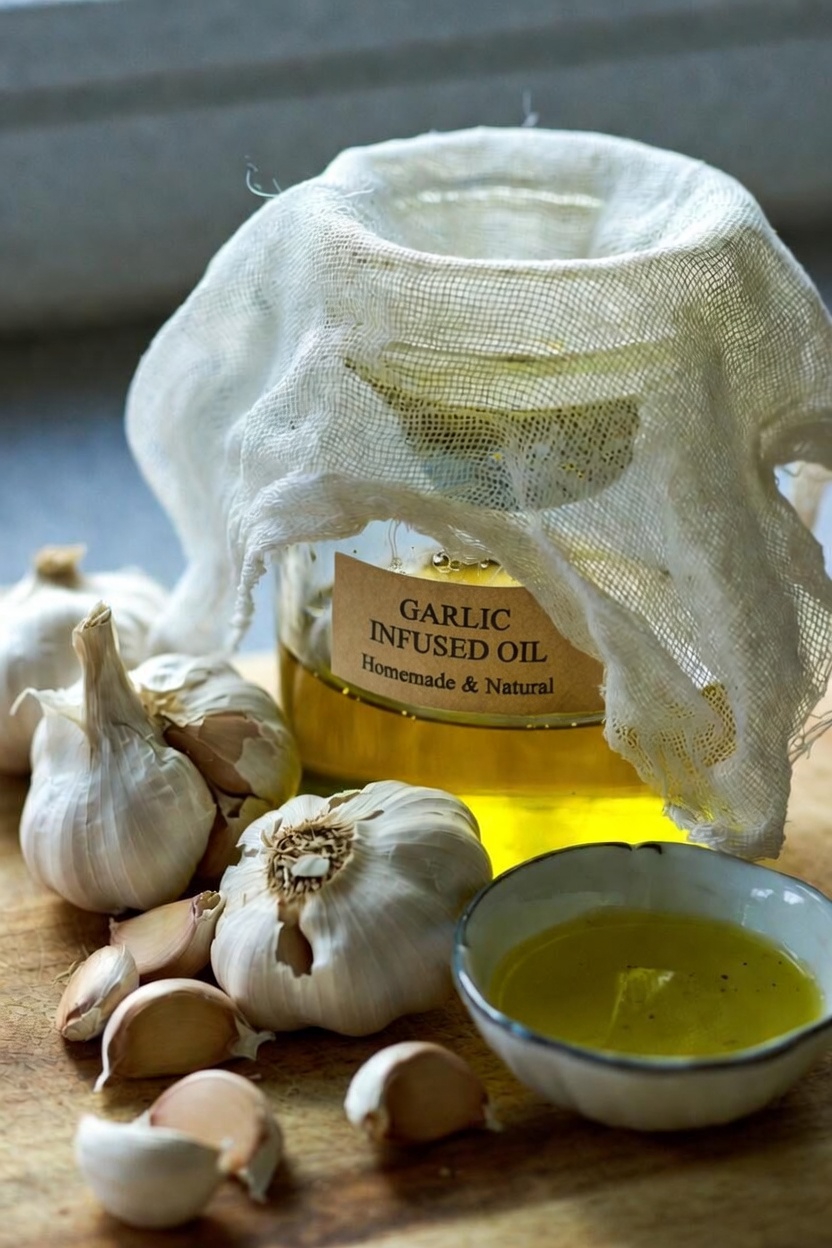
How to Make Garlic-Infused Olive Oil at Home
Preparing a small batch at home is simple and gives you control over ingredient quality and freshness.
Ingredients
- 1 to 2 fresh garlic cloves, peeled
- 2 to 4 tablespoons extra virgin olive oil
- Optional: a small pinch of dried rosemary
- Optional: 1 drop of vitamin E for preservation
Preparation Steps
- Crush or finely chop the garlic to help release its natural compounds.
- Put the garlic and olive oil into a small pan.
- Heat gently on very low heat for about 10 to 15 minutes.
- Do not boil or overheat the mixture.
- Remove it from the heat and allow it to cool a little.
- Strain it through cheesecloth or a fine mesh strainer into a clean glass container.
- Keep it in a cool, dark place for short-term use, or refrigerate if needed longer.
Before using it, test a small amount on the skin to check for sensitivity.
How to Use It Carefully for Outer Ear Comfort
If you choose to try garlic-infused olive oil for mild outer ear support, the safest approach is gentle and limited.
Basic Use
- Warm a small amount until it reaches body temperature.
- Test it on your wrist first.
- Never use it hot.
- Lie on your side with the affected ear facing upward.
- With a clean dropper, place 2 to 4 drops into the ear canal.
- Remain in that position for 5 to 10 minutes.
- Wipe away any extra oil from the outer ear.
If it feels comfortable, some people repeat this once or twice daily for a short period. This method is intended only for gentle soothing of the outer ear area, not for deep treatment.
Essential Safety Precautions
Home ear remedies should always be used with care. Avoid this method completely if there is any sign of a more serious issue.
Do Not Use Garlic Oil If:
- You think you may have a perforated eardrum
- There is ear discharge
- You have severe pain
- You have a fever
- There are signs of infection or significant hearing change
- You are treating a child without professional guidance
Stop Use Immediately If:
- Burning develops
- Irritation increases
- Symptoms get worse
- You suspect an allergic reaction
Important Reminder
- Never place whole garlic cloves in the ear.
- Never use unstrained oil with garlic pieces left inside.
Other Habits That Support Ear Wellness
Natural oils are only one small part of ear care. Everyday habits also play an important role in maintaining ear comfort and protecting hearing.
Helpful Daily Practices
- Dry your ears gently after swimming or showering.
- Avoid using cotton swabs or other objects inside the ear canal.
- Address allergy or sinus issues, since they can affect ear pressure.
- Support your immune health with balanced nutrition and enough rest.
Quick Ear Care Tips
- Drink enough water to help keep mucus thinner.
- Chew gum or swallow often during flights to help equalize pressure.
- Wear ear protection in loud environments.
- Reduce exposure to strong or prolonged noise.
What Current Evidence Really Shows
Garlic has shown promising antimicrobial effects in laboratory settings, and some herbal ear blends have been linked to improved comfort. Even so, evidence for putting garlic oil directly into the ear remains limited and sometimes inconsistent.
Most reliable sources stress the same point: traditional remedies may offer temporary soothing in minor situations, but they are not a substitute for medical care, especially when there is pain, infection, drainage, or hearing loss.
A professional assessment is the best way to identify the true cause of ear symptoms and choose the safest treatment.
Conclusion
Garlic-infused olive oil remains a popular traditional option for those exploring natural ways to support mild ear comfort, especially when the issue may be related to minor wax buildup or slight irritation. If used at all, it should be prepared properly, applied cautiously, and avoided whenever warning signs are present.
Pay attention to how your body responds, and seek professional advice for anything persistent, painful, or concerning.
FAQ
Is garlic oil safe for everyone to use in the ear?
No. It should be avoided if you have signs of ear damage, infection, discharge, strong pain, or allergies to the ingredients. A patch test on the skin can help check sensitivity first.
How long does homemade garlic oil last?
Fresh batches are best used within a few days. If refrigerated, it may keep for up to one week. Throw it away immediately if the smell, color, or texture changes.
Can it help with muffled hearing caused by wax?
It may gently soften wax in some cases, but ongoing blockage should be handled by a healthcare professional. Never try to force wax out with tools or objects.