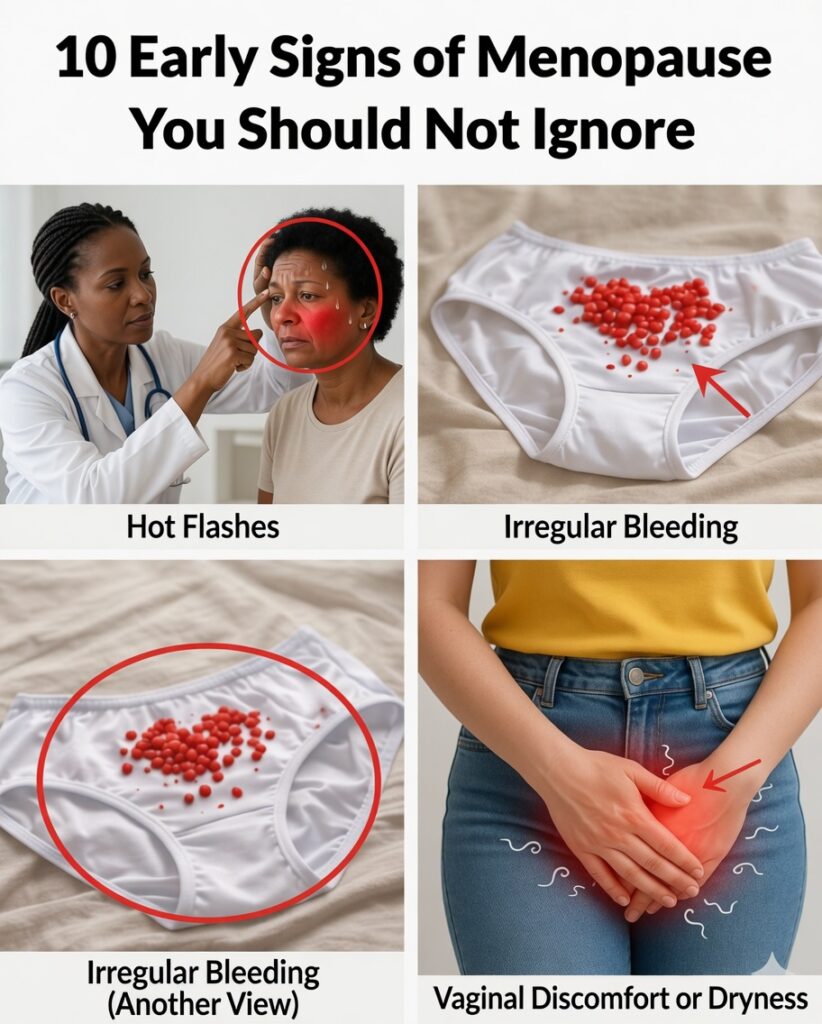
Is Your Body Changing After 40? 10 Signs That May Point to Early Menopause — and Natural Ways to Find Relief
In your early 40s, you may suddenly notice that your menstrual cycle doesn’t feel predictable anymore. Some months your period is unusually heavy; other times it’s barely there—or it doesn’t come at all. Hot flashes can hit at the worst moments, bringing a sudden rush of heat, facial redness, and sweating. You might feel drained even after a full night of sleep, and your mood may swing without a clear reason.
These changes can feel unsettling, and it’s common to wonder whether something is wrong. The reassuring truth is that you’re not alone. Many women experience these shifts earlier than expected—and once you understand what’s happening, it becomes much easier to navigate this stage with confidence.
Catching the signs early can help protect your long-term health and make the transition smoother. Keep reading for the most common symptoms and simple steps you can start today.
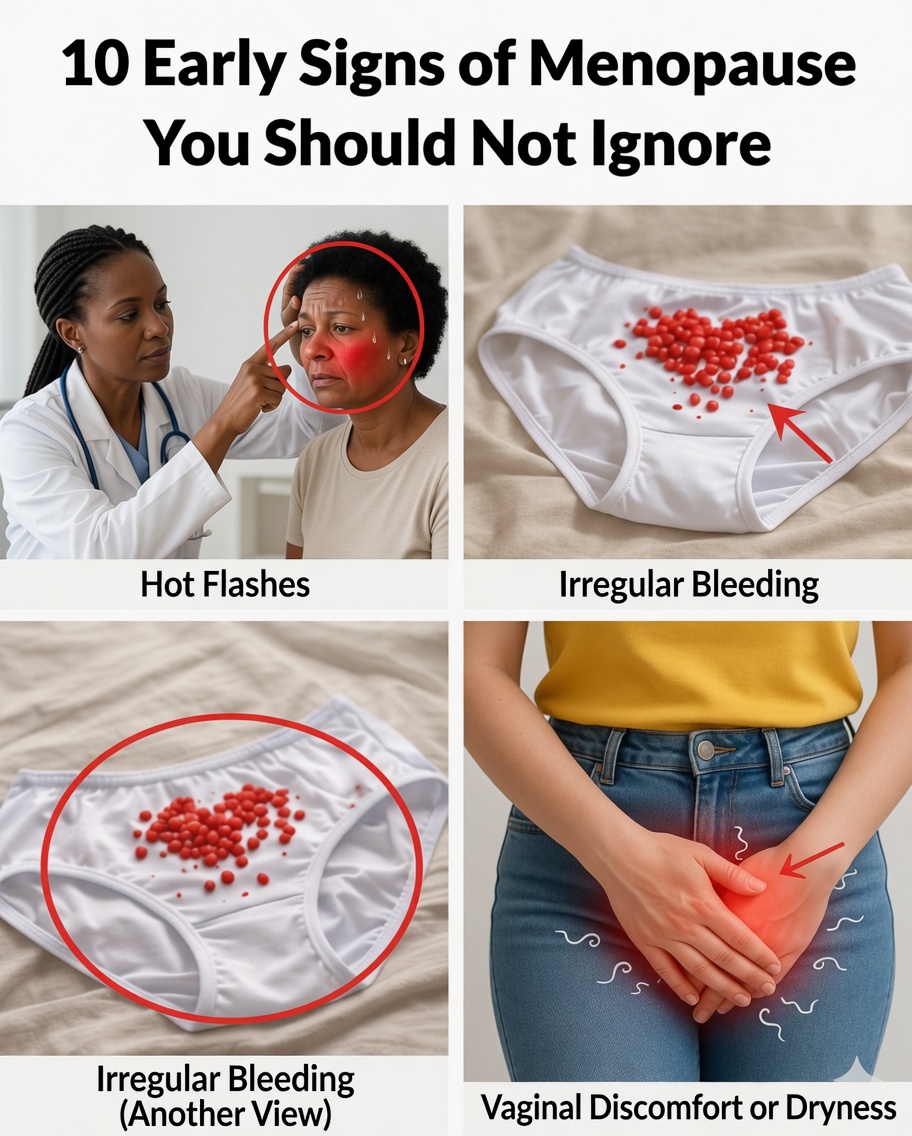
What Is Early Menopause?
Early menopause is when menstruation stops permanently before age 45. If it happens before age 40, it’s often referred to as premature menopause.
For many women, menopause naturally occurs around age 50. However, in some cases the ovaries begin producing fewer hormones—especially estrogen and progesterone—sooner than expected. Because these hormones influence multiple systems in the body, a decline can trigger a wide range of symptoms.
When hormone levels drop earlier, the body spends more years with lower estrogen, which may affect bone strength, heart health, and overall energy levels over time.
10 Common Signs of Early Menopause
Symptoms can look different for each woman, but the following are among the most frequently reported.
-
Irregular periods
Your cycle may become shorter or longer, flow may get heavier or lighter, or you may skip months entirely. -
Hot flashes
A sudden wave of intense warmth—often felt in the face, neck, and chest—usually followed by sweating. -
Night sweats
Heavy sweating during sleep that can soak pajamas or bedding. -
Mood changes
More frequent irritability, anxiety, low mood, or emotional ups and downs. -
Sleep problems
Trouble falling asleep, waking repeatedly at night, or feeling unrested in the morning. -
Persistent fatigue
Ongoing exhaustion even when you think you’ve rested enough. -
Brain fog and poor focus
Forgetfulness, difficulty concentrating, or a “cloudy mind” feeling. -
Vaginal dryness
Reduced lubrication that may lead to discomfort, especially during intimacy. -
Body weight and shape changes
Some women notice more abdominal fat or shifts in body composition. -
Joint aches or stiffness
Discomfort in the knees, hands, shoulders, or other joints.
Some women also notice drier skin, thinning hair, occasional headaches, or heart palpitations.
Why Do These Symptoms Happen?
Estrogen plays a key role across the body. When estrogen levels fall, several systems can respond in noticeable ways.
- Hot flashes may occur because the body’s temperature regulation becomes more sensitive.
- Mood and sleep disruptions can happen as hormonal shifts influence brain chemistry and neurotransmitters.
- Vaginal dryness develops when tissues become thinner and less hydrated due to lower estrogen.
That’s why identifying early menopause symptoms sooner can help you seek support and prevent symptoms from worsening.
Long-Term Health Areas to Watch
When menopause begins earlier, a few health factors deserve extra attention:
- Bone health: Lower estrogen may increase the risk of gradual bone density loss over time.
- Cardiovascular health: Some research suggests an association between early menopause and higher heart risk.
- Memory and concentration: Mild cognitive changes can appear temporarily for some women.
This doesn’t mean these issues will definitely occur—however, lifestyle choices can make a meaningful difference.
What You Can Start Doing Today (Naturally)
Small, consistent habits can make this phase easier to manage.
-
Track your symptoms
Write down changes in your cycle, sleep, mood, hot flashes, and energy to spot patterns and share them with a professional if needed. -
Improve sleep quality
Keep your bedroom cool, avoid caffeine late in the day, and try calming routines (stretching, breathing, or relaxation) before bed. -
Move your body regularly
Walking, yoga, and strength training can support mood, bone health, and weight management. -
Focus on nutrient-dense foods
Prioritize foods rich in calcium, vitamin D, and healthy fats to support overall wellbeing. -
Lower daily stress
Deep breathing, meditation, social support, and enjoyable downtime can reduce stress and improve resilience. -
Dress lightly and stay hydrated
Simple strategies like breathable clothing and enough fluids can help with hot flashes and night sweats.
Conclusion
Early menopause can feel sudden—and even scary—at first. But recognizing key signs such as irregular periods, hot flashes, and ongoing fatigue helps you respond with better self-care and informed choices.
With accurate information, professional guidance, and supportive daily habits, many women move through early menopause with greater calm and confidence.
Listening to your body is the first step toward a healthier, more balanced transition.