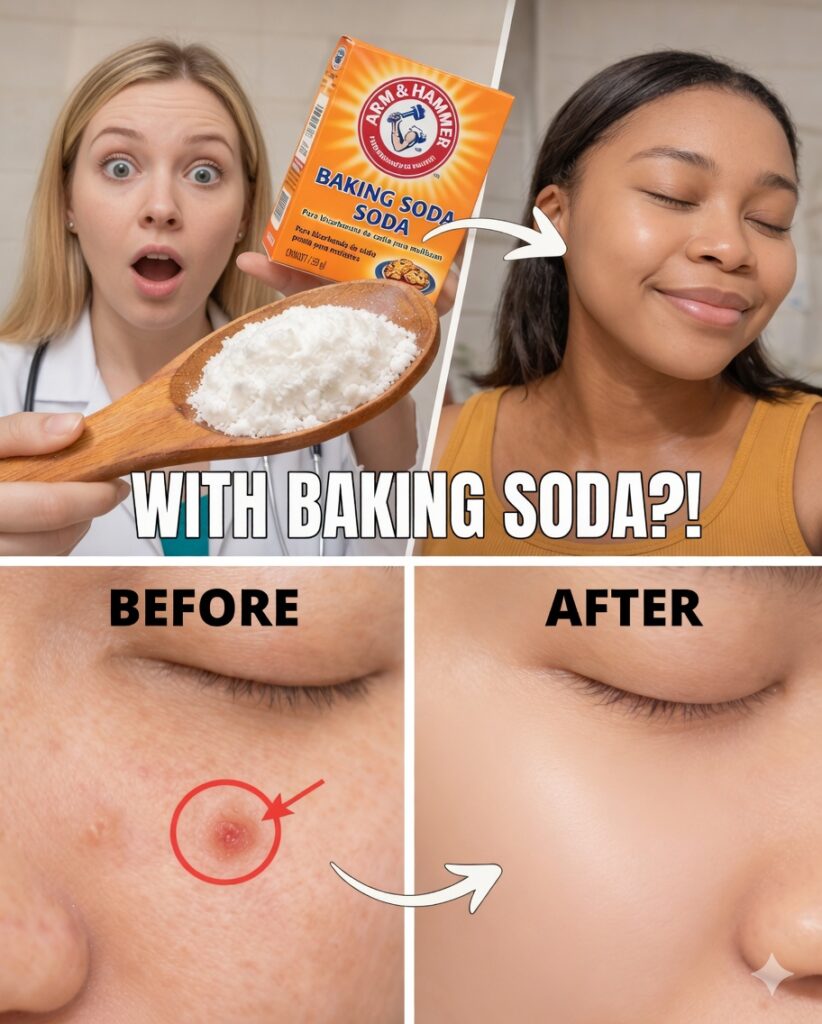
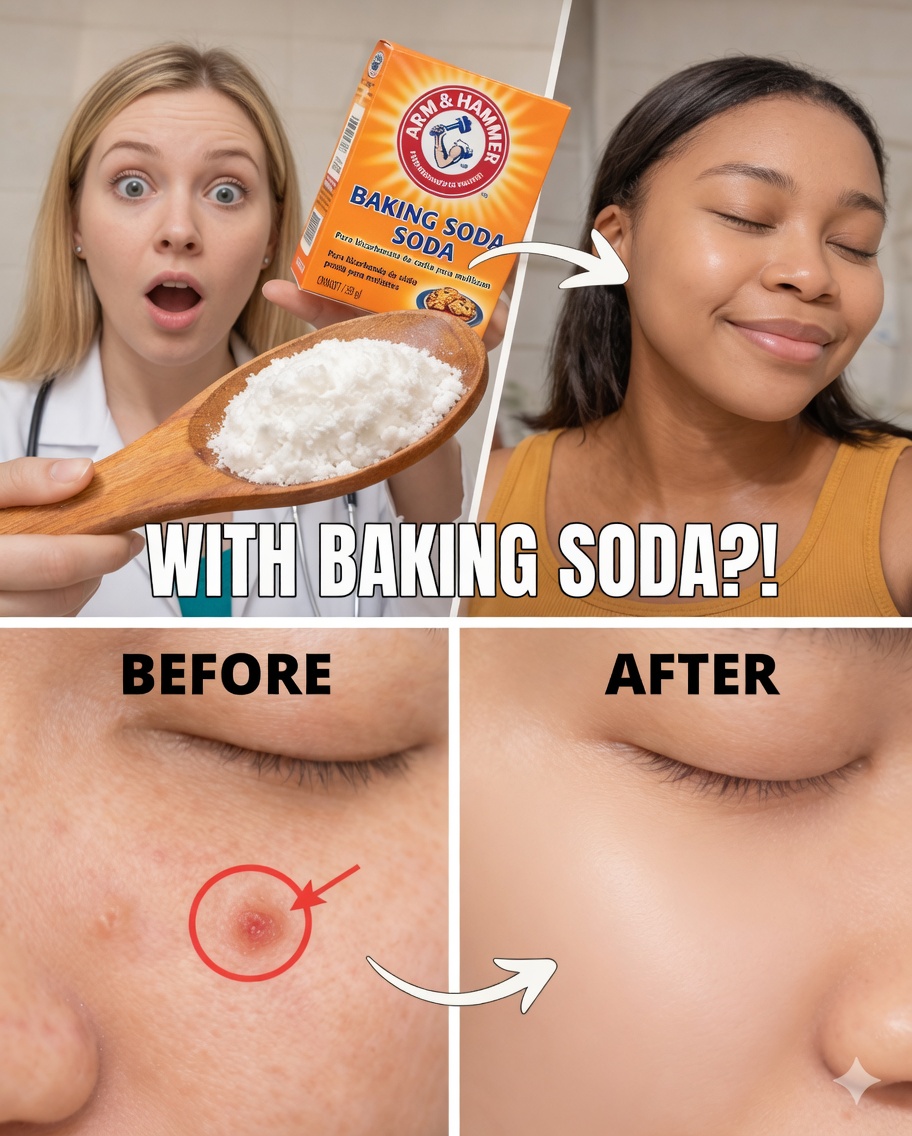
Many people use baking soda to “treat” dark spots and wrinkles—but experts warn it can harm your skin. Here’s a safer, more natural alternative.
As the years go by, fine lines around the eyes and darker patches on the cheeks often start to show up. It’s common to feel bothered when looking in the mirror and to search for quick fixes that promise a smoother, more even-looking complexion. Maybe you’ve already tried pricey creams that claimed dramatic results—only to end up disappointed. That’s when a tempting question appears: could something cheap and simple from your kitchen actually help?
In recent years, DIY skincare recipes featuring baking soda have gone viral online, marketed as a “natural” way to soften wrinkles and fade hyperpigmentation. What many posts leave out is that this shortcut can create more skin problems than it solves. Read on to understand the risks and explore safer, more effective alternatives for brighter, healthier-looking skin.
Why Baking Soda Became So Popular for Skincare
Baking soda (sodium bicarbonate) is a staple in most kitchens. Many homemade skincare guides suggest mixing it with water, honey, or plant oils to create a quick facial paste or “cream.”
The appeal is obvious:
- Low cost and easy access
- A “clean” or “natural” reputation
- A noticeable smooth feeling after exfoliation
Because it can remove surface dead skin cells, some people report that their skin looks softer or more radiant right after use. However, that temporary glow may mask irritation and barrier damage—especially with repeated application.
Why Dermatology Experts Don’t Recommend Baking Soda on the Face
Your skin is protected by a thin defensive layer known as the acid mantle, with a naturally slightly acidic pH (roughly 4.5 to 5.5). This protective barrier helps:
- defend against harmful bacteria and pollution
- reduce moisture loss
- keep the skin balanced and resilient
Here’s the issue: baking soda is highly alkaline, with a pH close to 9. When applied to facial skin repeatedly, it can disrupt your skin’s pH balance and strip away the natural oils that support a healthy barrier.
Over time, this may lead to:
- dryness and flaking
- redness and irritation
- increased sensitivity
- a weakened skin barrier
Instead of slowing visible aging, ongoing irritation and barrier breakdown may make fine lines and texture look worse.
Viral Claims vs. What Actually Happens
DIY recipes often promise dramatic improvements. Here’s how common claims compare to reality:
-
Claim: “Gentle exfoliation for smooth skin.”
Reality: It exfoliates mechanically, but can be too abrasive—causing micro-damage and irritation. -
Claim: “Fades dark spots and hyperpigmentation.”
Reality: It may create a short-term brightening effect on the surface, but it doesn’t effectively target deeper pigmentation where dark spots develop. -
Claim: “Reduces wrinkles.”
Reality: There’s no solid evidence that baking soda provides real anti-aging benefits. -
Claim: “Balances skin pH.”
Reality: It usually does the opposite by pushing facial skin pH too high, weakening the skin’s natural defenses.
Safer, More Effective Alternatives for Dark Spots and Wrinkles
Rather than risky home experiments, skincare professionals typically recommend gentle, consistent routines supported by research—especially for concerns like uneven tone, dark spots, and fine lines.
Daily essentials that make the biggest difference
- Broad-spectrum sunscreen (SPF 30+ daily)
- A mild, pH-balanced cleanser
- A good moisturizer with hyaluronic acid and/or ceramides
Evidence-based ingredients worth using
- Vitamin C: boosts radiance and supports collagen for firmer-looking skin
- Niacinamide: helps even tone, refine texture, and strengthen the skin barrier
- Retinol or bakuchiol: promotes skin renewal and helps soften the look of fine lines
- Gentle exfoliating acids (AHA/BHA): smooth texture and support clearer, brighter skin without harsh scrubbing
A Simple Routine to Improve Skin Texture and Glow
Morning routine
- Cleanse with a gentle facial cleanser
- Apply a serum with vitamin C or niacinamide
- Moisturize well
- Finish with broad-spectrum sunscreen
Night routine
- Cleanse again to remove sunscreen and impurities
- Use retinol or bakuchiol a few nights per week (start slowly)
- Moisturize to support barrier repair overnight
With consistent use, many people notice improvements in smoothness and brightness within a few weeks—while longer-term changes (like dark spots) often take more time.
Final Thoughts
A baking soda face “cream” may sound appealing because it’s cheap and convenient. But the risk of dryness, irritation, and long-term barrier damage is why experts generally advise not using baking soda on the face.
For safer, longer-lasting results, focus on gentle skincare, well-studied ingredients, and a consistent routine. Your skin will look better—and stay healthier—when it’s supported instead of stressed.