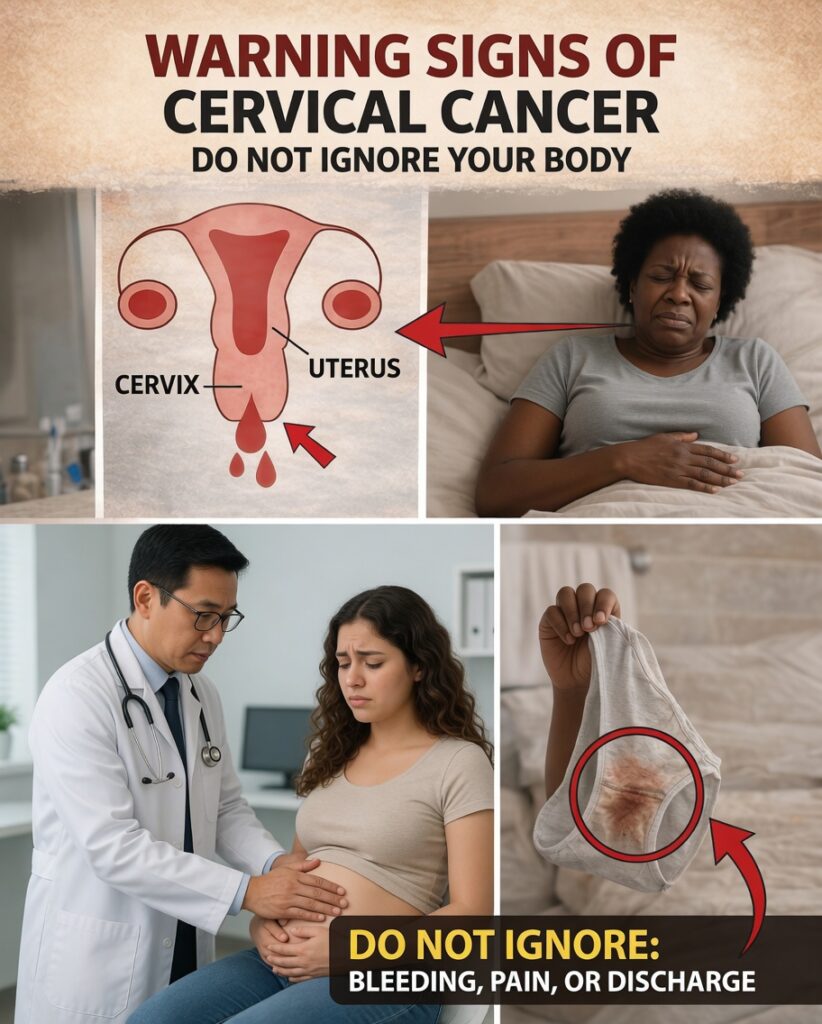
Smart Women Don’t Dismiss These Warning Signs — Learn How to Protect Your Well-Being Naturally and Proactively
It’s surprising how many everyday discomforts women brush off without a second thought. Small changes can feel “normal,” especially when life is full of work, family, and constant responsibilities. But what if those subtle shifts are actually meaningful messages from your body?
Knowing how to recognize early signals can make a real difference—and there’s one sign in particular that many women overlook. Read to the end to find out what it is.
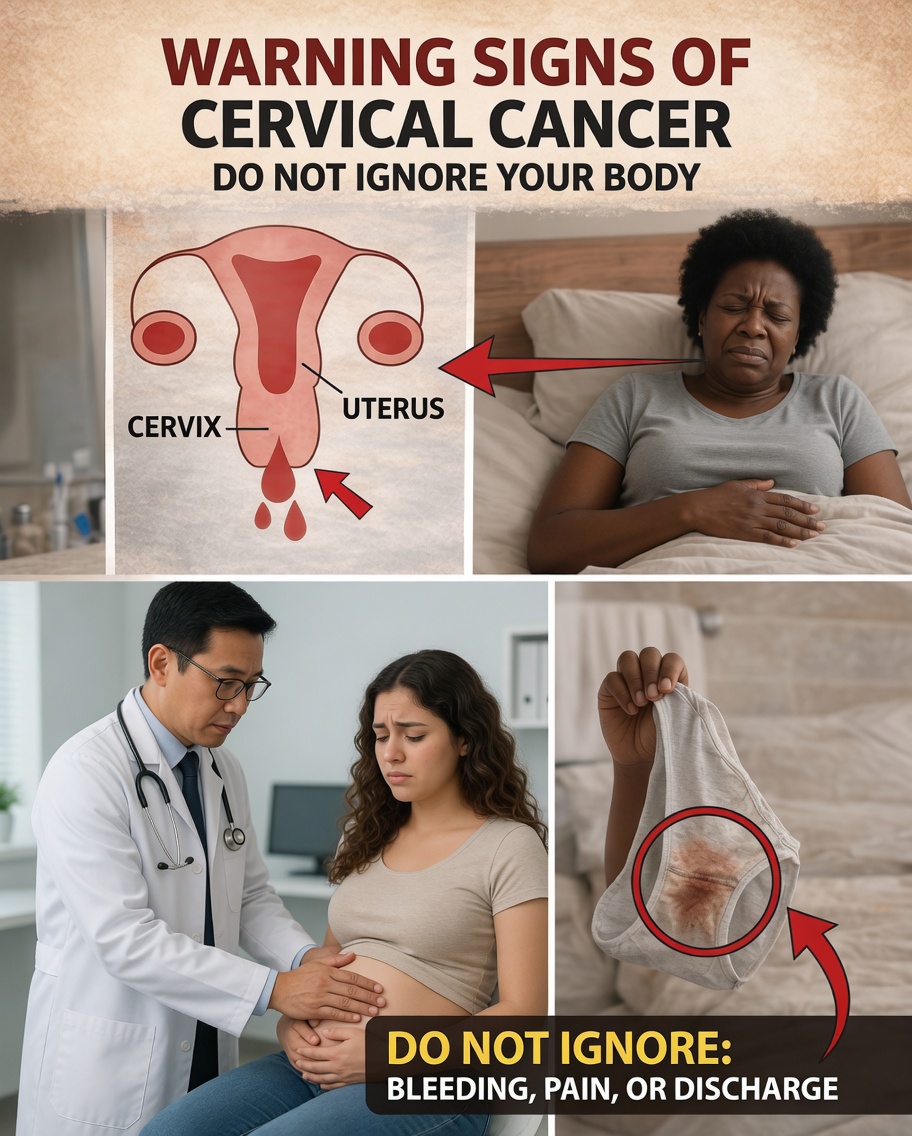
Why Early Attention Matters
Cervical cancer often develops quietly in its earliest stages. That’s why many women don’t notice anything unusual at first. When symptoms become obvious, the condition may already be more advanced.
The encouraging news: paying attention early helps you act sooner, feel more in control, and protect your health with greater confidence.
9 Early Signs Many Women Commonly Ignore
1) Bleeding after sex
Light bleeding after intercourse may seem minor, but if it happens more than once or becomes a pattern, it deserves attention. Track how often it occurs and discuss it with your healthcare provider.
2) Spotting between periods
Occasional spotting is often blamed on stress or hormonal shifts. Still, repeated bleeding outside your cycle should be evaluated rather than assumed to be “normal.”
3) Bleeding after menopause
Once you’ve gone 12 months without a period, any vaginal bleeding—no matter how light—is not considered normal. This is a sign that warrants prompt medical assessment.
4) Heavier or longer periods than usual
A sudden change in your flow—stronger bleeding, longer duration, or larger clots—can indicate that something has shifted in your body and should be checked.
5) Unusual vaginal discharge
Discharge that has a strong odor, looks watery, or appears a different color than your usual baseline shouldn’t be brushed aside—especially if it persists.
6) Pain during sex
Sex should not be painful. New discomfort, sharp pain, or an unfamiliar sensation during intercourse is a reason to investigate further.
7) Ongoing pelvic pain or pressure
A mild but persistent ache or pressure in the lower abdomen can be confused with cramps or digestive issues. If it lasts for weeks, don’t ignore it.
8) Lower back or leg pain (sometimes with swelling)
Unexplained pain in the lower back or legs—particularly if swelling is also present—may be connected and should not be dismissed.
9) Unexplained fatigue or bloating
Constant tiredness or bloating that doesn’t improve with rest or dietary changes is often overlooked because it feels common. If it’s persistent, it’s worth attention.
A Key Reminder
These symptoms do not automatically mean cancer. Many common conditions can cause similar signs. However, choosing to ignore persistent changes is rarely the best option.
5 Simple Actions You Can Start Today
- Write down your symptoms: dates, how long they last, and how intense they feel
- Stay current with routine screenings: Pap test and HPV testing as recommended
- Practice safer sex
- Avoid smoking
- Listen to your body: ongoing changes deserve a professional check-in
What This Means for You
Paying attention to your body isn’t about fear—it’s about empowerment. The earlier you notice changes, the more likely you are to find straightforward, effective solutions.
Frequently Asked Questions
What else can cause these symptoms?
Common causes include infections, fibroids, and hormonal changes.
How often should I get screened?
Many guidelines recommend starting around age 21, following medical advice—often every 3 to 5 years, depending on your results and testing type.
How can I lower my risk?
Regular screening, not smoking, practicing safer sex, and HPV vaccination are key prevention steps.
This article is for informational purposes only and does not replace medical advice. If you notice symptoms or have concerns, consult a qualified healthcare professional. Early detection can make a meaningful difference.