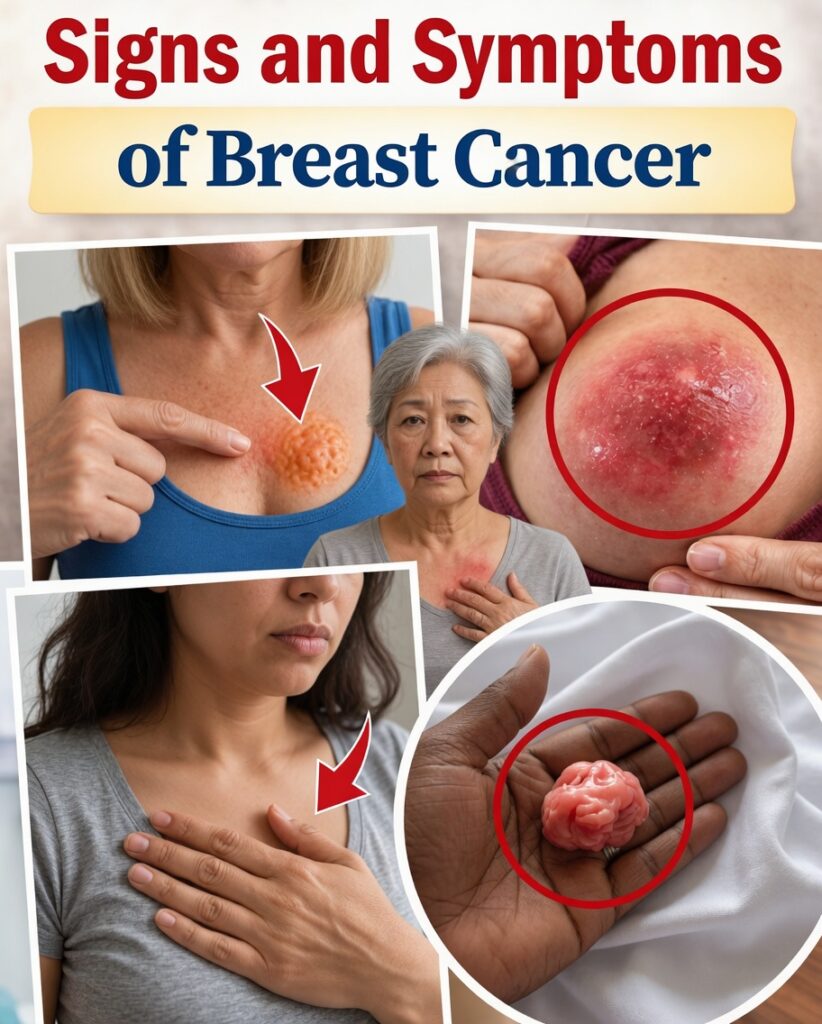
Spot the Silent Signs of Breast Cancer — Early Detection Can Save Your Life
Many women go through their daily routines without noticing that subtle breast changes can sometimes point to something serious. Breast changes are common and often harmless—but certain symptoms deserve prompt attention because catching breast cancer early can significantly improve outcomes. Knowing what to look for matters more than most people realize.
This guide highlights key breast cancer warning signs in a clear, practical way. More than a checklist, it’s an invitation to build a simple habit: paying attention to your body consistently—something that can support your long-term health.
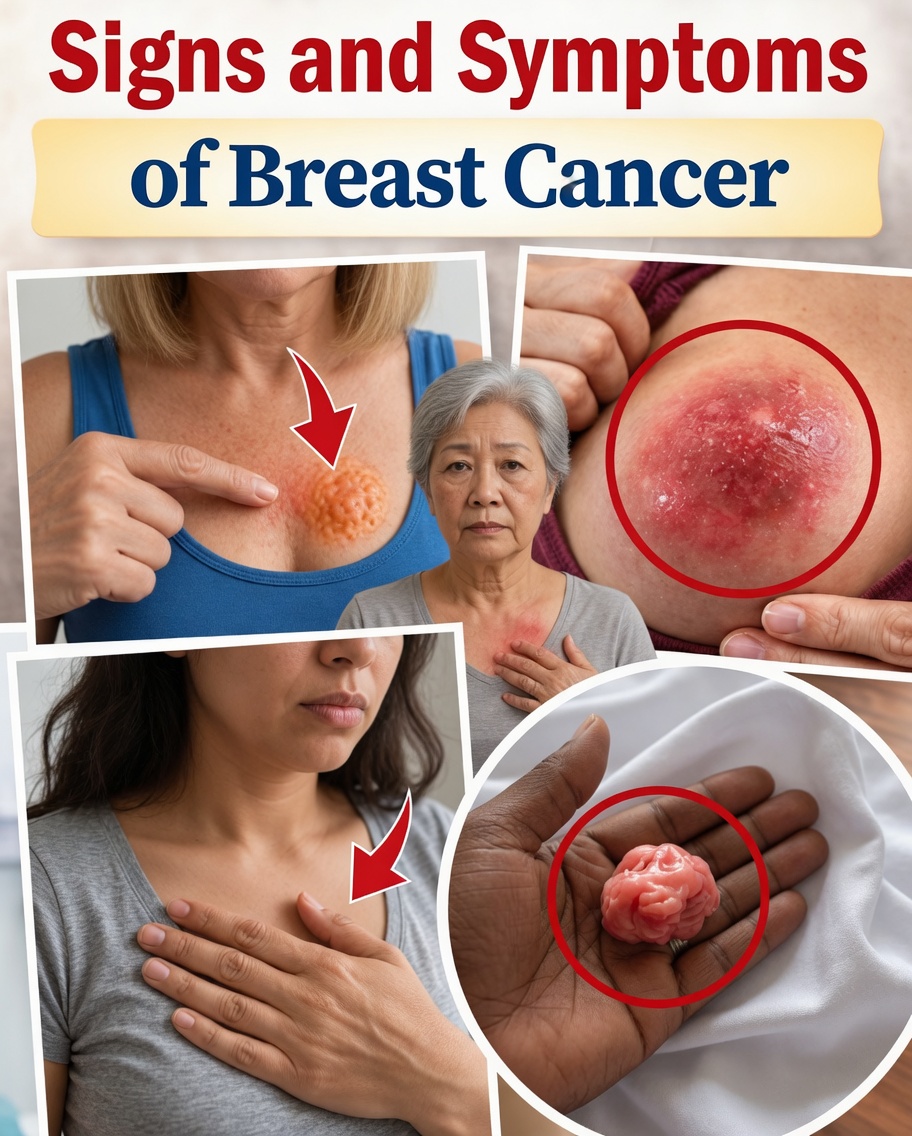
Why Paying Attention to Your Breasts Matters Every Day
Breast cancer affects millions of women worldwide. In many cases, the first clue comes from the person noticing a change themselves. However, most people only recognize the most well-known sign: a lump. That’s concerning, because breast cancer symptoms aren’t always obvious—and a lump isn’t always present.
Breasts naturally change with age, hormones, menstrual cycles, pregnancy, and other life stages. Still, some changes stand out and should be monitored carefully.
10 Breast Cancer Warning Signs You Shouldn’t Ignore
1. A new lump in the breast or armpit
A new mass that feels hard, fixed, or doesn’t go away—whether or not it hurts—should be evaluated. It may feel as small as a pea or like a thicker, firmer area.
2. Swelling or a change in size/shape
One breast may look larger, swollen, or shaped differently for no clear reason. This can happen even when you can’t feel a lump.
3. Skin that looks like “orange peel”
Dimpling, puckering, or a bumpy, uneven texture (often easier to see when your arms are raised) can be an important sign.
4. Redness or flaking skin
Persistent redness, irritation, or peeling skin on the breast or nipple—especially if it doesn’t improve—should not be dismissed.
5. Nipple changes
A nipple that becomes newly inverted, flattened, or shifts direction is worth checking, particularly if the change is recent.
6. Nipple discharge (when not breastfeeding)
Any unusual fluid—clear, bloody, or otherwise unexpected—coming from the nipple without breastfeeding is a warning sign that needs medical attention.
7. Persistent breast pain
Pain that continues beyond your menstrual cycle, feels unusual for you, or doesn’t improve over time should be investigated.
8. Thickening or firmness of the skin
Areas that feel thicker, tougher, or unusually firm to the touch may reflect internal changes that deserve assessment.
9. Changes in color or visible veins
New darkening, redness, or more noticeable veins in one breast can signal a concerning change, especially if it appears suddenly.
10. Swollen lymph nodes
Swelling in the armpit or near the collarbone may be a sign of lymph node involvement—even if you haven’t noticed changes in the breast itself.
What’s Normal vs. What Needs Attention?
Often common (and usually not serious):
- Hormonal tenderness or swelling
- Small lumps that come and go with your cycle
- Mild irritation that improves quickly
Needs medical evaluation:
- A lump that persists or grows
- Changes affecting only one breast
- Unusual nipple discharge
- Symptoms that don’t go away or keep worsening
How to Do a Simple Breast Self-Check
A self-check takes less than five minutes and can become a natural monthly habit:
- Pick the same day each month (choose a consistent date; if you menstruate, a few days after your period may be more comfortable).
- Look in the mirror with arms down, then arms raised—check for shape, skin, or nipple changes.
- Feel the breast tissue while lying down, covering the entire breast area.
- Check the armpits and nipples for lumps, tenderness, or discharge.
- Compare both sides, noting differences that are new for you.
What to Do If You Notice Something Different
Don’t wait. Schedule an appointment with a healthcare professional. Most breast changes are not cancer, but only proper medical evaluation and tests can confirm what’s happening. If possible, write down what you noticed and when it started—details can be helpful during assessment.
Common Questions
Can you have breast cancer without symptoms?
Yes. That’s why regular screenings and routine checkups are important, even when you feel fine.
Can men get breast cancer?
Yes, although it’s uncommon. Men should also seek medical advice if they notice breast or nipple changes.
How often should I do a breast self-check?
Once a month is enough for most people.
Final Thoughts
Recognizing breast cancer signs early depends on awareness and timely action. Learning what’s normal for your body—and responding to changes—can be one of the most powerful steps you take to protect your health.
Start today: set a reminder for your next self-check or book a medical appointment if something concerns you. Small habits can bring long-term peace of mind.
Disclaimer: This content is for informational purposes only and does not replace professional medical advice. If you have symptoms or concerns, consult a qualified healthcare professional.