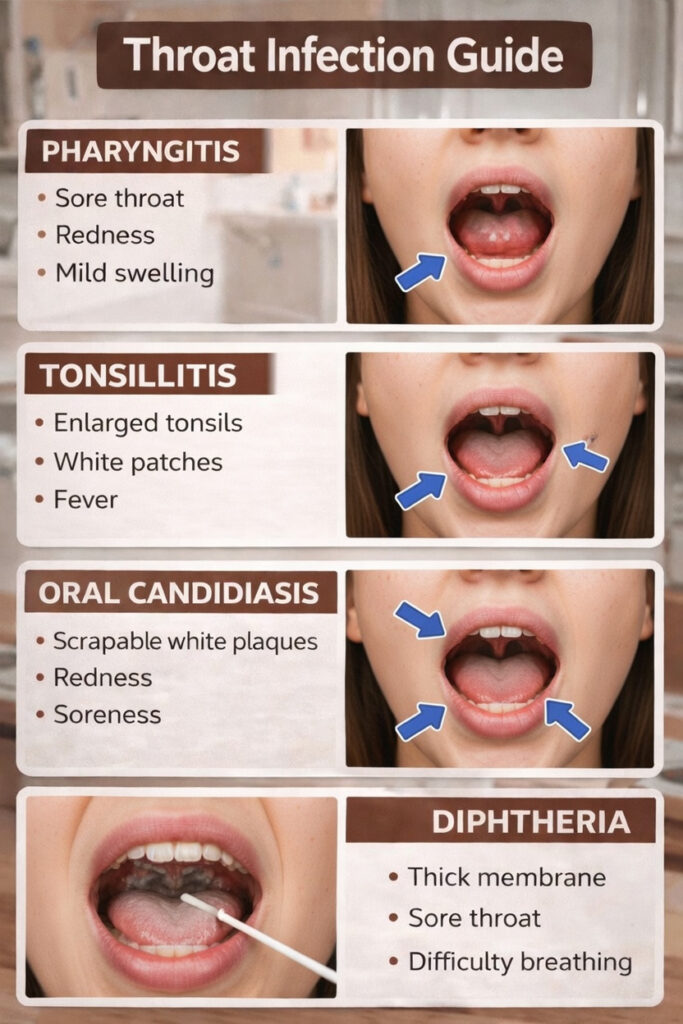
Sore Throat Symptoms: How to Recognize Common Throat Infections
A sore, scratchy throat can make even simple daily tasks feel exhausting. Swallowing may become painful, speaking can wear you out, and the irritation may linger long enough to affect sleep and rest. Although many people assume it is just part of a cold, the exact symptoms can reveal whether something more specific is going on. Understanding the differences between common throat conditions can help you respond earlier and more appropriately.
Common Throat Infections at a Glance
Throat infections are extremely common and affect people of all ages each year. Many cases are mild and improve without major treatment, but some conditions deserve closer medical attention. The best way to tell them apart is by noticing how the throat looks, what symptoms appear, and how severe they become.
Below is a closer look at several common throat conditions and the signs that distinguish them.
Pharyngitis: The Typical Sore Throat
Pharyngitis is inflammation of the pharynx, the area at the back of the throat. It often causes a dry, raw, or burning sensation, especially when swallowing.
Common symptoms include:
- Redness in the throat
- Pain that becomes worse when talking or eating
- Mild swelling without noticeable white patches
In most cases, pharyngitis is caused by viruses, although bacteria may sometimes be involved. Viral pharyngitis often improves within a few days with rest, fluids, and basic supportive care.
If your throat appears red and irritated but does not have pus or obvious coating, pharyngitis may be the cause.
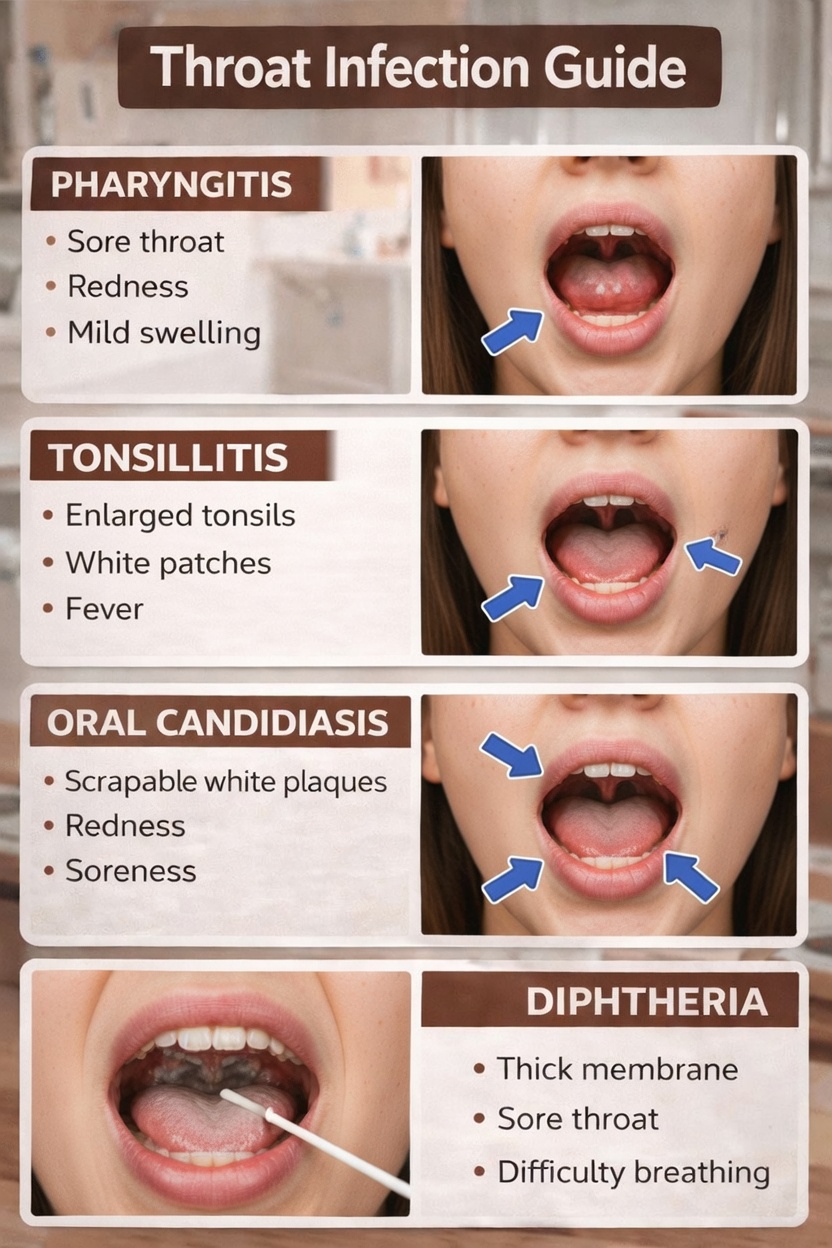
Tonsillitis: When the Tonsils Become Inflamed
Tonsillitis affects the tonsils, the soft tissue structures at the back of the throat. When inflamed, they often look enlarged and swollen, and the discomfort can be more intense than with a simple sore throat.
Typical signs include:
- Swollen, enlarged tonsils
- White or yellow patches on the tonsils
- Fever, fatigue, or a general sick feeling
Both viral and bacterial infections can trigger tonsillitis. Bacterial tonsillitis is more likely to produce visible exudate, which appears as white or yellow material on the tonsils. In many cases, drinking enough fluids and getting proper rest can support recovery.
Oral Candidiasis (Thrush): A Fungal Infection
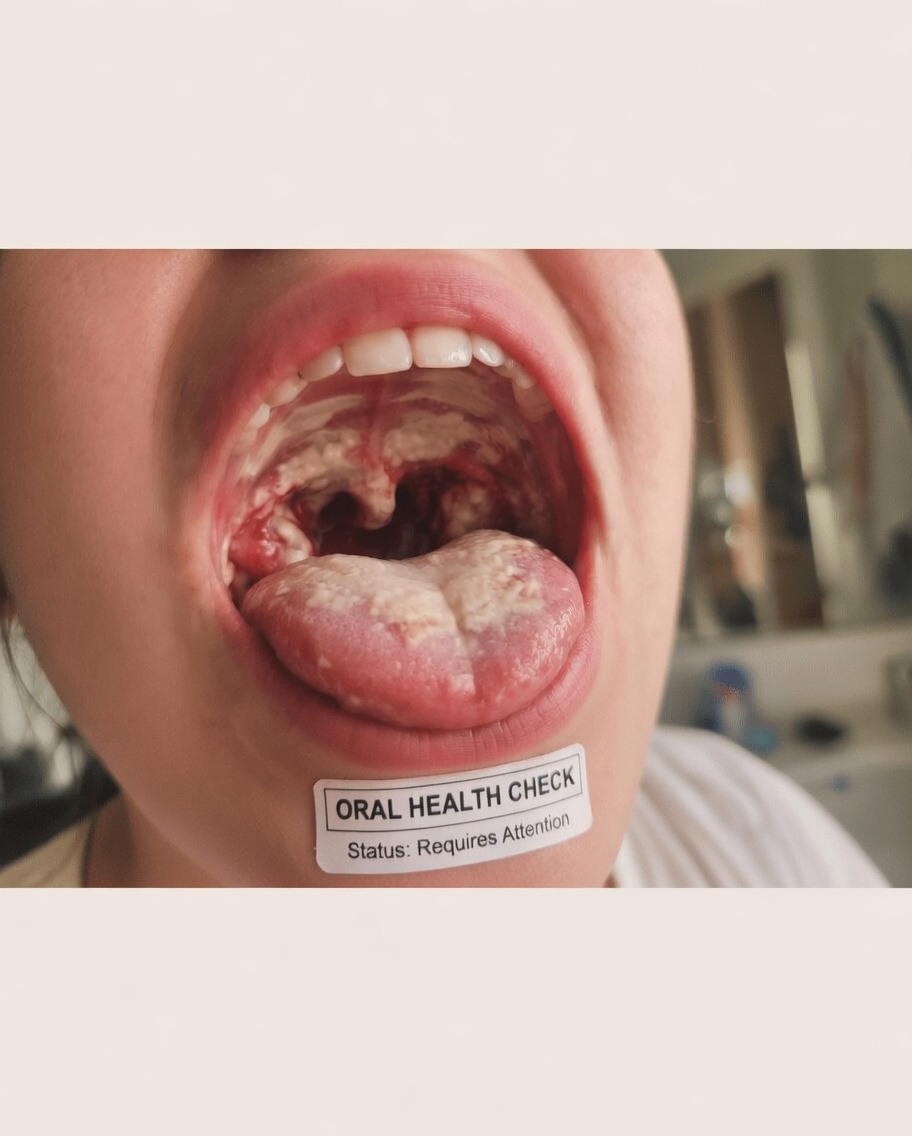
Oral candidiasis, also called thrush, is caused by an overgrowth of Candida fungus. Its appearance is usually different from viral or bacterial throat infections.
You may notice:
- Thick white plaques or creamy patches
- Red, tender tissue underneath the white coating
- Irritation that may also affect the tongue and inside of the cheeks
Thrush is more common in infants, older adults, people with diabetes, and those taking certain medicines such as antibiotics or inhaled steroids. One helpful clue is that the white plaques can usually be wiped away, revealing a red and irritated surface underneath.
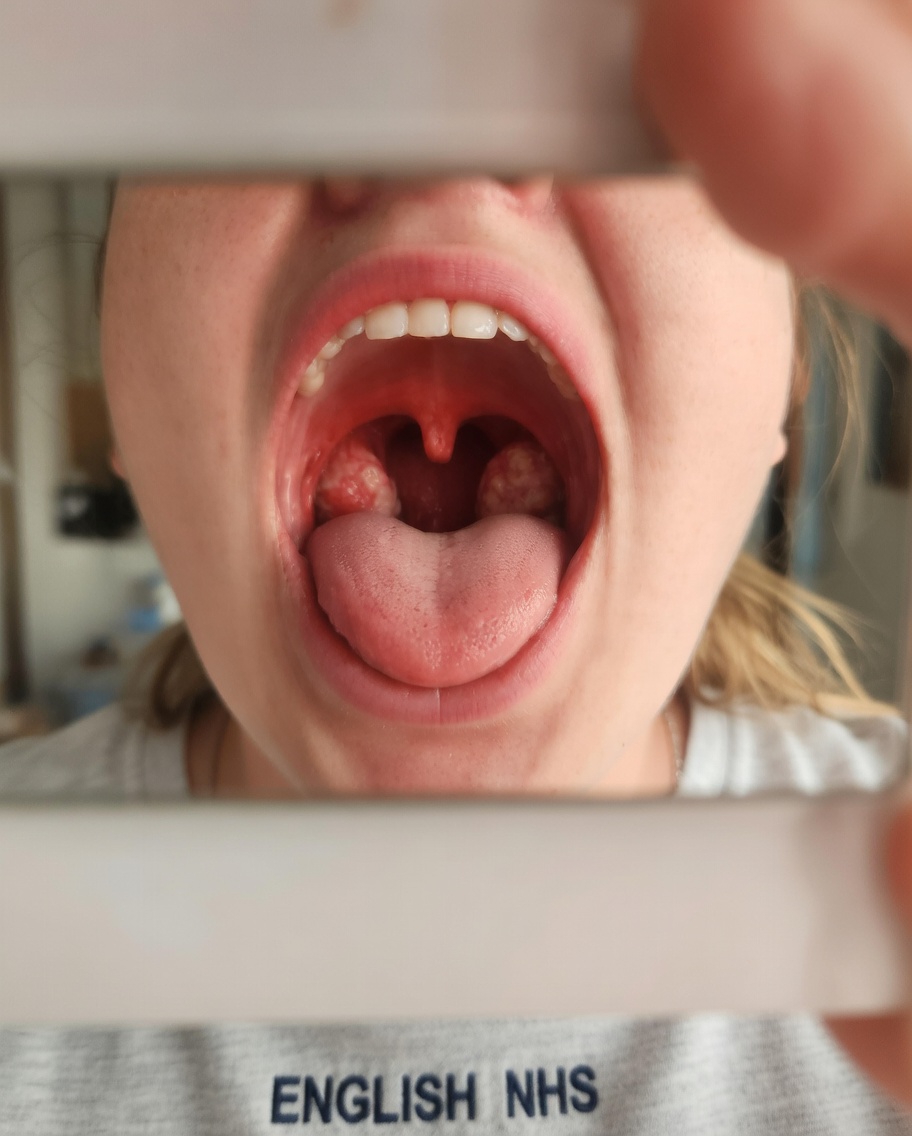
Diphtheria: Uncommon but Potentially Dangerous
Diphtheria is a bacterial infection caused by Corynebacterium diphtheriae. While it is now rare in many regions due to vaccination, it remains important to recognize because it can become serious quickly.
Key features include:
- A thick grayish-white membrane firmly attached to throat tissue
- Sore throat and swelling
- Breathing difficulty if the membrane becomes extensive
Unlike thrush, this membrane does not wipe away easily. Trying to remove it may cause bleeding. Because of this and the potential for airway problems, diphtheria requires urgent medical assessment. Awareness is especially important in areas with lower vaccination coverage or during international travel.
How to Differentiate These Throat Conditions
Looking at the throat can offer useful clues, although it cannot replace a professional diagnosis. Here is a simple comparison:
- Pharyngitis: Redness and mild swelling, usually without thick white patches
- Tonsillitis: Enlarged tonsils with white or yellow spots, often with fever
- Oral candidiasis: White creamy plaques that can be wiped off, leaving a red base
- Diphtheria: Thick attached membrane that may interfere with breathing
These signs can help you better understand what you may be seeing, but only a healthcare professional can confirm the cause.
When to See a Doctor for a Sore Throat
A mild sore throat does not always require immediate medical care, but some warning signs should not be ignored. You should seek medical advice if you have:
- Trouble breathing or swallowing
- A high fever or fever that does not go away
- Severe throat pain that does not improve
- A thick membrane-like layer in the throat
- Symptoms lasting longer than one week
Recognizing these signs early can help prevent complications and reduce unnecessary stress.
Home Remedies to Relieve Throat Discomfort
While monitoring your symptoms, several simple remedies may make you feel more comfortable:
- Drink plenty of fluids, especially warm or room-temperature beverages
- Use a humidifier to keep the air moist, particularly at night
- Gargle with warm salt water several times a day using about half a teaspoon of salt in a glass of warm water
- Rest your voice and stay away from irritants such as smoke or strong odors
- Use throat lozenges or suck on ice chips if they help soothe the throat
These supportive measures are commonly recommended and may help ease irritation while your body recovers.
Daily Habits That Help Protect Throat Health
Healthy routines can also support your throat over time and may lower the chances of repeated irritation or infection. Helpful habits include:
- Washing your hands often to reduce exposure to viruses
- Keeping up with good oral hygiene, including gentle brushing and tongue cleaning
- Avoiding shared drinks, utensils, or close contact during cold and flu season
- Staying current with recommended vaccinations
- Eating a nutritious diet with plenty of fruits and vegetables to support immune health
Research continues to show that hygiene and healthy daily choices can play an important role in reducing respiratory and throat-related discomfort.
Frequently Asked Questions
Can throat infections spread from one person to another?
Yes. Many throat infections can spread through respiratory droplets, close contact, coughing, sneezing, or shared objects. Regular handwashing and covering your mouth when coughing or sneezing can help limit transmission.
How long does a sore throat usually last?
Many mild sore throats improve within 3 to 7 days. If symptoms continue beyond that, or if they become more severe, it is a good idea to contact a healthcare provider.
Are home remedies enough for every throat problem?
Not always. Home care can improve comfort in many mild cases, but serious symptoms such as severe swelling, breathing difficulty, or a persistent membrane require professional medical evaluation.
Final Thoughts
Knowing the difference between pharyngitis, tonsillitis, oral candidiasis, and diphtheria can help you better understand what may be causing your throat symptoms. Paying attention to visual signs, symptom severity, and duration can guide you in deciding when home care is enough and when medical attention is needed.
This article is intended for educational purposes only and should not replace professional medical advice. If you are concerned about your symptoms or overall health, consult a qualified healthcare provider.