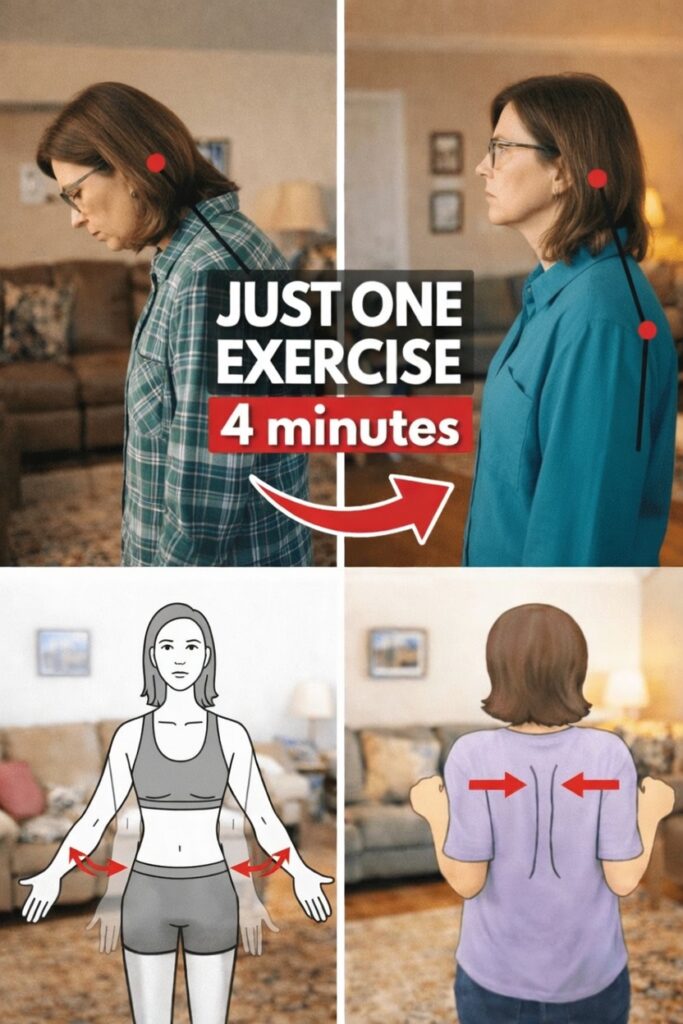
Understanding Forward Head Posture
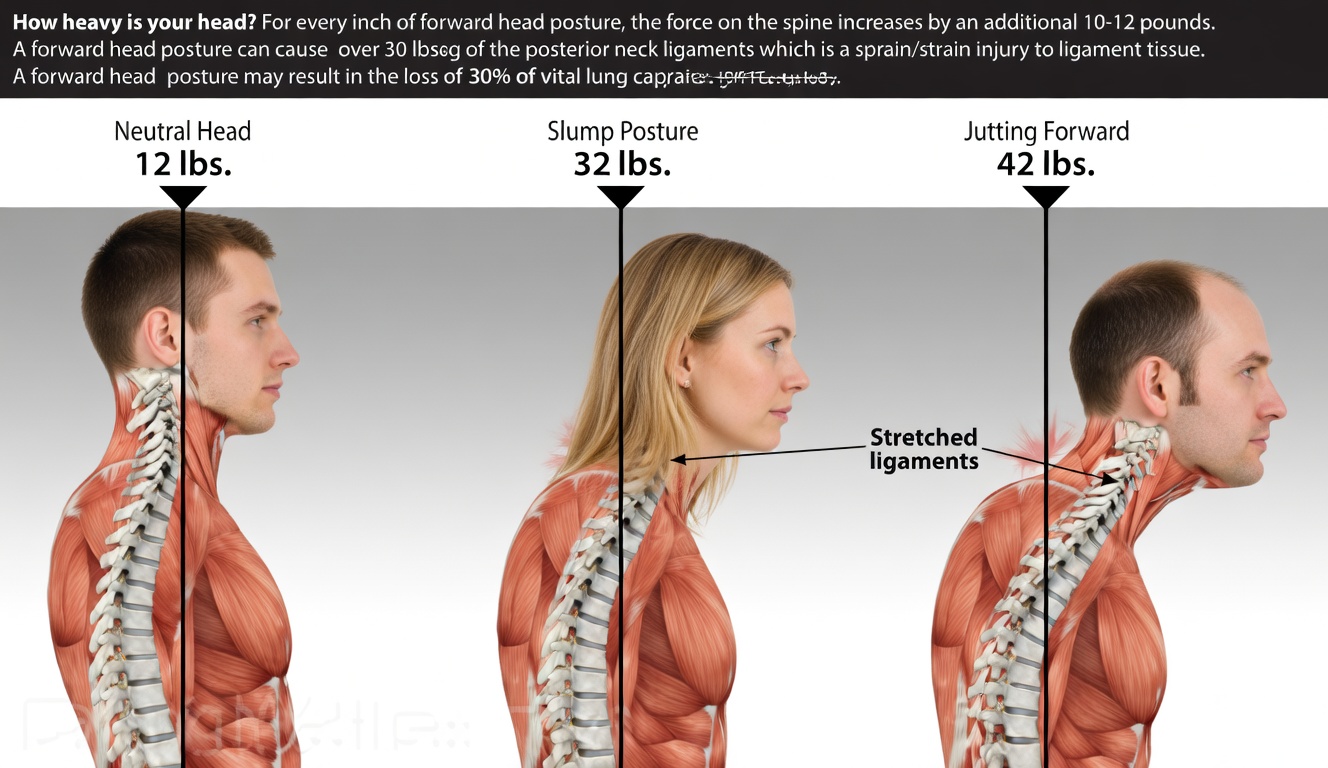
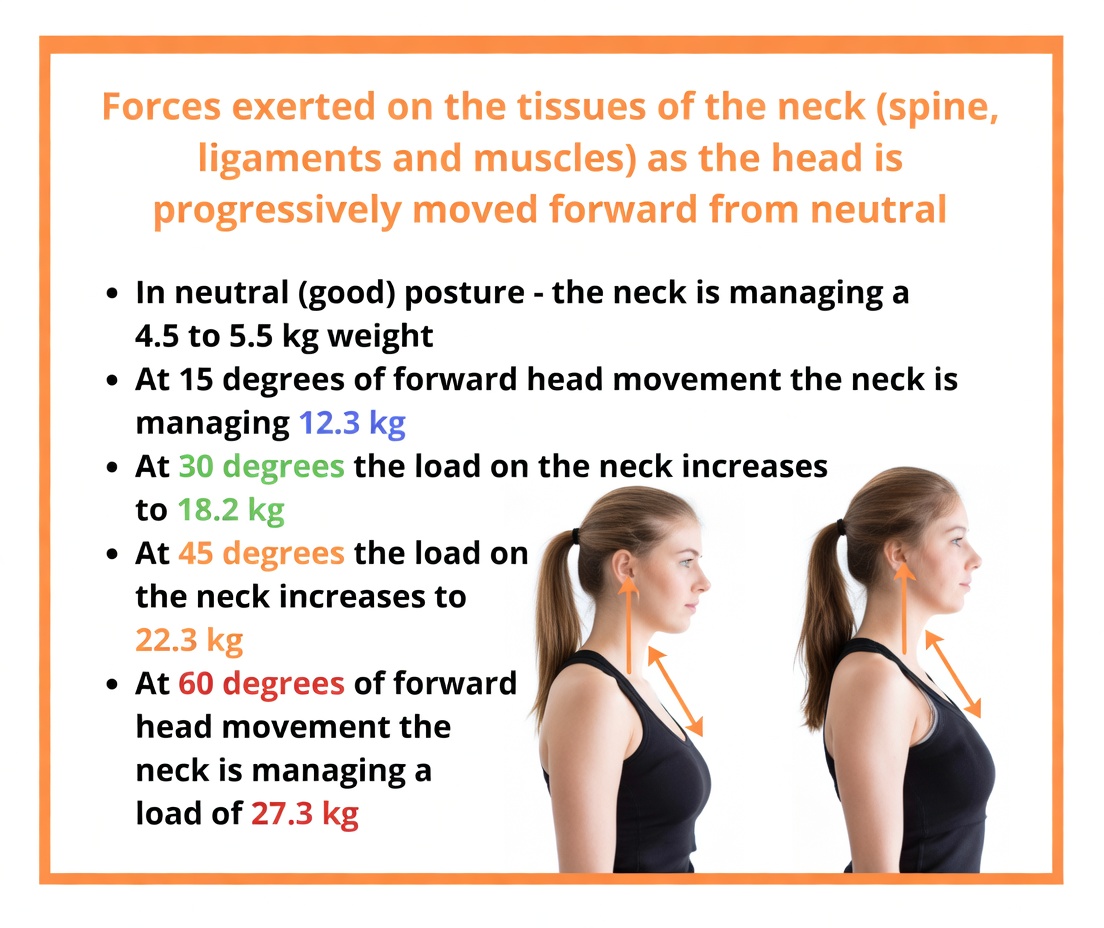
Forward head posture occurs when the head drifts in front of the shoulders instead of resting directly above them. This often develops gradually after years of looking down at phones, tablets, laptops, or books. Studies in musculoskeletal health show that this misalignment can multiply the load on the neck and upper spine several times beyond the head’s usual weight (around 10–12 pounds on average). Over time, this extra strain can tighten the front of the neck and chest while weakening the upper back muscles that are meant to support good posture.
For people in their 60s and older, this pattern may feel more obvious because normal aging affects muscle strength, joint mobility, and tissue elasticity. The encouraging part is that you don’t need intense workouts to support better posture—gentle, repeated movements can increase body awareness and help restore a more natural alignment without forcing the body.
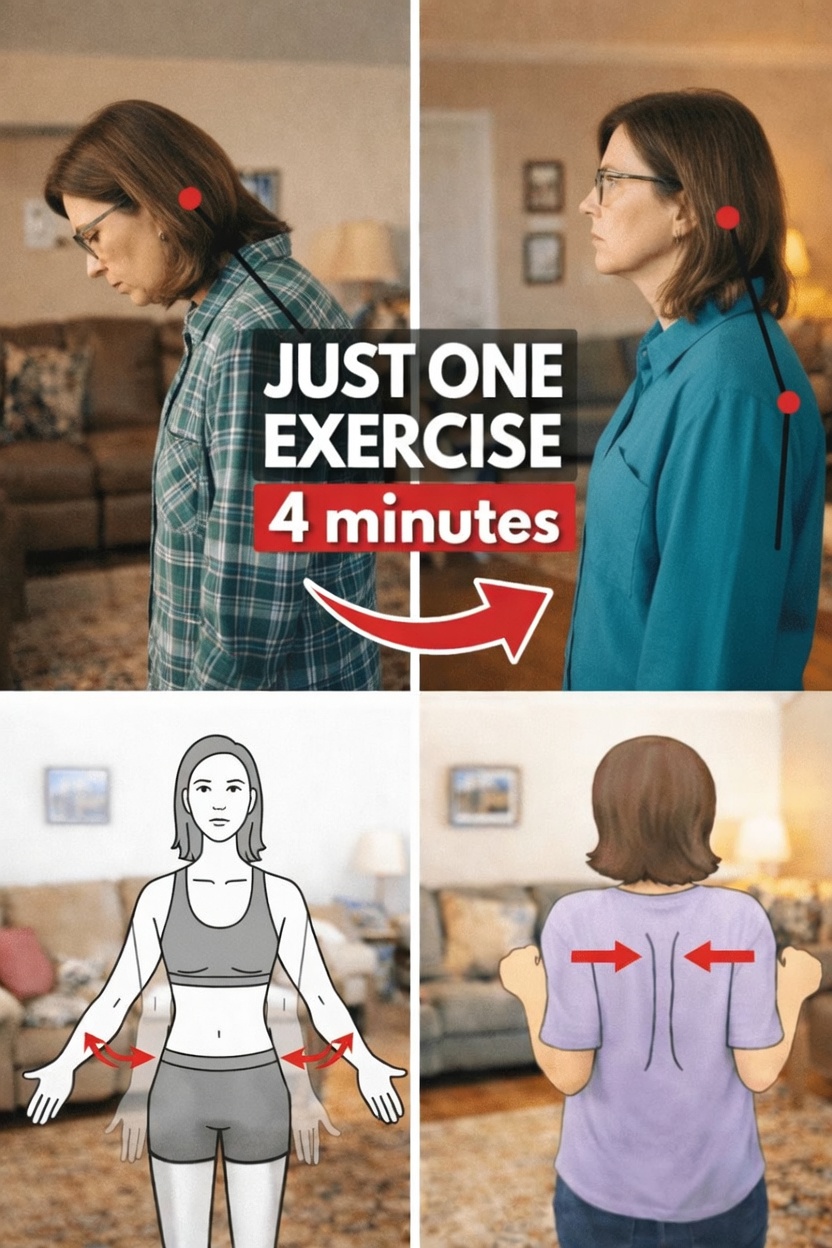
The Gentle 4-Minute Routine to Support Better Posture
This simple routine is inspired by practices often mentioned by Japanese longevity experts, who favor slow, mindful movement over intensity or strain. You do not need any equipment—just a stable standing or seated position.
Try this routine once or twice a day, ideally in the morning to “set” your posture and/or in the evening to release tension. Perform each step for roughly 1 minute, breathe comfortably, and stop if anything causes pain or sharp discomfort.
Step 1: Gentle Chin Tuck Awareness (1 Minute)
- Sit or stand upright with your shoulders relaxed and down.
- Look straight ahead and slowly draw your chin straight back toward your throat, as if creating a soft double chin. Avoid tipping your head up or down.
- Lightly hold this position for 3–5 seconds and notice a gentle lengthening at the back of your neck.
- Relax and repeat this movement 8–10 times at a slow, controlled pace.
This chin tuck activates the deep neck flexor muscles that help hold your head over your shoulders. Many people notice an immediate feeling of space and ease through the upper spine and base of the skull.
Step 2: Shoulder Blade Squeeze with Arm Circles (1 Minute)
- Maintain a tall posture and raise your arms out to the sides to shoulder level, or slightly lower if that feels more comfortable.
- Gently draw your shoulder blades toward each other, as though you are lightly pinching a pencil between them.
- While keeping this squeeze, make small backward circles with your arms, about the size of a dinner plate.
- Complete 10–15 slow circles, then reverse the direction and circle forward the same number of times.
This movement wakes up the upper back muscles, including the rhomboids and mid-trapezius, which help pull the shoulders back and support an upright posture. Research on posture training suggests that strengthening these areas can significantly improve overall alignment and reduce neck and shoulder strain.
Step 3: Wall or Doorway Alignment Check with Gentle Lean (1 Minute)
- Stand with your back against a wall, or imagine one behind you if space is limited.
- Position your heels, buttocks, upper back, and the back of your head as close to the wall as is comfortably possible. Keep a small, natural curve in your lower back rather than pressing it flat.
- Lightly press your shoulders and head back toward the wall while gently tucking your chin.
- Hold this alignment for 10–20 seconds, breathing deeply and evenly.
- Relax and repeat 4–5 times.
This wall alignment drill gives your body a clear “reference point” for neutral posture. It also provides a mild stretch through the chest and front shoulders, which often shorten from prolonged sitting and forward head posture.
Step 4: Full-Body Posture Reset with Arm Pull-Back (1 Minute)
- Stand tall with your feet hip-width apart.
- Clasp your hands behind your back. If your hands do not meet comfortably, hold a small towel or strap between them.
- Gently draw your arms back while opening your chest and squeezing your shoulder blades together.
- Slowly tilt your head slightly upward, looking toward the ceiling only as far as feels easy—avoid straining or compressing the neck.
- Hold this open position for 5–10 seconds, then release.
- Repeat 6–8 times.
This final step blends upper back activation with a gentle chest opener, encouraging a more balanced head position over the shoulders and a more spacious, upright stance.
Quick Comparison: Before and After Consistent Practice
Regular, gentle posture exercises like this 4-minute routine can create gradual changes that you may notice in how you stand, sit, and move.
| Aspect | Typical Forward Head Posture | After Consistent Gentle Practice |
|---|---|---|
| Head Position | Head juts forward in front of shoulders | Head rests more directly over the spine |
| Neck Sensation | Neck often feels tight, tired, or achy | Neck may feel lighter, more relaxed, and lengthened |
| Shoulder Position | Shoulders rounded and slumped forward | Shoulders gently drawn back and more level |
| Breathing Pattern | Shallower breathing from a compressed chest | Deeper, easier breathing with a more open chest |
| Daily Energy and Comfort | Can contribute to fatigue and stiffness | Can support greater comfort and easier movement |
Everyday Tips to Maintain Better Alignment
To support the benefits of this routine, add a few simple habits to your day:
- Set hourly reminders on your phone or computer to briefly check your posture.
- When sitting, place a small rolled towel or cushion behind your lower back to support its natural curve.
- Take short walking breaks and focus on “tall” posture: head over shoulders, shoulders over hips.
- Stay well hydrated—muscles and joints function better when you are not dehydrated.
- Pair posture work with calm breathing: inhale through your nose for a count of 4, exhale for a count of 6 to help relax the nervous system.
Consistency matters more than intensity. Many people notice subtle but meaningful improvements in how they stand and move within a few weeks of doing these gentle posture exercises regularly.
Conclusion: Small Daily Habits, Lasting Postural Comfort
Improving posture after 60 does not require dramatic workouts or rigid bracing. A simple, 4-minute routine—done with patience and awareness—can help your body remember a more natural, upright alignment. By practicing these movements and combining them with small daily habits, you may reduce everyday neck and shoulder discomfort, breathe more freely, and move with greater ease. Start gently, listen to your body, and observe how your posture and comfort evolve over time.
FAQ
How often should I do this posture routine?
Most people benefit from performing it once or twice a day—morning to set up the day and evening to release tension. Choose a schedule that feels realistic and sustainable for you.
Is this routine safe for beginners over 60?
Yes. The exercises are low-impact and designed to be gentle. Begin slowly and avoid pushing into pain. If you have osteoporosis, spinal issues, prior surgeries, or other medical concerns, check with your healthcare provider before starting any new exercise program.
Can this help with neck discomfort from sitting a lot?
It can. Many individuals report less neck and shoulder tension when they combine this routine with ergonomic changes, such as raising screen height, taking regular standing or walking breaks, and avoiding prolonged periods of looking down at phones or tablets.