A Smarter Way to Stay Hydrated All Day
A lot of people find it hard to drink enough water consistently. Busy routines, forgetting to take regular sips, or not feeling thirsty can all lead to mild dehydration. Even a small fluid deficit may leave you feeling tired, mentally dull, or physically off. Over time, not drinking enough can affect energy, concentration, and your general sense of wellness.
The encouraging part is that you do not need a major lifestyle change to improve hydration. A few simple habits centered on when you drink water can have a real impact on how you feel throughout the day.
What makes this even more interesting is that certain times of day may be especially helpful for water intake. Drinking at the right moments can work with your body’s natural rhythms and support comfort, alertness, and daily performance from morning until night.
Why Water Timing Can Make a Difference
Hydration is not only about hitting a daily total. It is also about giving your body fluids when they are most useful. Regular water intake helps preserve blood volume, move nutrients through the body, and regulate temperature. Although daily fluid needs differ from person to person, adults are commonly advised to get roughly 2 to 3 liters from beverages and food combined, according to sources such as the Mayo Clinic.
Research, including reviews from organizations like the National Institutes of Health, suggests that proper hydration may support mood, mental performance, and lower the likelihood of problems such as headaches and kidney stones. That is why timing your water intake can be a practical way to feel better without adding complexity to your day.
1. Drink Water Right After Waking Up
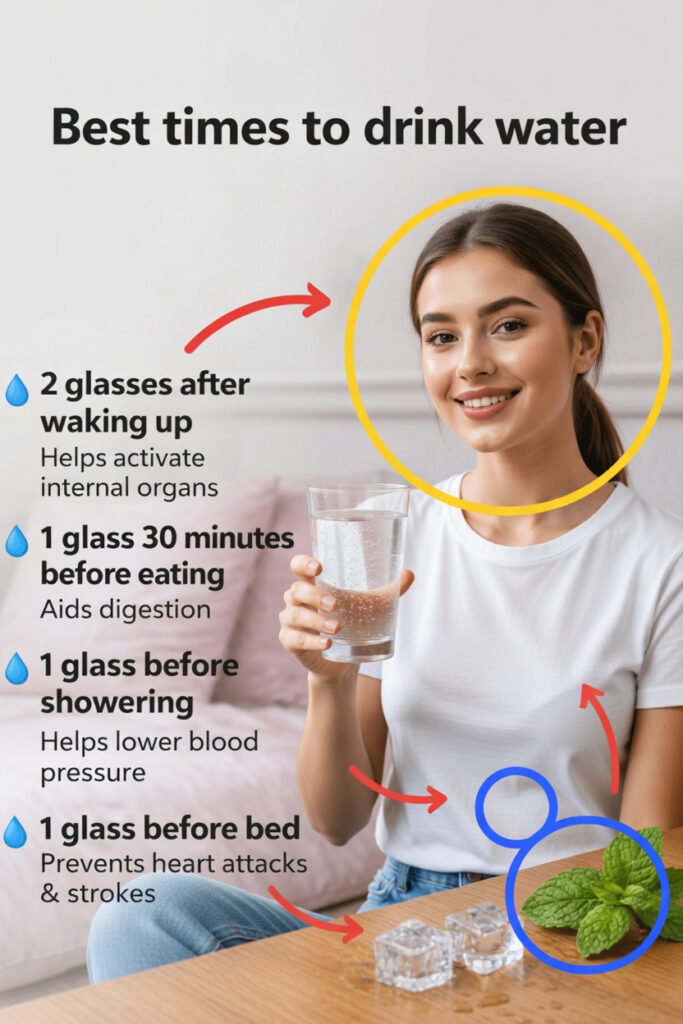
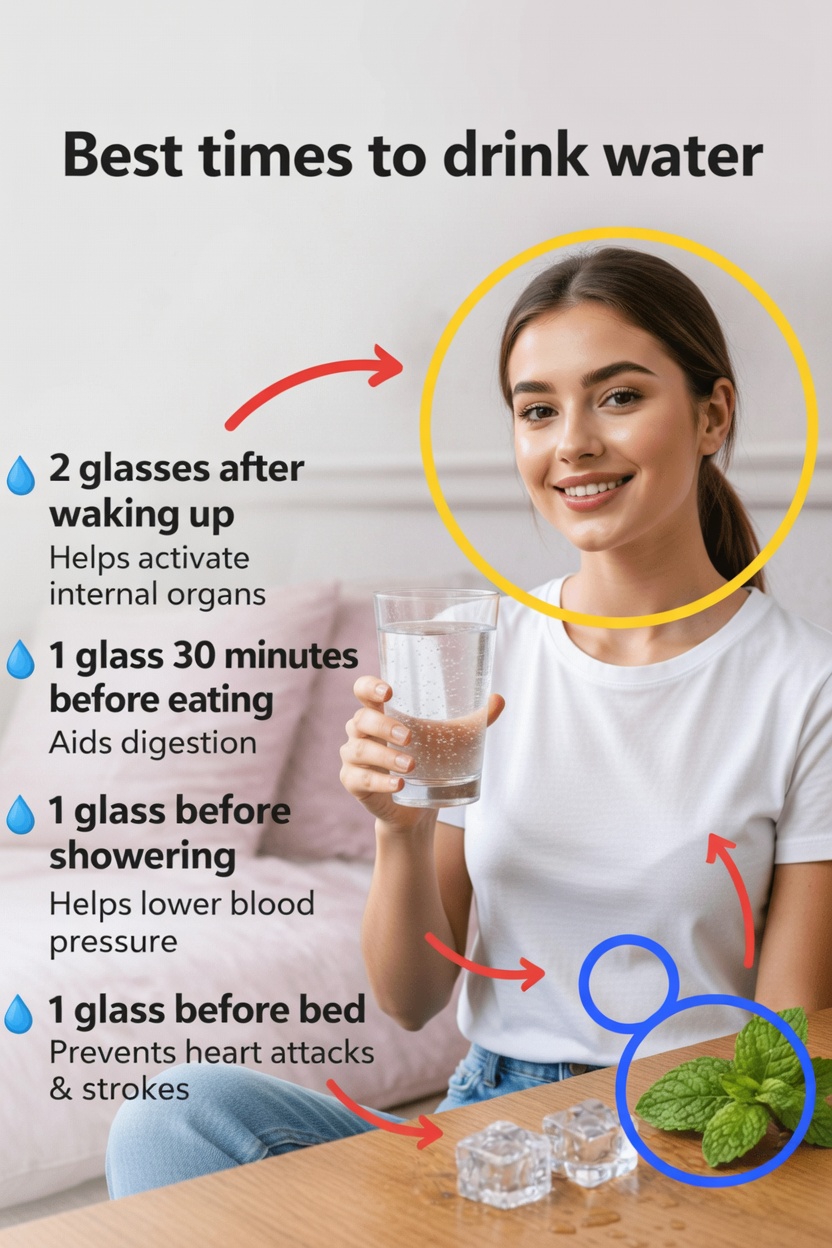
After 6 to 8 hours of sleep without fluids, your body usually starts the morning slightly dehydrated. Having 1 to 2 glasses of water, or about 400 to 500 ml, soon after waking can help restore fluid balance.
This morning habit may help you feel more alert and reduce that sluggish feeling many people experience early in the day. Some findings also suggest hydration can support mood and short-term cognitive tasks, including memory and focus.
Simple tip:
- Place a glass or bottle of water next to your bed
- Drink it before coffee, breakfast, or checking your phone
- Try room-temperature water if cold water feels too harsh first thing in the morning
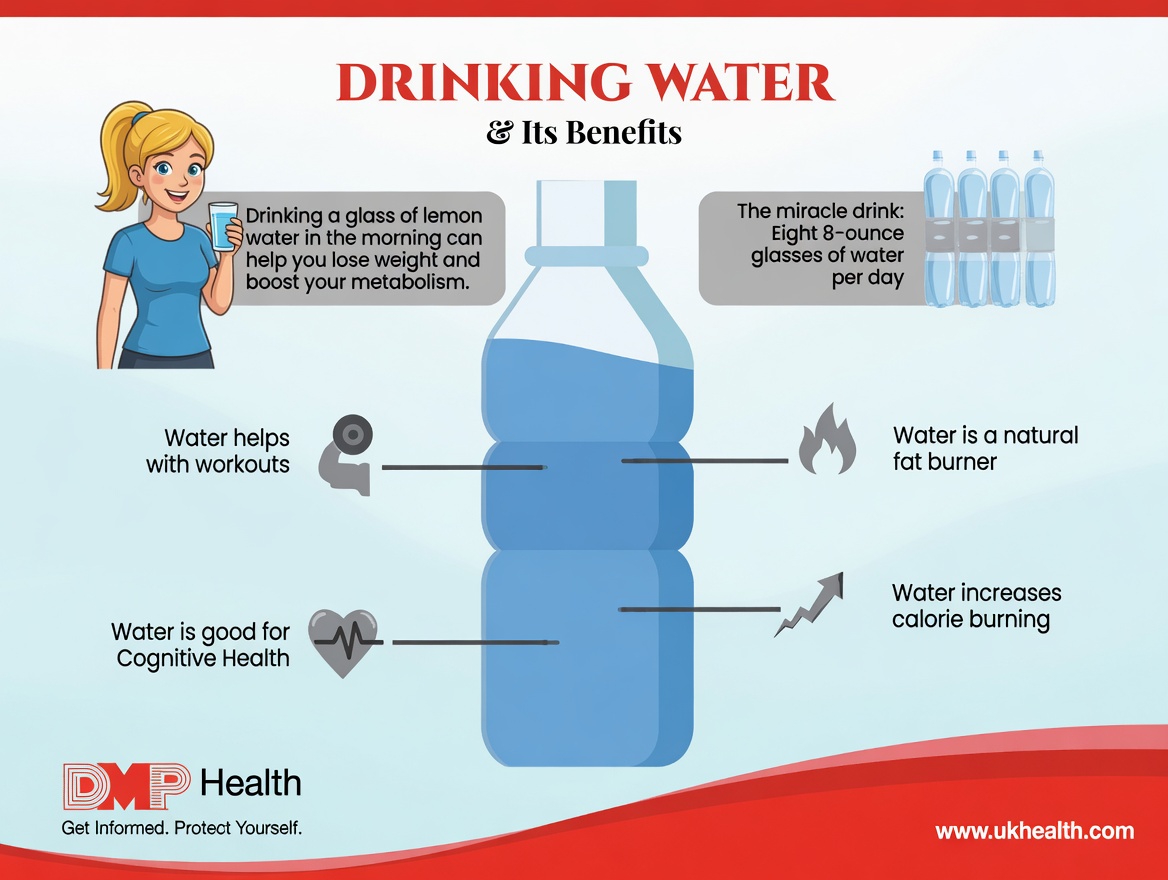
A slice of lemon can add flavor without adding calories, making the habit easier to enjoy.
2. Have Water Before Meals
Drinking a glass of water around 30 minutes before eating can help prepare your body for a meal. It may also help you feel satisfied sooner, which can encourage more mindful portion sizes.
Some smaller studies published in nutrition research suggest that drinking about 500 ml of water before meals may modestly reduce calorie intake for certain individuals. When paired with a balanced diet, this can support weight management. Water also plays a role in saliva production and helps your body process food more comfortably.
Pre-Meal Hydration Options
-
No water before eating
- You may eat quickly
- Fullness signals can be easier to miss
-
One glass about 30 minutes before a meal
- Can support satiety
- May improve awareness of portion size
-
Small sips during the meal
- Helps with swallowing
- Supports digestion without making you feel overly full
Simple tip:
- Set a reminder before lunch and dinner
- Drink slowly rather than all at once
- Choose plain water or herbal tea if you want a gentle option
For many people, this one habit alone improves daily comfort and eating awareness.
3. Prioritize Hydration Around Exercise and Sweating
Whenever you are active, whether through exercise, walking, or spending time in hot weather, your body loses water through sweat. Replacing those fluids before, during, and after activity helps support performance and recovery.
Sports hydration guidelines often recommend beginning exercise already well hydrated, with around 5 to 7 ml of fluid per kilogram of body weight several hours before activity. Drinking enough can help reduce fatigue, overheating, and muscle cramping.
Quick Hydration Tips for Active Moments
- Before exercise: Drink 1 to 2 glasses about 2 to 4 hours in advance
- During exercise: Take small sips every 15 to 20 minutes if you are sweating a lot
- After exercise: Replenish lost fluids based on how much you sweated
A useful reminder: thirst often shows up after your body already needs water, so it is better to stay ahead of it when possible.
4. Drink a Small Amount Before Bed
A modest glass of water in the evening can help maintain hydration overnight. Regular fluid intake throughout the day, including some water later on, may support overall comfort and even relate to better cardiovascular health markers, according to observational findings.
The key is not to drink too much right before sleep, since that may interrupt your rest with nighttime bathroom trips. A moderate amount is usually the best approach.
Simple tip:
- Pair evening water with your wind-down routine
- Dim the lights, sip slowly, and keep it relaxing
- Leave a bottle nearby so it is easy to hydrate again in the morning
Other Good Times to Drink Water
There are also a few moments when an extra glass of water can be especially useful:
- At the start of a headache: Mild dehydration is a common trigger
- During the afternoon slump: Water can help refresh your focus and energy
- When taking medication: Many medicines should be swallowed with water
A Simple Daily Hydration Routine
If you want an easy plan to follow, try this:
- Start the day with 1 to 2 glasses of water after waking
- Drink one glass before each main meal
- Sip during workouts, walks, or hot weather
- Finish the day with a small amount before bed
These are not strict rules. Think of them as gentle hydration cues that help you drink more intentionally. After a week of following this rhythm, many people notice steadier energy, clearer focus, and better overall comfort.
FAQ
How much water should I drink each day?
It depends on your body, activity level, climate, and health status. In general, many adults aim for about 2 to 3 liters of total fluid from drinks and food combined. Pay attention to thirst and increase intake when you are more active or in hot conditions.
Is drinking water before bed a bad idea?
Not at all. A small amount can support hydration overnight. The issue is drinking too much, which may disrupt sleep. A moderate amount usually works best.
Does water temperature matter?
For most people, not much. Room-temperature water is often easier on the stomach, while cold water can feel more refreshing. There is no strong evidence that one is dramatically better than the other for everyday hydration.