Ginger Doesn’t Just Clean—It Fights Bacteria and Can Naturally Boost Your Smile
You wake up, glance in the mirror, and notice that your smile doesn’t look as bright as it used to. Yellowish stains from coffee, tea, and everyday habits seem to dull your teeth little by little—and with that, your confidence. So a common question comes up: is there a natural, simple, affordable way to bring back a fresher-looking smile?
That’s where ginger enters the conversation. It’s often praised online for “whitening” teeth—but what does it actually do, and what results are realistic?
Why Teeth Turn Yellow Over Time
Tooth discoloration usually happens gradually, for two main reasons:
- Surface stains: Pigments from coffee, tea, wine, and habits like smoking can cling to the outer layer of the tooth.
- Deeper yellowing: As enamel naturally thins with age, the underlying dentin (which has a more yellow tone) becomes more visible.
Because professional treatments can be expensive—and some whitening products may trigger sensitivity—many people look for gentler, natural approaches. Ginger is one of the most talked-about options.
What Ginger Really Does for Oral Health
Ginger (Zingiber officinale) contains active compounds such as gingerol, widely known for its antibacterial effects. In oral care, this matters because it may help reduce bacteria linked to:
- Plaque buildup
- Cavities
- Bad breath
Ginger also has anti-inflammatory properties, which may help soothe irritated gums and improve the overall appearance of your smile. Some early research suggests it could support enamel protection, but stronger scientific evidence is still needed.
Does Ginger Whiten Teeth or Simply Clean Them?
This is the key point: ginger is not a true whitening agent in the way peroxide-based products are. It doesn’t chemically bleach the tooth.
Instead, ginger works more like a mild natural cleanser, helping lift superficial stains. Many popular DIY methods combine ginger with:
- A pinch of salt
- Coconut oil
These mixtures can create a gentle polishing effect, making teeth look smoother and shinier. In other words, the improvement is usually more about cleanliness and surface brightness than deep whitening.
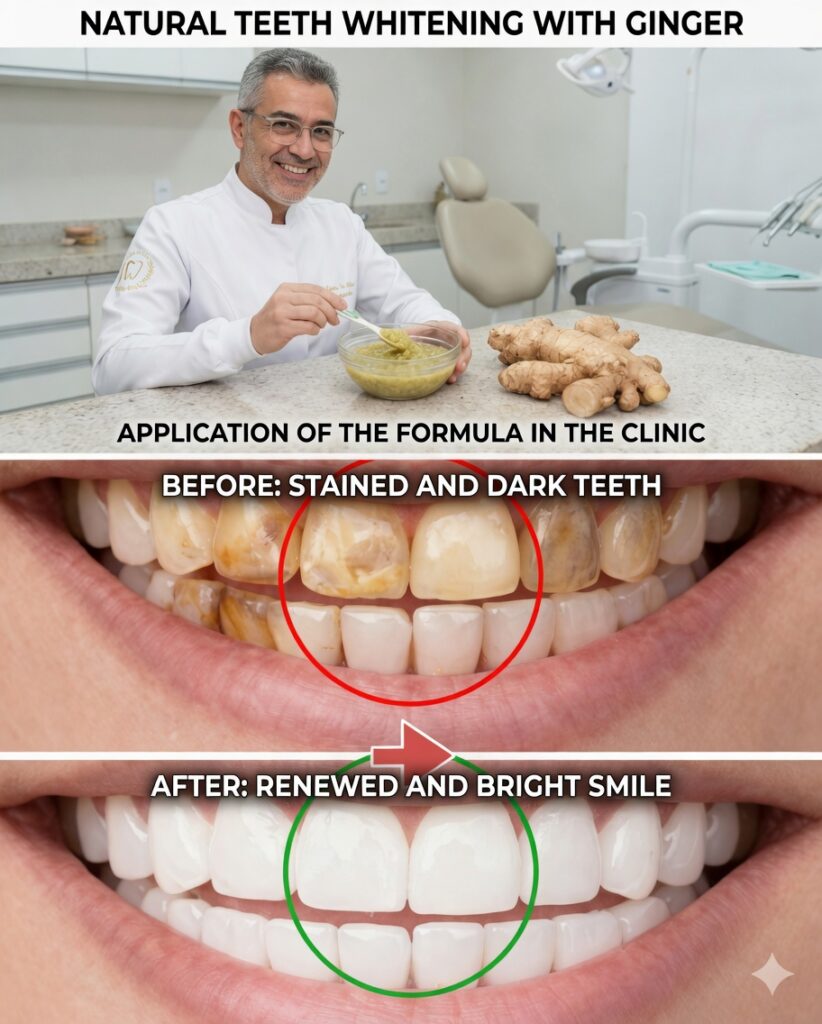
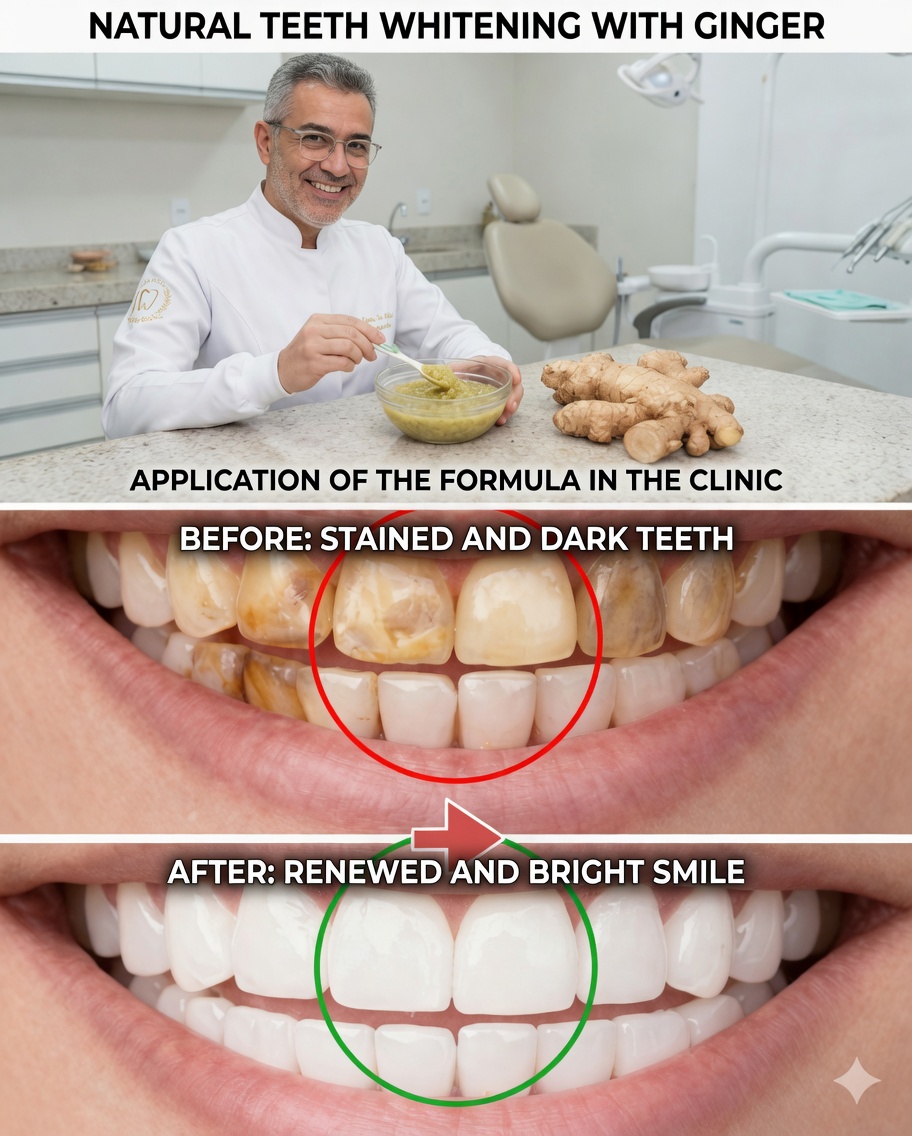
Before-and-After: What Results Are Realistic?
Results can vary significantly. Some people report:
- Teeth that look cleaner and slightly brighter within 1–2 weeks
- A stronger sense of freshness in the mouth
Others notice minimal visual change. Many dramatic “whitening” transformations seen in videos may actually come from a combination of:
- Better plaque control
- Healthier gums
- Improved brushing and flossing habits
Lesser-Known Benefits of Ginger for Your Smile
Even if your goal is cosmetic, ginger may offer useful oral health perks that indirectly improve how your smile looks:
- Helps reduce plaque formation
- Supports healthier gums
- Naturally combats bad breath
- Leaves a clean, fresh feeling in the mouth
Over time, these benefits can contribute to a brighter-looking smile without harsh chemicals.
How to Use Ginger Safely on Teeth
If you want to try ginger for oral care, keep it simple and gentle:
- Grate a small piece of fresh ginger and squeeze out the juice.
- Mix it with either:
- A tiny pinch of salt, or
- A small amount of coconut oil
- Apply lightly to teeth using a soft toothbrush or your fingertip.
- Massage for 1–2 minutes (no aggressive scrubbing).
- Rinse well, then brush normally with your regular toothpaste.
Limit use to 3–4 times per week to reduce the risk of enamel wear.
Important Precautions
- Don’t combine ginger with lemon or other acidic ingredients, which can weaken enamel.
- Stop immediately if you feel irritation or discomfort.
- If you have sensitive teeth, braces, or gum disease, consult a dentist before trying any DIY method.
Conclusion
Ginger isn’t a miracle tooth whitener, but it can be a strong natural ally for oral health. By helping control bacteria, supporting gum comfort, and reducing surface buildup, it may make your smile look cleaner and brighter over time.
For the safest, most visible results, pair it with solid daily habits like regular brushing and flossing. If you decide to try ginger, use it gently—and pay attention to how your mouth responds.