Bloating, Constipation, Discomfort… Could Your Chia Habit Be the Real Problem?
Chia seeds have a reputation as a powerful “superfood.”
They show up everywhere: blended into smoothies, sprinkled over oatmeal bowls, layered in pretty jars all over social media.
So you start adding them to breakfast, convinced you’re supporting your heart, digestion, and energy levels.
But then something feels off.
A heavy feeling in your chest. A tight throat. A swollen, gassy belly. Constipation or unpredictable bowel movements.
And the real question appears: are chia seeds actually helping you… or quietly making things worse?
The answer is both simple and surprising: chia seeds can be very good for you — but only when you use them the right way.
After age 50, the wrong method can trigger problems faster and more intensely than you might expect.
The Real Chia Problem After 50
Think of chia seeds as tiny sponges.
When they come into contact with liquid, they swell and form a thick gel. That’s exactly what makes them interesting for digestion — they add bulk, slow down digestion, and help you feel full.
But that same gel-forming power can work against you if chia is eaten dry or with too little fluid.
As you get older, some natural changes occur:
- Swallowing tends to become less smooth
- The esophagus becomes more sensitive
- Certain medications can dry out the mouth
- Overall hydration often drops without you noticing
Put together, this means: what felt like a healthy habit at 30 can become risky at 60 or 70 if you don’t adjust how you eat chia seeds.
The Most Common — and Riskiest — Chia Mistake
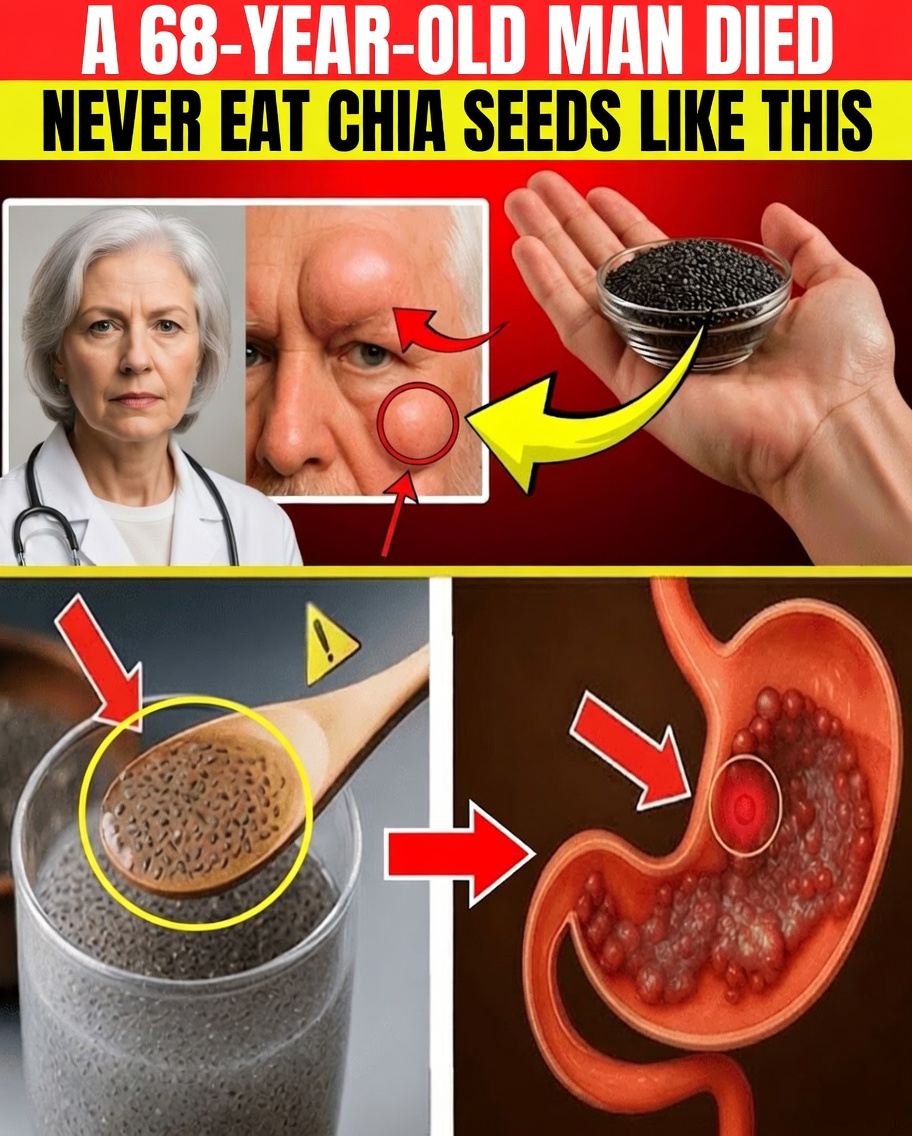
The biggest danger is swallowing dry chia seeds and then drinking water afterward.
It sounds harmless, but the seeds start absorbing liquid and expanding immediately.
If they swell before reaching your stomach, they can clump together and form a sticky mass in your throat or esophagus.
This risk is higher if you:
- Have difficulty swallowing
- Struggle with reflux, heartburn, or digestive disorders
- Eat large amounts of chia in one go
- Consume chia and then lie down soon after
5 Common Side Effects of Using Chia Seeds Incorrectly
When chia seeds aren’t prepared properly — especially after 50 — several uncomfortable side effects can appear.
-
Worsened constipation
Without enough water, the fiber in chia can thicken and harden the stool instead of softening it, making constipation more severe. -
Bloating and gas
A sudden jump in fiber intake can disrupt the gut microbiome, leading to gas, abdominal distension, and cramps. -
Heavy or sluggish feeling
The thick gel formed by chia can feel heavy and slow to digest, especially if you consume it quickly or in large quantities. -
Overfullness and reduced appetite
Chia can make you feel very full. That might sound positive, but it can also mean you end up eating less of what you really need — particularly protein. -
Hidden dehydration
Because chia absorbs a lot of water, it can pull fluid from your digestive tract and body if you’re not drinking enough, subtly contributing to dehydration.
How to Eat Chia Safely After 50
The good news: you don’t have to give up chia seeds.
You simply need to change how you use them so they support your health instead of stressing your system.
Here are the key rules:
- Always soak chia seeds for at least 15–30 minutes before eating
- Start small: begin with 1 teaspoon per day and increase gradually if tolerated
- Drink a full glass of water when you eat chia (even if it’s already soaked)
- Never swallow chia seeds dry
- Pair chia with protein, such as yogurt, eggs, cottage cheese, or legumes, to support muscle maintenance
A Simple and Safe Chia Routine
To make things easy — and safer — you can prepare a chia gel for the week.
- Mix 2 tablespoons of chia seeds with 2 cups of water
- Stir well and let it sit for about 20 minutes until it forms a gel
- Store the gel in the refrigerator
Each day, use 1–2 tablespoons of this chia gel in:
- Yogurt or cottage cheese
- Smoothies
- Soups (after cooking, when they’re warm, not boiling)
- Oatmeal or other cooked grains
This method ensures the seeds are fully hydrated before they reach your digestive tract, reducing the risk of choking, blockage, or excessive thickening in the gut.
The Winning Combination: Water + Protein
For chia seeds to truly benefit your health — especially as you age — always think in pairs:
- Chia + plenty of water: to prevent constipation and dehydration
- Chia + protein: to protect muscle mass and avoid displacing essential nutrients
A bowl of yogurt with chia gel and a big glass of water, for example, is far safer and more balanced than dry chia sprinkled on toast and washed down with just a few sips of coffee.
Conclusion: Don’t Quit Chia — Change How You Use It
The takeaway is not “stop eating chia seeds.”
It’s: stop eating them the wrong way.
A small adjustment in how you prepare and combine chia can turn it from a source of discomfort into a genuinely helpful food for digestion, energy, and satiety.
If you already have digestive issues, trouble swallowing, or take medications — especially for diabetes or blood thinning — it’s wise to talk with a healthcare professional before increasing your chia intake.
Your body is always sending signals: bloating, tightness, heaviness, or constipation are messages, not nuisances.
Listen to them — and let them guide you to a safer, smarter way of using chia seeds.