Rosemary Artisan Bread Recipe
Fragrant, crusty, and incredibly simple to make, this rosemary artisan bread is perfect for beginners and experienced bakers alike. It requires minimal hands-on time and delivers a bakery-style loaf right from your home oven.
Ingredients
- 3 cups all-purpose flour
- 1 1/2 teaspoons salt
- 1 teaspoon sugar
- 1 teaspoon instant yeast
- 1 1/4 cups warm water
- 2 tablespoons fresh rosemary, finely chopped (plus extra sprigs for topping)
- 2 tablespoons olive oil (for the dough and for brushing)
- Coarse sea salt, for finishing
Step-by-Step Instructions
1. Make the Dough
- In a large bowl, whisk together the flour, salt, sugar, instant yeast, and chopped rosemary.
- Slowly pour in the warm water, stirring with a spoon or spatula until a shaggy, sticky dough forms.
- Cover the bowl tightly with plastic wrap.
- Let the dough rest and rise at room temperature for 8–12 hours. An overnight rise gives the best flavor and texture.
2. Shape the Loaf
- After the dough has risen and become puffy, lightly dust your work surface and hands with flour.
- Gently turn the dough out onto the floured surface.
- Shape it into a rough round loaf, handling it carefully so you don’t deflate it too much. Avoid over-kneading at this stage.
3. Preheat the Oven and Pan
- Place a cast-iron skillet, Dutch oven, or heavy oven-safe pot (with lid) into your oven.
- Preheat the oven to 450°F (230°C), allowing the pan to heat up along with it.
4. Prepare for Baking
- Once the oven and pan are fully preheated, carefully remove the hot pan.
- Transfer the shaped dough into the pan (you can use parchment paper to make this easier).
- Drizzle the top of the dough with olive oil.
- Sprinkle with coarse sea salt and add a few extra sprigs of fresh rosemary on top for aroma and presentation.
5. Bake the Bread
- Cover the pan with its lid or tightly with foil.
- Bake for about 30 minutes.
- Remove the lid/foil and continue baking for another 10–15 minutes, or until the crust turns deep golden brown and crisp.
6. Cool and Serve
- Transfer the baked bread to a wire rack and let it cool for at least 15–20 minutes before slicing.
- Serve warm or at room temperature with olive oil, butter, or your favorite spreads and dips.
Flavor Variations
Customize your rosemary loaf with these easy variations:
- Herb Swap: Replace rosemary with fresh thyme, basil, oregano, or a mix of herbs for a different aroma.
- Cheesy Rosemary Bread: Fold in shredded Parmesan, cheddar, or mozzarella for a rich, cheesy loaf.
- Olives or Sun-Dried Tomatoes: Mix in chopped Kalamata olives or sun-dried tomatoes for a Mediterranean twist.
- Garlic Version: Add minced fresh garlic or roasted garlic cloves to the dough for a savory garlic bread.
- Whole Wheat Option: Substitute part or all of the all-purpose flour with whole wheat flour for a denser, nuttier bread.
- Nuts and Seeds: Stir in chopped walnuts, pecans, sunflower seeds, or sesame seeds for extra crunch and texture.
- Slightly Sweet Loaf: Add a bit more sugar or a spoonful of honey and fold in dried fruits such as cranberries, raisins, or chopped dried apricots.
Tips for Better Rosemary Artisan Bread
-
Choose Fresh Ingredients
Use fresh rosemary and good-quality flour and olive oil. Fresh ingredients significantly enhance flavor and aroma.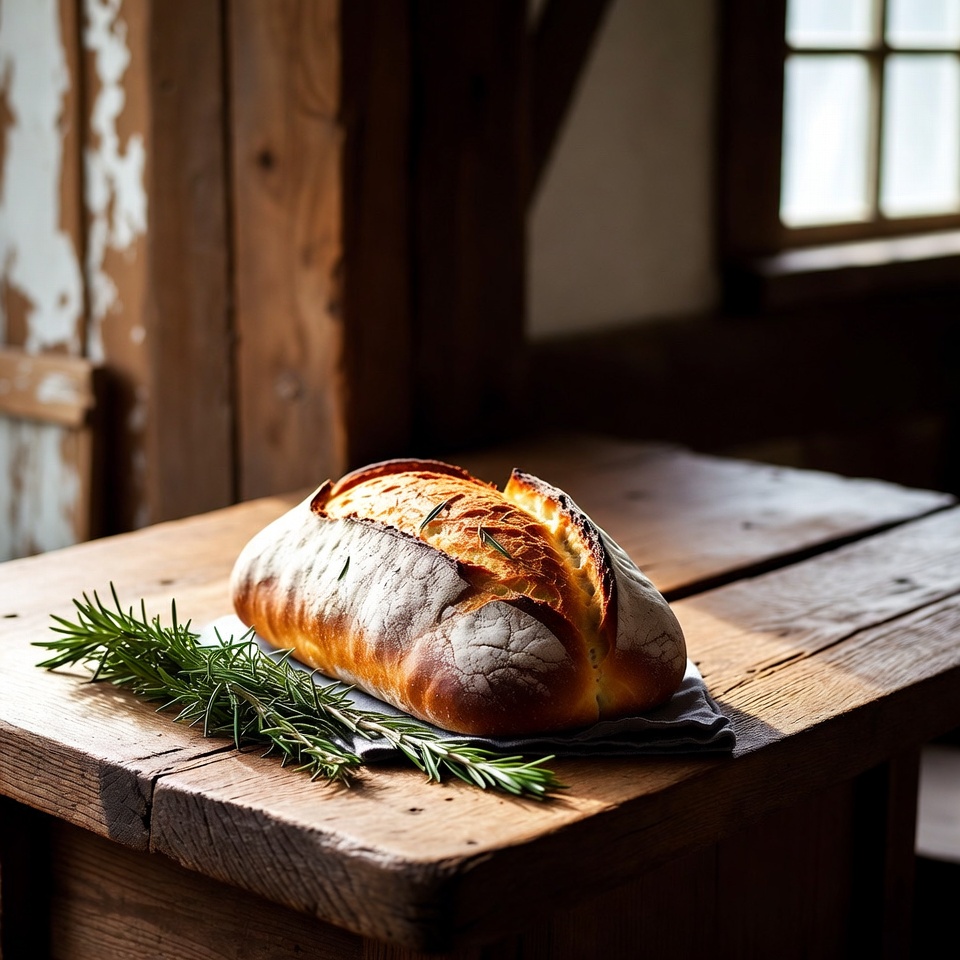
-
Develop the Gluten
While this is a low-knead style dough, make sure it’s well mixed and cohesive. A smooth, elastic dough structure results in a better crumb. -
Allow Enough Rising Time
Let the dough rise until it has visibly expanded and looks bubbly. Depending on room temperature, this can take 8–12 hours for the initial rise. -
Proper Preheating
Ensure your oven and baking vessel are fully preheated. A hot surface helps create a good oven spring and crust. -
Create Steam for a Crisp Crust
If not using a Dutch oven with a lid, place a small pan of water on a lower rack to generate steam and promote a crackly crust. -
Cool Before Cutting
Resist slicing the bread immediately. Allowing it to cool on a wire rack helps set the crumb and keeps the interior from becoming gummy. -
Experiment with Seasonings
Try adding black pepper, chili flakes, Italian seasoning, or other spices to make the bread uniquely yours.
How to Store Rosemary Artisan Bread
-
Cool Completely First
Let the loaf cool fully on a wire rack before storing. This prevents trapped steam from making the crust soggy. -
Wrap Securely
Once cool, wrap the bread in plastic wrap, reusable beeswax wrap, or aluminum foil to preserve freshness. -
Short-Term Storage (Room Temperature)
For 2–3 days, keep the wrapped bread at room temperature in a cool, dry spot away from direct sunlight. -
Freezing for Longer Storage
- Wrap the loaf (or individual slices) tightly in plastic wrap, then in aluminum foil or a freezer bag.
- Freeze for up to 3 months.
- Thaw at room temperature before reheating.
-
Reheating
Warm the bread in a 350°F (175°C) oven for about 10–15 minutes until refreshed and the crust is crisp again.
Enjoy this rustic, aromatic rosemary artisan bread on its own, dipped in olive oil, alongside soups and stews, or as the base for gourmet sandwiches.