Reishi Mushroom and Breast Cancer: What Current Research Really Suggests
Breast cancer continues to be one of the most common health concerns affecting women worldwide. Along with diagnosis and treatment often comes fear, uncertainty, and the desire to find supportive strategies that may help alongside conventional care. Many people also struggle with treatment-related side effects and begin looking into natural options that might offer added support without disrupting medical therapies.
One traditional remedy that has gained attention is Reishi mushroom, also known as Ganoderma lucidum. Laboratory research has raised interest because this medicinal mushroom appears to affect certain biological processes in aggressive breast cancer cell models. Even more interesting, these early findings may help explain why Reishi has been valued in traditional healing systems for centuries.
What Is Reishi Mushroom?
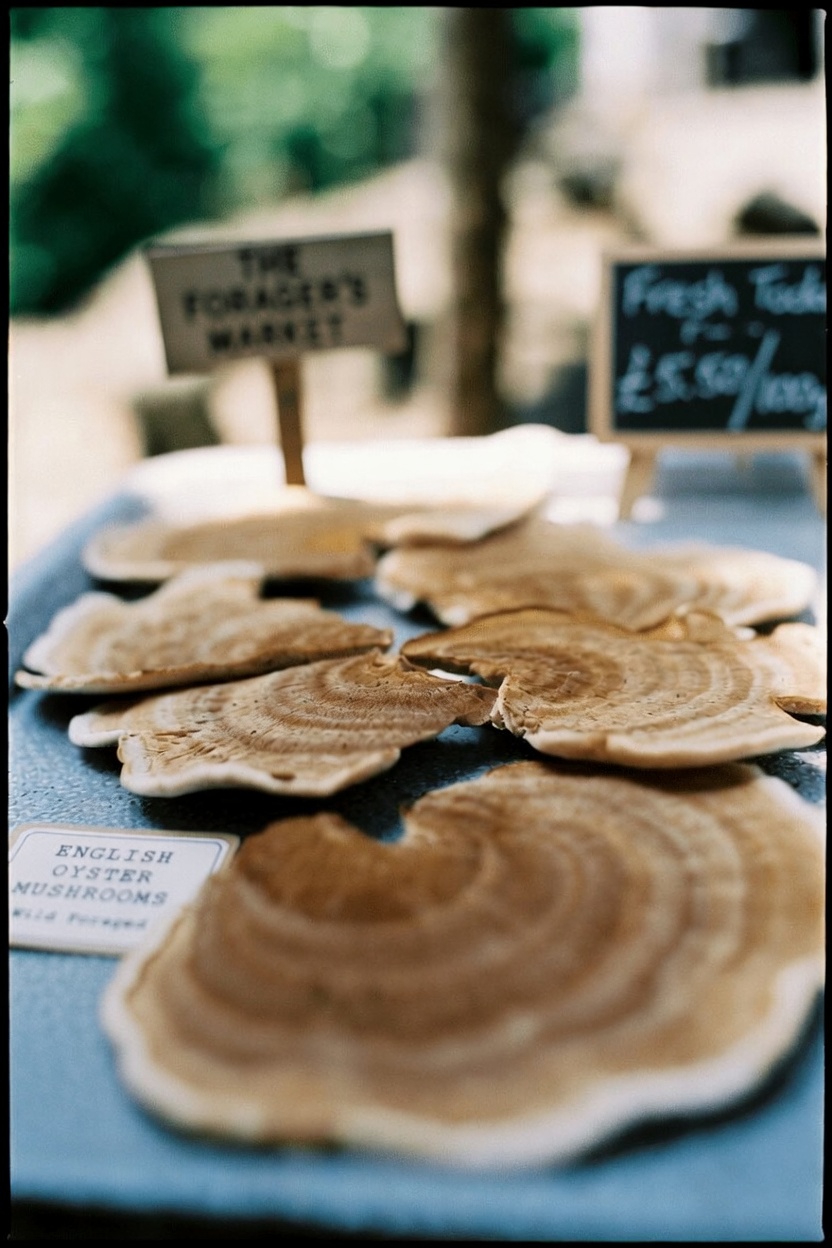
Reishi is a woody medicinal mushroom with a glossy reddish-brown cap that typically grows on trees. In traditional Chinese medicine, where it is also called Lingzhi, it has been used for more than 2,000 years to support vitality, resilience, and overall well-being.
Today, scientific interest centers on its active compounds, especially:
- Polysaccharides: complex carbohydrates linked to immune-related activity
- Triterpenes: bitter compounds often studied for their biological effects
These compounds are believed to play a role in the mushroom’s potential actions observed in laboratory studies.
Why Reishi Is Being Studied in Breast Cancer Research
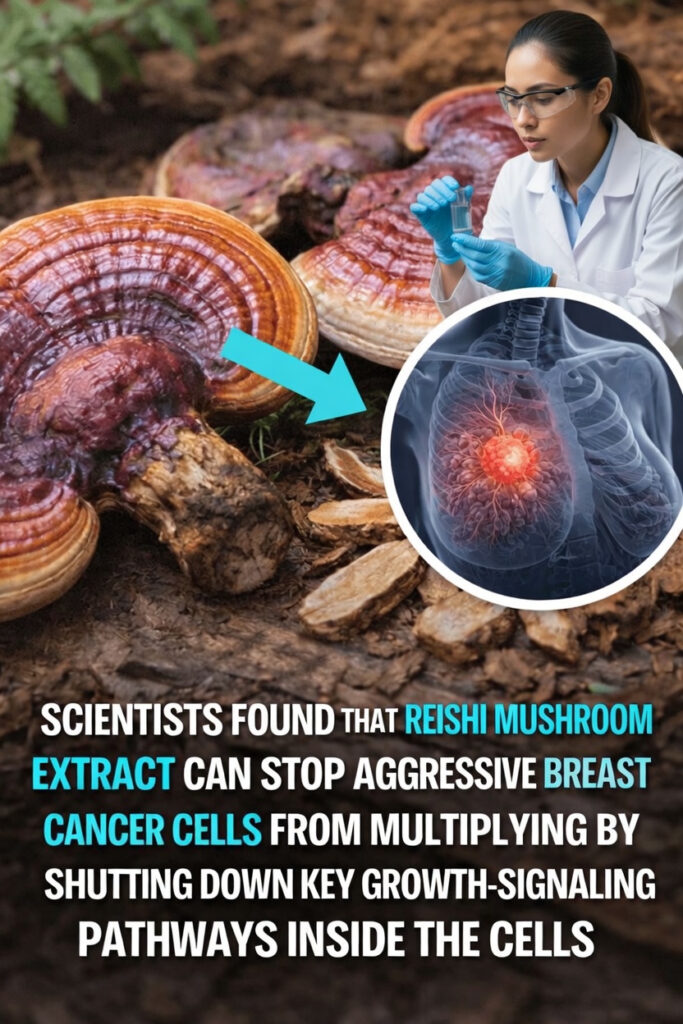
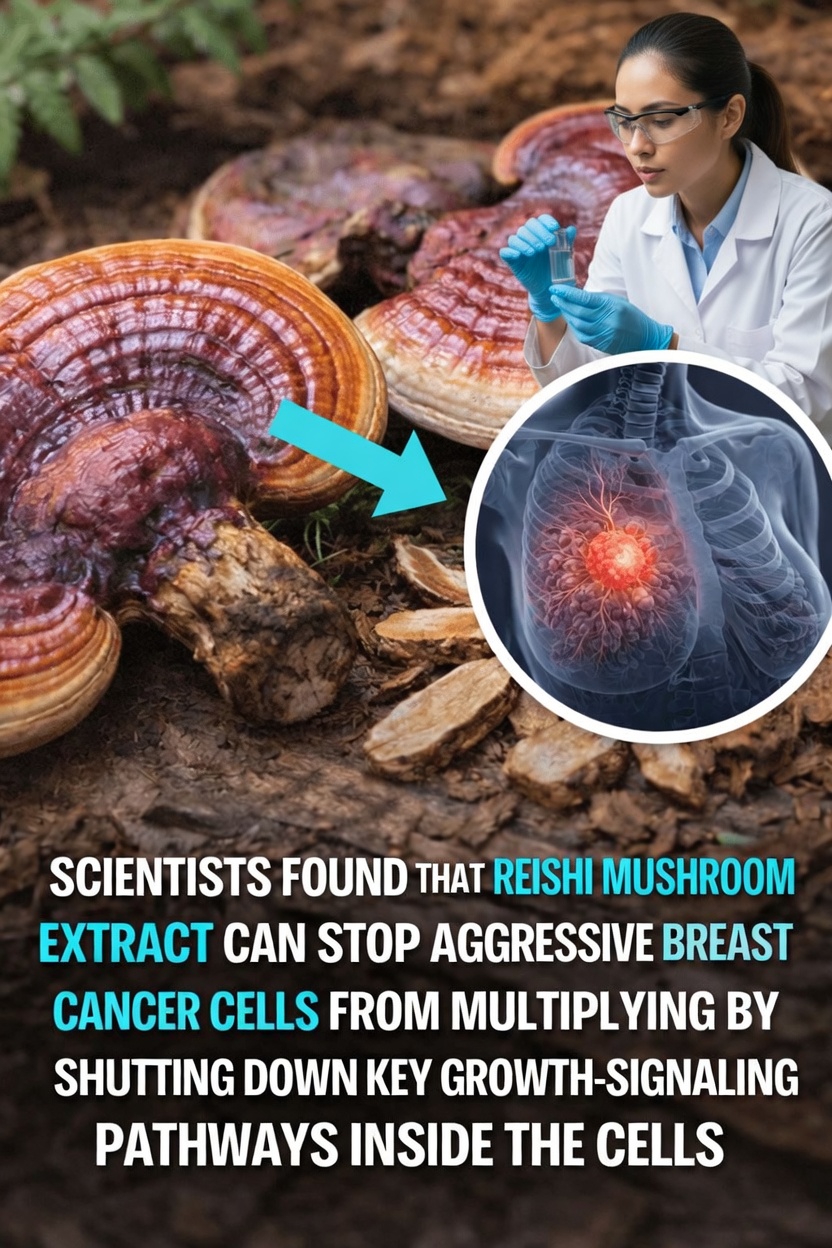
Reishi has become a topic of interest in cancer science because researchers have explored how it interacts with difficult-to-treat breast cancer cells. One widely cited study published in Nutrition and Cancer looked at the effects of Reishi extract on MDA-MB-231 cells, a triple-negative breast cancer line frequently used in research because of its aggressive nature.
In this cell-based study, scientists found that Reishi extract appeared to slow cancer cell growth by affecting important internal signaling systems. In particular, it lowered activity in:
- Akt pathway
- NF-kappaB
These pathways are often associated with cancer cell survival, growth, and resistance.
Key Laboratory Findings
The same research also showed that Reishi extract seemed to trigger cell cycle arrest. In simple terms, the cancer cells became stuck in the G0/G1 phase, an early stage where they were unable to continue dividing.
Researchers also observed reduced levels of proteins involved in cell multiplication, including:
- Cyclin D1
- cdk4
Because these proteins help drive cell division, lowering them may help explain why the cells multiplied more slowly in the lab.
These findings are promising, but one point is essential: this work was done in vitro, meaning in isolated cells under controlled laboratory conditions, not in human patients.
Additional Research on Reishi’s Potential Effects
Other experimental studies have examined Reishi in different breast cancer models and reported related findings. While results vary, several recurring themes have emerged.
Some laboratory research suggests:
- Reduced cell movement and invasion in breast cancer models, possibly involving pathways such as Rac/Lamellipodin
- Effects on inflammatory breast cancer cell lines like SUM-149, including changes in protein synthesis and signaling
- Broader activity across several cancer cell types, often linked to immune modulation or antioxidant-related mechanisms in test-tube studies
Common Themes in Reishi Cancer Research
Across cancer-related lab studies, Reishi is most often investigated for the following areas:
-
Inhibiting cell proliferation
- Frequently reported in aggressive cell lines such as MDA-MB-231
-
Modulating cellular pathways
- Common targets include Akt/NF-kappaB, PI3K/mTOR, and STAT3
-
Supporting immune-related activity
- Reishi polysaccharides may stimulate certain immune cell functions in vitro
-
Quality-of-life support
- Some human surveys mention improved fatigue or well-being, though not direct tumor reduction
It is important to keep these findings in context. Controlled lab observations do not automatically mean the same effects occur in the human body.
How Reishi Is Commonly Used Today
Many people use Reishi as a dietary supplement in several different forms, such as:
- Powdered extracts mixed into tea, coffee, or smoothies
- Capsules or tablets standardized for polysaccharide and triterpene content
- Dried mushroom slices simmered into traditional decoctions
- Spore powders or oils used in more concentrated preparations
If you are thinking about trying Reishi, choosing a trusted brand is important. Look for products that offer third-party testing for purity, identity, and potency.
Practical Tips for Using Reishi Carefully
If you are interested in adding Reishi to your wellness routine, it is best to take a careful and informed approach. Always speak with your healthcare provider first, especially if you are undergoing cancer treatment.
Here are some practical steps:
-
Select a quality product
- Look for extracts that contain around 10–30% polysaccharides and 2–6% triterpenes
-
Begin with a modest dose
- Many products suggest about 1–3 grams of extract per day, depending on concentration
-
Pay attention to your response
- Monitor changes in digestion, sleep, mood, or energy over time
-
Use it as part of a healthy routine
- A balanced diet rich in vegetables, fruit, legumes, and whole grains remains essential
-
Check for possible interactions
- Reishi may affect blood-thinning medications or drugs that influence the immune system
Using natural supplements thoughtfully can help reduce risk and improve decision-making.
The Bigger Picture
Research on Reishi and breast cancer cells is scientifically interesting, but human evidence is still limited. Some surveys of cancer patients who use Reishi describe benefits such as less fatigue or improved mood. However, these reports are subjective and do not prove that Reishi directly affects tumor growth in people.
Current evidence suggests that Reishi may have value as a complementary wellness option, particularly in discussions around quality of life and supportive care. Still, it should not be viewed as a substitute for established medical treatment.
Main Takeaway
Reishi mushroom shows promising biological activity in laboratory breast cancer studies, especially in aggressive cell models. It appears to influence signaling pathways, slow cell growth, and affect proteins involved in cell division. However, these results come from lab settings and are not enough to confirm the same anticancer effects in humans.
For now, Reishi is best understood as a potential supportive supplement under professional guidance, not a replacement for evidence-based breast cancer therapy.
FAQ
Is Reishi mushroom generally safe?
Most research suggests Reishi is usually well tolerated at standard doses. Some people report mild side effects such as:
- Dry mouth
- Stomach discomfort
- Digestive upset
You should speak with a doctor before using it, especially if you have a bleeding disorder or take prescription medication.
Can Reishi be used during breast cancer treatment?
You should always consult your oncologist first. Although Reishi is being explored as a complementary option, potential interactions with chemotherapy, immunotherapy, or other medications need careful medical review.
How quickly might someone notice effects from Reishi?
Experiences differ from person to person. Some individuals report subtle changes in energy or general well-being within a few weeks. Still, laboratory findings do not directly translate into predictable personal results.