Knee Pain When Climbing Stairs? These 8 Natural Foods May Help Reduce Inflammation and Support Cartilage
Do your knees ache when you climb stairs, get out of bed, or even take a simple walk? For many people, cartilage wear and tear can turn everyday movement into a real challenge. With age—or repeated stress on the joints—the cartilage that cushions the knee can gradually become thinner. The result may include inflammation, stiffness, and that unpleasant “gritty” sensation that feels like sand inside the joint.
This raises an important question: can everyday foods help protect your joints and ease discomfort?
The encouraging news is that while cartilage doesn’t regenerate easily, certain natural foods may help calm inflammation, support collagen production, and keep joints better lubricated. Even better, several of these options may already be in your kitchen.
Read through to the end to learn which foods may support knee health naturally—and which ones you can start eating today.
Why Knee Cartilage Needs Extra Support
Cartilage acts like a shock absorber between bones. Unlike many other tissues, it has limited blood supply, which means it heals and recovers more slowly after wear or injury.
Research suggests that chronic, low-grade inflammation can speed up cartilage breakdown. In contrast, antioxidant-rich nutrients and compounds that support collagen formation may help preserve joint structure over time.
A diet focused on anti-inflammatory foods is also linked with improved mobility and less day-to-day discomfort in people with osteoarthritis.
Key Nutrients That Help Protect Cartilage
Several nutrients play an important role in joint and cartilage support:
- Omega-3 fatty acids: help lower inflammation inside joints
- Vitamin C: essential for collagen production
- Antioxidants: help defend cartilage from oxidative damage
- Collagen-building precursors (amino acids): provide raw materials for connective tissue
- Sulfur-containing compounds: contribute to healthy joint structure and function
8 Natural Foods That May Support Knee Health
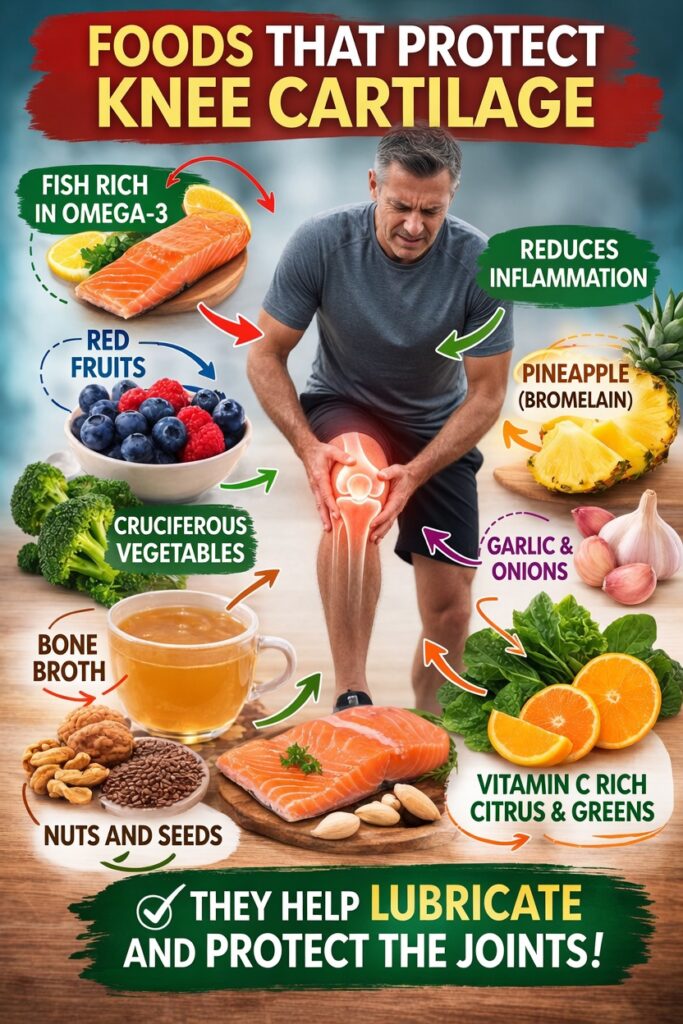
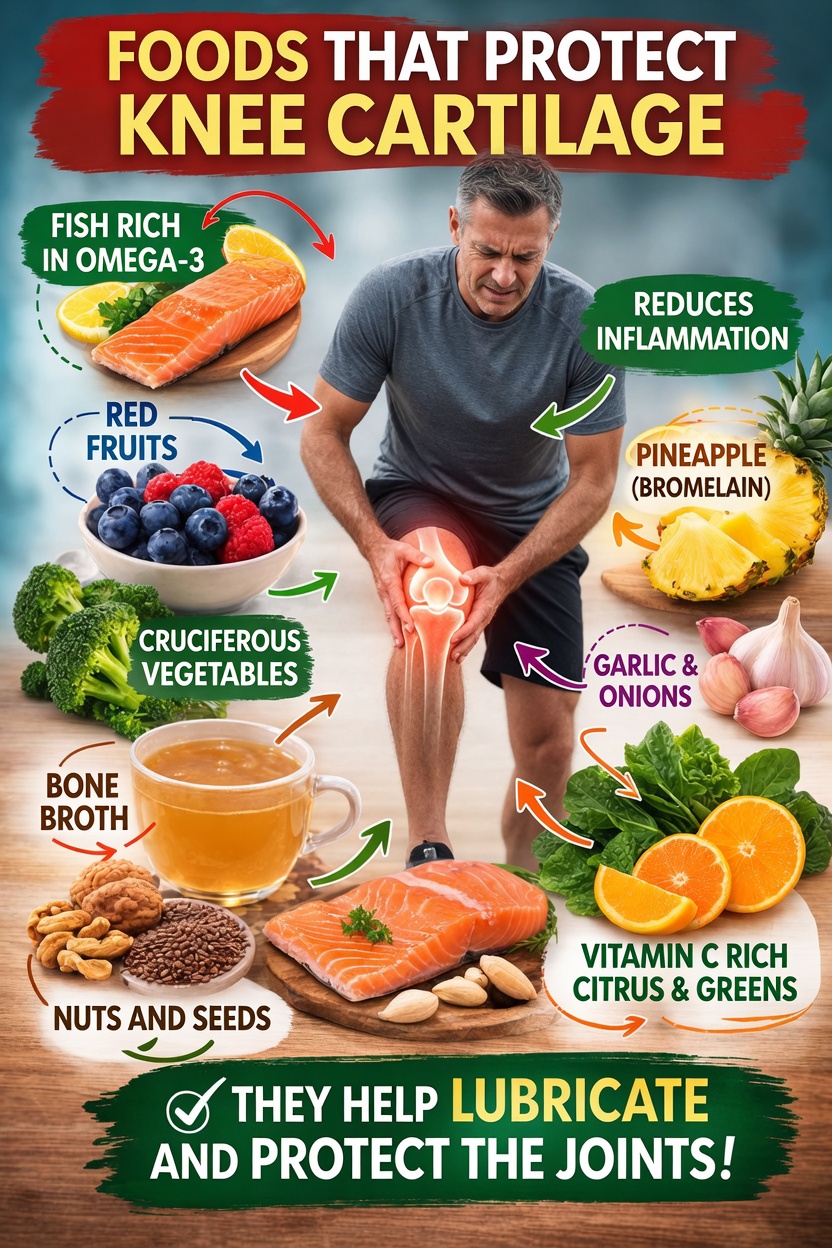
1. Fatty Fish (Salmon, Sardines, Mackerel)
Fatty fish are well known for their omega-3 content, which may help reduce joint inflammation and ease stiffness.
- Aim for 2–3 servings per week
- Simple idea: grilled salmon with lemon for an easy anti-inflammatory meal
2. Berries (Especially Blueberries)
Berries contain anthocyanins, powerful antioxidants that help combat oxidative stress—one factor associated with cartilage damage.
- Try ½ to 1 cup daily
- Easy add-ins: smoothies, yogurt, oatmeal
3. Cruciferous Vegetables (Broccoli, Kale, Cabbage)
These vegetables provide sulforaphane, a natural compound that may help slow processes involved in cartilage breakdown.
- Best method: light steaming to preserve nutrients
- Target: 3–4 times per week
4. Bone Broth
Slow-simmered bone broth contains natural collagen, plus compounds often associated with joint support such as glucosamine and chondroitin.
- Consider 1 cup per day
- Or use it as a base for soups and stews
5. Nuts and Seeds (Walnuts, Flaxseed, Almonds)
These offer a combination of healthy fats, vitamin E, and minerals that support tissue maintenance and inflammation balance.
- A small handful daily is a practical starting point
6. Pineapple
Pineapple contains bromelain, a natural enzyme studied for potential anti-inflammatory effects that may help with joint swelling.
- Choose fresh pineapple when possible
- Add to fruit salads or pair with savory dishes
7. Garlic and Onions
Garlic and onions provide sulfur compounds that may help reduce the activity of enzymes involved in cartilage damage.
- Use them regularly to boost both flavor and joint-friendly nutrition
8. Leafy Greens and Citrus Fruits
Leafy greens and citrus are rich in vitamin C, supporting collagen formation, while vitamin K (found in many greens) supports bone health around the joint.
- Simple meal idea: spinach salad with orange segments
How to Start Today: A Simple 4-Week Plan
Weeks 1–2
- Add one daily serving of berries
- Include fermented foods such as yogurt or kefir
Week 3
- Eat fatty fish twice per week
- Try a soup made with bone broth
Week 4
- Rotate in more cruciferous vegetables, nuts, and pineapple
Over time, pay attention to how your knees feel. Many people notice less morning stiffness after a few consistent weeks.
It can also help to cut back on:
- Highly processed foods
- Excess added sugar
- Fried foods
These are commonly linked to higher inflammation levels in the body.
Conclusion
Small dietary upgrades can make a meaningful difference in joint health. Foods rich in anti-inflammatory nutrients and collagen-supporting compounds may help protect cartilage, improve mobility, and support daily comfort.
These foods are not a cure, but eating them regularly can contribute to healthier knees over time. Start with one or two changes today and track how your body responds.
Frequently Asked Questions
What foods help lubricate joints naturally?
Foods rich in healthy fats—such as fatty fish and avocado—along with bone broth, may support the production of synovial fluid, which helps lubricate joints.
Can diet restore severely worn cartilage?
Nutrition can help manage inflammation and support joint function, but significant cartilage loss typically requires medical evaluation and a personalized care plan.
How long does it take to notice improvements?
Some people report reduced stiffness after 4 to 8 weeks of consistent, joint-supportive eating habits.
Disclaimer: This article is for informational purposes only and does not replace professional medical advice. Always consult a healthcare professional before making major dietary changes, especially if you have a medical condition or take medications. Results can vary from person to person.