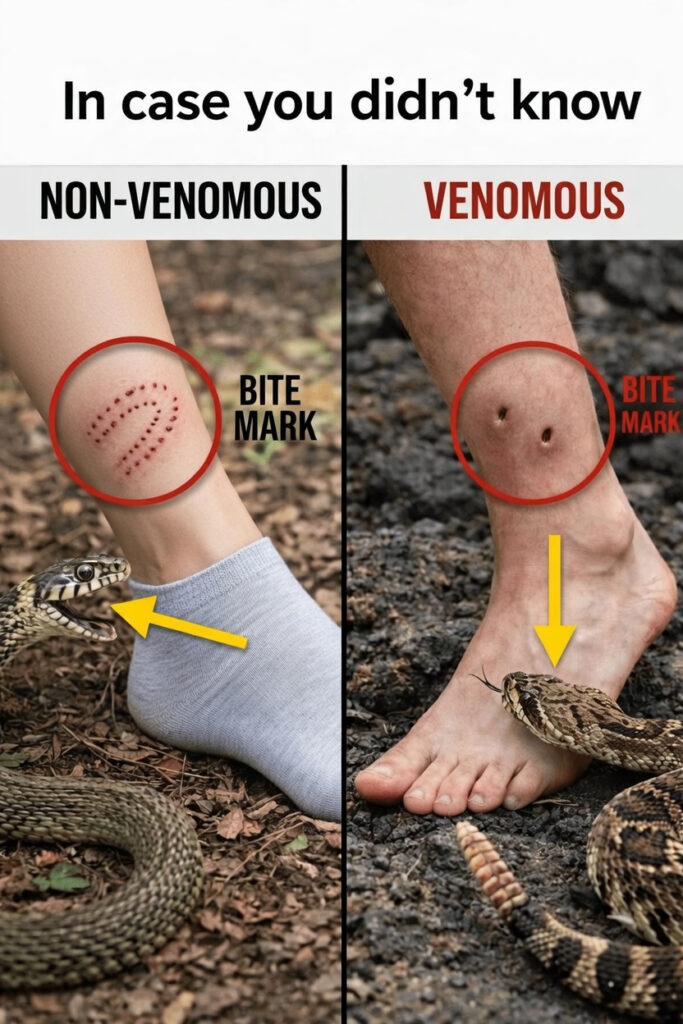
Snake Bite Marks: How to Tell a Venomous Bite From a Non-Venomous One
Picture yourself hiking through tall grass, stepping on something unexpected, and feeling a sudden, sharp sting. In that instant, one question takes over: was it a dangerous snake? Snake bites are more common than many people realize, especially in places where hiking, camping, and other outdoor activities are popular. Some bites cause little more than minor pain and irritation, but a venomous bite can quickly turn serious with swelling, intense pain, and other complications.
Being able to spot the likely differences in bite marks and knowing what to do immediately can help you respond more calmly and effectively. This guide explains the main visual clues, compares venomous and non-venomous bites side by side, and outlines practical first aid steps based on trusted medical sources. It also highlights an important detail about “dry bites,” which is why every snake bite should be taken seriously.
Understanding Snake Bites and Why Identification Is Important
Not all snake bites are the same. The effects depend heavily on the species involved. Non-venomous snakes generally bite with rows of teeth designed to grip prey, while venomous snakes have specialized fangs that can deliver toxins into the body.
Health organizations such as the CDC and Mayo Clinic stress that early recognition matters. A fast, informed response can reduce panic, support proper first aid, and help you seek medical care sooner when needed. Still, bite appearance should never be the only factor you rely on. Even if the wound seems mild, safety and professional evaluation come first.
Bite Mark Differences: The First Clue on the Skin
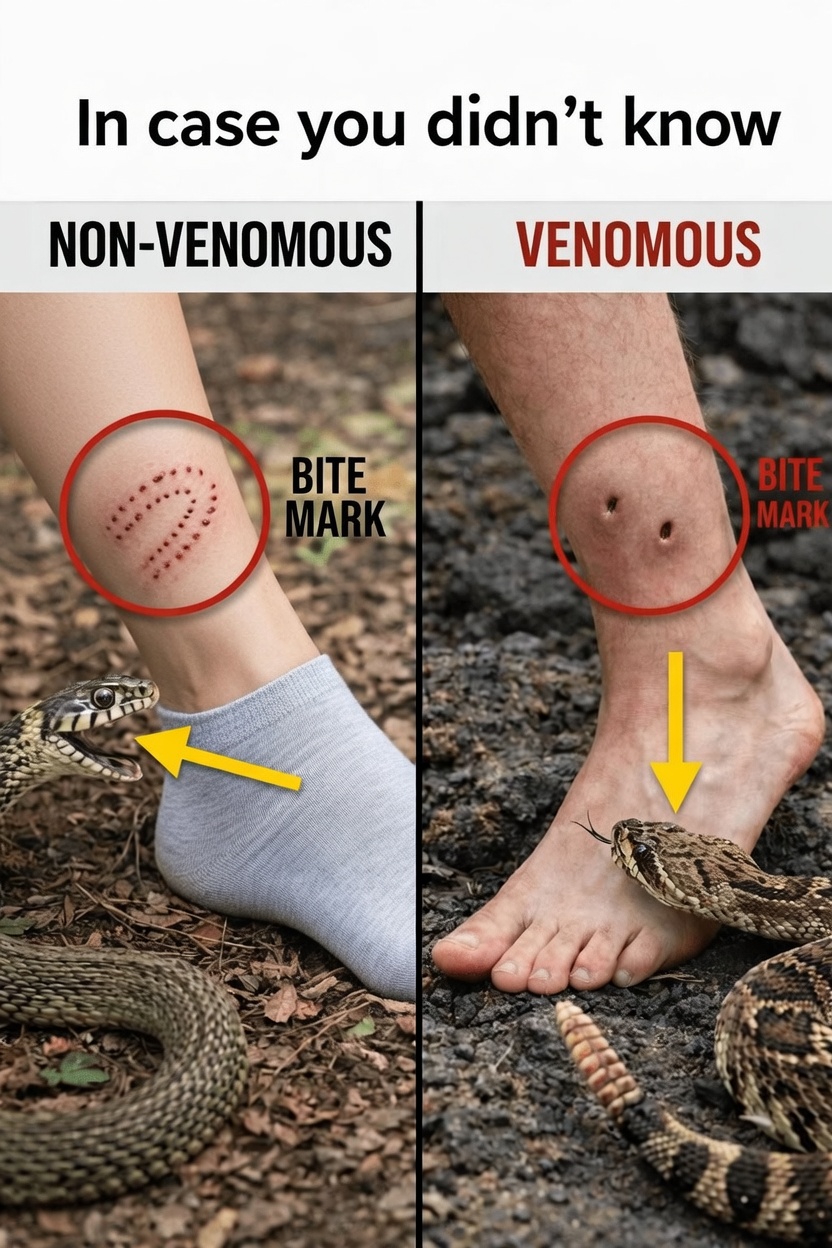
One of the most commonly discussed ways to distinguish snake bites is the pattern left behind on the skin. While this can be helpful, it is not always definitive.
Typical signs of a non-venomous snake bite
Non-venomous bites often leave:
- Several small tooth marks
- A curved, U-shaped, or horseshoe-like pattern
- Superficial scratches or shallow punctures
- Mild redness and slight bleeding
Typical signs of a venomous snake bite
Venomous bites, especially from snakes such as pit vipers, may show:
- Two more noticeable puncture wounds from the fangs
- Sometimes only one visible puncture if one fang did not fully strike
- Deeper bite marks
- Swelling or bruising developing around the area soon after the bite
However, the situation is not always that simple. A venomous snake does not always leave a textbook pair of fang marks. Some bites are glancing strikes, and some involve irregular contact. In other cases, the snake may bite without injecting venom at all. These are known as dry bites, and they can look deceptively mild.
Symptoms After a Snake Bite: What to Watch Closely
Symptoms may start within minutes, though in some cases they take longer to appear. Medical research shows that venomous bites usually trigger stronger and faster reactions than non-venomous ones.
Common symptoms of a non-venomous bite
You may notice:
- Mild or moderate pain near the bite
- Limited swelling
- Slight redness
- Itching or minor irritation
Common symptoms of a venomous bite
These often include:
- Sharp, burning, or throbbing pain
- Swelling that spreads quickly
- Bruising or blistering around the wound
- Nausea
- Sweating
- Weakness
- In severe cases, breathing difficulty or dizziness
If pain intensifies rapidly or swelling expands noticeably, the bite should be treated as a medical emergency. Different venoms affect the body in different ways, but quick action is always important.
Venomous vs Non-Venomous Snake Bites: A Quick Comparison
Here is a clear side-by-side breakdown of the main differences.
1. Bite pattern
- Non-venomous: Multiple small marks, often curved or horseshoe-shaped
- Venomous: Usually one or two deeper fang punctures, often more distinct
2. Pain level
- Non-venomous: Usually mild to moderate, similar to a scratch or minor puncture
- Venomous: Often immediate, stronger, and likely to spread outward
3. Swelling and skin changes
- Non-venomous: Minimal swelling or slow development
- Venomous: Faster swelling, more severe inflammation, possible bruising
4. Whole-body symptoms
- Non-venomous: Systemic symptoms are uncommon
- Venomous: May cause nausea, dizziness, weakness, or breathing problems
Medical sources such as Cleveland Clinic and Healthline emphasize an important point: even if a bite looks minor, caution is still necessary. A wound that seems harmless at first can become more serious over time.
Immediate First Aid for a Snake Bite
If a snake bites you or someone nearby, staying calm is one of the most helpful first steps. Panic raises heart rate, which may increase the spread of venom if venom was injected.
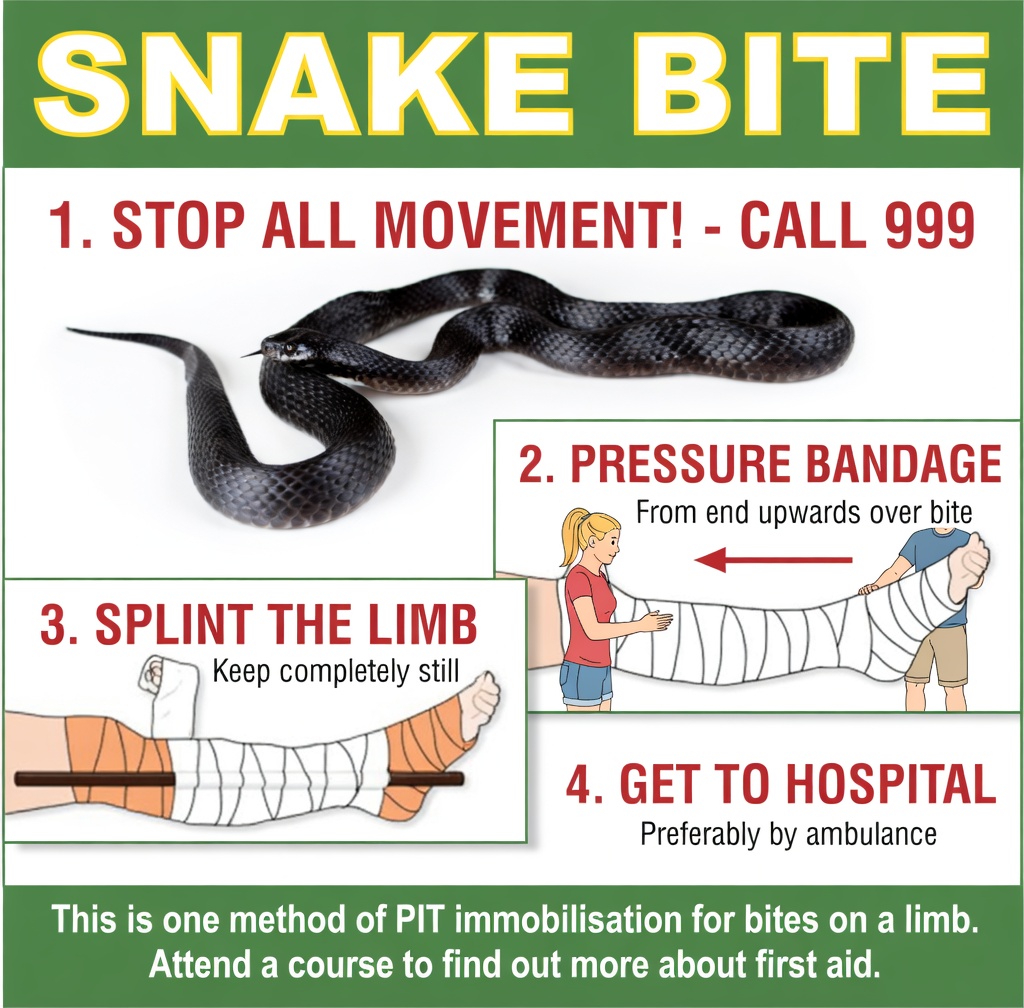
Follow these evidence-based first aid steps recommended by trusted medical authorities:
- Move away from the snake immediately. Your first priority is getting to a safe location.
- Keep the person as still as possible. Limit movement to slow the spread of venom.
- Position the bitten area at or slightly below heart level.
- Remove tight items such as rings, bracelets, watches, or snug clothing before swelling begins.
- Wash the wound gently with soap and water if available.
- Apply a clean, dry dressing or bandage.
- Call emergency services or get medical help right away.
These steps do not replace professional treatment, but they can reduce complications while help is on the way.
What You Should Never Do After a Snake Bite
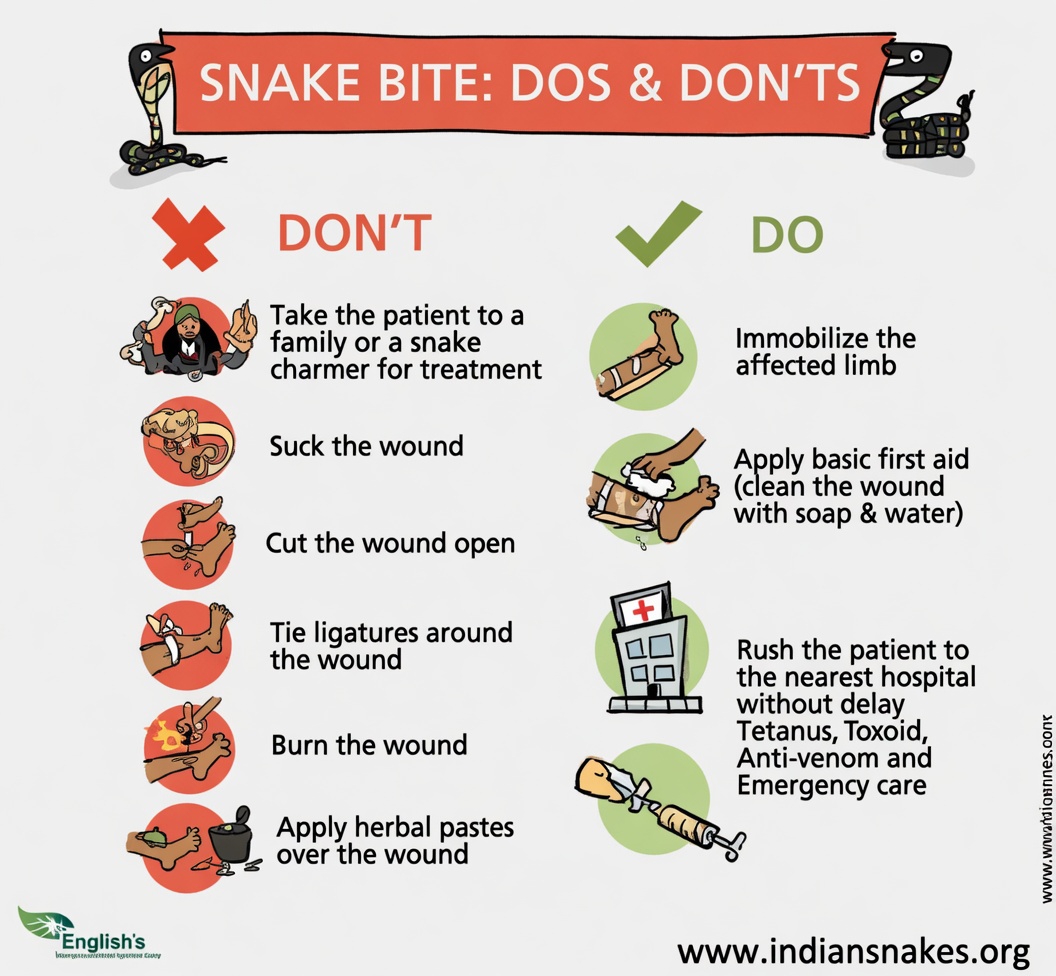
Many old snake bite remedies are now known to be unsafe. Some can even worsen tissue damage or delay proper treatment.
Avoid the following:
- Do not use a tourniquet. It can cut off blood flow and increase injury.
- Do not cut the wound.
- Do not try to suck out the venom.
- Do not place ice on the bite. Cold can make tissue damage worse.
- Do not drink alcohol or caffeine. Both may affect circulation and complicate the response.
Modern medical guidance is clear: skip outdated home remedies and focus on getting expert care as quickly as possible.
When to Seek Emergency Medical Help
You should get emergency care immediately if any of the following apply:
- You notice two puncture wounds that may be fang marks
- Swelling begins or spreads
- Pain becomes stronger over time
- You feel dizzy, nauseated, weak, or short of breath
- You are unsure what kind of snake caused the bite
Even if the bite seems minor, a hospital evaluation is still the safest choice. Some venom-related effects can be delayed, and only a medical professional can properly assess the risk.
How to Prevent Snake Bites Outdoors
The safest snake bite is the one that never happens. A few simple precautions can greatly reduce the risk during outdoor activities.
Smart prevention tips
- Wear sturdy boots and long pants in areas where snakes are common
- Stay on clear trails whenever possible
- Avoid walking through tall grass, especially after dark
- Never place your hands into holes, under rocks, or into hidden spaces
- Shake out shoes, sleeping bags, and gear before using them
- Teach children to observe wildlife from a safe distance and never approach snakes
Being alert and prepared makes hiking, camping, and exploring much safer.
Final Thoughts
Recognizing the possible differences between venomous and non-venomous snake bite marks can help you act quickly and wisely. Bite patterns, swelling, pain level, and other symptoms may offer useful clues, but no visual sign is completely reliable. The most important steps are to remain calm, give basic first aid, and seek medical attention without delay.
And remember the key fact many people overlook: some venomous snakes deliver dry bites, meaning no venom is injected. That is exactly why every snake bite should be treated seriously, even if it does not look severe at first.
Frequently Asked Questions
Can a non-venomous snake bite still be dangerous?
Yes. Even without venom, the bite can lead to infection, skin irritation, or an allergic reaction. Clean the area carefully and watch for warning signs such as worsening redness, fever, or increasing pain.
What if there are no clear fang marks?
You should still get medical care. Not every venomous bite leaves obvious punctures, and some dry bites can resemble non-venomous ones. A doctor is the best person to determine the level of danger.
How soon do symptoms of a venomous bite appear?
They may begin within minutes, but in some cases they take hours to fully develop. Do not wait for symptoms to get worse before seeking help.
Can a bite be serious even if it does not hurt much at first?
Yes. Some dangerous bites may seem mild early on. Pain level alone is not a reliable measure of risk, which is why every snake bite deserves medical attention.