Hair Loss, Dandruff, or Weak Strands? The Aloe Vera Oil Routine People Use to Revive Hair Naturally
Have you ever checked your brush or the shower drain and noticed more hair than you expected? Hair shedding, fragile strands, and slow growth are common concerns—and they can easily affect confidence. Everyday stressors like a dry scalp, nutrient gaps, styling damage, and environmental exposure may leave hair looking dull, brittle, and harder to manage.
What if a simple, natural ingredient could help deeply nourish your scalp and support stronger-looking hair over time?
Homemade aloe vera oil (made from aloe gel infused into a carrier oil) has become a go-to option in natural hair care. Because aloe vera is rich in hydrating and scalp-soothing compounds, this oil may help improve scalp comfort and encourage healthier-looking, shinier strands—especially when prepared correctly and used consistently. Below, you’ll learn what makes aloe vera oil beneficial, how to make it at home, and how to apply it step by step.
Why Aloe Vera Oil Can Be Helpful for Hair
Aloe vera has been used for centuries in traditional beauty routines. The clear gel inside the leaves contains key vitamins such as A, C, E, and B12, along with minerals, enzymes, and amino acids that can support overall scalp health.
When aloe gel is infused into a plant-based carrier oil, the mixture becomes easier to spread through the scalp and hair and may absorb more comfortably than gel alone. Aloe’s naturally moisturizing and calming qualities can help keep the scalp balanced, creating a better environment for hair follicles.
It may also help reduce irritation, dryness, and buildup—factors that often interfere with healthy-looking hair growth and contribute to flaking.
Key Benefits of Aloe Vera Oil for Scalp and Hair
With regular use, aloe vera infused oil may offer several noticeable improvements:
- Deep hydration – Helps combat dryness that can lead to brittle, breakage-prone hair.
- Scalp soothing – Aloe’s naturally calming properties may reduce discomfort, itching, and flaking.
- Stronger-looking strands – Nutrients and fatty acids from the carrier oil can help minimize breakage.
- More shine and softness – Leaves hair smoother, more nourished, and easier to detangle.
- Healthier scalp environment – May help loosen dead skin and support long-term scalp moisture.
Choosing Your Carrier Oil
You can customize your aloe vera oil by selecting a base oil that suits your hair type:
- Coconut oil: penetrates the hair shaft well; ideal for dry or damaged hair
- Olive oil: antioxidant-rich and deeply nourishing
- Sweet almond oil: lighter texture; often preferred for fine hair or oil-prone scalps
How Aloe Vera May Support Hair Growth
Healthy hair appearance is closely tied to a balanced scalp and resilient follicles. Aloe vera contains enzymes that may help lift away dead skin cells and residue that can accumulate around follicles.
At the same time, aloe’s hydrating effect can help keep the scalp moisturized without feeling harsh, supporting a more comfortable baseline for growth. Some plant compounds in aloe are also associated with follicle support, which may contribute to hair that looks stronger and fuller with consistent care.
How to Make Aloe Vera Oil at Home
Making DIY aloe vera oil is simple, budget-friendly, and uses natural ingredients.
Ingredients
- 2–3 large aloe vera leaves
- 1 cup carrier oil (coconut, olive, or almond)
- A small pot or a double boiler
- A fine strainer or clean cloth
- A clean glass jar for storage
Step-by-Step Instructions
-
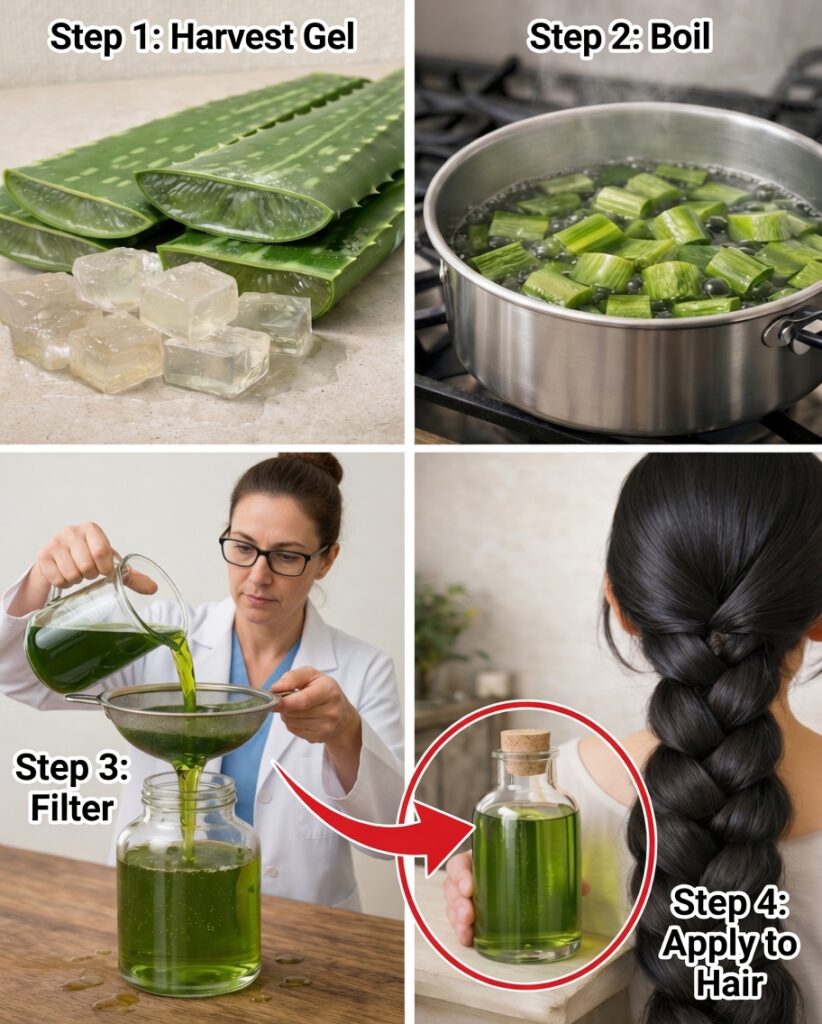
Prepare the aloe
- Rinse the leaves thoroughly.
- Trim off the thorny edges.
- Slice the leaf open and scoop out the clear gel, avoiding the yellow layer near the skin.
-
Chop the gel
- Cut the gel into small pieces to help it infuse more evenly.
-
Combine with oil
- Add your chosen oil to a pot over low heat, then add the aloe pieces.
-
Heat gently
- Warm the mixture on low, stirring occasionally.
- It may bubble as moisture evaporates. Continue until the aloe turns slightly golden and the oil looks clearer (about 10–20 minutes).
- Keep the heat low to avoid burning.
-
Strain and store
- Let it cool slightly, then strain into a clean glass jar.
- Store in a cool, dark place. It can last for several weeks.
How to Use Aloe Vera Oil for Best Results
Consistency matters most. Choose the method that fits your routine:
Scalp massage treatment
- Warm a small amount slightly.
- Massage into the scalp for 5–10 minutes.
- Leave on for 30 minutes (or overnight), then shampoo.
Nourishing hair mask
- Mix aloe vera oil with a little honey or plain yogurt.
- Apply to scalp and hair for 30–45 minutes, then rinse thoroughly.
Split-ends and frizz control
- Smooth a few drops onto the ends to add shine and reduce frizz.
Frequency: Use 1–2 times per week. Many people notice changes after several weeks of steady use.
What Results Can You Expect?
With ongoing use, improvements often start with softer texture, more shine, and less breakage. Over time, a calmer, better-hydrated scalp may support hair that looks stronger and more voluminous.
While aloe vera oil isn’t a miracle cure for hair loss, it can be a valuable natural addition to a broader hair care routine focused on scalp health, gentle handling, and nourishment.
Important Note (Safety Disclaimer)
This article is for informational purposes only and does not replace medical advice. Aloe vera is generally considered safe for topical use, but sensitivities can occur. Always do a patch test before applying widely, and consult a healthcare professional if you experience persistent scalp issues or excessive hair shedding.