Soursop (Guanabana) and Cancer: Myths vs. What Science Actually Says
Online you can find thousands of posts claiming that soursop (guanabana) “cures cancer.” The idea has been repeated so often that many people take it as fact, even though the reality is far more complex. If you are looking for serious, evidence-based information about guanabana and cancer, this guide explains clearly what has been studied, what has not been proven in humans, and why absolute promises are risky.
Important notice: This article is for information only and does not replace medical evaluation. For cancer, any changes to treatment must be discussed with your oncologist or medical team.
What Is Guanabana and Why Is It Linked to Cancer?
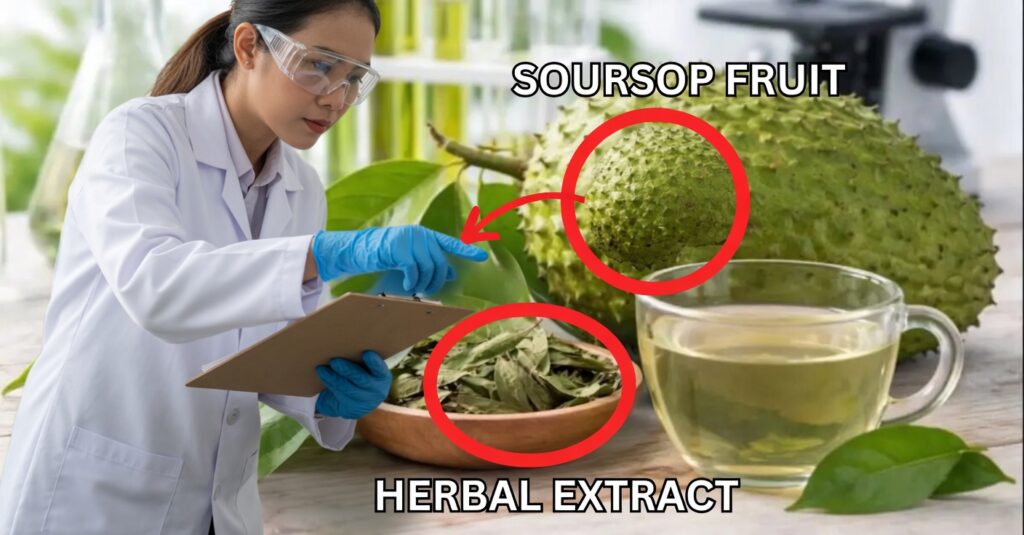
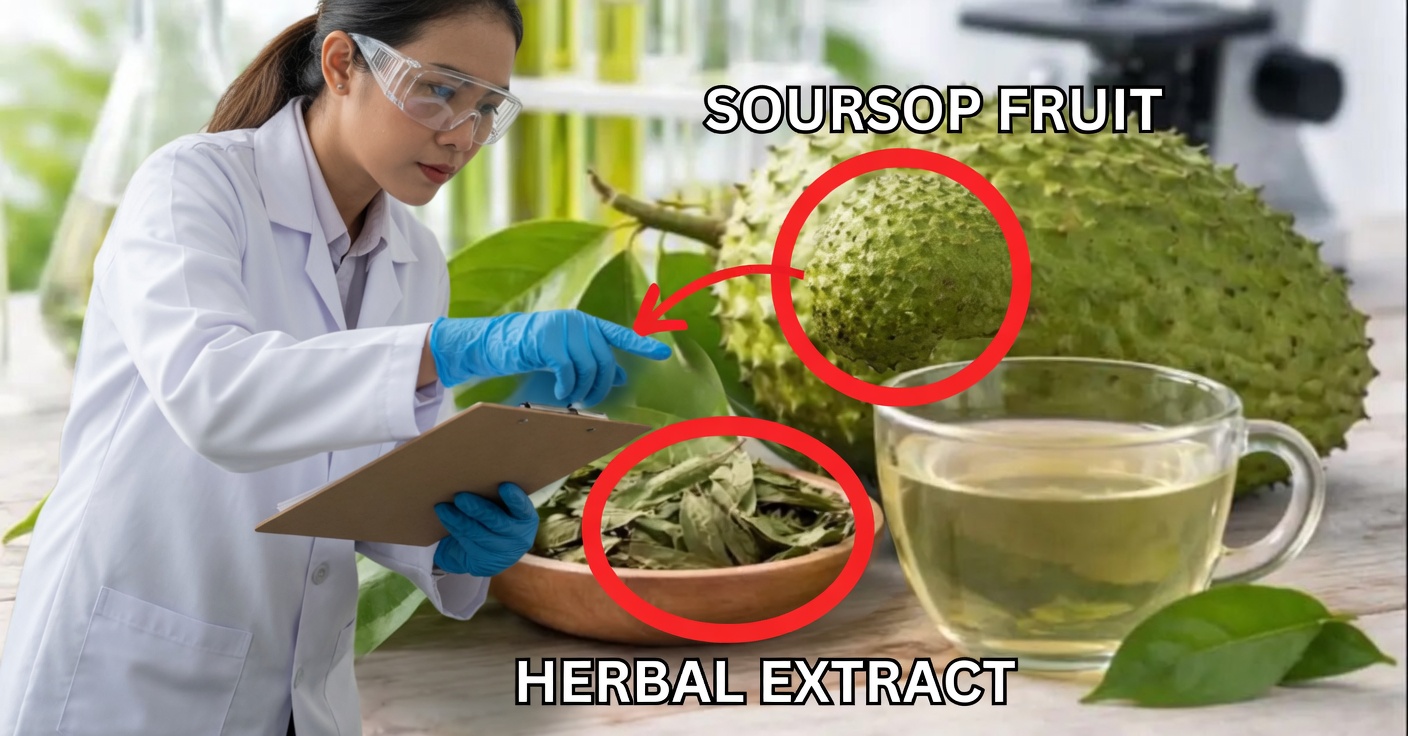
Guanabana (Annona muricata), also called soursop or graviola, is a tropical fruit eaten around the world. In traditional medicine, not only the fruit but also the leaves and stems are used, usually in teas or infusions.
The connection with cancer comes from plant compounds found in guanabana—especially acetogenins—that show biological activity against certain cells in laboratory experiments. Some of these compounds have attracted scientific interest because they can affect cancer cells in test tubes.
The problem arises when this early, preliminary research is presented online as if it were a proven cure for cancer in humans, which is not supported by solid clinical evidence. Major cancer centers such as Memorial Sloan Kettering Cancer Center have reviewed the data and highlight that the evidence in humans is insufficient to claim that guanabana treats or cures cancer.
Before You Believe or Share: Types of Scientific Evidence
A big part of the confusion comes from mixing different levels of scientific evidence. Not all studies carry the same weight:
-
In vitro (laboratory) studies
- Tests done on cells in a petri dish or test tube.
- Useful to explore mechanisms, but they do not show how a substance works in the human body.
-
Animal studies
- Experiments in animals (e.g., mice, rats).
- Help researchers understand how a compound might behave in a living organism, but do not guarantee it will be effective or safe for humans.
-
Clinical trials in humans
- Carefully designed studies with people.
- These are the only way to determine whether something truly works as a treatment, what dose is appropriate, who might benefit, and what side effects or risks it has.
Most of the popular claims about guanabana and cancer are based mainly on lab and animal studies, not on well-designed human clinical trials. Organizations like Cancer Research UK stress that this kind of early evidence is not enough to recommend guanabana as a cancer treatment.
Common Myths About Guanabana as a Cancer Cure
Myth 1: “Guanabana cures cancer”
So far, leading cancer organizations and research institutions agree:
There is no reliable clinical evidence showing that guanabana can treat or cure cancer in humans. Laboratory results are interesting, but they are only the first step, not proof of a cure.
Cancer Research UK and other expert bodies explicitly state that, at this time, guanabana cannot be recommended as a cancer treatment.
Myth 2: “It works better than chemotherapy”
Chemotherapy and other oncology treatments (such as radiotherapy, targeted therapies, and immunotherapy) are based on decades of rigorous clinical research. Their benefits and risks are documented in large numbers of patients.
In contrast, guanabana does not have this level of clinical testing in humans. There are no strong data showing that it is more effective than chemotherapy—or that it can replace standard cancer treatments. Sources like The ASCO Post emphasize that it should not be viewed as an alternative to evidence-based cancer care.
Myth 3: “Tea made from guanabana leaves dissolves tumors”
One of the most common claims is that drinking guanabana leaf tea can “shrink” or “eliminate” tumors. However:
- There are no robust clinical trials showing that guanabana leaf tea can remove tumors in humans.
- Many online articles confuse in vitro effects on cancer cells with real results in patients.
In real life, the human body is complex. Absorption, metabolism, dosage, and potential toxicity all influence what actually happens. Institutions such as Memorial Sloan Kettering Cancer Center underline the lack of solid evidence supporting leaf teas as an effective cancer therapy.
Myth 4: “Because it’s natural, it can’t be harmful”
“Natural” is not the same as “harmless.” Many powerful drugs and toxins come from plants.
In the case of guanabana, researchers have investigated possible neurological risks linked to compounds such as annonacin (one type of acetogenin). Studies suggest that frequent or long-term consumption of products from the Annonaceae family (which includes guanabana) may be associated with certain neurological problems in specific populations.
Scientific reports collected in PubMed point toward potential neurotoxicity, especially with high and repeated exposure—for example, through concentrated extracts, teas, or supplements.
Myth 5: “It works for every type of cancer”
Cancer is not a single disease. There are many types and subtypes, each with different behaviors, mutations, and recommended treatments.
Any product marketed as a universal cure for all cancers is, by definition, a red flag. Modern oncology is highly specialized; no single substance has been proven to cure all cancers.
Key Facts About Guanabana and Cancer
Fact 1: The compounds are scientifically interesting, but human benefit is unproven
Reviews and experimental studies report that some guanabana compounds show anticellular or cytotoxic activity in lab models and experimental systems. This is valuable for scientific exploration and may inform future drug development.
However, this does not mean that eating the fruit, drinking the tea, or taking supplements has been shown to treat cancer in human patients. Even reviews that look at its use in people highlight major limitations in study quality and emphasize the need for caution.
Publications such as those in mjpharm.org note that the existing evidence is preliminary and not strong enough to recommend guanabana as a medical treatment.
Fact 2: As a fruit, it can be part of a balanced diet (in moderation)
When consumed as a food, guanabana can be part of a varied, balanced diet—like many other fruits. Its value here is mainly nutritional: vitamins, fiber, and hydration.
This is very different from using guanabana as an “anticancer therapy.” Enjoying the fruit as an occasional food does not mean you are “treating cancer” with it.
Fact 3: A complementary practice is not a substitute for medical treatment
Some people with cancer are interested in traditional or natural remedies as a way to:
- Support appetite or hydration
- Feel more in control
- Honor cultural or family practices
Using guanabana in this context must be clearly distinguished from using it as a replacement for proven therapies.
If someone with cancer wants to use guanabana in any form (fruit, tea, etc.), the safest approach is to:
- Discuss it openly with their oncology team
- Avoid stopping or delaying treatments that have been shown to improve survival and quality of life
Organizations like Cancer Research UK consistently warn against abandoning evidence-based cancer treatments in favor of unproven alternatives.
Risks and Precautions: What Is Often Left Out
Safety is one of the most overlooked aspects in social media posts and viral articles.
Research has explored a possible connection between high consumption of Annonaceae products (including herbal infusions) and atypical parkinsonism in certain populations. Experimental studies also indicate potential neurotoxic effects of compounds like annonacin.
This does not mean that “eating guanabana causes Parkinson’s disease.” It does mean that frequent, long-term, or concentrated use—especially of leaves, extracts, or supplements—should be approached with caution.
Based on current knowledge, it is wise to avoid:
- Capsules or concentrated extracts from unknown or unregulated sources
- “Treatment protocols” recommending daily use for months without medical supervision
- Combining guanabana supplements with cancer treatments without informing your oncologist
Two key concerns are:
- Safety (possible toxicity, especially neurological)
- Interactions with medications, including chemotherapy, blood thinners, or other long-term drugs
Can You Drink Guanabana Leaf Tea?
If you are interested in guanabana leaf tea for cultural or traditional reasons—not as a cancer treatment—the guiding principles are moderation and medical guidance.
Traditional infusion (occasional use)
An example of a traditional preparation:
- 3–5 clean guanabana leaves
- 2 cups of water
Preparation:
- Bring the water to a boil.
- Add the leaves.
- Simmer on low heat for about 10 minutes.
- Let it sit for a few minutes, then strain.
Suggested cautious use (general, not medical advice)
- About ½ to 1 cup, up to 2–3 times per week, not on a daily basis.
- Avoid continuous, long-term use without professional supervision.
When it is NOT recommended without medical advice
You should not use guanabana leaf tea or supplements without consulting a doctor if you:
- Are receiving cancer treatment (chemotherapy, radiotherapy, targeted therapies, immunotherapy)
- Have low blood pressure or neurological conditions
- Take regular medications, including anticoagulants (blood thinners)
- Are pregnant or breastfeeding
The goal is not to “ban” traditional practices, but to prevent a cultural or occasional habit from becoming an intense, prolonged, and uncontrolled intervention, especially in people who are already under medical treatment.
How to Talk About Guanabana With Your Doctor
Many patients do not tell their doctors about herbal or traditional remedies because they fear being judged. However, your medical team can only protect you from risks if they know what you are taking.
You can bring up the topic in simple, neutral ways, such as:
- “I’ve been reading about guanabana and cancer and would like to know if it is safe for me.”
- “Could it interact with my cancer medications or other drugs I’m taking?”
- “Would you recommend avoiding the leaves or extracts and just eating the fruit occasionally instead?”
These questions help your oncologist or healthcare provider give advice specific to your situation, taking into account your diagnosis, treatments, and other health factors.
Conclusion
Based on the clinical evidence available today, guanabana is not a proven cure for cancer. It is a plant and fruit that contains biologically active compounds which have sparked scientific interest, mostly in laboratory and experimental settings, but this has not translated into confirmed benefits in human cancer patients.
The true danger is not the fruit itself but the misinformation surrounding it:
- Promises of guaranteed cures
- Marketing of “miracle” extracts and supplements
- Pressure on patients to abandon proven treatments in favor of untested alternatives
Organizations such as Cancer Research UK emphasize that this kind of misinformation can be harmful, especially if it leads patients away from therapies that can genuinely improve survival.
If you want to include something “natural” in your routine, focus on:
- A balanced, varied diet (where guanabana can be one fruit among many)
- Regular medical follow-up and honest communication with your healthcare team
- Caution with concentrated leaves, extracts, and long-term supplement use
This combination supports your overall health, respects your cultural preferences, and helps prevent unrealistic expectations or avoidable risks.