Subtle Early Signs of Rising Blood Sugar You Should Not Ignore
Many people experience gradually increasing blood sugar for years without recognizing the warning signs. The body often gives off quiet clues before any major problem becomes obvious. These small changes can influence daily comfort, including how your skin looks and feels or strange sensations in your hands and feet. Because they seem minor, they are often blamed on aging, stress, or a busy lifestyle.
Noticing these signals early can make a meaningful difference. It gives you the chance to make smarter health decisions before symptoms become more serious. Below, you’ll learn about several commonly overlooked signs supported by trusted health sources, along with practical ways to stay ahead of potential problems.
Why Early Warning Signs Deserve Attention
Long-term high blood sugar can affect the body in ways that are easy to miss at first. According to organizations such as the American Diabetes Association and Mayo Clinic, identifying early changes can help people respond sooner and make more informed choices about their health.
The challenge is that these signs are rarely dramatic. Instead of demanding attention, they often show up quietly and gradually. Some of the earliest clues may appear in the skin, while others are felt as unusual sensations that seem unrelated at first.
Tingling or Numbness in the Hands and Feet
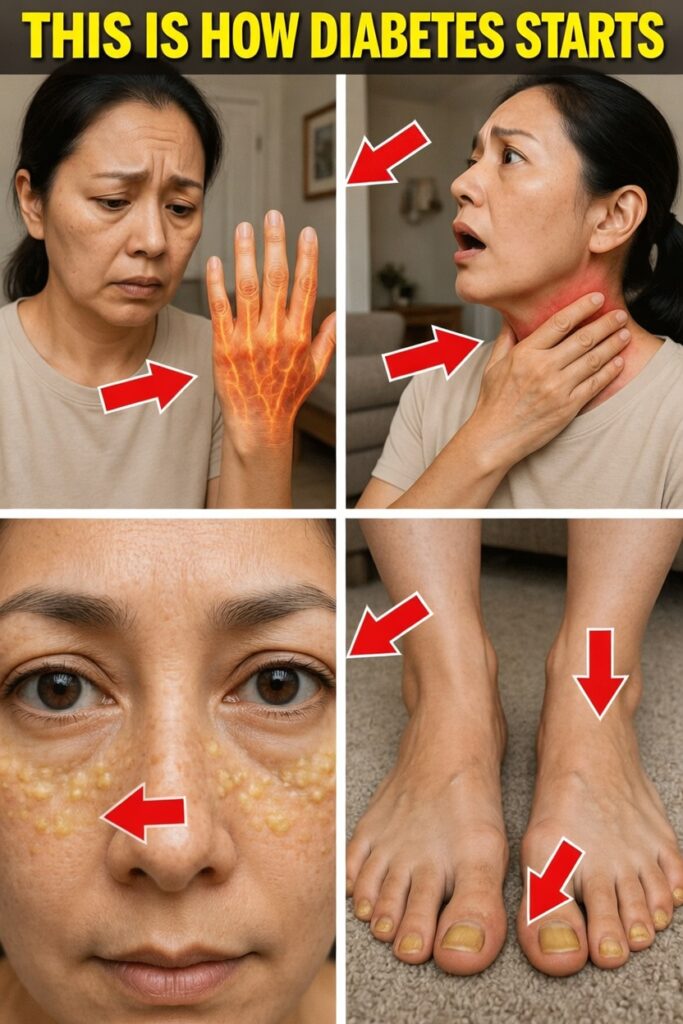
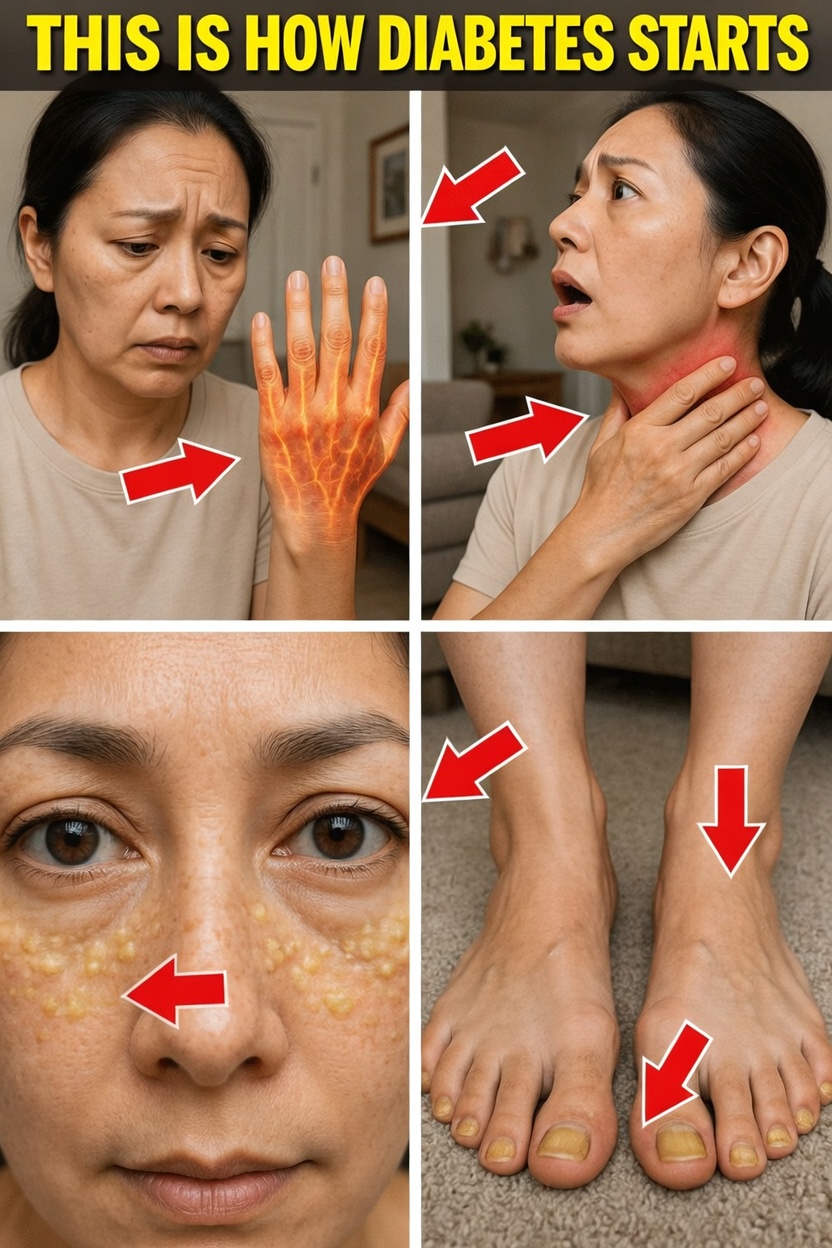
A common early symptom is a tingling, burning, or numb sensation in the extremities. This often starts in the fingers, toes, or the bottoms of the feet. Persistently elevated blood sugar may affect nerve function over time, and these changes can begin very subtly.
In many type 2 diabetes cases, this neuropathy-like discomfort develops slowly. You may notice your hands “falling asleep” more often than usual, or a mild burning feeling when resting.
Signs to pay attention to:
- Tingling that comes and goes and may feel stronger at night
- Less sensitivity when touching hot or cold surfaces
- Brief numbness after sitting or standing for long periods
Recognizing these patterns early can encourage timely lifestyle changes and medical follow-up.
Changes in Skin on the Face, Neck, and Body Folds
The skin often reflects what is happening inside the body. One important sign is the appearance of dark, velvety patches, especially on the neck, underarms, or groin. This condition, called acanthosis nigricans, can be an early sign of insulin-related issues. The skin may appear thicker and darker, almost like a stain that does not wash away.
Some people may also notice small yellowish bumps or rough areas on the face. Sources such as the American Academy of Dermatology have noted that these skin changes can sometimes be linked to blood sugar imbalance.
Watch for these skin clues:
- A velvety texture in body folds
- Sudden development of small, firm bumps
- Persistent changes that do not improve with normal skincare

Dry, Itchy Skin and Foot Changes
Dry or itchy skin is common, but when it appears alongside other symptoms, it may point to circulation issues or changes in moisture balance associated with higher glucose levels. This often becomes most noticeable in the legs and feet, where the skin can feel flaky, tight, or irritated.
Toenails may also begin to change. Over time, they can become thicker, brittle, or yellowish in color. Reduced circulation may contribute to these shifts, making nail care more difficult.
Common foot-related signs include:
- A yellow tint on one or more toenails
- Thick nails that are difficult to trim
- Cracks around the heels or between the toes
- Ongoing dryness that returns quickly
Using moisturizer regularly may help relieve discomfort, but it is also important to keep track of any visible changes.
Other Mild Symptoms People Often Miss
In addition to nerve and skin changes, the body may show other subtle signs that are easy to dismiss.
These may include:
- Feeling thirstier than usual
- Going to the bathroom more often
- Unexplained fatigue even after enough rest
- Blurry vision that seems to come and go
- Minor cuts or sores that heal slowly
Guidance from sources like the CDC and WebMD frequently highlights these symptoms, especially when they appear together with the physical changes mentioned above.
Common Signs vs. Less-Discussed Clues
| Common Signs | Less-Obvious Signs |
|---|---|
| Frequent urination | Tingling in hands or feet |
| Excessive thirst | Darkened skin on the neck or underarms |
| Extreme tiredness | Yellowish toenails |
| Blurry vision | Small facial bumps |
| Slow-healing wounds | Persistent dry, itchy skin |
Recognizing combinations of symptoms can help you see the bigger picture sooner.

Simple Steps You Can Start Today
You do not need to overhaul your life overnight. Small, steady habits can support your body and improve awareness without creating stress.
Try these practical actions:
-
Track energy and thirst levels
- Notice how often you feel unusually tired or thirsty.
- Keep a simple record for a week to identify patterns.
-
Check your skin routinely
- Look at your neck, underarms, and feet regularly.
- Use a gentle, fragrance-free moisturizer every day to reduce dryness.
-
Give extra attention to your feet
- Examine your toenails and skin after bathing.
- Cut nails straight across and choose breathable socks.
-
Move your body consistently
- Aim for 20 to 30 minutes of walking on most days.
- Even light activity can support circulation and overall wellness.
-
Choose balanced meals
- Focus on vegetables, lean protein, whole foods, and fiber-rich choices.
- Balanced eating can help support more stable energy throughout the day.
-
Stay current with check-ups
- If you notice ongoing changes, talk with a healthcare professional.
- Personalized guidance is the best way to understand what your symptoms may mean.
These habits are manageable, practical, and helpful for building body awareness over time.
Overlooked Daily Habits That Can Help
Many people focus only on food and exercise, but everyday routines also matter. Consistent sleep, stress control, and beverage choices can all support better overall health.
Helpful lifestyle habits include:
- Sleeping 7 to 9 hours each night
- Practicing stress relief through deep breathing or relaxation exercises
- Reducing sugary drinks
- Maintaining a steady daily routine when possible
Research suggests these habits can positively influence blood sugar stability and energy levels. Even simple improvements may leave you feeling more energized and less bothered by unusual symptoms.
Final Thoughts: Pay Attention to What Your Body Is Telling You
Mild symptoms can be easy to overlook, but they may be the body’s way of signaling that something needs attention. Tingling in the hands or feet, changes in skin texture, dryness, discoloration, and unexplained fatigue are all worth noticing.
By staying aware and building supportive daily habits, you give yourself a better chance to protect long-term health. Early action does not have to be overwhelming—it starts with observation and small consistent steps.
FAQ
What skin signs can appear early when blood sugar is rising?
Some early skin-related clues include darkened patches in body folds, ongoing dryness and itching, or small bumps on the skin. These changes may suggest it is time to review your habits and speak with a healthcare professional.
How do I know if foot changes may be linked to overall health?
Yellowish or thickened toenails, dry skin, cracks, or tingling sensations may be connected to circulation or nerve changes. Checking your feet regularly and moisturizing them can help you monitor any progression.
Should I talk to a doctor if I only have one or two mild symptoms?
Yes. If any symptom continues or becomes more noticeable, it is a good idea to discuss it with a healthcare provider. Proper evaluation can help determine the cause and guide the next steps.