Feeling Pain, Weakness, or Afraid of Falling? These 3 Moves Can Change Everything
After turning 60, many people notice a clear shift: strength isn’t what it used to be. Even if you keep a daily walking routine, you may still experience weaker muscles, less steady balance, and that uncomfortable stiffness after sitting for a while. Walking is excellent for heart health and mental well-being, but experts emphasize that walking alone is not enough to slow the age-related loss of muscle.
Why Strength Declines After 60 (And Why It Matters)
As we age, the body naturally loses muscle mass—a process known as sarcopenia. After 60, this decline often accelerates, which can lead to:
- Reduced strength and stamina
- Poorer posture and mobility
- Higher risk of trips and falls
- More difficulty with everyday tasks
The encouraging news is that there’s a practical solution: adding strength training to your weekly routine.
The Simple Fix: Strength Training (No Gym Required)
Research consistently shows that resistance-based exercises are more effective than walking alone for building and maintaining muscle and supporting bone strength. For adults over 60, many specialists recommend strength exercises at least twice per week.
Even better: you don’t need a gym membership or fancy equipment. With just three bodyweight-based movements, you can improve strength, balance, posture, and overall energy.
The 3 Most Recommended Exercises
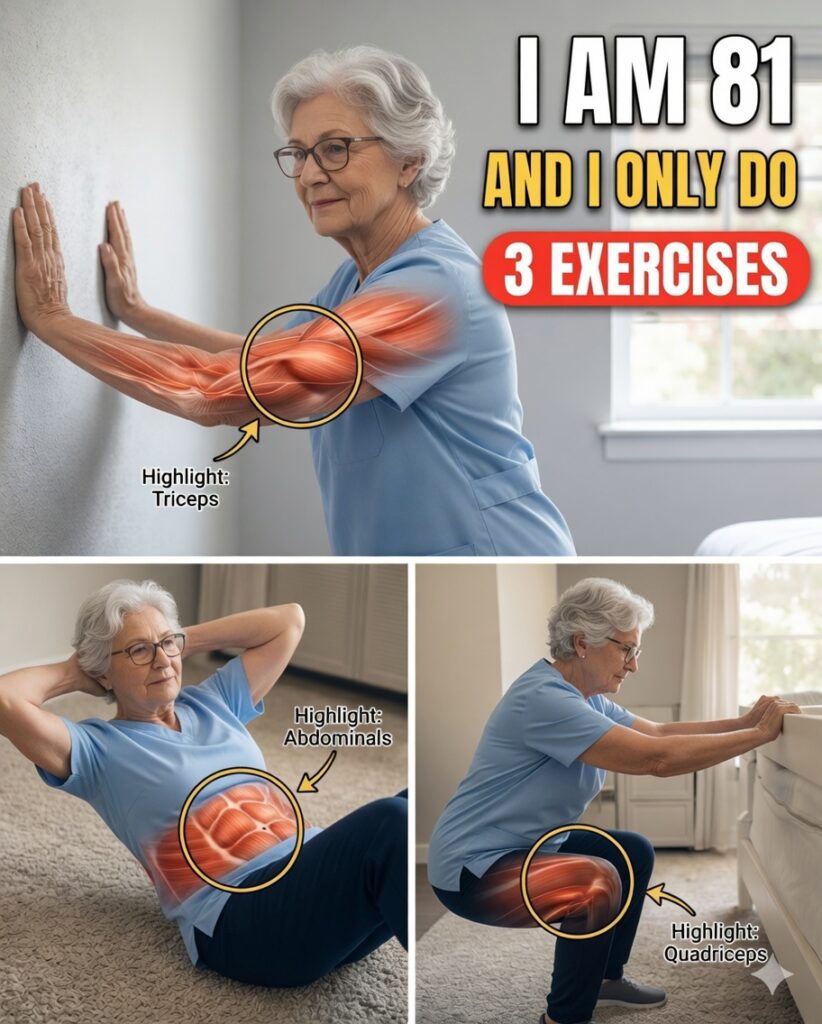
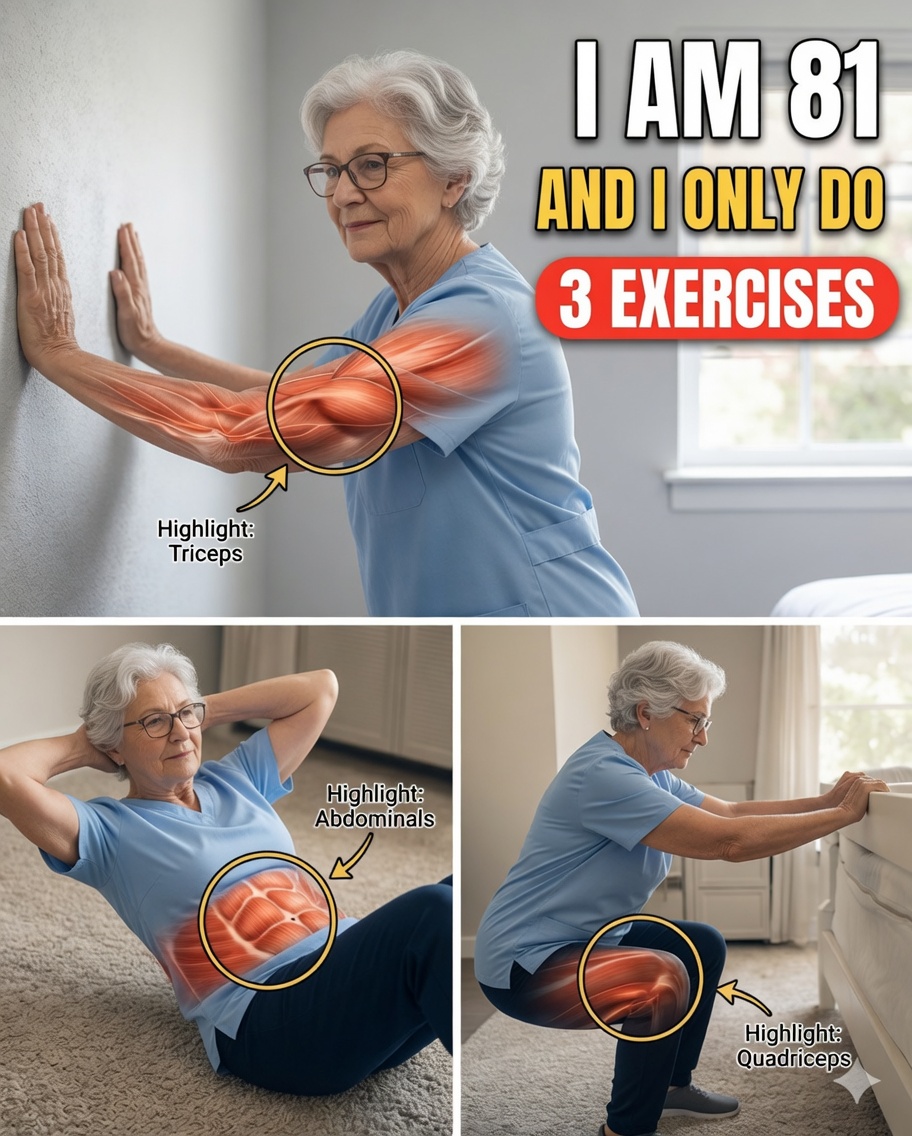
1. Wall Push-Ups (Wall Press)
This is a beginner-friendly version of a push-up that strengthens the chest, shoulders, arms, and core.
How to do it:
- Stand facing a wall at arm’s length.
- Place your hands on the wall at chest height, aligned with your shoulders.
- Keep your body straight and bend your elbows slowly, bringing your chest closer to the wall.
- Push back to the starting position.
- Do 8–12 repetitions.
Why it helps: This movement supports daily actions like pushing doors or objects and can help reinforce better posture.
2. Doorway Bar Pull-Ups (Assisted Options)
This exercise targets the back and arms and helps counter the rounded-shoulder posture that becomes common with age.
How to do it:
- Install a secure, reliable doorway pull-up bar.
- Grip the bar firmly.
- If lifting your body is too difficult, start by:
- holding your weight for a short time, or
- lowering yourself slowly with control.
- Another option: keep your feet on the floor and pull yourself up partially.
- Do 5–8 repetitions.
Bonus benefit: It also improves grip strength, which supports everyday tasks like carrying bags or opening jars.
3. Squats (Sit-to-Stand Squats)
One of the best exercises for strengthening the legs and hips while improving balance and stability.
How to do it:
- Stand with feet shoulder-width apart.
- Bend your knees and send your hips back as if you’re sitting down.
- Keep your chest lifted.
- Lower only as far as feels comfortable, then return to standing.
- Do 8–12 repetitions.
Need support? Use a sturdy chair for assistance or perform a controlled sit-to-stand.
Why These Exercises Beat Walking Alone
Walking is great for cardiovascular health, but strength-focused movements do more for functional aging because they:
- Build and preserve muscle
- Improve balance and coordination
- Support bone density
- Increase independence in daily life
They also take less time: 10–15 minutes, 2–3 times per week—often far shorter than long walks.
A Simple Beginner Plan
- Choose 3 days per week (for example: Monday, Wednesday, Friday).
- Start with a 2-minute gentle warm-up.
- Do 2–3 sets of each exercise.
- Rest 60 seconds between sets.
- Finish with light stretching or a relaxed walk.
With consistency, many people start noticing improvements in 3–4 weeks.
Conclusion
Age doesn’t have to mean giving up strength or confidence. With three simple exercises, you can rebuild energy, improve balance, and stay independent longer.
Start slowly, listen to your body, and stay consistent—small steps done regularly create meaningful results.
Medical Disclaimer
This content is for informational purposes only and does not replace medical advice. Consult a healthcare professional before starting any exercise program, especially if you have pre-existing conditions.