Amlodipine Side Effects: What to Expect and When to Get Help
Millions of people take amlodipine every day to manage high blood pressure. While the medication is effective, some users notice body changes they did not expect. Swollen ankles after sitting for too long or a sudden feeling of heat in the face can be uncomfortable and even alarming at first.
These effects happen because amlodipine relaxes and widens blood vessels to improve blood flow. Although this is exactly how the medicine helps lower blood pressure, it can also lead to side effects that affect daily comfort. The reassuring part is that many of these reactions are mild and often fade as the body adjusts. Knowing what to expect can help you stay calm, track symptoms more confidently, and have more productive conversations with your doctor. There is also one simple strategy that many people do not start early enough, and it can be especially helpful.
Why Amlodipine May Cause Side Effects
Amlodipine is part of a medication group known as calcium channel blockers. Its main job is to relax blood vessels so blood can move through them more easily, which lowers blood pressure.
Because this effect changes circulation, other parts of the body may respond as well. According to trusted medical sources such as the Mayo Clinic, most side effects linked to amlodipine are mild and tend to improve over time. Still, responses vary from person to person, so it is important to pay attention to how your body reacts.
12 Common Amlodipine Side Effects Explained
Below is a practical guide to the side effects most often reported by people taking amlodipine. Understanding these symptoms can make them easier to recognize and discuss with a healthcare professional.
1. Swelling in the Ankles and Feet
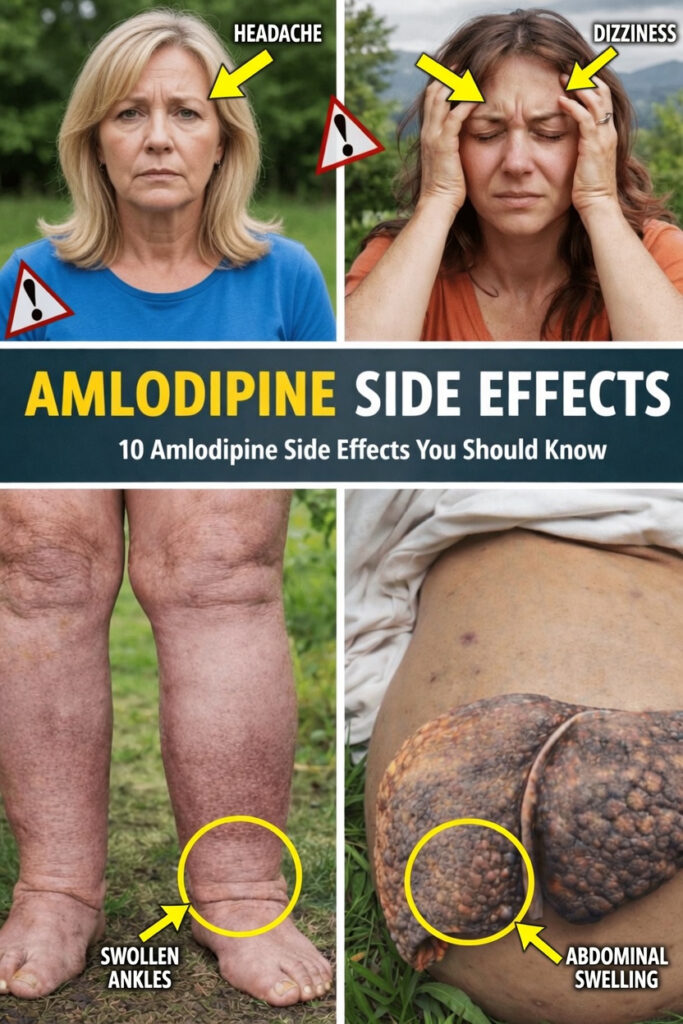
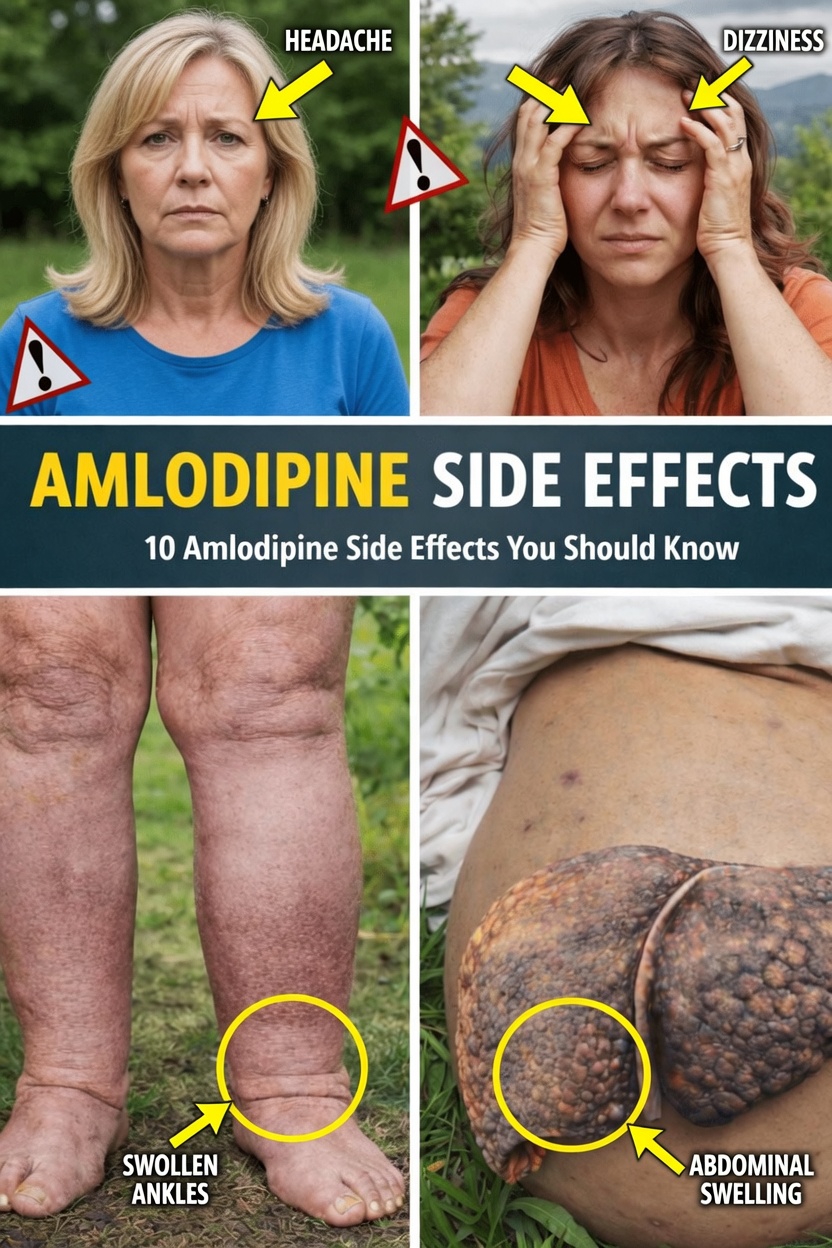
Ankle and foot swelling is one of the most commonly reported side effects. As blood vessels relax, fluid can collect in the lower legs. This may become more noticeable after long periods of sitting or standing, and some people find it worsens in hot weather. If swelling appears often, it helps to note when it happens.
2. Facial Flushing or Redness
Some people experience sudden warmth and redness in the face, neck, or upper chest. This happens because blood flow near the skin increases. It is usually brief and tends to be more common during the first few weeks of treatment.
3. Headaches
Mild or moderate headaches are fairly common, especially when starting amlodipine. They may feel like pressure or tightness across the forehead. Rest and proper hydration may help while your body adjusts, but ongoing headaches should be mentioned to your doctor.
4. Dizziness or Lightheadedness
A drop in blood pressure can make you feel dizzy, particularly when standing up too quickly. This may be more noticeable in older adults or during rapid position changes. Moving slowly can reduce the risk of feeling faint or unsteady.
5. Fatigue or Low Energy
Feeling unusually tired can happen in the early stage of treatment. As your body adapts to changes in circulation, energy levels may temporarily dip. Many people say this improves within a few weeks, but tracking daily energy can help you spot patterns.
6. Palpitations or a Strong Heartbeat
You may occasionally notice your heart beating harder, faster, or irregularly for short periods. While this is often temporary and not dangerous, it can still feel unsettling. The NHS notes that this type of reaction often settles as the body gets used to the medication.

7. Nausea
A mild queasy stomach may develop, especially around mealtimes. In many cases, this symptom is short-lived and becomes less noticeable over time.
8. Stomach Pain or Abdominal Discomfort
Some users report cramping or a general uncomfortable feeling in the stomach area. Although this is less common than swelling or headaches, it still deserves attention if it keeps happening.
9. A General Feeling of Warmth
In addition to facial flushing, some people notice a broad sensation of warmth throughout the body without having a fever. This is also related to blood vessel widening and usually passes on its own.
10. Drowsiness or Sleepiness
Daytime sleepiness can occur in some people taking amlodipine. This may be related to the dose and often improves once the body becomes more accustomed to the medicine.
11. Gum Swelling or Gum Changes
In less common cases, the gums may become swollen, enlarged, or more sensitive. This condition is called gingival hyperplasia. It is mentioned in long-term research, although it is generally less common with amlodipine than with some other medications in the same class.
12. Rare Changes in Liver Function
In rare situations, blood tests may show mild changes in liver enzymes. The FDA label notes that this is uncommon and usually not severe. Online images and stories can make this issue seem more dramatic than it usually is, so regular checkups remain the best way to monitor your health accurately.
It is important to remember that side effects are not the same for everyone. Some people notice only one or two mild symptoms, while others experience none at all.
When You Should Contact Your Doctor Immediately
Most amlodipine side effects are not dangerous, but some symptoms need prompt medical attention. Seek help right away if you notice:
- Sudden or severe swelling that spreads rapidly
- Chest pain, chest tightness, or trouble breathing
- Intense dizziness that leads to falls
- Yellowing of the eyes or skin
- Unusual bruising or bleeding
These problems are not common, but recognizing them early is important.
Simple Ways People Often Manage Discomfort
Only a doctor should change your medication or dose, but some everyday habits may help improve comfort while taking amlodipine:
- Elevate your legs for about 15 minutes several times a day if swelling occurs
- Drink enough water throughout the day
- Stand up slowly after sitting or lying down
- Keep a brief record of symptoms to discuss during appointments
- Wear comfortable shoes, especially if your feet feel swollen
These small steps can help many people feel more comfortable and more in control of their treatment.

One Helpful Step Many People Miss
As mentioned earlier, one of the most useful things you can do is keep a short daily symptom log. Write down how you feel, when symptoms appear, and whether anything seems to make them better or worse.
This simple habit can turn uncertainty into clear information. Instead of trying to remember vague details at your next appointment, you can show your doctor a pattern. That often makes it easier to adjust treatment, answer concerns, and reduce stress.
Final Thoughts
Amlodipine helps many people control blood pressure successfully, but understanding its possible side effects can make the experience much less stressful. Most reactions are mild, manageable, and temporary.
The best approach is to stay aware of changes in your body, communicate openly with your healthcare team, and monitor any symptoms that concern you. With the right information, it becomes much easier to use amlodipine with confidence.
Frequently Asked Questions
Do amlodipine side effects usually go away?
Yes. In many cases, side effects improve after a few weeks as the body adapts to the medication. If symptoms continue or become bothersome, speak with your doctor.
Can I stop taking amlodipine if the side effects bother me?
No. You should never stop taking amlodipine suddenly without medical advice. Your doctor can help you adjust the dose or explore other options safely.
Is leg swelling normal while taking amlodipine?
Leg and ankle swelling is one of the more common side effects of amlodipine. However, any new, persistent, or worsening swelling should be checked by a healthcare provider to rule out other possible causes.