Datura Stramonium: Uses, History, Risks, and Identification
Datura stramonium, widely known as thorn apple, devil’s trumpet, or jimsonweed, is one of the most intriguing and controversial plants in herbal history. It has been linked to traditional medicine, spiritual practices, and folklore across many cultures. At the same time, it is infamous for its powerful hallucinogenic effects and extreme toxicity.
This remarkable plant sits at the intersection of healing, ritual, and danger. Below is a closer look at what Datura stramonium is, how it has been used, why it is hazardous, and the role it has played throughout history.
What Is Datura Stramonium?
Datura stramonium is a rapid-growing plant in the nightshade family. It is easy to recognize because of its unusual appearance and strong biological effects.
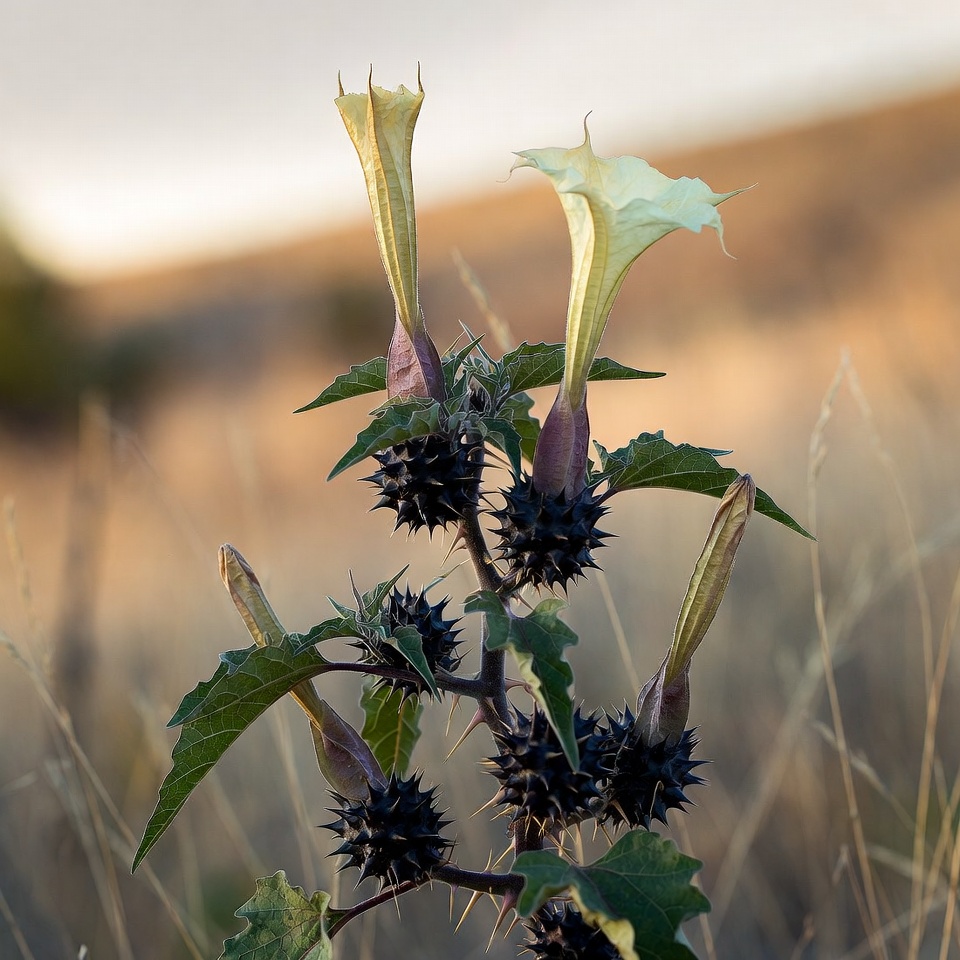
Key Characteristics
- Large trumpet-shaped flowers, usually white or purple
- Spiny seed pods covered with sharp thorns
- Potent chemical compounds with both medicinal and hallucinogenic action
For centuries, the plant has appeared in traditional healing systems, shamanic ceremonies, and even in the preparation of poisons.
Medicinal Uses of Datura Stramonium
Although Datura is highly toxic, it has historically been used in very small and carefully controlled amounts for therapeutic purposes. In traditional systems of medicine, it was valued for several effects.
1. Respiratory Support and Asthma Relief
Historically, the dried leaves of Datura were sometimes smoked to help ease:
- Asthma
- Bronchitis
- Certain breathing difficulties
This practice was believed to relax the airways and reduce respiratory spasms.
2. Pain Relief and Muscle Relaxation
In Ayurvedic medicine and other traditional healing methods, Datura was used as a natural analgesic for:
- Muscle pain
- Joint discomfort
- Inflammatory conditions
It was also sometimes applied externally in poultices to help relieve:
- Rheumatism
- Neuralgia
3. Sedative Effects and Sleep Support
In minimal doses, the plant was traditionally used to promote:
- Relaxation
- Calmness
- Relief from insomnia
Its sedative qualities made it notable, though also dangerous because of its narrow margin between dose and poisoning.
4. Antispasmodic and Digestive Uses
Datura was also used in folk medicine to reduce:
- Cramps
- Colic
- Digestive spasms
Its antispasmodic action made it a plant of interest in older herbal traditions.
Important Warning About Datura Use
Datura stramonium should never be used without expert medical supervision. Its toxic compounds are extremely powerful, and even small miscalculations can lead to severe poisoning.
Dangers and Toxicity of Datura Stramonium
One of the main reasons Datura is so feared is that every part of the plant is poisonous. It contains tropane alkaloids, including:
- Scopolamine
- Hyoscyamine
- Atropine
These compounds strongly affect the nervous system and can quickly become life-threatening.
Symptoms of Datura Poisoning
Poisoning may cause:
- Hallucinations
- Delirium
- Dry mouth
- Intense thirst
- Rapid heartbeat
- High body temperature
- Blurred vision
- Dilated pupils
- Confusion
- Paranoia
- Convulsions
- Coma in severe cases
Overdose can be fatal. In sensitive individuals, even direct contact with the plant may trigger skin irritation.
Datura in History, Spirituality, and Folklore
Datura has long carried an aura of mystery. Across different civilizations, it has been connected with magic, altered states of consciousness, prophecy, and the supernatural.
Cultural and Spiritual Significance
Ancient India and Ayurveda
In India, Datura appeared in Ayurvedic traditions, where it was used in tiny amounts for:
- Pain management
- Ritual purposes
- Expanding consciousness
Native American Traditions
Some Native American communities used Datura in:
- Vision quests
- Spiritual journeys
- Divination practices
Because of its psychoactive properties, it was associated with powerful but risky ritual experiences.
Witchcraft and Occult Practices
In occult traditions, Datura became linked with:
- Flying ointments
- Ritual intoxication
- Hallucinogenic ceremonies
Its intense mental effects contributed to its dark and mystical reputation.
European Folklore
In European belief systems, Datura was often viewed as a plant of the underworld. It was associated with:
- Sorcery
- Spirits
- Enchantment
- Forbidden knowledge
This folklore helped shape the plant’s enduring image as both magical and dangerous.
How to Identify Datura Stramonium
If you encounter Datura in the wild or in a garden, proper identification is essential.
Identification Features
- Flowers: Large, trumpet-shaped blooms in white or purple
- Leaves: Dark green with irregular, jagged edges
- Seed pods: Round, spiky capsules covered in thorns
- Odor: Strong and unpleasant smell
These features make the plant distinctive, but they should also serve as a warning.
How to Handle Datura Safely
Because of its toxicity, great care is necessary when dealing with this plant.
Safety Tips
- Do not ingest any part of the plant
- Avoid handling it with bare hands
- Wear gloves if contact is necessary
- Keep it away from children and pets
- Seek immediate medical attention if poisoning is suspected
Prompt treatment is critical in any possible case of exposure or overdose.
Final Thoughts
Datura stramonium is a plant of striking contrasts. It is historically important, medicinally significant in controlled contexts, and deeply rooted in spiritual and folkloric traditions. Yet it is also one of the most dangerous medicinal plants, with toxic effects that can be severe or even deadly.
Its story is a blend of medicine, mystery, and menace—a powerful reminder that not every natural remedy is safe simply because it comes from a plant.