Introduction to Ciabatta Bread
Ciabatta is a classic Italian bread celebrated for its crackly crust and light, open crumb. Its name, which translates to “slipper” in Italian, comes from its long, flat, slightly rustic shape that resembles a house slipper.
This artisan-style loaf, distinguished by its large, irregular holes, is ideal for sandwiches, panini, dipping in olive oil, or enjoying warm with a simple spread of butter. The charm of ciabatta lies in both its simplicity and its technique: a very wet, high-hydration dough that creates the signature chewy texture and airy interior.
Ciabatta originated in Italy’s Lombardy region in the early 1980s. It was developed as Italy’s answer to the rising popularity of the French baguette—bread that could compete in versatility while highlighting Italy’s own baking heritage. The result was a loaf that quickly spread beyond Italy and is now a staple in bakeries and home kitchens across the globe.
A defining feature of ciabatta is its high hydration. The large proportion of water in the dough is what creates the open crumb and satisfying chew. This wet dough can be tricky to handle, but careful handling and gentle folding techniques allow the gluten to develop while preserving the dough’s airy structure.
Another key element is slow fermentation. Ciabatta typically uses a pre-ferment called a biga, prepared the day before. This overnight fermentation builds complex flavor and strengthens the dough. By the time the final dough is mixed, it already has a head start in both taste and structure.
Baking ciabatta at home is deeply rewarding. The smell of freshly baked bread filling your kitchen, followed by the moment you slice into a loaf and see its beautiful, holey crumb, makes the time and patience worthwhile. With its crisp crust and tender interior, ciabatta is incredibly versatile—perfect for panini, bruschetta, or serving alongside soups and salads.
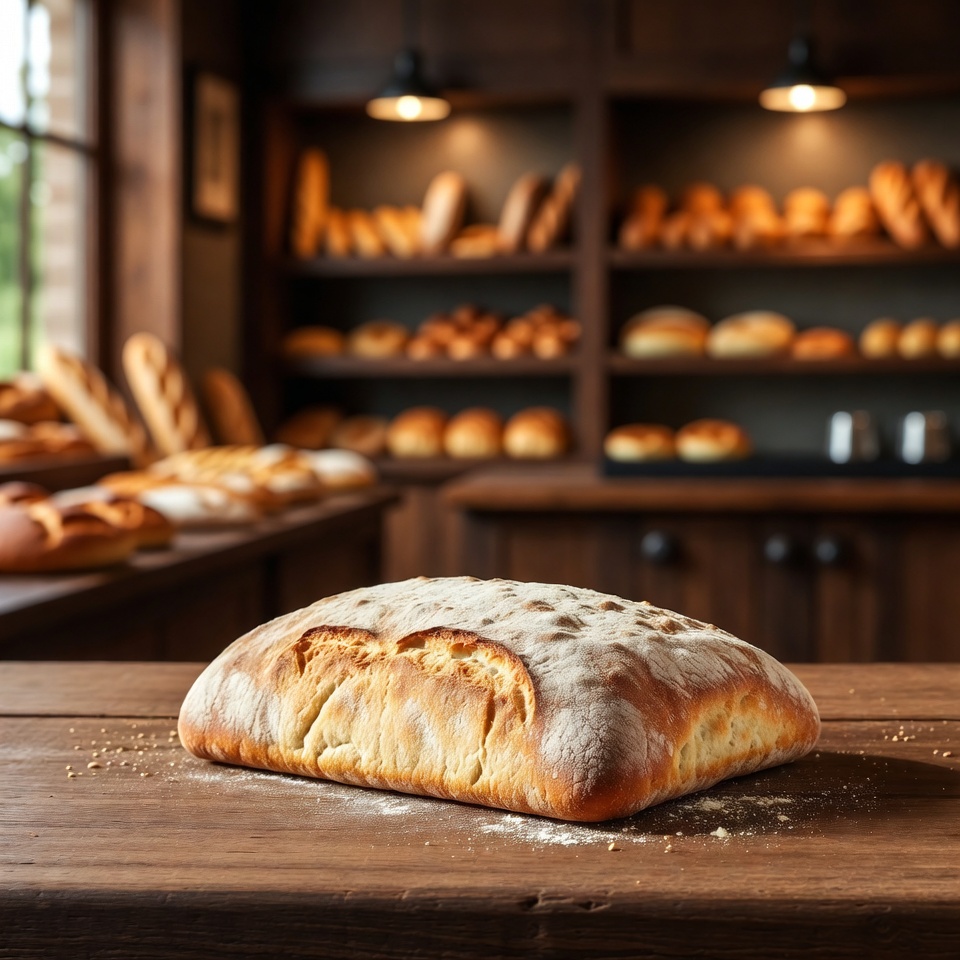
Visually, ciabatta is just as appealing as it tastes. Its flour-dusted crust, irregular shape, and rustic look give it an artisanal feel that instantly elevates any table. Sharing a homemade loaf with friends and family is a wonderful way to gather people, celebrate simple ingredients, and enjoy real, honest food.
In essence, ciabatta is a remarkable bread: crisp on the outside, airy and flavorful within. Its distinct characteristics and the craftsmanship involved in making it have earned it a place among the most beloved breads worldwide. Whether you’re an experienced baker or just beginning your bread journey, learning to bake ciabatta is a fulfilling process that delivers delicious results.
Ingredients
- 500 g (about 4 cups) all-purpose flour
- 10 g (2 teaspoons) fine salt
- 5 g (1 teaspoon) active dry yeast
- 400 ml (1 2/3 cups) room-temperature water
- 10 g (2 teaspoons) olive oil
- Extra flour for dusting
For the biga (pre-ferment)
(Taken from the total above)
- 100 g (about 3/4 cup) flour
- 100 ml (about 1/2 cup) water
- A pinch of active dry yeast
Step-by-Step Instructions
1. Prepare the biga (the day before)
- In a small bowl, mix 100 g flour, 100 ml water, and a pinch of yeast.
- Stir until a rough, shaggy dough comes together.
- Cover the bowl tightly with plastic wrap.
- Let it ferment at room temperature for 12–16 hours. By the next day, the biga should be bubbly, fragrant, and slightly domed.
2. Mix the final dough
- In a large mixing bowl, combine the remaining flour (400 g), salt, and the remaining yeast.
- Add all of the matured biga.
- Gradually pour in the remaining 300 ml of water while stirring with a spoon or dough whisk.
- Mix until you have a very wet, sticky dough. Resist the urge to add more flour—the dough is supposed to be highly hydrated.
3. Rest (autolyse)
- Cover the bowl with plastic wrap.
- Let the dough rest for 30 minutes.
- During this autolyse phase, the flour fully hydrates and gluten begins to form, making the dough easier to handle later.
4. Incorporate the olive oil and begin folding
- After the 30-minute rest, drizzle the olive oil over the dough.
- Using a dough scraper or lightly oiled hands, gently lift and fold the dough over itself several times to work in the oil.
- Aim for gentle, deliberate movements—this strengthens the gluten network while preserving the dough’s airiness.
5. Bulk fermentation with stretch and folds
- Cover the bowl again and let the dough rise at room temperature for about 3 hours.
- During this rise, perform three sets of stretch-and-folds, spaced 30 minutes apart:
- With wet or lightly oiled hands, grab one side of the dough, gently stretch it up, then fold it over toward the center.
- Rotate the bowl and repeat on the remaining three sides.
- After the third set of folds, leave the dough undisturbed for the remainder of the rise.
- By the end of the bulk fermentation, the dough should look puffed, elastic, and dotted with bubbles.
6. Preheat the oven
- Place a baking stone or an inverted baking sheet on the middle rack of your oven.
- Put a shallow pan on the bottom rack to hold water for steam.
- Preheat the oven to 475°F (245°C), allowing plenty of time for the stone or sheet to heat thoroughly.
7. Shape the ciabatta loaves
- Generously flour your work surface.
- Gently turn the dough out onto the floured area, taking care not to knock out too much air.
- Lightly flour the top of the dough.
- Using a bench scraper, divide the dough into two equal pieces.
- With minimal handling, coax each piece into a rough rectangle, preserving as many bubbles as possible. Aim for a rustic shape rather than a tight, smooth loaf.
8. Final proof
- Transfer the shaped rectangles onto a sheet of parchment paper.
- Dust the tops with a little flour.
- Cover with a clean kitchen towel.
- Let the loaves rest for 30–45 minutes, until slightly puffy.
9. Bake the ciabatta
- Carefully pour hot water into the pan on the bottom rack to create steam (if the pan is not already filled).
- Use a pizza peel or an inverted baking sheet to slide the parchment with the loaves onto the preheated baking stone or baking sheet.
- Bake for 20–25 minutes, or until the ciabatta is a deep golden brown and the loaves sound hollow when tapped on the bottom.
- Remove from the oven and transfer to a wire rack.
- Allow the bread to cool completely before slicing to preserve its structure and crumb.
How to Make Ciabatta (Summary)
- Day before: Mix the biga and let it ferment 12–16 hours at room temperature.
- Next day: Combine biga, remaining flour, salt, yeast, and water to form a wet dough.
- Autolyse: Let rest 30 minutes.
- Add oil and fold: Incorporate olive oil with gentle folds.
- Bulk ferment: Let rise about 3 hours, performing three sets of stretch-and-folds every 30 minutes.
- Shape: Turn out, divide into two, shape into loose rectangles.
- Proof: Rest 30–45 minutes on parchment.
- Bake: Bake at 475°F (245°C) with steam for 20–25 minutes, until golden and hollow-sounding.
Tips for Perfect Ciabatta
-
Prioritize flavor with a long biga fermentation
Let the biga go the full 12–16 hours. This extended fermentation builds complex, slightly tangy flavor and improves the bread’s overall texture. -
Maintain high hydration
The dough should feel very wet and sticky; this is essential for ciabatta’s signature open crumb. Avoid adding extra flour to “fix” the stickiness—use wet or oiled hands instead. -
Use quality flour
A good all-purpose or bread flour with moderate protein content gives better gluten development and a more satisfying chew. -
Handle the dough gently
Use a dough scraper to move and divide the dough. Minimize rough handling and avoid pressing down too hard, as this can deflate the precious gas bubbles you’ve developed. -
Go easy on bench flour
Flour your work surface generously enough to prevent sticking, but don’t overdo it. Excess flour can toughen the crust and alter the dough’s hydration. -
Master the stretch-and-fold technique
Stretch and folds replace heavy kneading. Gentle, regular folds strengthen the gluten network while keeping the dough open and airy. -
Bake with steam
Steam in the oven helps the loaves expand fully and develop a thin, crisp crust. A shallow pan of hot water or spritzing the oven walls at the start of baking can make a big difference. -
Allow full cooling before slicing
As tempting as it is to cut into warm bread, let the loaves cool completely. This sets the crumb and prevents it from becoming gummy.
By following these steps and tips, you’ll be able to bake authentic, bakery-style ciabatta at home—crisp, airy, and full of flavor.