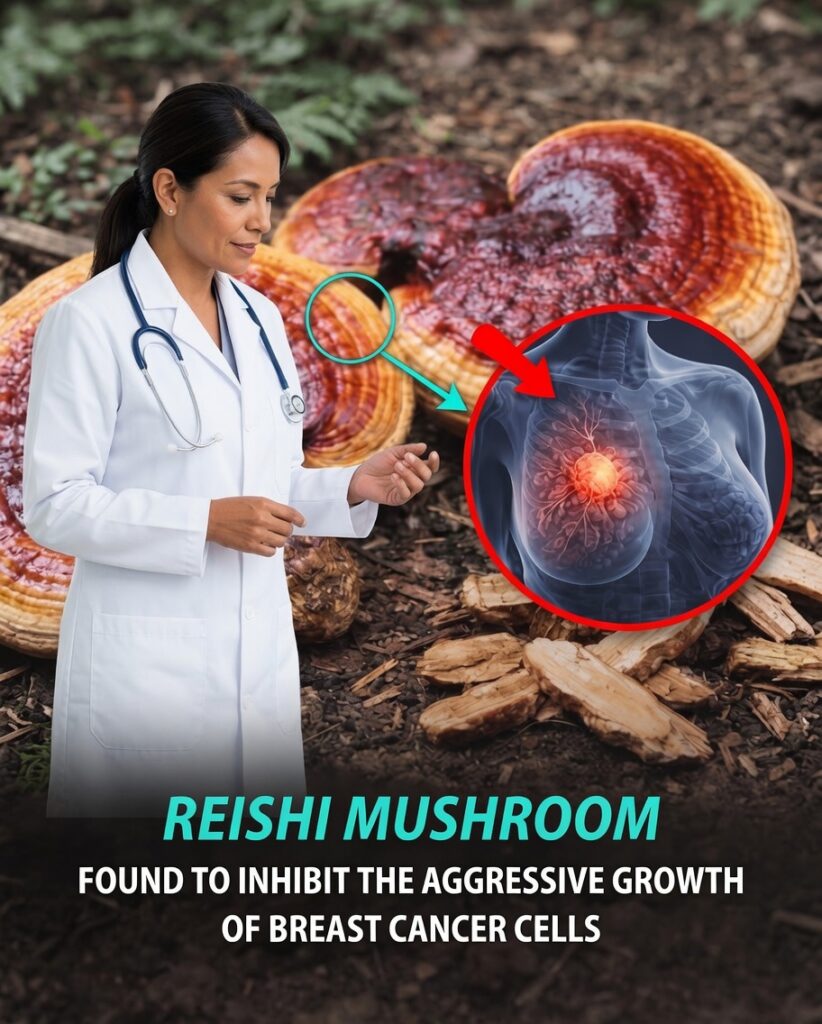
Can Reishi Mushroom Help Slow Cancer Cells? Science Is Starting to Reveal Something Surprising
If you’re dealing with breast cancer—whether personally or while supporting someone you love—you already know how exhausting it is to search for options that truly make sense. Natural compounds are advertised everywhere, but how do you tell what’s science-based and what’s just marketing? What if there were a lab-studied ingredient that at least deserves a thoughtful conversation with your doctor? Stay with this until the end—the findings may genuinely surprise you.
What Is Reishi (Ganoderma lucidum) and Why Is It Being Studied?
Reishi mushroom, also known as Ganoderma lucidum, has been used for centuries in traditional Asian medicine. Today, it’s attracting growing interest in modern research because it contains bioactive compounds, especially:
- Polysaccharides
- Triterpenes
These components are being explored for potential effects on immune function and cell behavior, including how certain cells grow and respond to internal signaling.
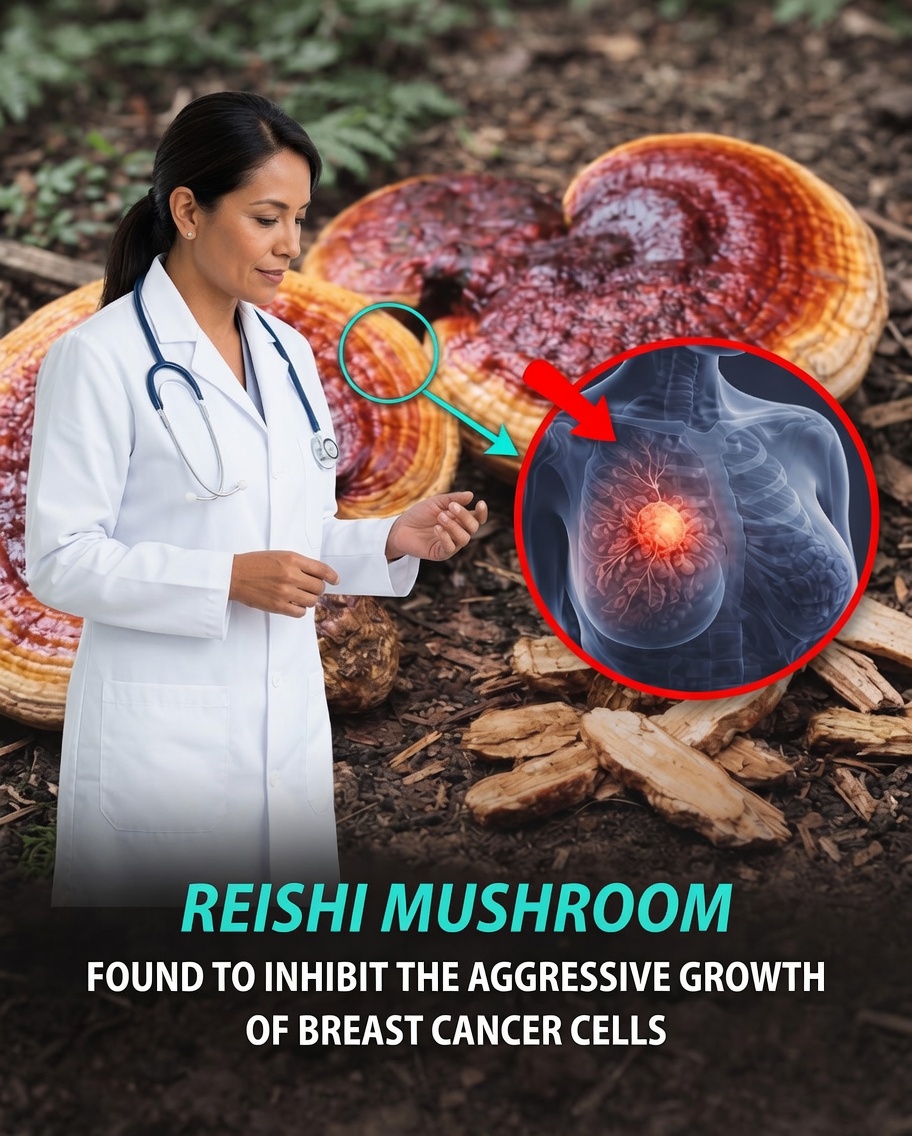
What the Lab Study Found: Reishi Extract and Aggressive Breast Cancer Cells
A study published in the journal Nutrition and Cancer examined how Reishi extract affected an aggressive breast cancer cell line called MDA-MB-231, known for its strong growth potential.
In laboratory conditions, the extract appeared to slow down cell multiplication by disrupting internal processes that cancer cells rely on to keep growing.
Key Mechanisms Observed: Akt and NF-κB Pathways
Researchers reported reduced activity in two major signaling pathways:
- Akt
- NF-κB (NF-kB)
These pathways can act like powerful “on switches.” When overly active, they tend to support cancer cell survival, growth, and progression. By lowering their activity, Reishi extract appeared to make the cancer cells stall early in their growth cycle.
Cell Cycle Impact: Cells “Stuck” in G0/G1
The study observed that cells became arrested in the G0/G1 phase—an early stage of the cell cycle. When cells can’t move forward through the cycle, they have a harder time dividing and expanding.
Reduced Growth Proteins: Cyclin D1 and cdk4
The researchers also noted reduced levels of proteins involved in proliferation, including:
- Cyclin D1
- cdk4
Lower levels of these proteins may further limit the cell’s ability to multiply uncontrollably.
To put it simply: imagine cancer cells as cars speeding without control. In this context, Reishi acts like a brake—not necessarily stopping everything, but potentially reducing the speed.
What Other Research Suggests (And What It Does Not Prove)
Other related studies suggest Reishi may influence areas such as:
- Inflammation
- Oxidative stress
- Cancer cell mobility
However, one point is essential: lab results are not the same as clinical proof in humans. These findings do not mean Reishi prevents or cures cancer in people.
Considering Reishi as a Complement? Practical Safety Guidelines
If you’re thinking about using Reishi mushroom as a natural complementary option, these safer, science-minded steps can help guide your decision:
- Choose high-quality products with standardized active compounds
- Start with a low dose (often 1–3 g/day of extract, depending on professional guidance)
- Talk to your doctor first, especially if you’re in active treatment
- Prefer dual extracts (water + alcohol) for broader compound extraction and potential absorption benefits
- Monitor your body carefully and keep notes on any changes or side effects
Reishi has also been studied for possible benefits such as immune support, better sleep, and reduced fatigue, but human clinical evidence remains limited.
Conclusion
Research on Ganoderma lucidum (Reishi) highlights interesting mechanisms: reduced growth signaling, slower cell division, and potential support for cellular health. Still, this science is early-stage and must be interpreted cautiously.
The most responsible path is to rely on proven medical treatment while exploring complementary approaches with proper guidance. Reishi might be one piece of a larger strategy—but it should never be treated as the only answer.
Stay informed, speak with qualified healthcare professionals, and choose approaches that genuinely support your health journey.
Frequently Asked Questions
Can Reishi cure breast cancer?
No. There is no scientific evidence proving Reishi cures breast cancer in humans.
Is it safe to take Reishi during cancer treatment?
It depends. Reishi may interact with certain medications or therapies, so you should consult your physician.
How do I choose a good Reishi supplement?
Look for products that are tested, clearly labeled, and sourced from reputable manufacturers with transparent ingredients.
Disclaimer: This content is for informational purposes only and does not replace medical advice. Always consult a healthcare professional before starting any supplement.