Breast Cancer Signs Beyond a Lump: Symptoms You Should Not Ignore
Breast cancer is still one of the most frequently diagnosed cancers in women around the world. Although many people associate it mainly with finding a lump, the warning signs are not always that straightforward. In many cases, the earliest changes are subtle and easy to mistake for harmless irritation, hormonal shifts, or temporary body changes. Because of that, some people do not seek medical advice until symptoms become more noticeable.
Understanding a broader range of possible breast cancer symptoms can help you identify unusual changes earlier and speak with a healthcare professional sooner. Greater awareness does not mean panic—it means being informed and prepared.
What many people do not realize is that some important signs may appear even when no breast lump can be felt. Recognizing these lesser-known symptoms can play a valuable role in early detection and overall breast health awareness.
Why Noticing Small Changes Is Important
According to trusted medical sources such as the American Cancer Society and Mayo Clinic, a new lump is the most commonly reported symptom of breast cancer, but it is not the only one. Research suggests that as many as one in six individuals with breast cancer symptoms may not notice a clear lump at first.
This is why paying attention to changes in your body matters. Observing unusual symptoms early is not a replacement for mammograms or clinical exams, but it can support faster medical assessment and timely treatment when needed.
Unusual Skin Changes on the Breast
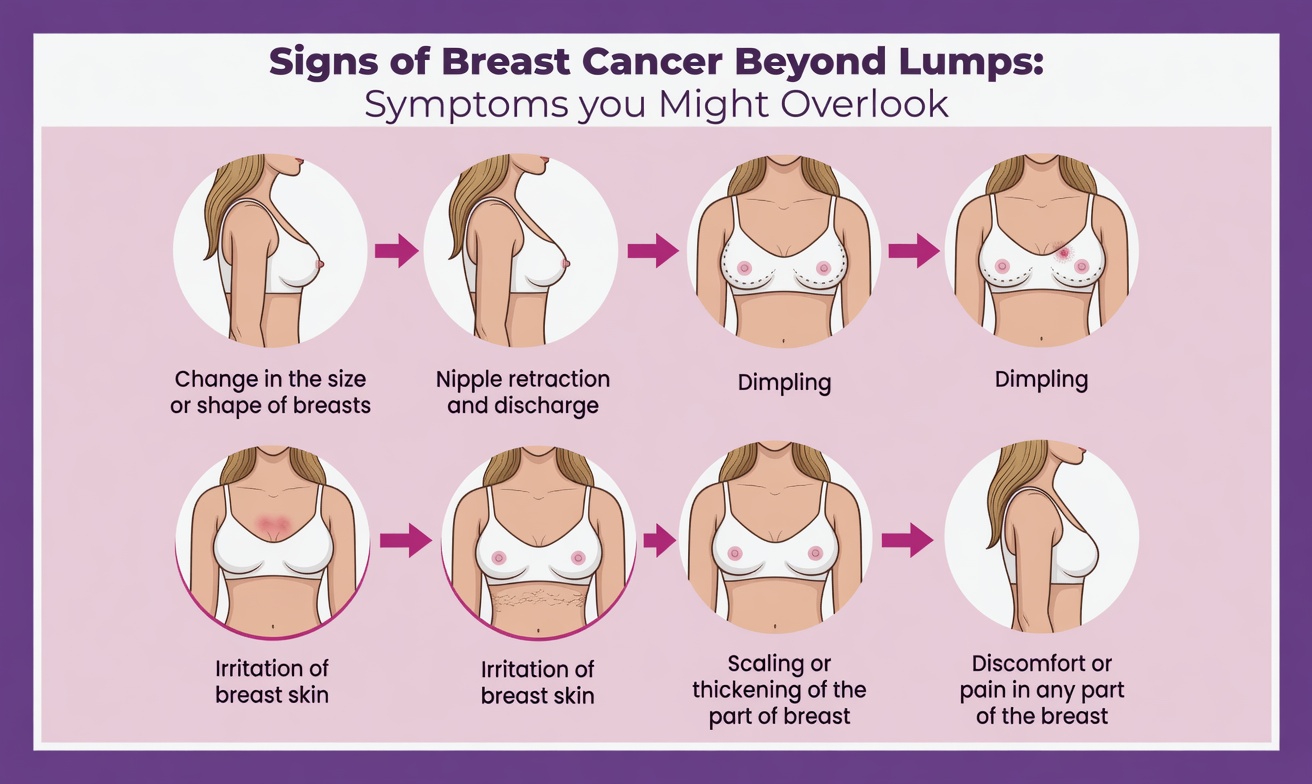
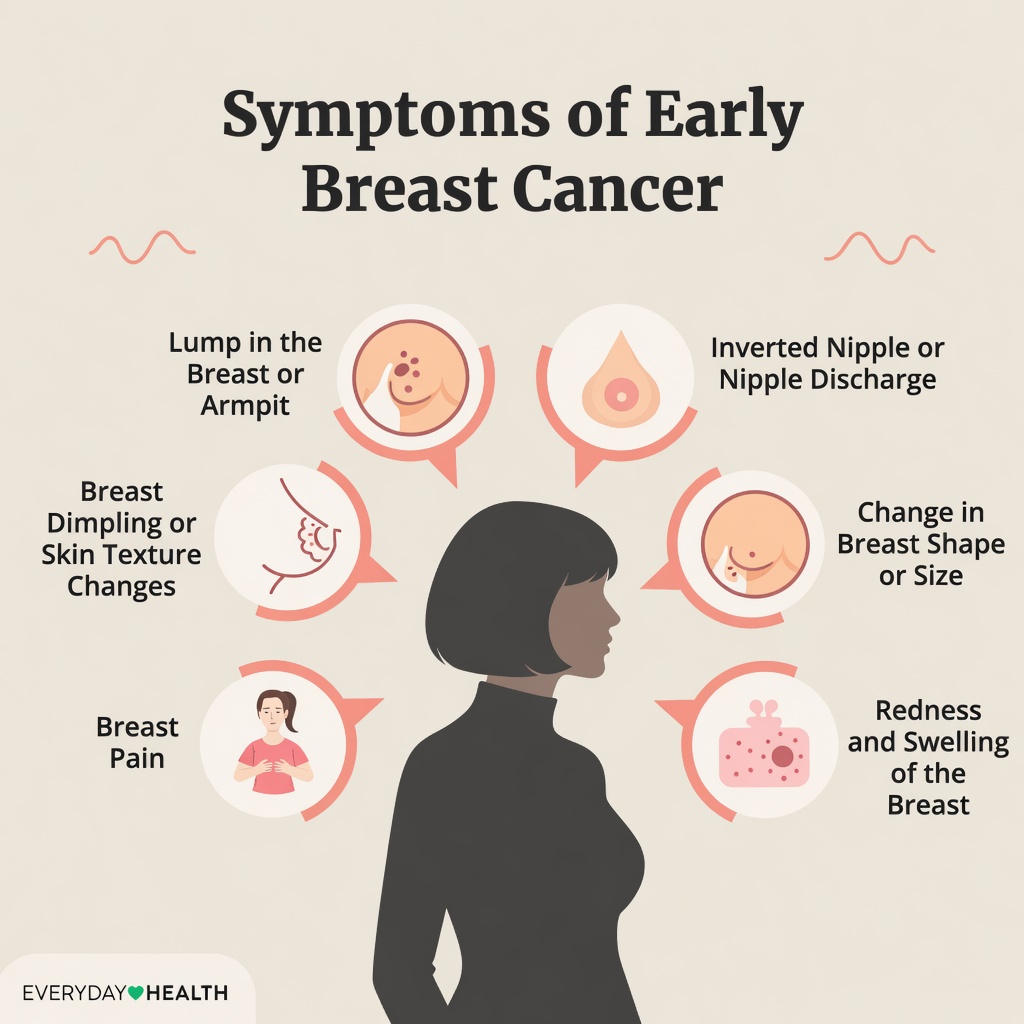
One commonly missed warning sign involves the skin of the breast. Some people develop dimpling or puckering, creating a texture similar to an orange peel. This appearance, known as peau d’orange, happens when underlying tissue pulls on the skin.
Other skin-related changes may include:
- Redness affecting part or all of the breast
- Thickened skin or raised ridges
- Flaky, scaly, or dry areas, especially near the nipple
These signs may develop slowly and often affect only one breast. A less common but aggressive type called inflammatory breast cancer can cause fast-developing redness, swelling, and warmth, sometimes without any obvious lump at all.
If these skin changes continue or one breast feels noticeably heavier or warmer than the other, it is important to talk to a doctor.
Nipple Changes That Can Be Easy to Miss
The nipple and areola can also show important symptoms. One change to watch for is sudden nipple inversion, when a nipple that usually points outward starts turning inward. This is different from naturally inverted nipples that have always looked that way.
Other nipple-related warning signs include:
- Discharge not related to pregnancy or breastfeeding
- Clear or bloody discharge
- Fluid coming from only one breast
- Nipple flattening or pulling inward
- Itching, crusting, or a rash-like area that does not improve
These symptoms are sometimes mistaken for simple skin irritation or infection. While many causes of nipple discharge are not serious, ongoing or unusual symptoms should always be checked by a healthcare provider.
Swelling, Tenderness, and Other Physical Sensations
Breast cancer can sometimes cause swelling in the breast, underarm, or around the collarbone. You may notice fullness, puffiness, or one breast looking larger than the other for no clear reason.
Pain is not the most common early symptom, especially when it is the only one present, but it can happen. Breast pain or tenderness that is not connected to your menstrual cycle and continues over time should not be dismissed, particularly if it is focused in one area.
Helpful ways to stay aware include:
- Check your breasts regularly in front of a mirror
- Raise and lower your arms to look for changes in shape or symmetry
- Notice whether one breast feels warmer, heavier, or more swollen
- Pay attention to swelling under the arm or near the collarbone
Lymph Node Changes May Appear Early
Swollen lymph nodes can sometimes be one of the first signs that something is wrong. These changes often occur in the armpit or near the collarbone and may feel like small, firm bumps that do not go away.
Some people also report less specific symptoms such as:
- Itching across the breast skin
- Tenderness in the breast area
- Unexplained fatigue along with breast discomfort
These symptoms can overlap with many non-cancerous conditions, but persistent changes deserve medical attention.
Simple Habits to Help You Stay Aware
Being proactive about breast health does not have to be complicated. A few simple habits can make it easier to notice changes early.
1. Do a monthly self-check
Choose the same time each month, such as a few days after your period ends, and gently examine your breasts while standing and lying down.
2. Use mirror checks
With good lighting, look for visible differences in breast size, contour, skin texture, or nipple position.
3. Track anything new
Write down unusual symptoms, even if they seem minor. Note when they started, how long they last, and whether anything makes them better or worse.
4. Keep up with recommended screenings
Follow professional guidance for mammograms and clinical breast exams based on your age, family history, and personal risk level.
5. Speak openly with your doctor
If something feels unusual, do not delay the conversation. Healthcare providers are there to evaluate symptoms and help determine next steps.
These everyday practices can strengthen your awareness and support early follow-up when something does not seem right.
Final Thoughts: Awareness Can Make a Difference
Breast cancer does not always begin with a noticeable lump. Sometimes the earliest signs involve skin texture, nipple appearance, swelling, or changes in nearby lymph nodes. Knowing that these symptoms are possible can help you feel more informed and less likely to overlook important warning signs.
Most breast changes turn out to be benign, but it is always worth getting persistent symptoms checked. Staying aware of your body is one of the best ways to protect your health and gain peace of mind.
Frequently Asked Questions
What does it mean if I have skin dimpling but cannot feel a lump?
Skin dimpling can occur even when no lump is noticeable. Because it may signal an underlying issue, any ongoing skin change should be evaluated by a medical professional.
Is nipple discharge always caused by breast cancer?
No. Nipple discharge can happen for many harmless reasons, especially if it is milky and comes from both breasts. However, discharge that is spontaneous, bloody, clear, or only from one side should be assessed promptly.
Can breast cancer cause pain without any other symptom?
It can, but this is less common. Most breast pain is related to hormonal changes or non-cancerous conditions. Still, pain that is persistent, unusual, or focused in one area should be discussed with a doctor.