A Simple Blood Pressure Mistake That Can Make Your Numbers Look Higher
Most people have had their blood pressure checked many times without paying much attention to posture or arm placement. You sit down, the cuff tightens, and you assume the reading accurately reflects your health. But for some people, a surprisingly high result can trigger stress, concern about hypertension, or even extra medical follow-ups—when the number may have been influenced by something as simple as how the arm was positioned.
A recent Johns Hopkins Medicine study explains why this happens and shows that one small adjustment can help produce more accurate blood pressure readings.
What may be most surprising is this: arm position alone can shift the result by several points. In some cases, that is enough to move a reading from a normal range into one that suggests elevated blood pressure or stage 1 hypertension.
What the Johns Hopkins Study Revealed
Researchers from the Johns Hopkins Bloomberg School of Public Health carried out a randomized crossover clinical trial involving 133 adults. Their goal was to compare three common arm positions used during blood pressure measurement.
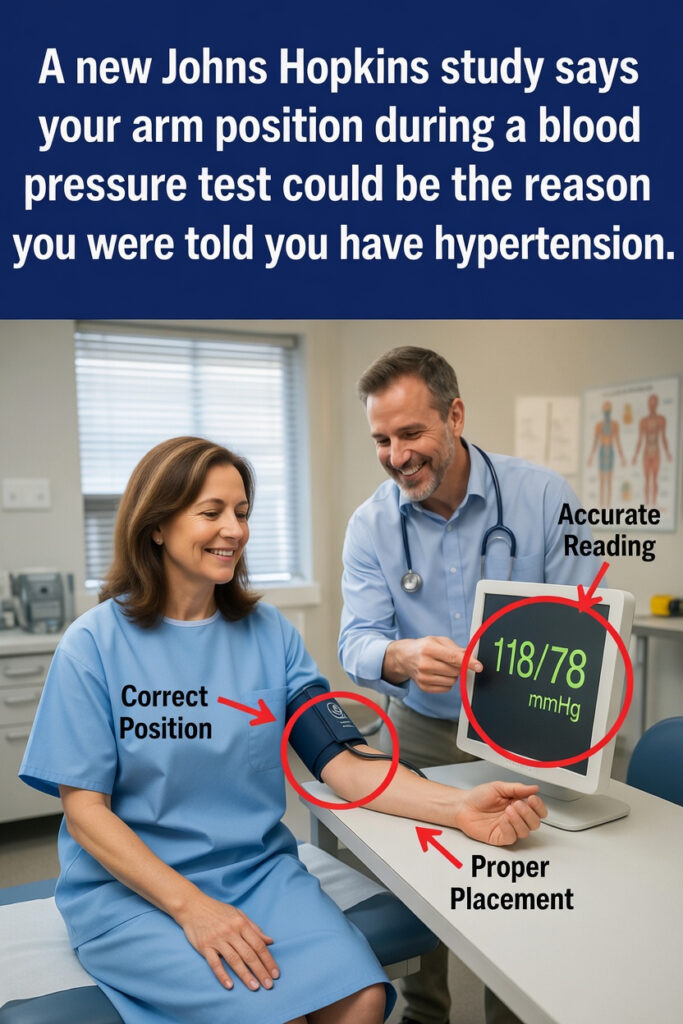
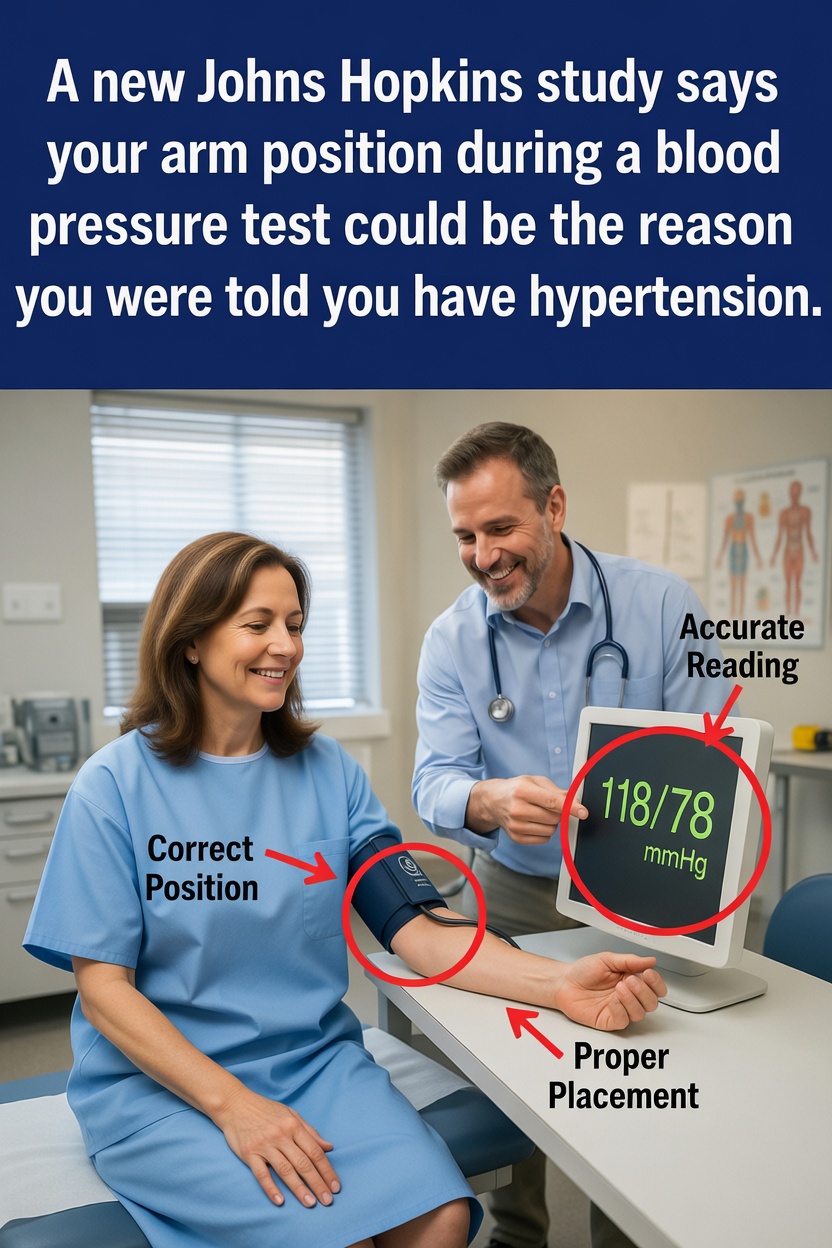
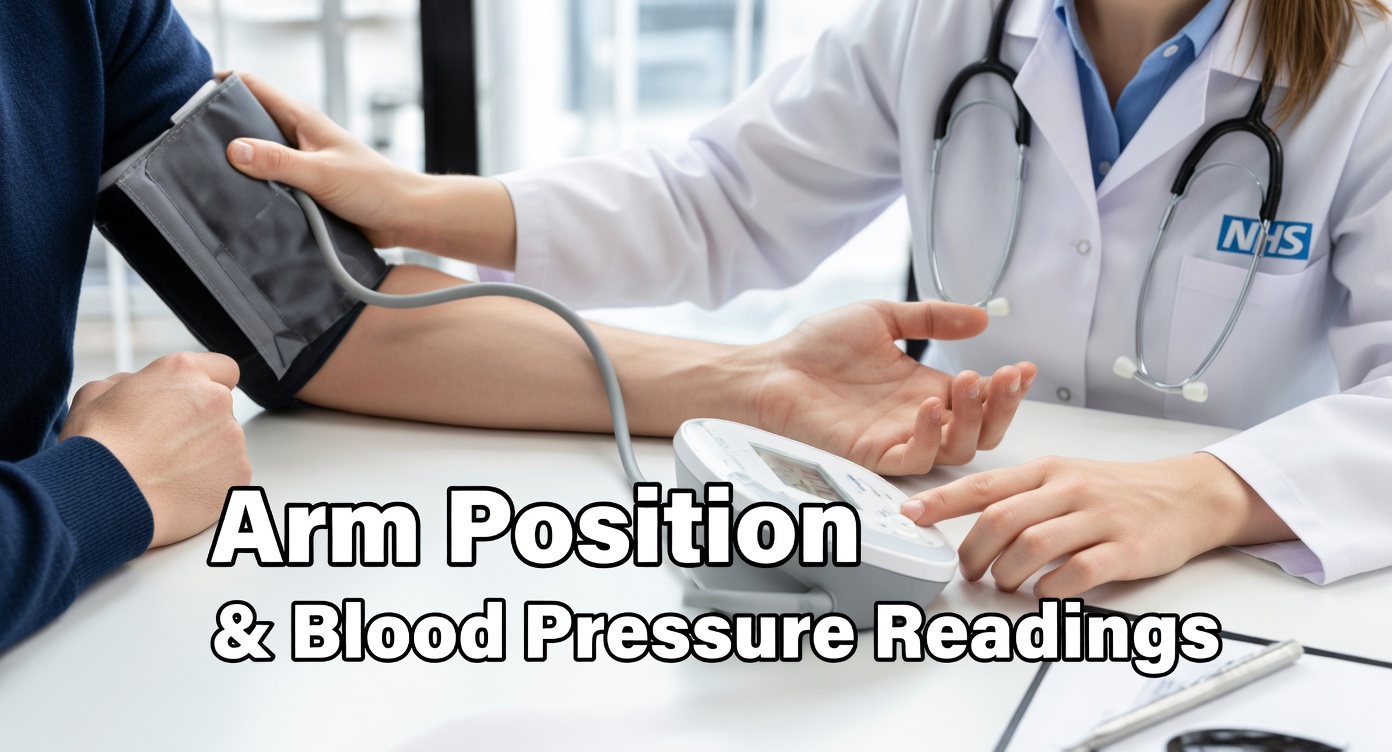
The reference position followed standard medical guidance: the arm was supported on a desk or table, with the center of the cuff placed at heart level. The researchers then compared that setup with two other positions often seen in everyday practice:
- Arm resting on the lap
- Arm hanging unsupported at the side
The differences were clear.
When the arm was placed on the lap, systolic blood pressure—the top number—was overestimated by about 3.9 mmHg, while diastolic pressure—the bottom number—was overestimated by about 4.0 mmHg compared with the properly supported desk position.
When the arm hung unsupported at the side, the effect was even greater. Systolic pressure was overestimated by about 6.5 mmHg, and diastolic pressure by about 4.4 mmHg.
These may seem like small changes, but they can have real consequences. A true blood pressure reading of 123/74 mmHg could appear closer to 130/78 mmHg or higher, depending on arm placement. That shift can place someone into a category that raises concern, even if their actual blood pressure is lower.
The same pattern appeared across age groups and other participant subgroups. Published in JAMA Internal Medicine, the study highlights how routine positioning errors can lead to blood pressure overestimation in both clinics and other care settings.
Why Arm Position Affects Blood Pressure So Much
Blood pressure measurement is influenced by hydrostatic pressure—the same basic principle that affects fluid levels in connected containers. If your arm is lower than your heart, gravity increases pressure in the arteries where the cuff is wrapped.
That means when your arm rests too low on your lap or hangs by your side, the monitor can record a value that is artificially higher than your true blood pressure.
Keeping the arm supported on a stable surface at heart level reduces this effect and gives a reading that more closely reflects your actual cardiovascular status. In contrast, unsupported positions allow gravity to distort the measurement, even when nothing has changed in your body.
This concept is not entirely new. Organizations such as the American Heart Association have long recommended proper arm support during blood pressure checks. What the Johns Hopkins study adds is a clearer picture of how meaningful the difference can be in real-world situations, especially with automated blood pressure devices.
Common Blood Pressure Check Mistakes
Many people unknowingly make small positioning errors during a reading. These habits may seem harmless, but they can affect accuracy:
- Letting the arm hang freely at the side
- Resting the arm loosely on the lap without firm support
- Leaning forward or slouching so the arm falls below heart level
- Crossing the legs
- Sitting without back support, which can create subtle muscle tension
Each of these can contribute to a reading that looks higher than it should.
The good news is that these errors are easy to correct.
How to Get a More Accurate Blood Pressure Reading
Whether you are at a clinic or checking your blood pressure at home, these simple steps can improve consistency and reliability:
- Sit in a chair with your back supported.
- Keep both feet flat on the floor.
- Do not cross your legs.
- Rest your arm on a desk, table, or other firm surface.
- Make sure the cuff is positioned at about heart level.
- Keep your elbow slightly bent and your palm facing upward.
- Relax your hand and arm completely.
- Sit quietly for a minute or two before the reading starts.
- Avoid talking, moving, or looking at your phone during the measurement.
Following these steps helps ensure the result is closer to your true baseline rather than being influenced by posture or movement.
Quick Comparison of Arm Positions
Based on the Johns Hopkins study, here is how common positions compare:
- Arm supported on desk at heart level: most accurate baseline reading
- Arm resting on lap: about +3.9 mmHg systolic and +4.0 mmHg diastolic
- Arm hanging unsupported at side: about +6.5 mmHg systolic and +4.4 mmHg diastolic
A few points may not seem dramatic, but on a blood pressure monitor, they can make a major difference in how a result is interpreted.
Other Things That Can Change a Blood Pressure Reading
Arm support is only one factor. Several other everyday conditions can also influence blood pressure measurements, including:
- Recent caffeine intake
- Exercise shortly before the test
- A full bladder
- Stress or a noisy environment
- Talking during the reading
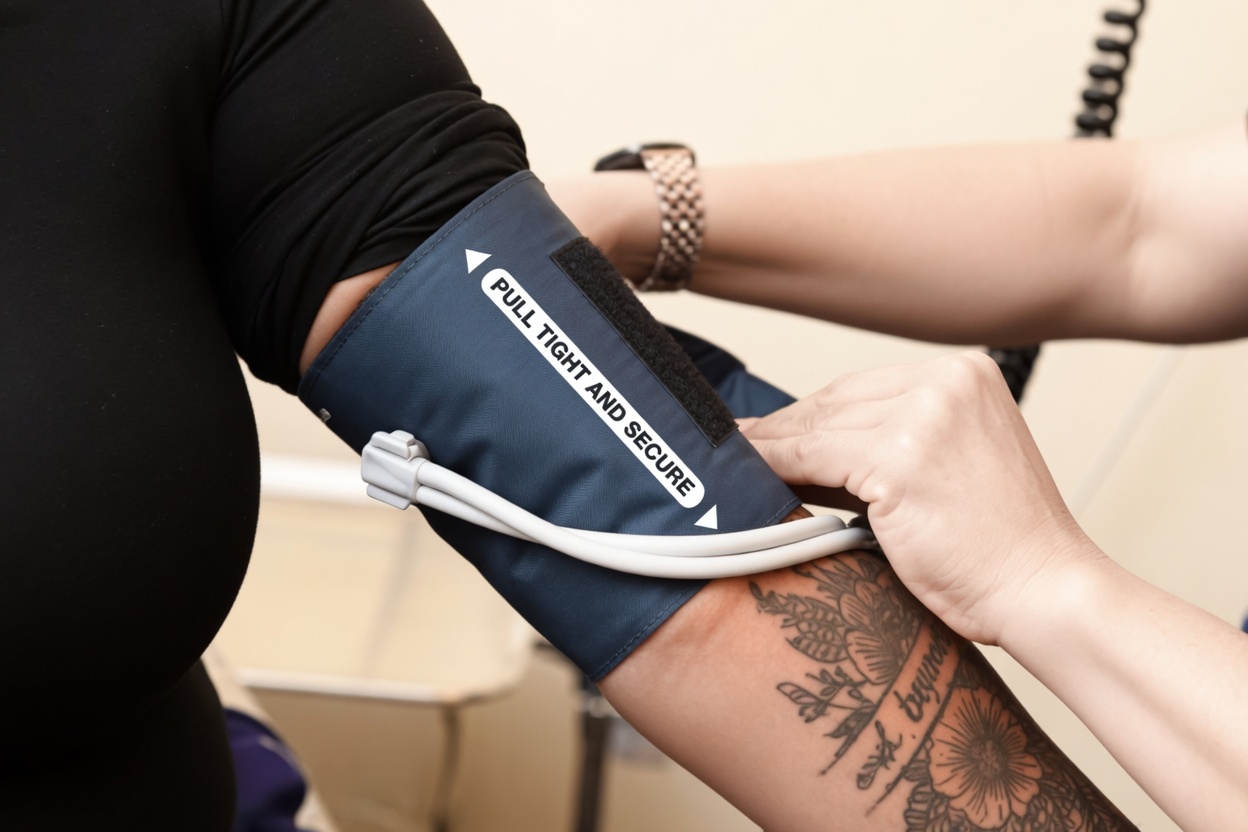
- Using the wrong cuff size
- Not resting beforehand
For the best results, proper arm positioning should be combined with these basic measurement habits. Consistent technique over time is much more useful than focusing on one unexpected high reading.
Why This Matters at Your Next Appointment
Understanding the effect of arm position gives you a simple way to advocate for a more accurate reading. If needed, you can politely ask, “Could we support my arm on the table?” Most healthcare professionals will appreciate the request because it aligns with standard best practices.
This awareness can also reduce unnecessary worry if you have ever received a blood pressure reading that seemed unusually high or inconsistent with how you felt. It is a reminder that small details can have a meaningful impact on health measurements.
In the end, better blood pressure accuracy often starts with a very simple habit: supporting the arm correctly at heart level. Paying attention to this one detail can help you understand your numbers more clearly and avoid misleading results.
FAQ
How much can arm position change a blood pressure reading?
Studies such as the Johns Hopkins trial suggest that arm position can change systolic blood pressure by roughly 4 to 6.5 mmHg. While the exact effect varies from person to person, the difference is significant enough to matter during routine screening.
Should I ask for my arm to be supported on a table?
Yes. If your arm is not already supported at heart level, it is reasonable to ask for that adjustment. It follows accepted blood pressure guidelines and can improve the reliability of the result.
Does this also apply to home blood pressure monitors?
Yes. The same principles apply at home. For the most accurate home blood pressure readings, sit quietly, use the same proper position each time, support your arm at heart level, and follow the device instructions carefully.