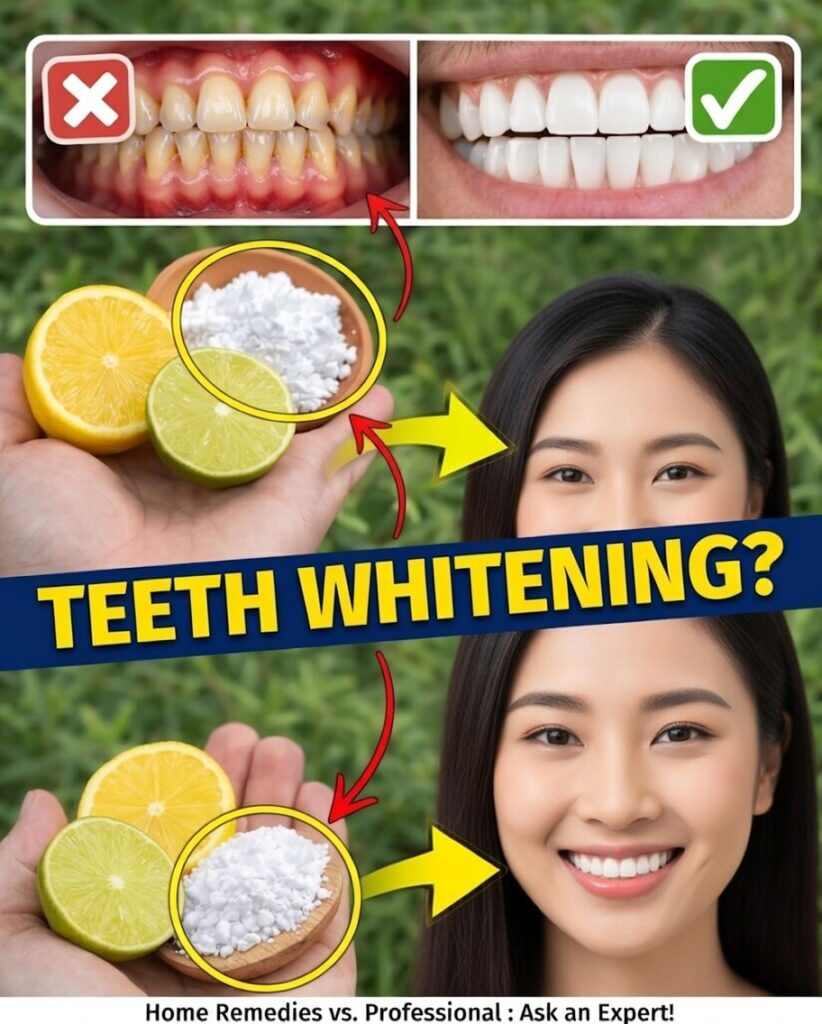
Lemon and Baking Soda for Whiter Teeth: Helpful Trick or Hidden Risk?
You’ve probably had that moment in front of the mirror thinking, “My teeth look a bit dull today,” even right after brushing. Daily habits like your morning coffee, the occasional glass of red wine, or even “healthy” foods such as berries can gradually rob your smile of its natural brightness. And if you’ve ever felt reluctant to smile in a photo, you’re definitely not alone.
The idea sounds almost too simple: lemon juice + baking soda. Two everyday ingredients, a quick homemade paste, and supposedly whiter teeth in minutes. But the real issue is: does this DIY teeth whitening method actually work without damaging your enamel?
The honest answer: it can help a little, but it’s not risk-free. How you use it makes all the difference.
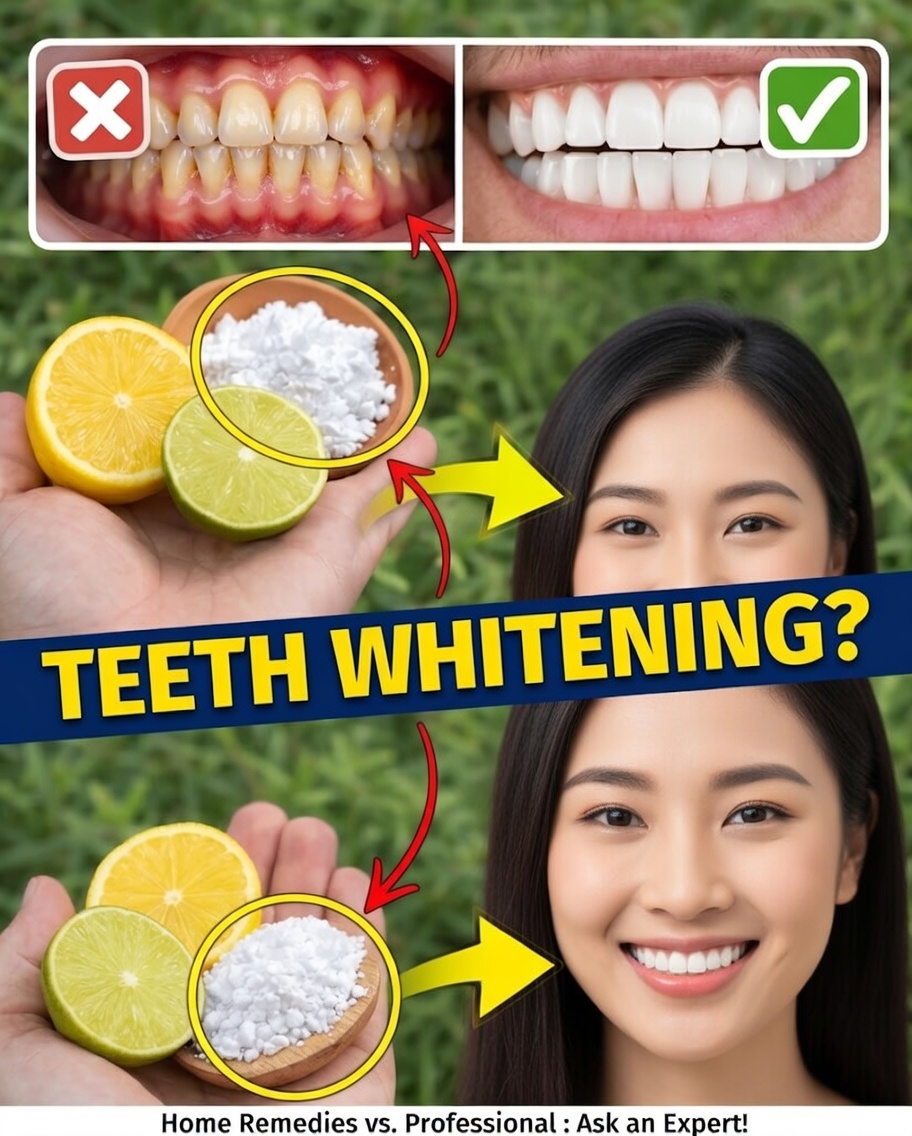
Why Do Teeth Lose Their Natural Whiteness?
Over time, there are two main reasons your teeth look less white:
-
Surface stains
Pigmented foods and drinks—think coffee, tea, red wine, cola, curry, soy sauce, and certain spices—can cling to the outer layer of your teeth and cause discoloration. -
Thinning enamel
Your enamel, the hard outer coating of the tooth, naturally becomes thinner as you age. When that happens, the underlying dentin, which is more yellow, becomes more visible. Even perfectly healthy teeth can look more yellow for this reason.
The good news: in many cases, simply reducing these superficial stains is enough to reveal a noticeably brighter smile.
How Lemon and Baking Soda Work on Teeth
Baking soda (sodium bicarbonate) acts as a mild abrasive. It can gently scrub away some surface stains and give a smoother, cleaner feel to your teeth.
Lemon juice contains citric acid, which can help dissolve certain types of surface discoloration.
However, this is where the risk comes in:
- Citric acid is highly acidic and can temporarily soften and weaken enamel.
- Combined with the abrasive action of baking soda, it can increase the risk of enamel erosion if used too often or too aggressively.
So while the combination can brighten teeth slightly, misuse can do more harm than good.
Why Is This Home Remedy So Popular?
The lemon and baking soda method attracts so much attention because:
- It gives an immediate feeling of freshness.
- It’s cheap and easy to prepare with ingredients most people already have at home.
- It can slightly reduce superficial stains, creating the impression of whiter teeth.
- It looks “natural”, which many people mistakenly assume means “harmless.”
- You can adjust the strength of the mixture yourself, which feels empowering.
But this same simplicity often leads to overuse—too frequently, too concentrated, or with too much scrubbing—and that’s when enamel damage becomes a real concern.
How to Use Lemon and Baking Soda More Safely
If you still want to experiment with this method, you need to focus on gentleness and moderation.
Follow these precautions:
-
Dilute the mixture
- Use a small amount of baking soda.
- Add just a few drops of lemon juice.
- Mix with a little water to create a thin, mild paste, not a thick, gritty one.
-
Apply gently
- Use your finger or a very soft toothbrush.
- Spread the paste lightly over the front surfaces of your teeth.
- Do not scrub vigorously. Avoid any harsh rubbing.
-
Rinse thoroughly
- After a short application time, rinse your mouth well with water to remove any residue.
- Do not swallow the mixture.
-
Do not brush immediately afterward
- The acid from the lemon temporarily softens enamel.
- Brushing straight away can increase wear and erosion.
- Wait at least 30 minutes before brushing your teeth with normal toothpaste.
-
Use rarely, not routinely
- Treat this as an occasional touch-up, not a weekly or daily ritual.
-
Avoid completely if you have dental issues
- If you have sensitive teeth, enamel erosion, exposed roots, gum recession, cavities, or recent dental work, skip the lemon entirely.
- In these cases, speak to your dentist before trying any DIY whitening method.
A More Effective (and Overlooked) Strategy for a Whiter Smile
The real secret to a naturally bright smile isn’t a single “miracle” treatment. It’s a collection of small, consistent daily habits that protect your enamel and reduce staining:
-
Rinse your mouth after staining drinks
After coffee, tea, or red wine, swish water around your mouth to reduce the pigments that cling to enamel. -
Drink more water throughout the day
Water helps wash away food particles and staining compounds and supports saliva production, which naturally protects teeth. -
Use a soft-bristled toothbrush
A soft brush cleans effectively without scratching or wearing down enamel. -
Maintain solid oral hygiene
Brush twice a day with fluoride toothpaste, floss daily, and consider using an alcohol-free mouthwash if recommended by your dentist. -
Get regular professional cleanings
Dental cleanings remove plaque, tartar, and many surface stains that home care can’t fully eliminate. This alone can make your smile look noticeably whiter and healthier.
These habits may seem simple, but over months and years, they are far more powerful—and far safer—than any harsh DIY whitening trick.
Final Thoughts: Is Lemon and Baking Soda Worth It?
The lemon and baking soda combination can provide a slight brightening effect on surface stains, but only when used:
- Occasionally
- Gently
- With proper dilution
- And with full awareness of the risks to your enamel
It is not a miracle cure, and it should never become part of your daily routine.
If your goal is a truly bright and healthy smile, your best allies are:
- Consistent oral hygiene
- Mindful eating and drinking habits
- Regular dental check-ups and cleanings
- Professionally supervised whitening when needed
On a scale from 1 to 10, how confident do you feel about your smile right now? And how much could that number increase simply by protecting your enamel and adopting better daily habits, instead of relying on risky shortcuts?