Your Body Often Speaks Before Serious Illness: Can You Recognize These 10 Essential Signals?
Breast cancer is one of the most common cancers affecting women worldwide. The encouraging news is that when breast cancer is found at an early stage, treatment is usually less complex and the chances of recovery are significantly higher.
Your body may already be sending you early warning signs—you just might not recognize them yet. Learning to spot these possible symptoms of breast cancer can genuinely save lives. Take a few moments to read carefully; it could make a crucial difference to your health.
Why Is Early Detection of Breast Cancer So Important?
The earlier breast cancer is detected, the more options there are for simpler and more effective treatments. Health professionals generally recommend:
- Performing a monthly breast self-exam
- Having regular mammograms starting around age 40 (or earlier if you are at higher risk, as advised by your doctor)
- Seeking medical advice promptly if you notice any unusual changes
Knowing your own body is one of the most powerful ways to protect yourself.
10 Key Warning Signs of Breast Cancer
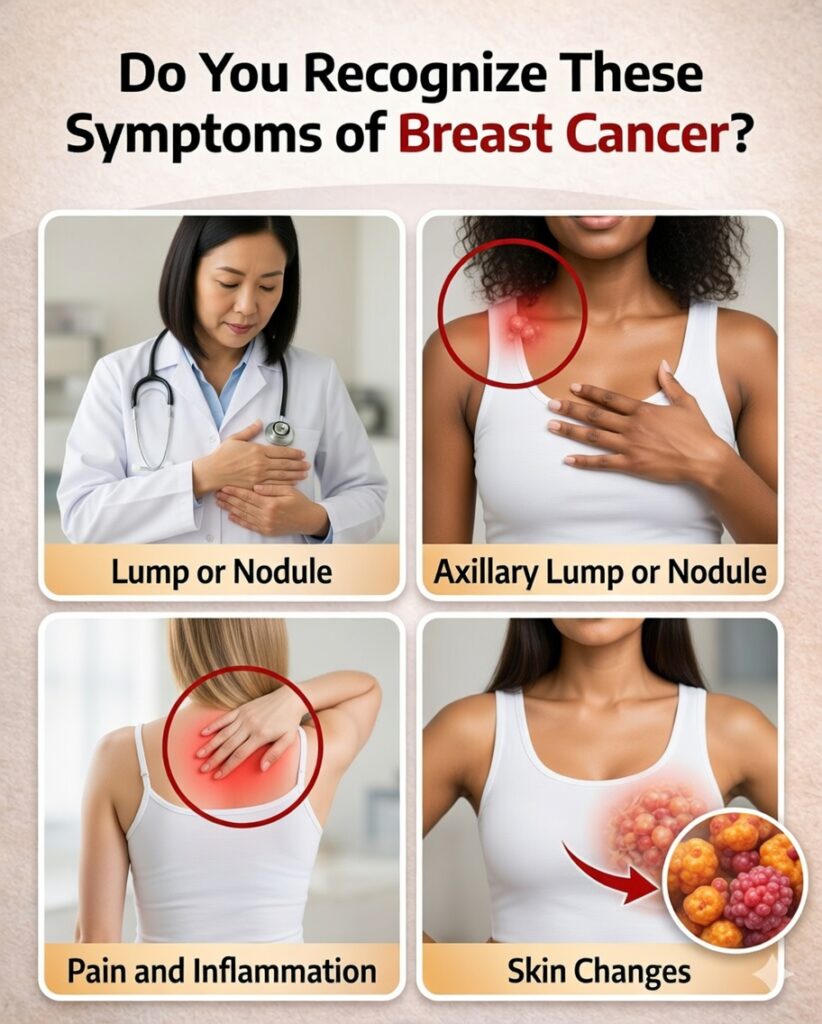
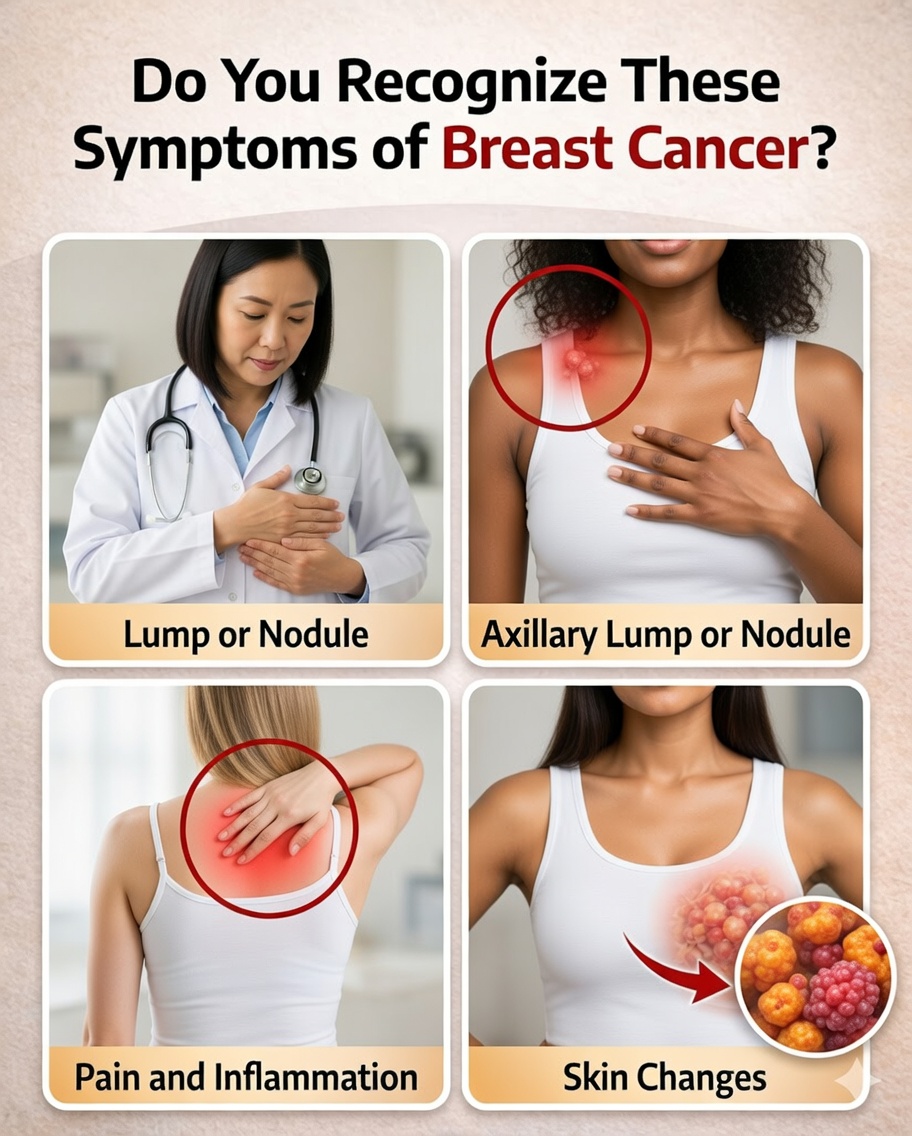
Below are 10 important signs that should never be ignored. Having one or more of these does not automatically mean you have cancer, but they do warrant medical evaluation.
1. A New Lump in the Breast or Underarm
A lump or thickening in the breast or in the armpit area is the most common warning sign.
It may feel:
- Hard or firm
- Often painless
- Different from the surrounding tissue
Such a lump can result from abnormal cell growth and should always be checked.
2. Swelling of All or Part of the Breast
Even if you cannot feel a distinct lump, one breast may:
- Look swollen or enlarged
- Feel heavier or denser
- Seem different in texture compared with the other side
This can signal internal changes in the breast tissue.
3. Persistent Pain in the Breast or Nipple
Breast pain is common and often harmless, but pain that:
- Affects only one breast
- Persists over time
- Feels unusual compared with your normal cycle
should be monitored and discussed with a healthcare professional.
4. Unusual Nipple Discharge
Any discharge from the nipple that is not related to breastfeeding needs attention, especially if it is:
- Clear
- Yellow
- Brown
- Bloody or pink-tinged
Nipple discharge can have many causes, but it is a sign that should be evaluated.
5. Changes in Breast Size or Shape
A sudden or noticeable change in one breast compared with the other may include:
- New asymmetry
- Altered contour or shape
- Visible distortion
These changes can reflect alterations in the underlying breast structure.
6. Skin That Looks Like “Orange Peel”
If the skin of the breast begins to resemble the texture of an orange peel (called “peau d’orange”), you might notice:
- Small dimples or pits
- Uneven or thickened skin
- Areas that appear slightly pulled in
This can occur when the breast tissue and lymphatic system are affected.
7. Inverted or Distorted Nipple
Pay attention if the nipple:
- Becomes pulled inward
- Changes direction or position
- Looks flattened or misshapen compared with before
A newly inverted or altered nipple should not be ignored.
8. Redness, Warmth, or Skin Irritation
Red, inflamed, or irritated breast skin may appear:
- Red or reddish-purple
- Thicker than usual
- Warm or hot to the touch
- Dry, flaky, or scaly
These signs can be associated with inflammatory breast cancer, which tends to be more aggressive and requires urgent evaluation.
9. Wounds or Lesions That Do Not Heal
Any sore, ulcer, or lesion on the breast that:
- Persists over time
- Does not heal as expected
- Reopens or worsens
should always be examined, even if it seems minor at first.
10. Swollen Lymph Nodes or More Visible Veins
You may notice:
- Swollen lymph nodes under the arm or around the collarbone
- Veins on the breast or chest area that appear more prominent or enlarged
These can be signs that the disease has affected nearby lymphatic or blood vessels and must be assessed by a professional.
How to Perform a Breast Self-Exam at Home
Regular breast self-exams help you become familiar with how your breasts normally look and feel, making it easier to notice changes.
- Stand in front of a mirror with your shoulders straight and arms relaxed at your sides.
- Look for changes in size, shape, or symmetry, and for any skin or nipple changes.
- Raise your arms overhead and check again from different angles.
- While lying down or in the shower, use the pads of your fingers to feel each breast in small circular motions, covering the entire breast from the collarbone to the top of the abdomen and from the sternum to the armpit.
- Gently palpate the underarm area to feel for lumps or swelling.
The goal is to understand what is normal for you so that any new or unusual change stands out.
When Should You See a Healthcare Professional?
You should contact a doctor or healthcare provider promptly if you notice:
- A new lump or thickening in the breast or underarm
- Any unexplained nipple discharge
- Persistent breast or nipple pain
- Changes in the skin or nipple (redness, dimpling, inversion, scaling)
- Any other change that feels unusual or worries you
These signs do not always indicate breast cancer, but they always deserve professional evaluation.
Final Thoughts: Stay Alert, Protect Your Health
Breast cancer can develop silently in its early stages. That is why being attentive to small changes in your breasts is so important.
Remember these 10 possible warning signs and take action quickly if you notice something unusual. To support your long-term breast health:
- Perform regular breast self-exams
- Schedule routine medical check-ups and mammograms as recommended
- Never dismiss a new or persistent change in your breasts
Awareness, prevention, and timely medical care remain your strongest allies.