A Simple Daily Walk Could Be the Reset Your Body and Mind Need
Spending long hours at a desk can leave you feeling depleted, tense, and mentally scattered. By evening, your back may feel stiff, your thoughts may seem cloudy, and even routine tasks can feel harder than they should. Modern life moves fast, and that nonstop pressure often drains both energy and focus.
The good news is that improving how you feel does not always require a complex wellness plan or costly fitness gear. Sometimes, one of the most effective solutions is something you already do every day — walking — but with a bit more purpose.
In this guide, you’ll learn how short walks can naturally help support energy, mood, focus, and physical comfort, along with the surprising changes that can happen at different walking durations.
Why Walking Deserves a Place in Your Daily Routine
Walking is one of the easiest healthy habits to maintain. It costs nothing, does not require special training, and can be done in nearly any setting. Studies repeatedly show that regular walking can help support heart health, contribute to balanced blood sugar, and improve mental sharpness.
Compared with intense exercise routines that may feel difficult or discouraging, walking is approachable, gentle on the joints, and much easier to fit into a busy day.
What makes it especially interesting is how quickly your body starts responding once you begin to move.
What Your Body Experiences at Different Walking Milestones
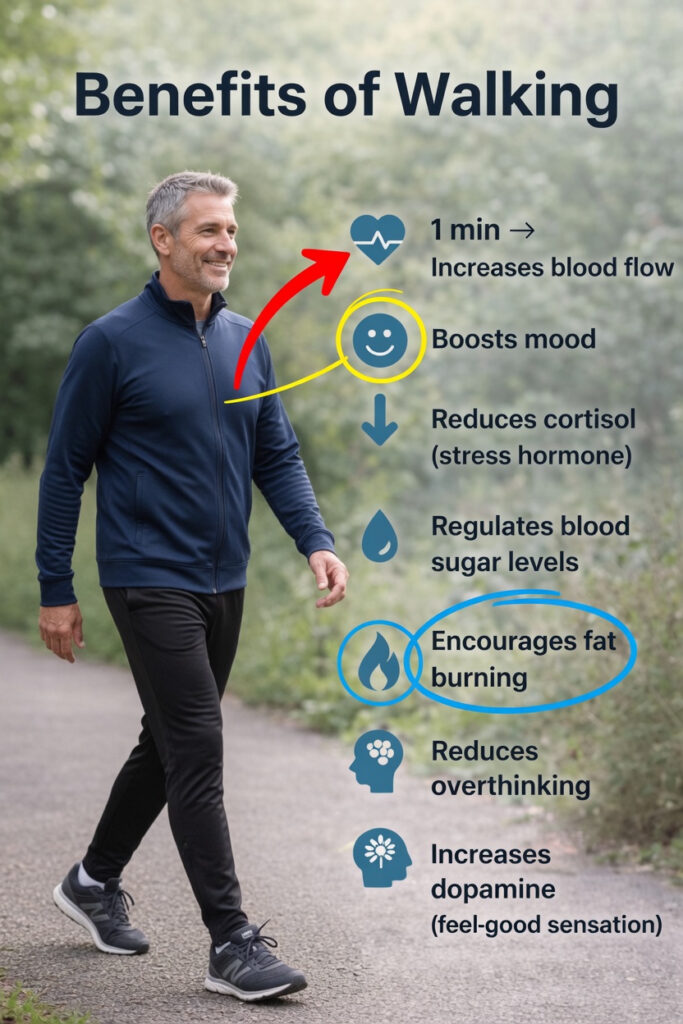
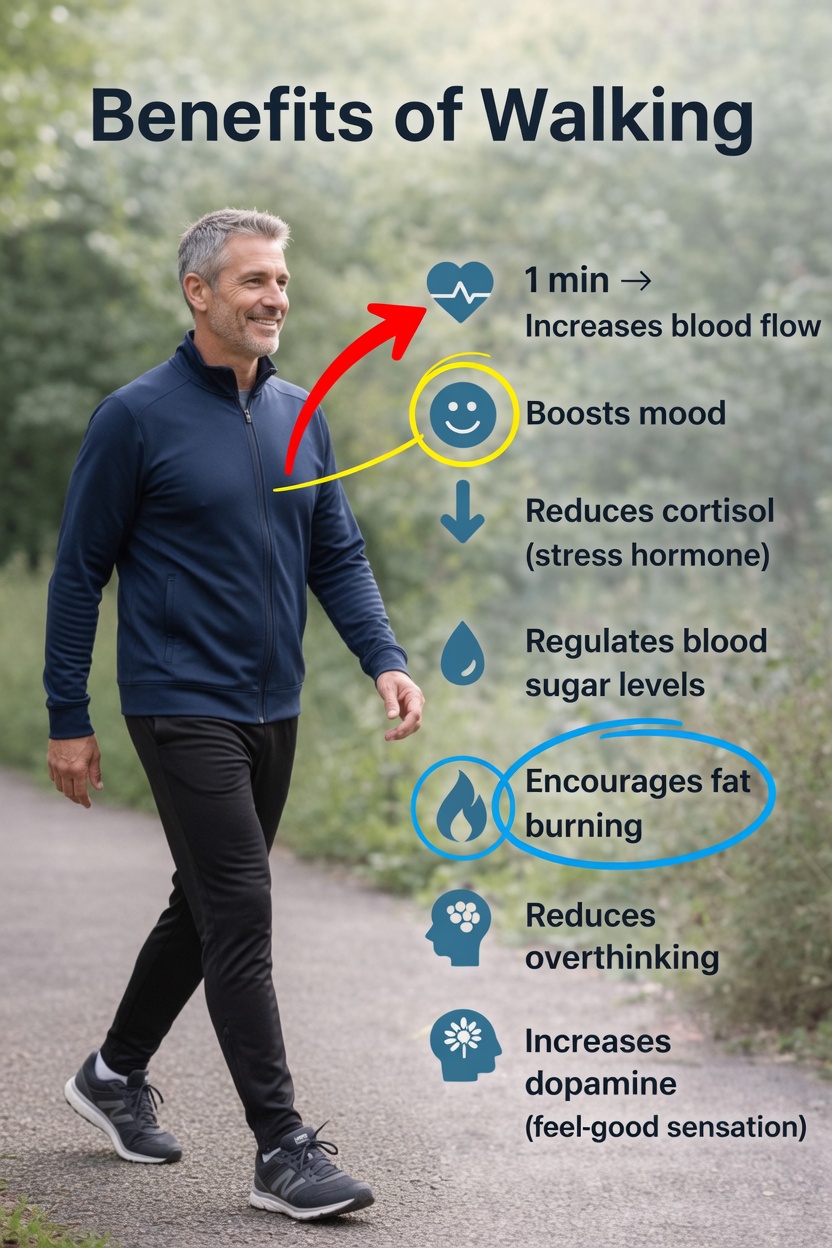
1 Minute
In the first minute of walking, your heart begins to beat a little faster and circulation improves. As blood flow increases, more oxygen and nutrients reach your muscles and brain, which can create an immediate sense of alertness.
5 Minutes
After about five minutes, many people start to feel emotionally lighter. Focus often improves too, making a short walk an ideal break during a demanding workday.
10 Minutes
At roughly the ten-minute point, cortisol levels may begin to decline. Since cortisol is the body’s primary stress hormone, this shift can leave you feeling calmer and less mentally overloaded.
15 Minutes
A 15-minute walk may help support steadier blood sugar levels. This can be especially helpful for reducing the midday slump or sudden drops in energy that so many people experience.
30 Minutes
By 30 minutes, the body starts relying more on stored fat as a fuel source. When practiced consistently, this can support a healthy body composition over time.
45 Minutes
Longer walks, especially around 45 minutes, are often associated with greater emotional calm and fewer repetitive or anxious thought patterns.
60 Minutes
An hour of walking may increase dopamine activity, a brain chemical connected to motivation and pleasure. This is one reason many people finish a long walk feeling refreshed and genuinely better.

The Overlooked Benefits of Walking
One of the biggest strengths of walking is that the benefits build with consistency. Over time, this simple habit may:
- Support cardiovascular function by helping blood vessels stay flexible
- Help maintain healthy blood pressure levels
- Contribute to better balance and stronger bones
- Improve sleep quality, especially when walks happen earlier in the day
- Encourage a more optimistic mindset and stronger emotional resilience
These effects are not only physical. Walking can also have a meaningful influence on how your brain works.
How Walking Supports Mental Clarity
Walking does more than move your body — it can also help reset your mind. The repetitive, rhythmic motion seems to quiet mental noise, reduce overthinking, and create room for fresh ideas. Many busy professionals, caregivers, and creative thinkers say their clearest thoughts come while taking a simple walk.
When walking outdoors, the added combination of fresh air and natural surroundings can make the effect even stronger. It becomes a small but powerful break from pressure, screens, and constant stimulation.
Easy Ways to Walk More Each Day
You do not need to suddenly start taking long walks every day. The most effective approach is to begin with manageable steps and build from there. Try these practical ideas:
- Take a 10-minute walk after lunch to support digestion and reduce the afternoon crash
- Park farther from store entrances when running errands
- Walk while talking on the phone instead of remaining seated
- Set a reminder every two hours to stand up and walk for five minutes
- Invite a friend or family member to join you for extra motivation and social connection
- Play your favorite music or a podcast to make the walk more enjoyable
- Use a step-tracking app on your phone to monitor progress and stay encouraged

How to Build a Walking Habit That Lasts
When it comes to walking for better health, consistency matters far more than intensity. Set a goal that feels realistic for your schedule and energy level. A helpful strategy is to connect walking with an existing habit, such as going for a walk after your morning coffee or before dinner.
If you are new to it, start with just 10 to 15 minutes per day. Once that feels natural, gradually increase the time. The goal is to make walking feel simple, pleasant, and sustainable — not like another task on your to-do list.
Changes People Often Notice From Walking Regularly
People who walk consistently often report improvements such as:
- More stable energy throughout the day
- Fewer emotional ups and downs
- Better sleep at night
- Less difficulty handling daily stress
- Improved posture and reduced lower back tightness
These results usually appear little by little, which is part of what makes them easier to maintain over the long term.
Common Questions About Walking for Health
How fast should you walk?
A moderate, comfortable pace is usually enough. If you can still talk while walking, that is often a good speed. There is no need to power walk unless that is your preference.
Is outdoor walking better than using a treadmill?
Both can be beneficial. Outdoor walks offer fresh air, scenery, and variety, while a treadmill provides convenience and makes it easier to stay consistent in bad weather.
Can walking replace other types of exercise?
Walking is an excellent form of movement on its own. However, pairing it with strength training or flexibility exercises can create even more complete support for overall health and well-being.
Final Thoughts
Walking is one of the simplest and most effective habits you can add to your day. It supports the body, clears the mind, and fits into almost any lifestyle. Whether you start with five minutes or a full half hour, each walk can help you feel more energized, more balanced, and more comfortable in your daily life.
Sometimes the most powerful wellness habit is not the most complicated one — it is the one you can keep doing, day after day.