
Easing Leg Discomfort in Your 60s and Beyond with Magnesium-Rich Foods
Many people in their 60s, 70s, and older experience occasional leg discomfort—tightness, sudden twitches, or cramps that interrupt sleep or make everyday movement feel less smooth. These episodes can be especially bothersome when they appear at night or after standing and walking all day, leaving you more fatigued the next morning.
While staying active, stretching gently, and drinking enough fluids all play a role in how your muscles feel, nutrition is another important part of the picture. Getting key minerals through food helps support overall wellness. One mineral that receives a lot of attention is magnesium, which is involved in normal muscle function. Including more magnesium-rich foods in your diet is a simple daily step many older adults may want to consider.

Interestingly, several common foods contain surprisingly high amounts of magnesium and are easy to work into familiar meals and snacks. Below are five standout options, how much they provide, and practical ideas for using them more often.
Why Magnesium Matters for Muscle Comfort as You Age
Magnesium is an essential mineral that participates in hundreds of reactions in the body, including helping muscles relax after they contract. Research summarized by organizations like the National Institutes of Health (NIH) indicates that older adults may consume less magnesium and may also absorb it less efficiently than younger people.
Evidence specifically linking magnesium to the prevention of occasional leg cramps in older adults is mixed. Reviews such as those from the Cochrane Collaboration have found that magnesium supplements do not consistently outperform placebo for unexplained leg cramps. Because of this, many experts suggest focusing on food sources first as a low-risk, balanced way to support general muscle health.
Adding magnesium-rich foods to your routine does not replace medical care or advice, but it does increase the nutrient density of your diet in a natural, sustainable way.
Five Magnesium-Rich Foods to Put on Your Shopping List
The following five foods stand out for their magnesium content, how easy they are to find, and how well they fit into meals that work for older adults. Magnesium amounts are approximate and based on reliable nutrition data from sources such as the USDA and NIH.
-
Spinach and Other Leafy Greens
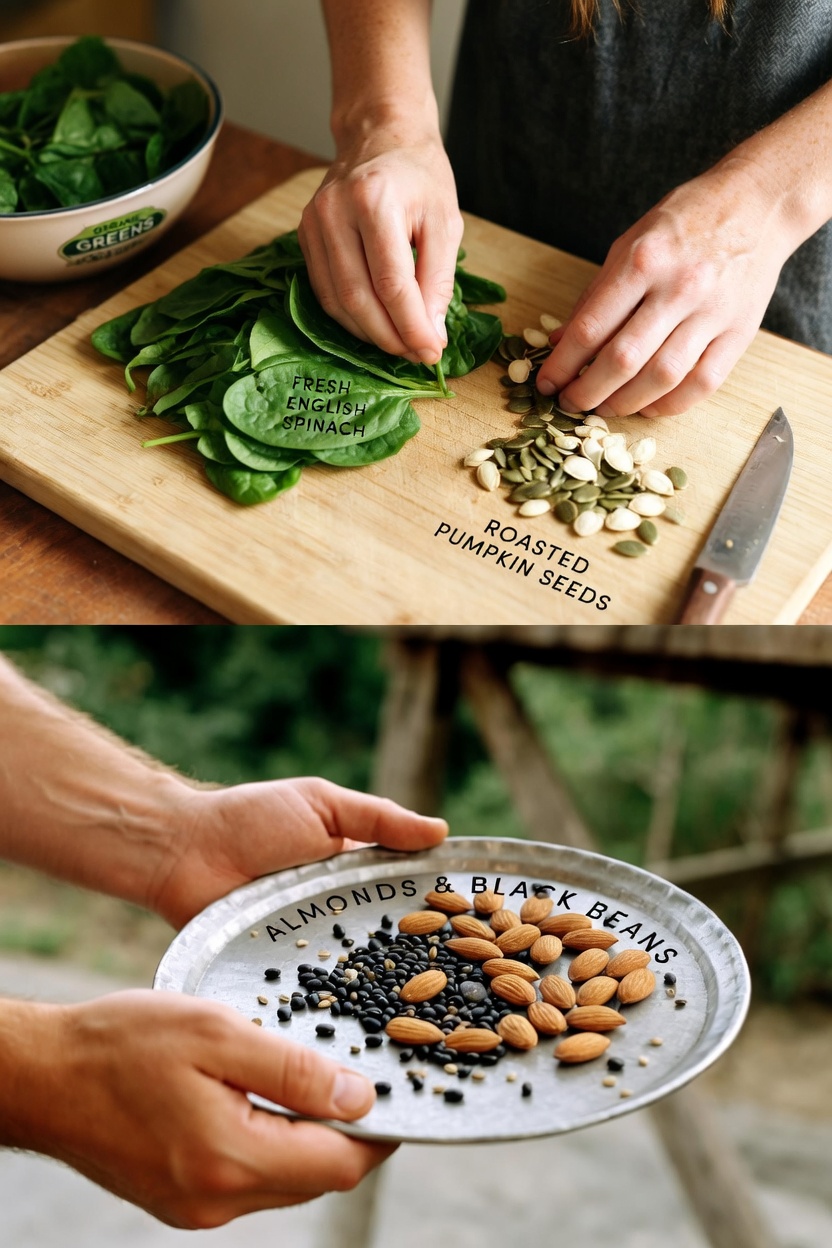
A cooked cup of spinach supplies roughly 78–157 mg of magnesium, which is about 19–37% of the daily value (DV) for adults. When cooked, greens are usually gentle on digestion and can be added to many dishes. They also bring in other important nutrients, including potassium and various antioxidants. -
Almonds and Other Nuts
About 1 ounce (a small handful) of dry-roasted almonds provides around 80 mg of magnesium, or roughly 19% of the DV. Cashews are similar, at about 74 mg per ounce. Nuts are portable, require no preparation, and offer healthy fats and some protein alongside their magnesium. -
Pumpkin Seeds
One ounce of roasted pumpkin seeds delivers about 156 mg of magnesium—up to 37% of the DV—making them one of the richest natural sources. They add a pleasant crunch to salads, yogurt, oatmeal, or blended grain bowls and are easy to store and carry. -
Black Beans and Other Legumes
Half a cup of cooked black beans contains approximately 60 mg of magnesium (about 14% DV). Lentils and chickpeas offer similar amounts. Legumes are budget-friendly, filling, and pair well with rice, vegetables, or lean proteins for balanced meals. -
Avocados
A medium avocado provides around 58 mg of magnesium, or about 14% of the DV. Their creamy texture makes them ideal for spreading on whole-grain toast, stirring into salads, or blending into smoothies and dips.
These foods are valuable not only because they supply magnesium, but also because they deliver fiber, healthy fats, and other electrolytes that support hydration and muscle function.

Magnesium at a Glance: Quick Comparison
Here is a simple comparison of how much magnesium each of these foods offers per typical serving, using a daily value of 420 mg for reference:
| Food | Typical Serving | Magnesium (mg) | Approx. % Daily Value* |
|---|---|---|---|
| Pumpkin seeds (roasted) | 1 oz | 156 | 37% |
| Spinach (cooked) | 1 cup | 78–157 | 19–37% |
| Almonds (dry roasted) | 1 oz | 80 | 19% |
| Black beans (cooked) | ½ cup | 60 | 14% |
| Avocado | 1 medium | 58 | 14% |
*Based on an adult daily value of 420 mg of magnesium.
Even modest portions of these foods, spread throughout the day, can quickly add up and help you move toward your daily magnesium target.
Simple Ways to Add These Foods to Your Routine
There is no need to overhaul your entire diet. Small, consistent changes often work best:
-
Morning boost:
Top your oatmeal, porridge, or yogurt with a tablespoon of pumpkin seeds or chopped almonds. -
Midday meal upgrade:
Stir a handful of spinach into scrambled eggs, soups, stews, or pasta. It wilts down quickly and blends into many dishes. -
Smart snacking:
Keep a small container of mixed nuts and seeds in your bag, at your desk, or by your favorite chair for an easy, satisfying snack. -
Dinner addition:
Add black beans to salads, tacos, grain bowls, chili, or serve them as a side alongside grilled chicken or fish. -
Quick extra:
Mash half an avocado onto whole-grain toast, or slice it over a salad or cooked grains for a fast, nutrient-rich addition.
Aim for variety over the week so you enjoy different flavors and textures while covering a broader range of nutrients. Combined with adequate fluids and gentle stretching, a magnesium-rich diet can be one piece of your overall strategy for daily comfort.
Many people report feeling more energized and satisfied with their meals when they regularly include nutrient-dense foods such as these.
What Research Says: Foods vs. Magnesium Supplements
Several clinical trials have tested magnesium supplements for occasional leg cramps, especially in older adults. The results are mixed, and many studies—including Cochrane reviews and trials reported in journals such as JAMA—have not found a clear, consistent benefit over placebo for idiopathic (unexplained) cramps.
Because of that, many health professionals highlight whole foods as the preferred way to hit magnesium targets. Food sources offer magnesium in combination with other vitamins, minerals, and beneficial compounds, and they are less likely to cause side effects such as digestive upset, which can happen with high-dose supplements in some people.
The NIH notes that most individuals can meet their magnesium needs through diet alone, especially by regularly eating leafy greens, nuts, seeds, and legumes.
Bottom Line: Small Dietary Shifts, Everyday Payoffs
Supporting muscle comfort in later life does not have to be complex. By gradually adding magnesium-rich foods like spinach, nuts, seeds, beans, and avocados to your meals, you provide your body with natural building blocks for healthy muscle function.
Consider choosing one or two foods from the list to focus on this week—perhaps pumpkin seeds at breakfast and black beans at dinner—and see how easily they fit into your routine.
FAQ
How much magnesium do older adults need each day?
For adults over 51, the recommended dietary allowance is approximately 420 mg per day for men and 320 mg per day for women, according to major health authorities. Including magnesium-rich foods regularly can help you reach these levels without relying heavily on supplements.
Can I get too much magnesium from food?
It is very uncommon to consume excessive magnesium from whole foods alone. The body adjusts how much it absorbs and typically prevents overload when magnesium comes from food. Problems related to too much magnesium are usually linked to high-dose supplements or certain medical conditions, not diet.
What if I have kidney issues or take regular medications?
If you have kidney disease, other conditions that affect mineral balance, or take prescription medications, speak with your healthcare provider before making major changes to your diet or starting supplements. Your doctor or dietitian can help you decide how best to include magnesium-rich foods in a way that is safe and appropriate for your situation.