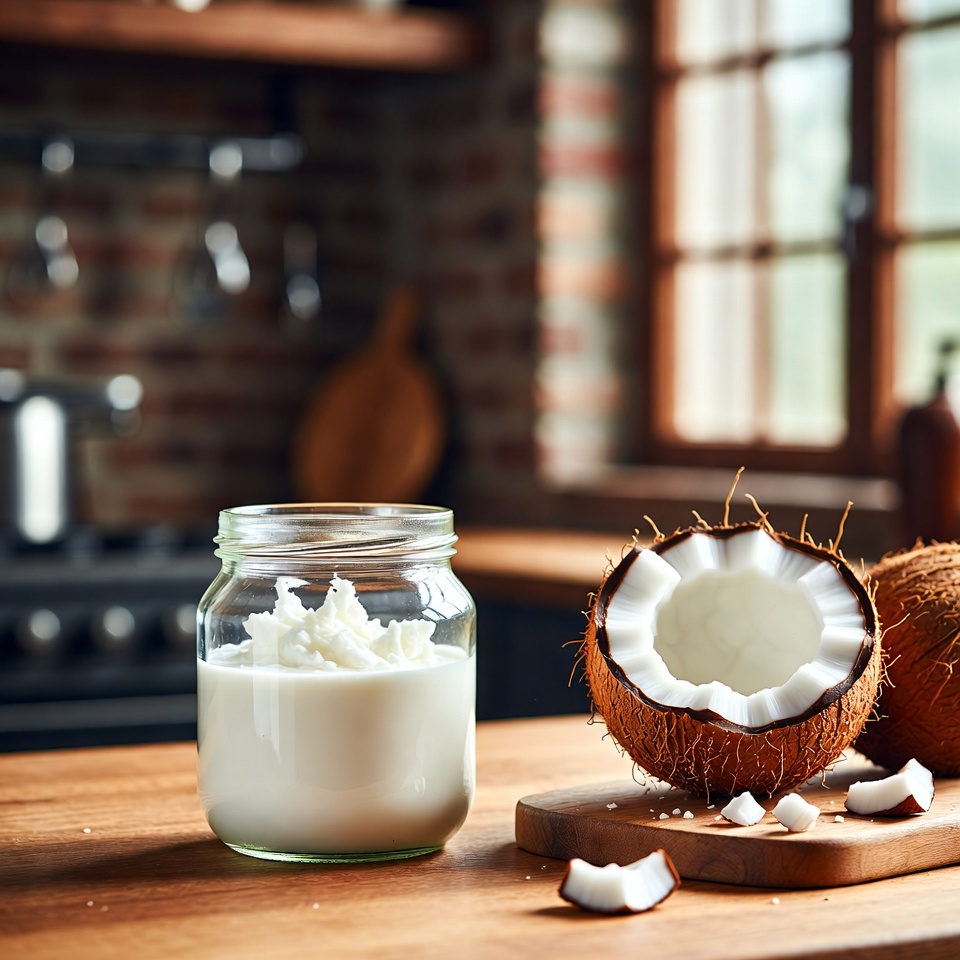
How to Make Pure, Chemical-Free Coconut Oil at Home
If you want fresh, natural coconut oil without additives or preservatives, this simple DIY method is ideal. The result is pure, homemade coconut oil you can use for cooking, skincare, and hair care.
Ingredients
- 2–3 mature brown coconuts (not young green coconuts)
- 4 cups warm water
Step 1: Extract the Coconut Milk
- Break open the coconuts and separate the white meat from the shell.
- Rinse the coconut flesh, then grate it or cut it into small pieces.
- Place the grated coconut into a blender with the warm water.
- Blend until you get a thick, creamy mixture.
- Pour the mixture through a cheesecloth or fine strainer, squeezing out as much liquid as possible.
- Collect the liquid—this is your fresh coconut milk. Discard or repurpose the leftover pulp.
Step 2: Ferment the Coconut Milk
- Transfer the coconut milk to a clean glass bowl or jar.
- Cover it loosely (with a lid or cloth) and leave it in a warm spot at room temperature.
- Let it rest undisturbed for 24–48 hours.
- Over time, the coconut milk will separate into distinct layers: oil, water, and a thicker cream.
Step 3: Separate and Heat to Release the Oil
- Gently skim off the thick cream that has risen to the top.
- Pour the remaining liquid (which contains oil and water) into a pan.
- Warm it over very low heat for about 45–60 minutes, stirring occasionally.
- As it heats, the oil will gradually separate and turn a light golden color.
- Once the oil has clearly separated, remove from heat and allow it to cool slightly.
- Strain the liquid through a fine sieve or cheesecloth into a clean, dry glass jar, leaving any solids behind.
How to Store and Use Your Homemade Coconut Oil
- Store the oil in an airtight glass jar in a cool, dry place, away from direct sunlight.
- Properly stored, it can stay fresh for about 6–12 months.
- Use as:
- A cooking oil for sautéing, baking, or frying
- A nourishing hair mask or scalp treatment
- A natural moisturizer for face and body
- Oil pulling as part of an oral care routine
Tips for Making the Best Coconut Oil
- Choose mature coconuts: Older, brown coconuts contain more fat, which means more oil.
- No-heat option: If you prefer not to heat, place the separated coconut milk in the refrigerator. Once the fat solidifies on top, scoop it off and gently melt it to obtain oil.
- Add a personal touch: For beauty uses, you can mix in a few drops of your favorite essential oil (like lavender or peppermint) for a light fragrance.
Would you try making your own DIY coconut oil at home?