Natural Home Remedies for Flu, Phlegm, and Mucus
Flu is a common viral infection that often brings along stubborn symptoms such as phlegm, excess mucus, chest congestion, and persistent coughing. While over-the-counter medications are widely available, many people prefer to support their recovery with simple, natural remedies made from everyday kitchen ingredients like ginger, garlic, onion, honey, and herbs.
Below are two powerful home remedies that may help loosen mucus, ease chest congestion, and soothe flu symptoms.
Remedy 1: Ginger and Black Pepper Tea with Honey
This warming herbal drink combines ginger, black pepper, and honey—ingredients known in traditional medicine for their potential to ease coughs, break up mucus, and support respiratory health.
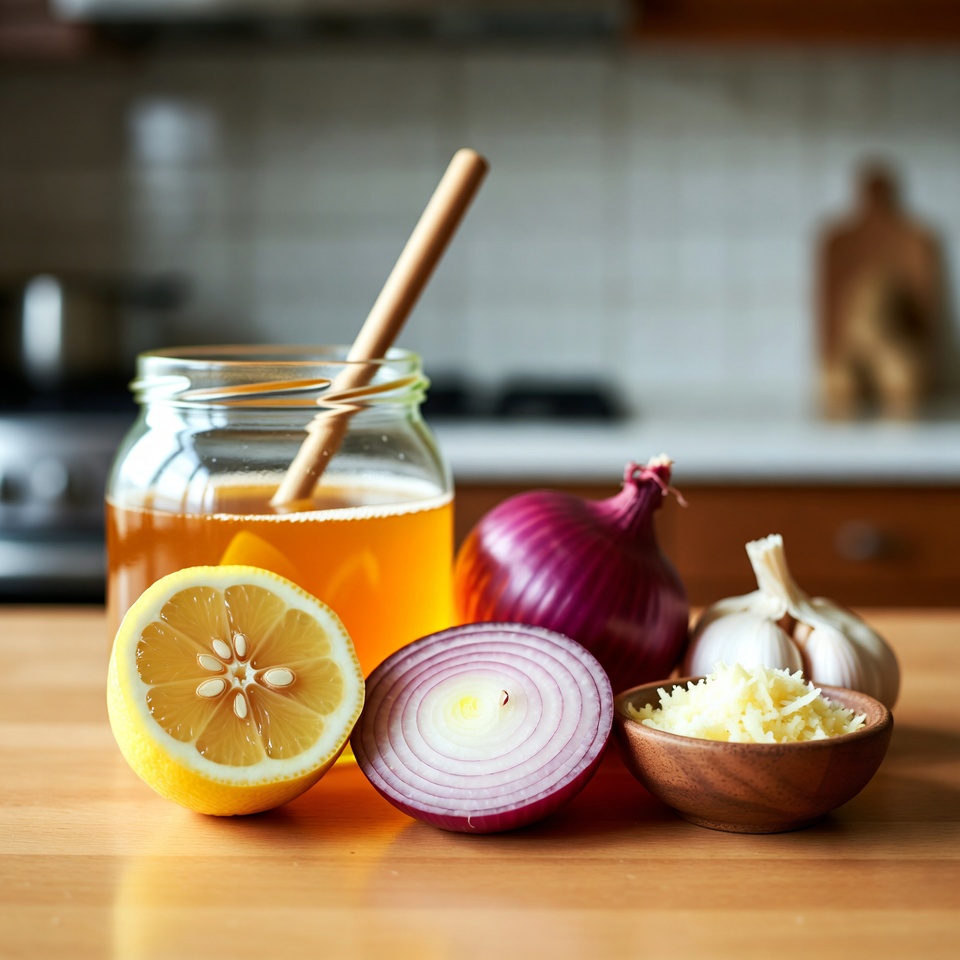
Ingredients
- 1 tablespoon whole black peppercorns (or ground black pepper)
- 1 teaspoon honey
- 2 teaspoons finely chopped or grated fresh ginger
- 3 cups water
How to Prepare and Use
- Add the chopped ginger and black pepper to a saucepan with 3 cups of water.
- Bring the mixture to a boil, then reduce the heat and let it simmer for about 3 minutes.
- Turn off the heat and allow the tea to cool slightly until it is warm but not boiling.
- Stir in the honey to sweeten and enhance soothing effects.
- Sip this tea as needed throughout the day to help ease coughing, loosen phlegm, and relieve chest congestion.
Recommended Amount
- Drink 3–4 cups per day when your flu symptoms are most intense.
- For milder symptoms, 1 cup on an empty stomach may be enough.
- Adjust the quantity based on your comfort and tolerance.
Remedy 2: Potent Herbal Tonic for Colds and Flu
This second remedy is a strong, traditional-style tonic made from pungent ingredients such as garlic, onion, ginger, horseradish, and cayenne pepper. It is often used to help clear sinuses, break up mucus, and support the immune system.
Ingredients
- Fresh garlic, chopped or crushed
- Fresh onion, chopped
- Fresh ginger root, grated
- Fresh horseradish, grated
- Fresh cayenne peppers with seeds, chopped or sliced
(Use equal parts of each ingredient or adjust to taste and tolerance.)
How to Prepare and Use
- Place all the chopped and grated ingredients into a blender or food processor.
- Blend until you achieve a smooth, well-mixed paste.
- Transfer the mixture into a clean glass jar with a tight-fitting lid.
- Store the jar in a cool, dark place for 2 weeks, shaking it once daily to help the extraction process.
- After 2 weeks, strain the mixture through a fine sieve or cheesecloth to separate the liquid from the solids.
- Store the strained liquid in a sealed glass bottle in the refrigerator.
You can take small amounts (for example, 1 teaspoon diluted in water) as needed, especially at the onset of cold or flu symptoms, to help clear nasal passages and support respiratory health. Always start with a small dose to assess tolerance, as this tonic is very strong and spicy.
Benefits of Using Natural Home Remedies for Flu Symptoms
Incorporating these home treatments into your flu-care routine can offer several potential advantages:
-
Natural ingredients:
These remedies rely on common kitchen items such as ginger, garlic, onion, pepper, and honey, which are easy to find and widely used in traditional medicine. -
Support for mucus and congestion relief:
Many of these ingredients have warming, expectorant, or decongestant properties that may help thin mucus, ease chest tightness, and promote clearer breathing. -
Simple preparation:
Both remedies can be prepared at home with basic tools and minimal effort, making them practical options for everyday use. -
Symptom relief:
People often report reduced coughing, less throat irritation, and improved comfort when using these natural remedies alongside standard flu treatments.
Combining Home Remedies with Conventional Flu Care
Natural remedies can be a helpful complement to conventional flu treatments, but they are not a replacement for professional medical care when it is needed.
- These DIY solutions may provide gentle, supportive relief and help your body’s own healing processes by easing cough, phlegm, and congestion.
- For a more comprehensive approach, you can use these home remedies together with rest, hydration, and any medications recommended by your healthcare provider.
- Always consult a doctor before starting new remedies, especially if:
- You take prescription medications
- You have chronic or underlying health conditions
- You are pregnant, breastfeeding, or preparing remedies for children
Used thoughtfully and safely, natural home treatments like ginger-pepper tea and herbal tonics can be valuable tools in managing flu, phlegm, and mucus while supporting overall respiratory health.