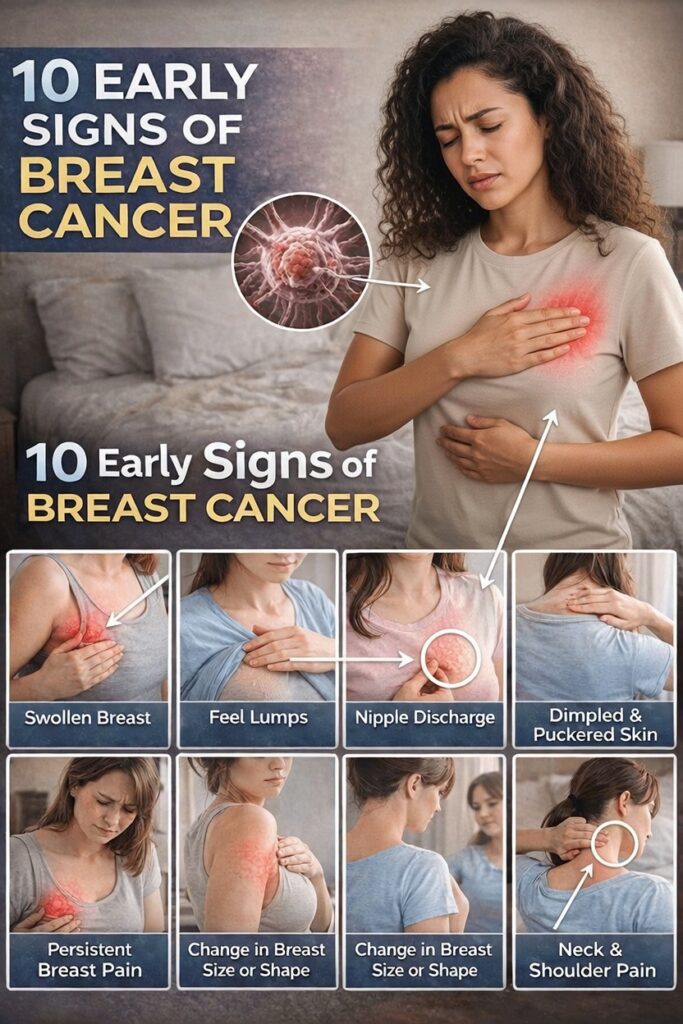
10 Early Warning Signs of Breast Cancer Every Woman Should Know
Many women move through everyday life without realizing that small breast changes can sometimes point to a serious health issue. Breast cancer often begins silently, and identifying it early can greatly improve treatment outcomes. Of course, not every breast change is cancer—many lumps, skin changes, and discomforts are caused by harmless conditions. Still, knowing what is normal for your body and paying attention to unusual changes is essential.
Leading health authorities, including the American Cancer Society and the CDC, stress that early recognition of warning signs can lead to faster medical evaluation and better care. Some symptoms are subtle and easy to brush off as hormonal changes, aging, or temporary irritation. But noticing one small difference now could make a major difference later.
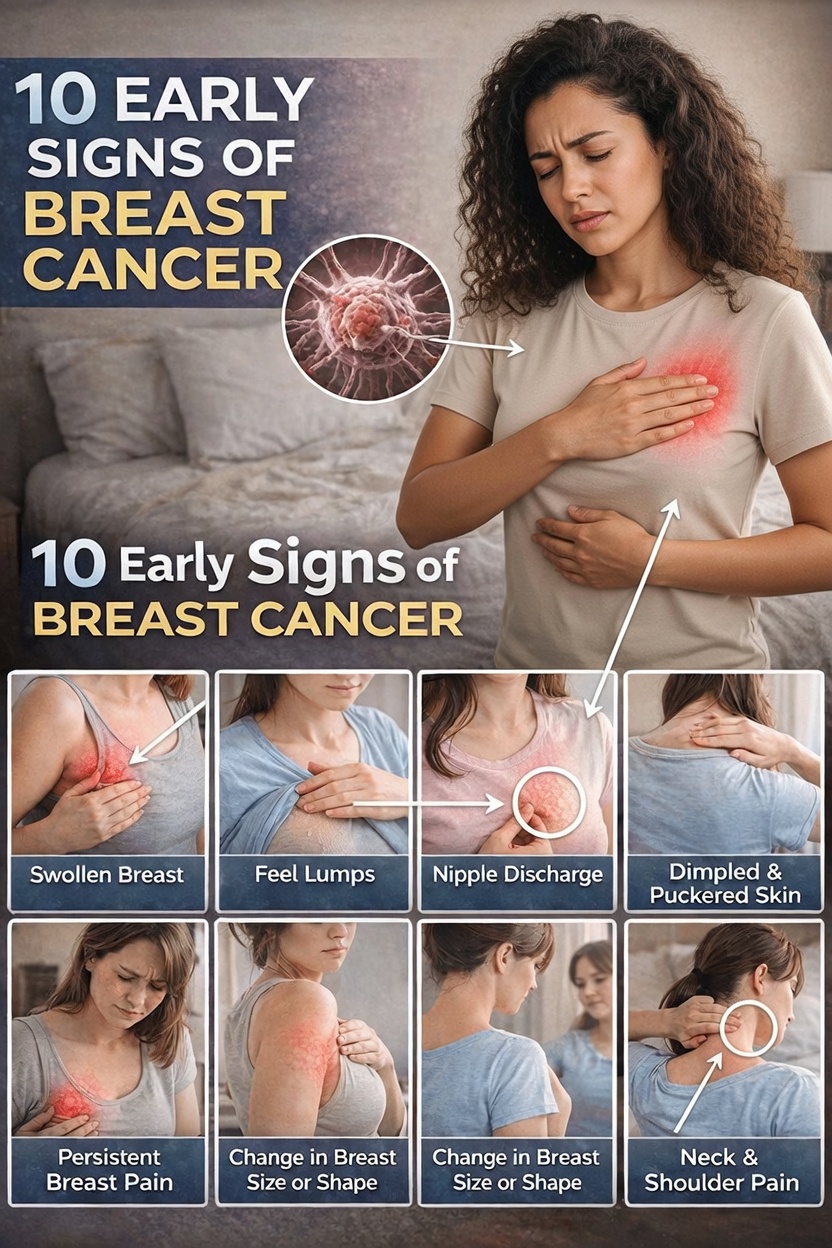
Below are 10 important signs of breast cancer to watch for, along with practical ways to protect your breast health.
1. A New Lump in the Breast or Underarm
One of the earliest and most recognized signs of breast cancer is a new lump or an area of thickened tissue in the breast or armpit. These lumps are often hard, uneven in shape, and painless, although some may feel tender.
It is important not to wait for pain before taking action, since many early breast cancers do not hurt. While many lumps are benign, such as cysts or fibroadenomas, any lump that stays present should be evaluated by a medical professional.
A good habit is to check your breasts once a month. While lying down, use the pads of your fingers to move in small circles across the breast and underarm area. If you notice something new that remains after your next menstrual cycle, contact your doctor.
2. Thickening or Swelling in Part of the Breast
Sometimes breast cancer does not begin with a clearly defined lump. Instead, one section of the breast may start to feel thicker, heavier, fuller, or swollen compared with the other side. This change can happen gradually and may not be painful.
In some cases, swelling affects only one area, while in others it may involve most of the breast. You may simply notice that one breast looks larger than the other or feels different when getting dressed or showering.
Because this symptom can appear before a lump is easy to detect, persistent asymmetry or swelling should never be ignored.
3. Dimpling or Puckering of the Skin
If the skin of the breast starts pulling inward, creating dents or a texture similar to an orange peel, this can be a warning sign. This change, known medically as peau d’orange, happens when tissue beneath the skin begins to tug on the surface.
This symptom is especially important because it can be associated with inflammatory breast cancer. Looking at your breasts in the mirror with your arms raised can help you notice these visual changes more easily. If dimpling or puckering does not go away, a medical exam is necessary.
4. Unexplained Changes in Breast Size or Shape
A noticeable difference in the size, contour, or shape of one breast may also be a sign of concern. One breast may appear enlarged, distorted, or uneven without a clear reason.
These changes may develop slowly over several weeks or months, making them easy to miss. Comparing both breasts regularly in the same position can help you spot a persistent difference.
Although hormones can cause temporary breast changes, ongoing or unexplained alterations should be checked by a healthcare provider.
5. Nipple Retraction or a Newly Inverted Nipple
If a nipple that normally points outward starts turning inward, this may indicate an underlying breast problem. This type of nipple retraction usually affects only one side and may occur along with other symptoms.
The change can happen when tissue behind the nipple begins pulling it inward. A nipple that has always been inverted is usually not a concern, but a newly inverted nipple should be discussed with a doctor as soon as possible.
6. Unusual Nipple Discharge
Fluid coming from the nipple that is not breast milk should be taken seriously, especially if it is bloody, clear, or appears without squeezing the breast. Discharge from only one breast is generally more concerning than discharge from both.
While nipple discharge can occur for harmless reasons, spontaneous or blood-tinged discharge is considered an important warning sign by medical experts. If this happens, note the color, thickness, and how often it occurs so you can share accurate details with your doctor.
7. Redness, Rash, or Flaking on the Breast or Nipple
Red, irritated, flaky, or peeling skin on the breast or around the nipple may resemble eczema, dermatitis, or an infection. However, in some cases, it can be linked to inflammatory breast cancer or other serious breast conditions.
The affected area may also feel warm, itchy, or sensitive. If creams or basic skin care do not improve the problem within a week or two, it is important to get it examined rather than assuming it is only a skin issue.
8. Ongoing Breast or Nipple Pain
Breast pain is common and is often related to hormone fluctuations. Still, pain that stays in one specific area and does not improve with your menstrual cycle deserves attention. Persistent nipple soreness or tenderness can also be significant.
Pain is not the most common early symptom of breast cancer, but when it is localized and ongoing—especially if paired with another breast change—it should be evaluated by a healthcare professional.
9. Swelling in the Armpit or Near the Collarbone
Breast cancer can sometimes spread to nearby lymph nodes before a breast lump becomes obvious. When this happens, you may feel swelling, fullness, or a lump in the armpit or above the collarbone.
These swollen lymph nodes are often painless in the early stages. During self-checks, include both underarm areas and the area near the collarbone. Any new or lasting swelling should be assessed by a doctor.
10. Itchy or Scaly Skin on the Breast
Persistent itching, scaling, or crusting on the breast or nipple may be a sign of Paget’s disease of the breast, a rare condition that can be associated with underlying breast cancer.
It may begin as a stubborn rash that does not improve with moisturizer or basic skin treatment. If the irritation continues, a breast specialist or dermatologist should evaluate it promptly.
Why Early Awareness Is So Important
These warning signs do not automatically mean breast cancer. In fact, many breast changes are caused by non-cancerous conditions. However, knowing the normal appearance and feel of your breasts can help you notice changes earlier.
Early attention can lead to faster diagnosis, earlier treatment, and better outcomes. The American Cancer Society recommends regular mammogram screening starting around ages 40 to 45 for women at average risk, along with general breast self-awareness.
Practical Steps to Protect Your Breast Health
- Check your breasts monthly, ideally a few days after your period ends.
- Schedule regular clinical breast exams with your healthcare provider.
- Follow mammogram guidelines based on your age, family history, and personal risk factors.
- Stay physically active and maintain a balanced diet.
- Limit alcohol intake.
- Avoid smoking.
Frequently Asked Questions
Can breast cancer develop without any symptoms?
Yes. Many early-stage breast cancers are found through routine screening before a woman notices any symptoms. That is why mammograms remain so important.
Are these warning signs only relevant for women over 50?
No. Breast cancer can affect women of different ages, including younger women. Every woman should understand the possible warning signs.
What should I do if I notice one symptom but otherwise feel fine?
Do not dismiss it. Even mild or painless changes can be early clues. The safest step is to see a doctor for proper evaluation and peace of mind.