Understanding Hiatal Hernia Symptoms: 10 Common Signs to Watch For
Many people deal with digestive discomfort from time to time, such as a burning feeling in the chest or becoming full much sooner than expected during a meal. Problems like these can interfere with everyday life, turning meals into a source of stress and causing poor sleep or ongoing concern about what may trigger symptoms next. According to respected medical organizations such as Mayo Clinic and Cleveland Clinic, this type of discomfort is often associated with conditions in which part of the stomach moves upward through the diaphragm. The encouraging news is that recognizing the typical warning signs early can make it easier to spot patterns and bring them up with a healthcare professional.
What Is a Hiatal Hernia?
A hiatal hernia happens when the upper section of the stomach pushes through an opening in the diaphragm called the hiatus and enters the chest area. The diaphragm is the muscle that separates the chest from the abdomen and plays a major role in breathing. Small hiatal hernias are fairly common, particularly in adults over 50, and many do not cause obvious symptoms. Larger hernias, however, can make it easier for stomach acid and stomach contents to move back into the esophagus, which may lead to irritation and discomfort.
Medical research suggests that a large number of hiatal hernias cause no symptoms at all. When symptoms do occur, they are most often linked either to acid reflux or to pressure caused by the stomach being out of its usual position.
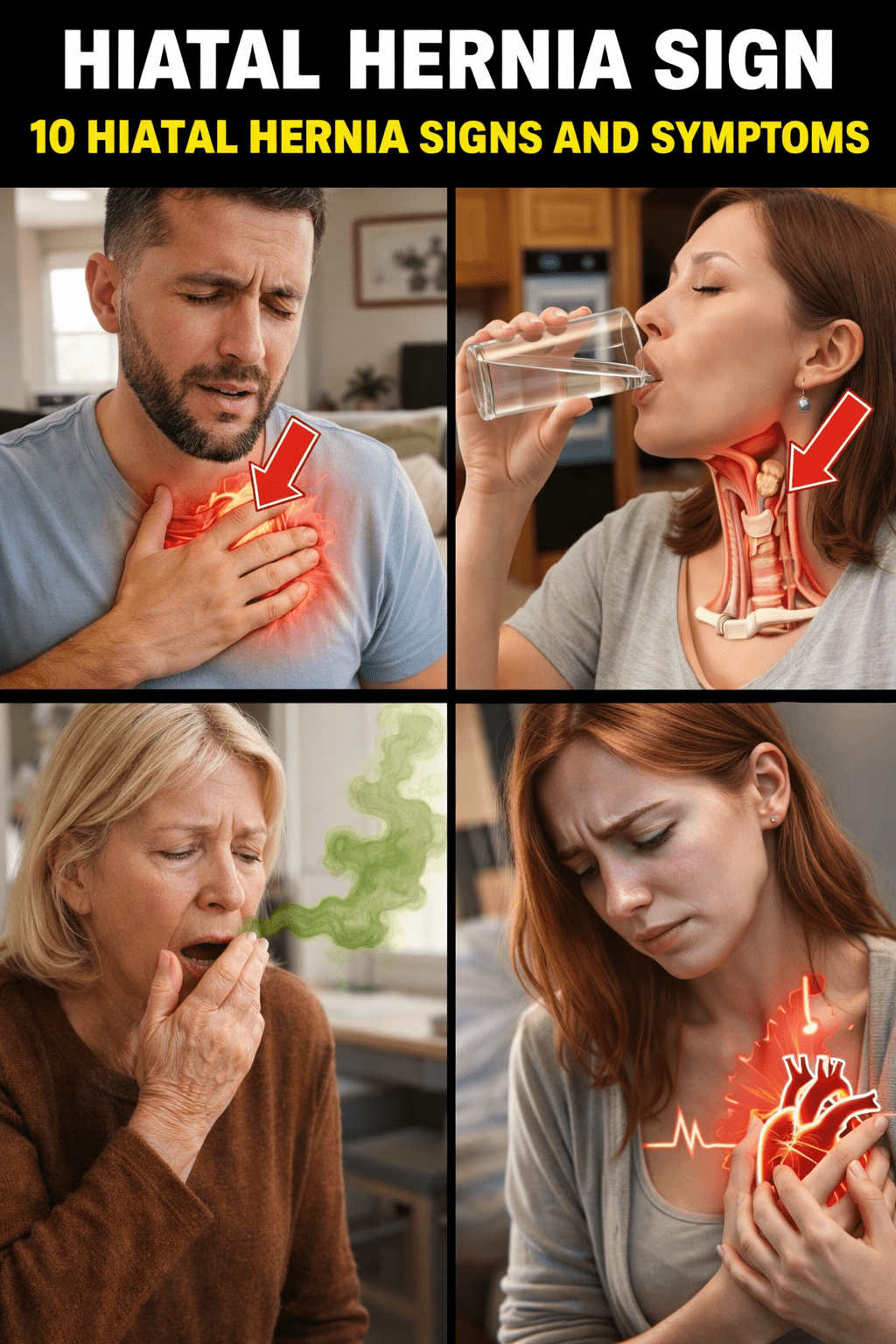
10 Common Signs and Symptoms of a Hiatal Hernia
Below are 10 symptoms frequently reported in connection with hiatal hernia, based on information from trusted medical sources. Keep in mind that these symptoms can also appear in other conditions, so a proper medical assessment is important.
1. Heartburn
A burning sensation in the chest is one of the most common complaints. It often appears after eating or when lying down, especially if stomach acid travels back into the esophagus.
2. Acid Reflux or Regurgitation
Some people notice a sour, bitter, or acidic taste in the mouth. This can happen when food or liquid flows upward unexpectedly, sometimes creating the feeling that something is coming back up.
3. Chest Pain or Pressure
A hiatal hernia may cause chest discomfort that is not related to the heart. The sensation can feel like pressure or tightness and may become more noticeable after meals or when bending over.
4. Difficulty Swallowing
Also known as dysphagia, this symptom may make it feel as though food is sticking in the throat or chest. Swallowing may take more effort than usual.
5. Feeling Full Too Quickly
Early satiety means feeling satisfied after eating only a small amount. In some cases, the altered position of the stomach may reduce how comfortably it expands during meals.

6. Frequent Belching
Burping more often than usual can happen when air becomes trapped or when acid rises upward. Some people also notice an unpleasant sour taste along with it.
7. Nausea or Vomiting
A hiatal hernia may sometimes cause queasiness, especially after meals. In certain cases, vomiting may also occur.
8. Shortness of Breath
Some individuals feel breathless, particularly if the hernia places pressure on the diaphragm or nearby structures in the chest.
9. Upper Abdominal Pain
Discomfort may develop in the upper belly area and sometimes spread toward the chest or back, making it harder to pinpoint the source.
10. Chronic Cough or Hoarseness
Ongoing throat irritation, a dry cough, or a hoarse voice may result when acid reaches higher into the throat.
For many people, these symptoms become more noticeable at night or after eating certain foods, which can make daily routines more difficult.
Lifestyle Habits That May Help Reduce Symptoms
Although only a healthcare provider can give personalized medical advice, many people find that simple daily changes can make symptoms easier to manage. General health recommendations often include the following:
- Eat smaller meals more often instead of large, heavy meals.
- Avoid lying down for at least 2 to 3 hours after eating.
- Raise the head of the bed by 6 to 8 inches using blocks under the bed legs rather than stacking pillows.
- Aim for a healthy weight, since extra abdominal pressure may worsen symptoms.
- Reduce or avoid trigger foods such as spicy foods, fatty meals, citrus, tomatoes, chocolate, and caffeine.
- Stop smoking if you smoke, as it can relax the lower esophageal sphincter.
- Choose loose-fitting clothing around the waist to reduce pressure on the abdomen.
Keeping a simple food and symptom journal can also be helpful. Tracking what you eat and when symptoms appear may reveal patterns faster than expected.

When to See a Healthcare Professional
If symptoms continue, become more intense, or are accompanied by severe chest pain, unexplained weight loss, vomiting blood, or black stools, seek medical care right away. These signs may point to complications that require prompt evaluation.
FAQ
What causes a hiatal hernia?
Common causes and risk factors include weakening of the diaphragm with age, obesity, pregnancy, heavy lifting, and chronic coughing. Genetics may also contribute in some cases.
Can a hiatal hernia go away on its own?
Small hiatal hernias often remain stable and may not cause problems, but they usually do not disappear on their own. Even so, lifestyle adjustments can often help control related symptoms.
How is a hiatal hernia usually diagnosed?
Doctors often identify a hiatal hernia while investigating reflux-related complaints. Common tests include an endoscopy, a barium swallow X-ray, or esophageal manometry.