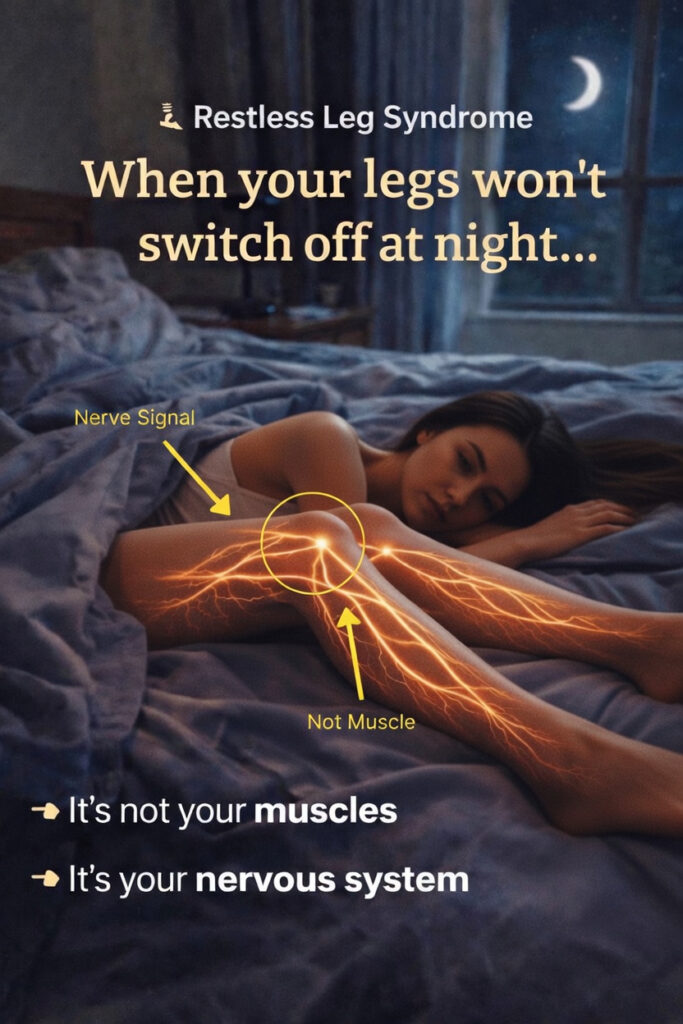
Why Restless Legs Feel Stronger at Night
Nighttime is supposed to be when the body settles down. But for many people, the legs become unusually active just when rest should begin. That nagging need to move can slowly intensify, making relaxation difficult and sleep frustratingly hard to reach. What many people misunderstand is that this is not just a matter of overworked muscles. And by the end of this article, you will learn one simple daytime habit that is often overlooked when evenings become uncomfortable.
What Is Restless Leg Syndrome?
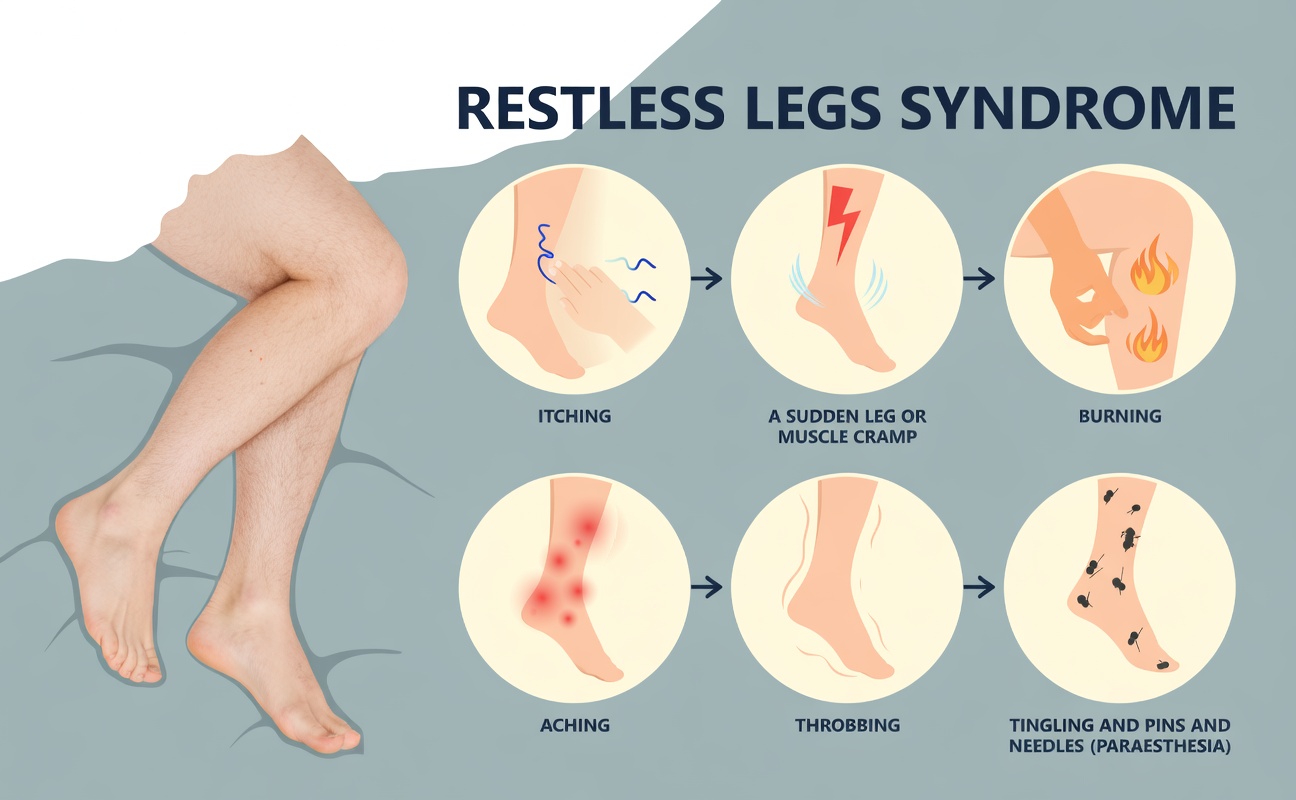
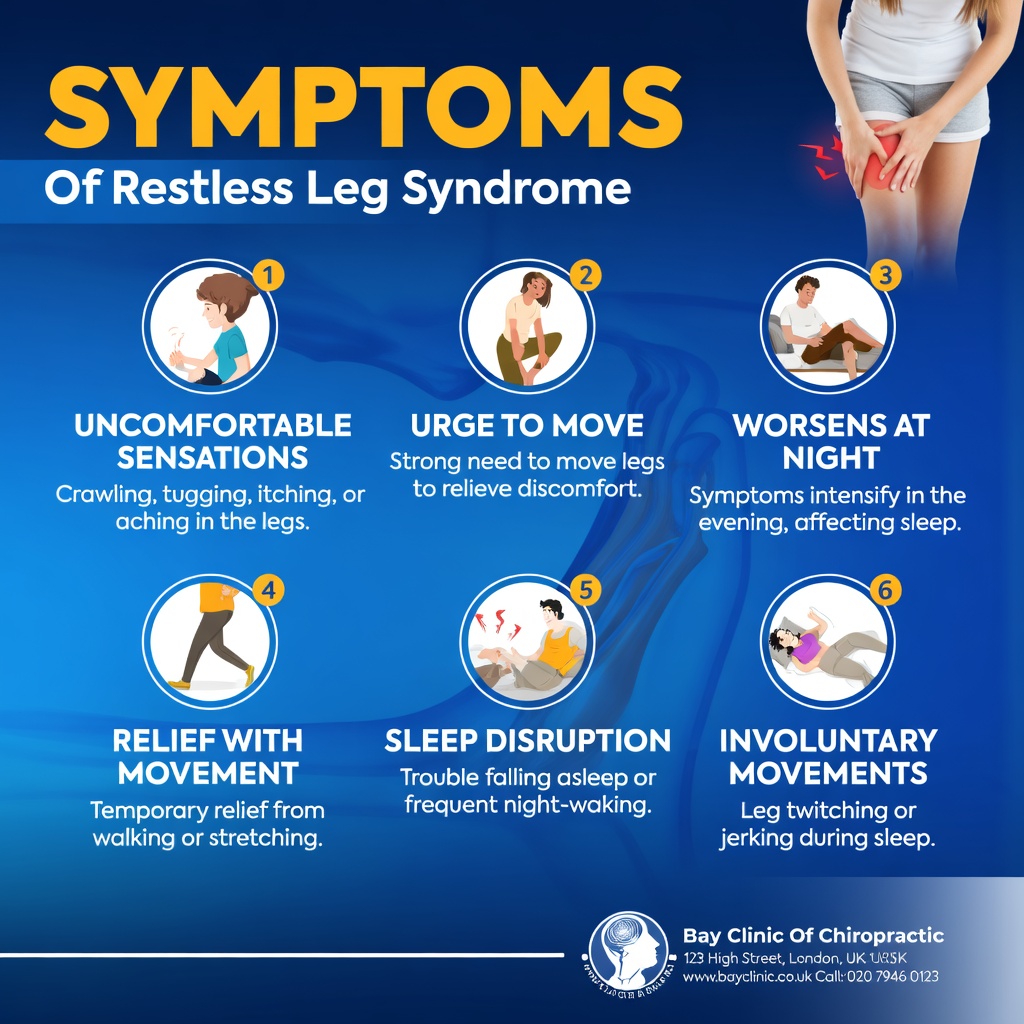
Restless Leg Syndrome, often called RLS, is a neurological condition involving the way the brain and leg nerves communicate. It tends to appear most often in the evening or during the night, especially when the body is inactive. People commonly describe the feeling as:
- Crawling
- Tingling
- Pulling
- A strong inner urge to move the legs
One reason this condition feels confusing is that symptoms may stay relatively quiet during the day. Regular movement naturally masks or reduces the discomfort. But once the body becomes still at night, the sensations can feel much more intense.
Research also suggests that changes in brain chemistry and the body’s internal daily rhythms may help explain why symptoms often peak after sunset. That is why lying down can feel worse than getting up and walking.
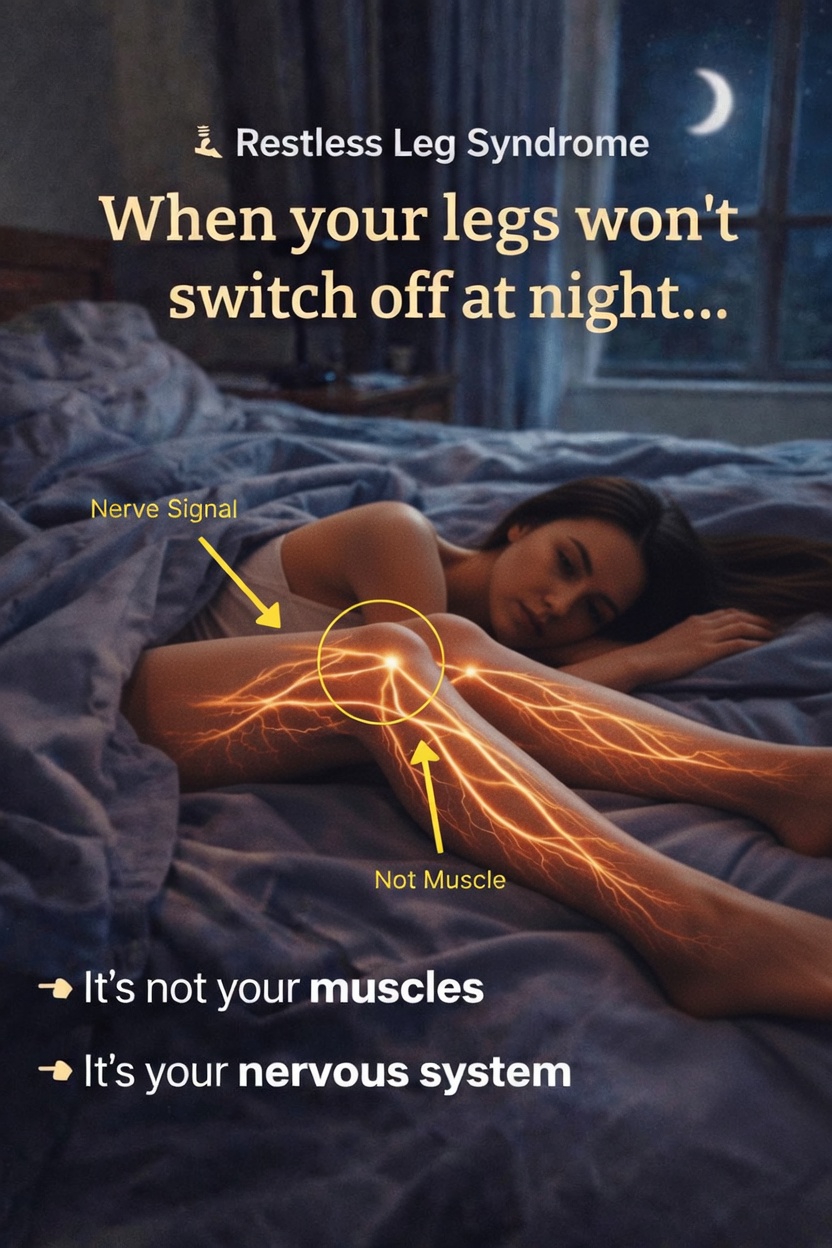
It Is Not Only About the Muscles
A lot of people assume the problem comes from tight or tired muscles, so they try stretching or massaging the legs. While these methods may offer temporary relief, the underlying issue usually involves nerve signaling and how the brain processes sensation.
Findings published in sleep and neurology research indicate that restless legs are more closely linked to the nervous system than to muscle weakness or physical damage.
A simple way to think about it is this: the muscles themselves may be fine, but the signals that should help them stay calm are not always working smoothly at night.
Common Triggers That Can Make Symptoms Worse
Knowing your triggers can make nighttime discomfort easier to manage. Although each person’s experience is different, several factors are commonly associated with stronger symptoms:
- Sitting or lying still for long periods
- An inconsistent sleep schedule
- Evening stress or mental overload
- Too much caffeine late in the day
- Low iron levels, according to some studies
Here is what many people do not expect: small daily habits can have a bigger effect than they realize. In some cases, simple routine changes can reduce how strong the sensations feel.
How the Nervous System Affects Evening Restlessness
The nervous system acts like a communication network between the brain and the rest of the body. At night, that network shifts toward rest and recovery. For people with restless leg symptoms, this transition can feel unpleasant instead of calming.
Researchers believe dopamine pathways may be involved, since dopamine helps regulate movement and sensation. If these pathways become less active in the evening, leg discomfort may stand out more.
That does not necessarily mean something is seriously wrong. It may simply mean the system needs more support during certain hours of the day.
Gentle Evening Habits That May Help Leg Comfort
Many readers want practical steps they can try right away. While these are not medical treatments or guaranteed solutions, they are commonly recommended by sleep and wellness professionals.
1. Build a Calm Evening Routine
Consistency can help the nervous system feel more settled.
- Go to bed and wake up around the same time every day
- Dim the lights about an hour before bedtime
- Reduce screen use late in the evening
These habits help tell the brain that sleep is approaching.
2. Add Light Movement Before Bed
Gentle movement may ease discomfort without overstimulating the body.
- Take a slow walk for five to ten minutes
- Do seated leg stretches
- Try simple ankle rotations or calf movements
Keep the activity easy and relaxed. The goal is soothing the legs, not getting in a workout.
3. Watch What You Eat and Drink Late in the Day
Evening food and drink choices can influence how the legs feel at night.
- Cut back on caffeine after early afternoon
- Avoid heavy meals close to bedtime
- Stay well hydrated throughout the day
Some research also points to iron balance as a possible factor, so discussing nutrition with a healthcare professional may be worthwhile.
4. Use Sensory Comfort to Calm the Legs
This is one area where many people notice subtle but useful improvements.
- Take a warm bath or soak your feet before bed
- Use soft bedding and loose sleepwear
- Try light pressure from a thin blanket
These sensory cues may help quiet the signals that create discomfort in the legs.
And here is the key point hinted at earlier: many people focus only on nighttime habits, while one simple daytime behavior can also affect how calm the legs feel after dark.
What Research Says About Lifestyle and Restless Legs
Scientific studies do not point to one single cause of Restless Leg Syndrome. Instead, they show patterns.
Research in sleep medicine suggests that people with restless leg symptoms often sleep better when they maintain:
- Regular sleep routines
- Lower evening stress
- A calm and predictable bedtime environment
This does not mean symptoms vanish immediately. However, many individuals report fewer interruptions and more restful sleep when they consistently support their nervous system over time.
Helpful Habits vs. Habits That Often Make Things Worse
Looking at the contrast can make it easier to spot what to change first.
Habits That Often Help
- Going to sleep at consistent times
- Doing light movement earlier in the evening
- Creating a calm sensory environment before bed
Habits That Often Make Nights Harder
- Drinking caffeine too late
- Staying still for long periods before sleep
- Doing stressful or mentally intense activities at night
Seeing these side by side helps turn vague frustration into clear action.
Conclusion
Restless leg sensations at night can feel lonely and exhausting, but understanding the nervous system connection makes the experience easier to interpret. In many cases, small habits practiced consistently matter more than quick fixes.
And here is the overlooked daytime habit promised earlier: regular movement during the day.
This does not mean intense exercise. Simple, steady activity such as walking, stretching, or staying gently active throughout the day may help the nervous system stay more balanced by nighttime. Research suggests that when the body gets natural movement earlier in the day, evenings may feel calmer.
Supporting your body across the full day often leads to more comfortable nights.
Frequently Asked Questions
Why do restless leg sensations usually show up at night?
They often become more noticeable when the body is still and the nervous system shifts into rest mode. Changes in brain signaling during the evening may make the sensations feel stronger.
Can lifestyle changes really help?
Many people say their sleep improves when they keep a steady routine, lower evening stimulation, and support overall nervous system balance with healthy daily habits.
Is stress connected to restless leg syndrome?
Stress is not considered the direct cause, but it can make symptoms feel worse. Relaxation and stress-reducing habits may help reduce nighttime discomfort.
Medical Disclaimer
This article is intended for informational purposes only and should not replace professional medical advice. Always speak with a qualified healthcare provider about personal health concerns.