Aloe Vera for Eye Comfort: A Gentle Addition to Your Daily Routine
Eye discomfort has quietly become part of everyday modern life. Long hours in front of screens, dry indoor air, dust, and too little rest can leave the eyes feeling strained day after day. Redness, dryness, and irritation may seem like small issues at first, but over time they can reduce concentration, affect confidence, and make daily tasks less comfortable.
Because of this, many people look for mild, natural ways to support eye comfort without turning immediately to aggressive products. Aloe vera is often mentioned in that search. However, there are a few important points people tend to miss, especially when it comes to how it should actually be used.
Why Eye Discomfort Is So Common Today
Dryness and redness are not limited to people with diagnosed eye conditions. Even healthy eyes can become irritated when they are exposed to everyday environmental and lifestyle stress.
The challenge is that many common solutions focus only on short-term relief. Artificial tears, for example, may help temporarily, but they do not always address the habits that contribute to ongoing discomfort.
In many cases, better eye comfort begins outside the eye itself. Hydration, gentle care of the skin around the eyes, and calming daily routines can all make a difference. Used properly, aloe vera may be a helpful part of that broader approach.
Why Aloe Vera Is Often Mentioned in Eye-Related Care
Aloe vera has a long history of use for skin hydration and soothing care. More recent research has also examined its moisturizing and calming properties.
Studies suggest that aloe vera gel contains compounds such as polysaccharides and antioxidants, which may help maintain skin hydration and reduce mild surface irritation. This is one reason aloe is frequently included in products made for delicate or sensitive skin.
There is one critical point to remember: aloe vera is not intended to be put directly into the eyes. Its role is external, meaning it may be applied around the eye area as part of a comfort-focused skincare routine.
That difference is essential.
Commonly Discussed Properties of Aloe Vera
Research and cosmetic use often highlight several qualities of aloe vera:
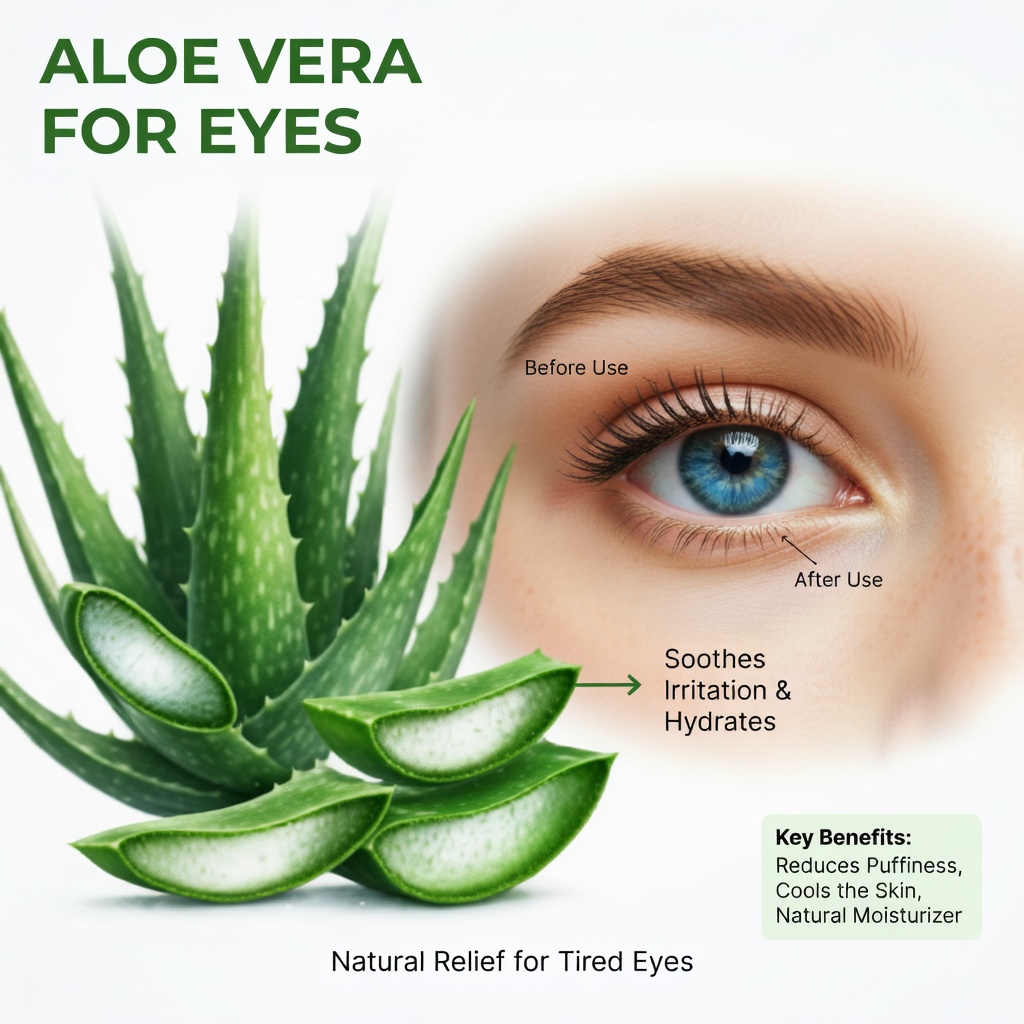
- High water content that helps support skin moisture
- A cooling, soothing feel when applied to the skin
- Frequent use in products created for sensitive skin
- Antioxidant properties associated with support for the skin barrier
These qualities help explain why aloe remains popular in personal care routines.
External Use vs. Direct Eye Use: What Matters Most
One of the most common online misunderstandings is the idea that natural ingredients can be used the same way as eye drops. That is neither safe nor accurate.
Aloe vera should never be placed directly into the eyes unless it is part of a professionally formulated ophthalmic product.
When used correctly around the eyes, however, aloe vera may support comfort in indirect ways.
Safe Ways Aloe Vera Is Commonly Used Around the Eyes
Aloe vera is usually used externally in the following ways:
- Lightly applied to the under-eye area for skin hydration
- Added to a cooling compress routine
- Included in eye creams made for sensitive skin
- Used after long periods of screen time as part of a relaxation habit
The benefit depends on both the purpose and the method of use.
How Aloe Vera Can Fit Into a Daily Eye Comfort Routine
This is where aloe vera becomes practical rather than just popular.
It works best as a supporting ingredient, not as a standalone fix. Combined with healthy habits, it may help maintain comfort around tired-looking or dry-feeling eyes.
Before using it, one factor matters more than anything else: choosing the right product.
How to Choose the Right Aloe Vera Product
Not every aloe product is suitable for use near the eyes. Many commercial gels contain alcohol, fragrance, colorants, or preservatives that may irritate delicate skin.
Look for products with these qualities:
- Pure aloe vera gel with as few added ingredients as possible
- Labels indicating use for sensitive skin or cosmetic application
- Fresh aloe gel prepared carefully and hygienically if taken directly from the plant
This single step can help prevent many negative reactions.
Step-by-Step Aloe Vera Ritual for Eye-Area Comfort
Many people find this routine simple, calming, and easy to add to their day.
1. Prepare the Aloe
- Use clean, fresh aloe vera gel or a high-quality cosmetic gel
- If using fresh aloe from the plant, wash the leaf thoroughly and extract only the clear inner gel
2. Cool It Slightly
- Place a small amount in the refrigerator for about 5 to 10 minutes
- A light cooling effect can feel more soothing without being too intense
3. Apply Around the Eyes
- Wash your hands first
- Using clean fingertips, gently tap a very thin layer under the eyes and around the outer eye area
- Keep the product away from direct eye contact and avoid the eyelid margins
4. Rest Briefly
- Close your eyes for about 5 minutes
- Breathe slowly and stay away from screens during that time
This routine is meant to support comfort and relaxation, not to correct medical eye problems.
Aloe Vera and Screen Fatigue
Screen-related eye fatigue is one of the most frequent complaints today. Although aloe vera does not solve the effects of screen exposure directly, it may complement routines that encourage breaks and help relax tension around the eyes.
For better support, pair aloe vera use with these habits:
- Follow the 20-20-20 rule: every 20 minutes, look at something 20 feet away for 20 seconds
- Improve lighting to reduce glare on screens
- Blink more intentionally while using digital devices
Often, better relief comes from consistent habits rather than from products alone.
Common Mistakes to Avoid
This part is especially important if you want to use aloe vera near the eyes without causing irritation.
Avoid These Errors
- Putting aloe vera gel directly into the eye
- Using gels that contain fragrance, alcohol, or unnecessary additives
- Applying too much product too close to the lash line
- Skipping a patch test before first use
Small mistakes can completely change the experience.
Aloe Vera Compared With Other Common Comfort Approaches
Different methods support eye comfort in different ways. Aloe vera is only one option among several.
| Approach | Main Purpose | Best Use Case |
|---|---|---|
| Aloe vera gel (external) | Hydration and soothing for skin around the eyes | Tired or dry-feeling eye area |
| Artificial tears | Moisture for the eye surface | Dry indoor air or temporary eye dryness |
| Cold compress | Helps reduce puffiness | Morning care or after a long day |
| Proper sleep | Supports natural recovery | Long-term comfort and eye refreshment |
The most effective routine often combines more than one of these approaches.
What Research Generally Suggests About Aloe Vera
Scientific literature commonly points to aloe vera’s topical benefits for the skin. It is often associated with:
- Better moisture retention
- Mild soothing effects at the skin surface
- Support for comfort in sensitive skin areas
These findings help explain why aloe vera appears so often in skincare and personal care products.
The key takeaway is simple: research mainly supports skin application, not direct internal use in the eye.
When Aloe Vera May Not Be a Good Choice
Even natural ingredients are not right for everyone.
You should avoid using aloe vera around the eyes if:
- You already know you are sensitive or allergic to aloe
- Your skin develops redness, itching, or irritation after use
- You are unsure whether the product is pure or suitable for delicate skin
It is always best to test a small amount on another area of skin first.
Daily Habits That Can Enhance Aloe Vera’s Benefits
Aloe vera tends to work best when it is part of a larger self-care routine.
Helpful habits include:
- Drinking enough water throughout the day
- Lowering screen brightness in the evening
- Doing very gentle eye-area massage without pressure
- Taking short breaks outdoors to relax the eye muscles
This is often where the biggest improvement happens.
Final Thoughts: Helpful, but Not a Miracle Solution
Aloe vera is not a cure, and it should never replace professional eye care. Still, when it is used responsibly and only on the outside of the eye area, it may support routines that help tired eyes feel more refreshed and comfortable.
In the end, the real benefit is not just aloe vera itself. It is the habit of slowing down, treating the eye area gently, and paying attention to early signs of strain.
That kind of care matters more than any single product.
Frequently Asked Questions
Can aloe vera be applied directly inside the eyes?
No. Aloe vera should not be placed directly into the eyes unless it is part of a professionally formulated eye product.
How often can aloe vera be used around the eyes?
Many people apply it once a day or several times a week as part of a gentle relaxation routine. Frequency should depend on individual skin sensitivity.
Is fresh aloe better than store-bought aloe gel?
Not always. Fresh aloe can be a good option if it is prepared hygienically and only the clear inner gel is used. A high-quality store-bought gel may be safer and more convenient if it contains minimal ingredients and is made for sensitive skin.
Can aloe vera replace eye drops?
No. Aloe vera used externally is not a substitute for eye drops. It may support skin comfort around the eyes, while eye drops are designed for the eye surface itself.
What should I do if aloe vera causes irritation?
Stop using it immediately and rinse the area if needed. If irritation continues or the eye itself is affected, seek advice from a qualified eye care professional.