4 Early Breast Cancer Warning Signs Every Woman Should Know
Many women move through everyday life without noticing that small breast changes may point to a more serious health issue. In the earliest stages, breast cancer can develop with very few obvious symptoms. That is why awareness matters so much. Trusted medical sources such as the American Cancer Society and Mayo Clinic emphasize that paying attention to changes in your body is a powerful form of self-care.
The good news is that spotting potential warning signs early and speaking with a healthcare provider quickly can improve the chances of timely treatment and better outcomes. Below are four important early signs to watch for, along with simple steps you can take to stay proactive about breast health.
Why These Warning Signs Matter
Breast cancer affects millions of people around the world. Still, not every breast change is cancer. Many findings are harmless, including cysts and other benign conditions. The key is not to ignore unusual or persistent changes.
The Centers for Disease Control and Prevention (CDC) notes that breast cancer symptoms are not the same for everyone. Some people notice clear changes early on, while others may have no symptoms at all at first. Learning the most common warning signs can help you respond sooner and seek medical advice when needed.
1. A New Lump or Thickened Area in the Breast or Underarm
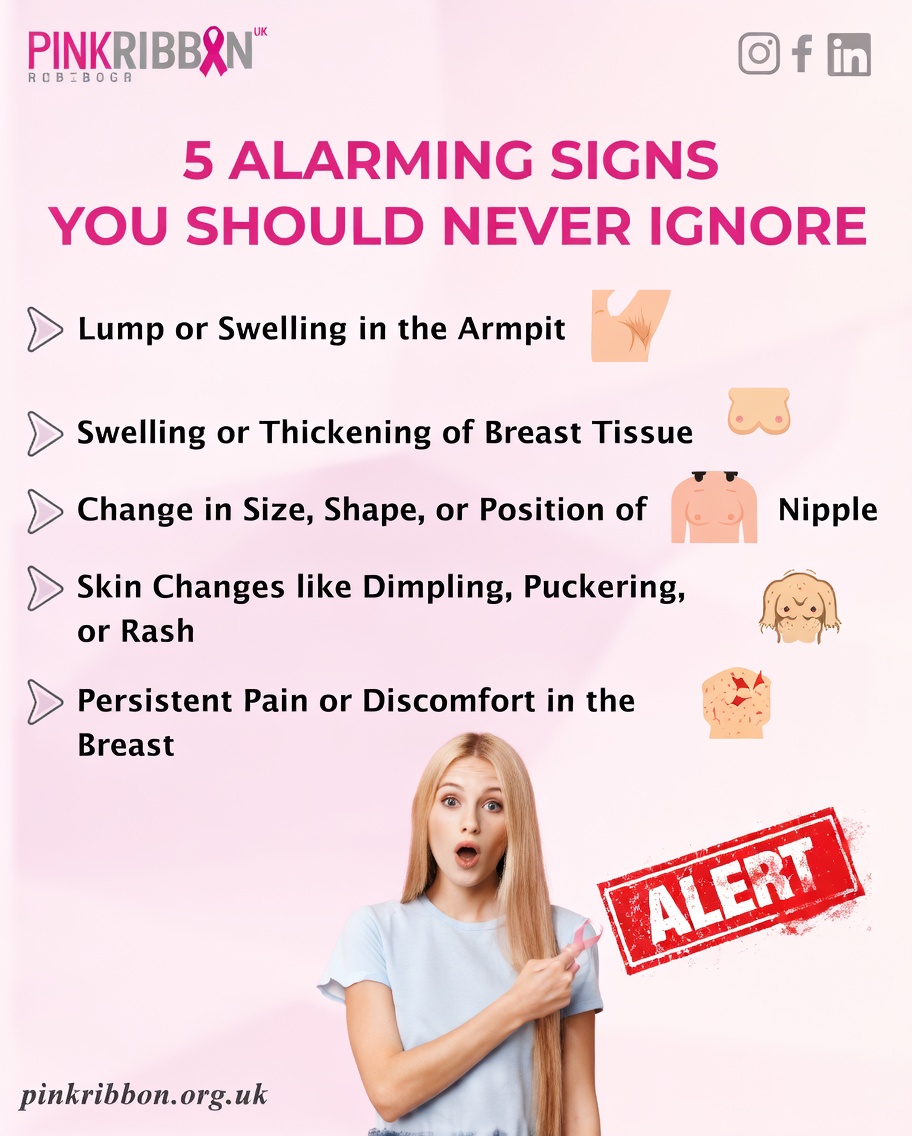
One of the earliest and most recognized warning signs is a new lump or an area of thickened tissue in the breast or under the arm. This may feel firm or irregular, although some lumps can be softer, smooth, or even tender.
According to the American Cancer Society, many breast lumps are not cancerous. They may be linked to cysts, fibroadenomas, or other non-cancerous conditions. Even so, any new lump that does not go away should be checked by a doctor.
To monitor for this sign, try these self-check habits:
- Do a breast self-exam once a month.
- Check in the shower or while lying down.
- Use the pads of your fingers and move in small circular motions.
- Examine both breasts, the underarm area, and the region up toward the collarbone.
If you feel something new and it remains after your menstrual cycle, schedule a medical evaluation.
2. Changes in Breast Size, Shape, or Overall Contour
A noticeable shift in the size, shape, or outline of one breast can also be an early sign. You may see swelling in one area, feel that one breast seems heavier than usual, or notice that one side suddenly looks different from the other.
Mayo Clinic explains that these changes may appear gradually or become more obvious over several weeks. While many women naturally have some breast asymmetry, a sudden one-sided difference deserves attention.
A helpful way to stay aware is to compare both breasts in the mirror and during routine self-exams. Looking for what is normal for your body makes it easier to spot unexpected changes.
3. Skin Changes Such as Dimpling, Redness, or Unusual Texture
Changes in the skin covering the breast can be another important warning sign. Watch for dimpling, puckering, redness, flaking, or a texture that looks similar to orange peel.
The CDC includes skin irritation and dimpling among notable breast cancer symptoms. Redness or flaky skin around the nipple can also occur. These changes may happen when tissue beneath the skin is affected or when inflammation develops.
Pay close attention if the skin becomes:
- Dimpled or indented
- Red or irritated
- Thickened or unusually warm
- Rough, flaky, or pitted in texture
To check for skin-related signs:
- Stand in front of a mirror with your arms relaxed at your sides.
- Raise your arms overhead and look again.
- Watch for changes in color, shape, or texture.
- Gently feel the skin for thickened areas.
Even subtle changes are worth noting, especially if they do not improve.
4. Nipple Changes or Unusual Discharge
The nipple can also show early signs of a problem. Important changes include a nipple that suddenly turns inward, flattening that was not there before, pain in the nipple area, or discharge that is not breast milk.
The American Cancer Society notes that nipple retraction and non-milk discharge can be associated with breast cancer, although these symptoms may also happen with benign conditions. Discharge is especially important to evaluate if it is bloody or clear, or if it comes from only one breast without squeezing.
You should also pay attention to:
- Sudden nipple inversion
- Crusting or scaling
- Persistent nipple pain
- Discharge from one side only
If you notice any of these changes, do not ignore them. A medical assessment can help determine the cause.
Practical Steps to Support Breast Health
Staying alert to breast changes does not need to feel stressful. Small, consistent habits can make a big difference.
Here are some practical ways to stay on top of your breast health:
- Do monthly self-exams: Set a reminder each month, ideally a few days after your period ends when breast tenderness is lower.
- Schedule regular clinical exams: See your healthcare provider for professional breast checks.
- Follow mammogram screening guidance: Many women begin screening at age 40, though earlier testing may be recommended if you have higher risk factors.
- Learn your normal baseline: The better you know how your breasts usually look and feel, the easier it is to detect change.
Most importantly, trust yourself. If something seems unusual, seek medical advice rather than waiting.
Awareness Leads to Action
Understanding these four early breast cancer signs can help you act with confidence. The main warning signs include:
- A new lump or thickening
- Changes in breast size or shape
- Skin dimpling, redness, or texture changes
- Nipple changes or unusual discharge
Not every symptom means cancer, but any persistent or unexplained change deserves attention. Seeing a healthcare professional early can provide answers, reassurance, and, when necessary, a faster path to treatment. Awareness and regular screening remain some of the strongest tools for protecting long-term breast health.
Frequently Asked Questions
What should I do if I find a lump in my breast?
Make an appointment with your doctor as soon as possible. They may suggest tests such as a mammogram, ultrasound, or other imaging to identify the cause.
Are all breast lumps cancerous?
No. Most breast lumps are benign and may result from cysts, fibrocystic breast changes, or other non-cancerous conditions. However, any new or lasting lump should be examined.
How often should I perform a breast self-exam?
Once a month is a good routine. For many women, the best time is a few days after the menstrual period ends, when the breasts are usually less swollen and tender.