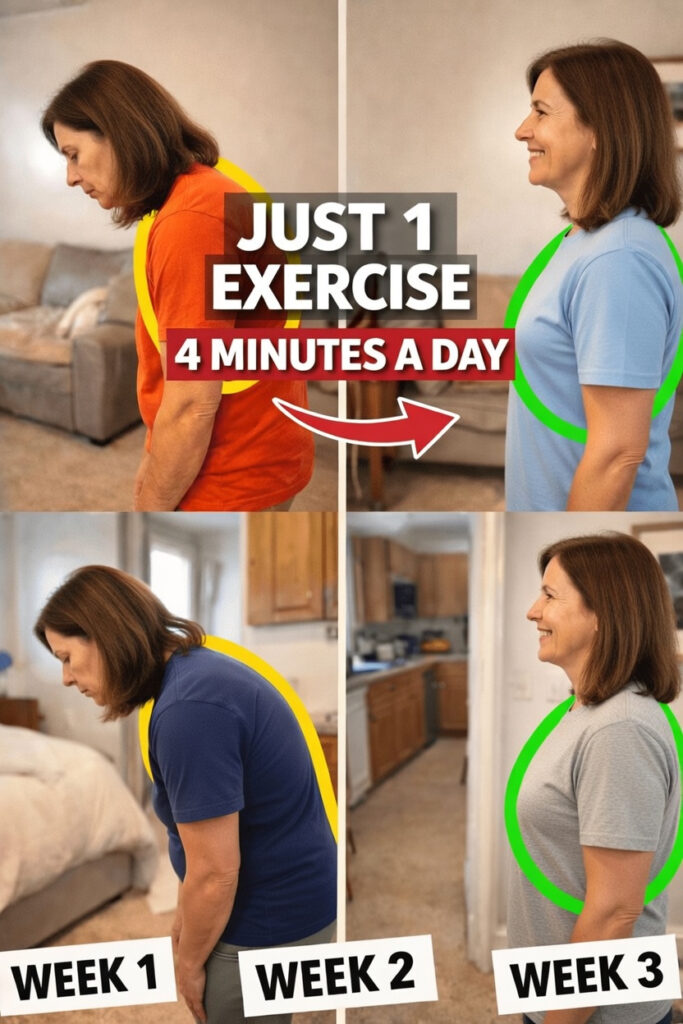
Forward Head Posture: A Gentle 4-Minute Daily Routine for Better Alignment
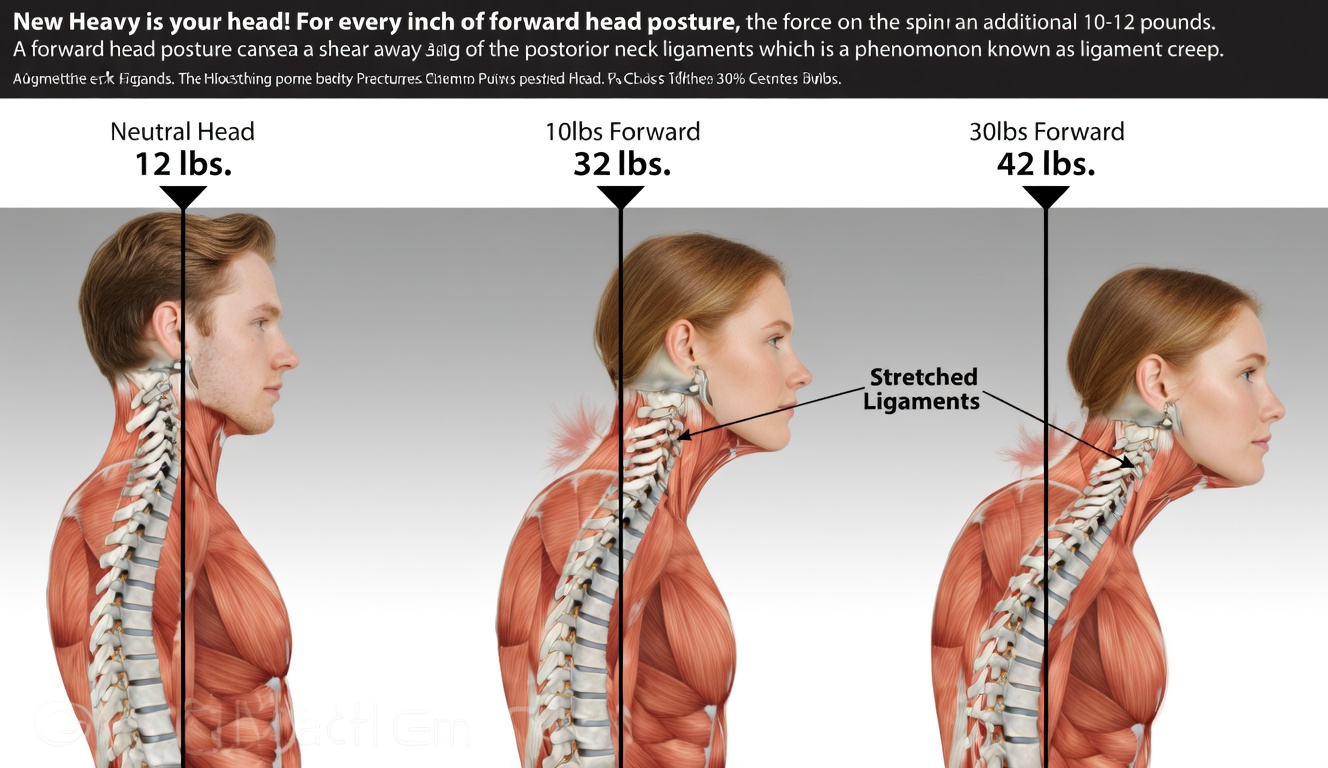
Forward head posture occurs when the head drifts in front of the shoulders, placing added demand on the neck muscles and cervical spine. Evidence suggests that even a small forward shift can sharply increase pressure on the neck, which may lead to stiffness, discomfort, and reduced mobility over time.
In Japan, a country well known for healthy aging and long life expectancy, physicians have often promoted simple daily habits that support posture and body alignment. Dr. Shigeaki Hinohara, one of Japan’s most respected doctors, famously encouraged steady, practical movement as part of lifelong wellness. No exercise is a miracle fix, but easy routines performed regularly can improve posture awareness and help reinforce healthier movement patterns.
The good news is simple: modest efforts, repeated every day with attention and care, can create meaningful change.
Why Gentle Neck Exercises Can Help
Research on posture correction and rehabilitation has shown that targeted movement can improve head and neck positioning. In particular, strengthening the deep neck flexors and releasing tight tissues may help counteract the pull that draws the head forward.
Findings from PubMed-indexed studies and rehabilitation journals suggest that regular practice of corrective exercises can improve the craniovertebral angle, an important measure of head and neck alignment, over a period of weeks. Because these exercises are low impact, they are often appropriate for older adults when introduced gradually and performed with good control.
What matters most is not intensity, but consistency. Short sessions done daily are often more effective than occasional hard effort.
A Simple 4-Minute Routine to Encourage Better Posture
This brief routine is inspired by gentle posture-support methods commonly recommended in senior wellness practices, including approaches popular in Japan. It emphasizes three essentials:
- awareness
- light muscle activation
- gentle release
You do not need any equipment, though a small towel can be useful for one part. Start once a day if needed, and build toward twice daily if it feels comfortable.
Step 1: Warm Up Neck Mobility
Spend about 1 minute preparing the muscles and joints.
- Sit or stand in a relaxed position.
- Let your shoulders drop naturally.
- Slowly nod the head up and down, as if saying “yes.” Keep the motion small and smooth.
- Next, tip the head gently from side to side, bringing the ear toward the shoulder without forcing the stretch.
- Finish with slow neck circles, about 3 to 5 in each direction.
This light warm-up helps loosen tension and gets the neck ready for the main exercise.
Step 2: Chin Tuck for Deep Neck Support
This is the key movement in the routine and takes about 1 to 2 minutes. It helps activate the deeper muscles that support proper head position.
- Sit or stand tall with your eyes looking straight ahead.
- Place one finger lightly on your chin as a guide.
- Draw the chin straight backward, as if creating a subtle double chin.
- Avoid tipping the head up or down.
- Hold the position for 3 to 5 seconds.
- Slowly release.
- Repeat 8 to 10 times.
You should feel a gentle engagement in the front of the neck rather than strain.
Helpful tip: Practice in front of a mirror when starting out. Many people also find it useful to imagine the top of the head being lifted upward by a string.
Studies show that variations of the chin tuck can effectively activate important neck stabilizers.
Step 3: Towel-Assisted Support
Take about 1 minute for this step. The towel offers light feedback and resistance.
- Roll up a small towel.
- Place it behind the neck near the base of the skull.
- Move into the chin tuck position.
- Gently press the head backward into the towel.
- Hold for 5 to 10 seconds.
- Relax and repeat 5 to 8 times.
This creates mild resistance, helping strengthen the area without excessive effort.
Step 4: Upper Back Extension Release
Finish with 30 to 60 seconds of upper back opening.
- Stand against a wall or sit upright in a chair.
- Put your hands behind your head with the elbows open.
- Gently extend the upper back slightly.
- Keep the lower back neutral rather than over-arching.
- Hold for 10 to 15 seconds while taking slow breaths.
- Return to neutral and relax.
This final step helps open the thoracic spine, which works together with the neck to support better posture.

What You May Notice Over Time
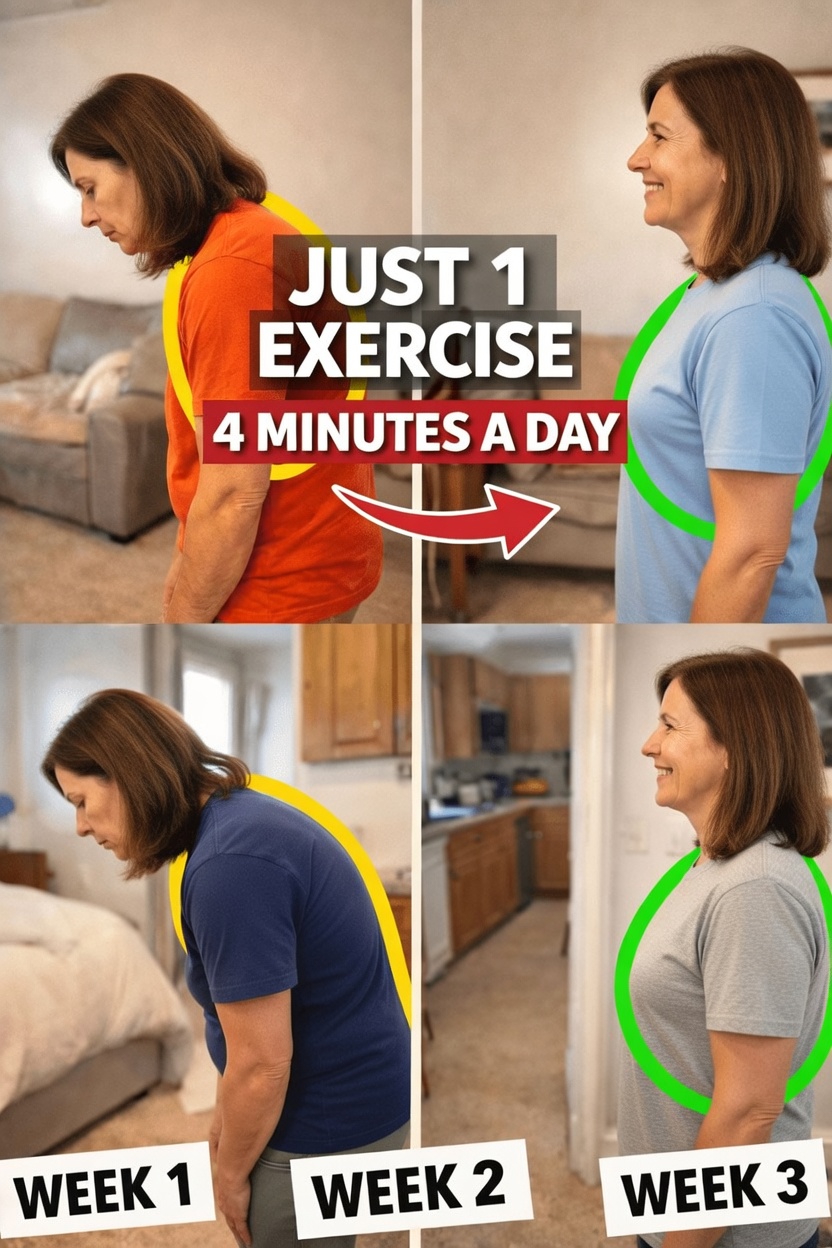
People who practice this routine regularly often report gradual but noticeable improvements. Results differ from person to person, but the progression may look something like this:
- Week 1: Better awareness of how the head sits during daily tasks and less unconscious slumping
- Week 2: Reduced neck tightness after practice and easier upright sitting
- Week 3 and beyond: A more natural tall posture and less daily tension buildup
The key is to stay patient and steady. Small changes can build over time.
Everyday Habits That Support Neck Alignment
To make your routine more effective, add a few posture-friendly habits throughout the day:
- Set a reminder every hour to check your posture
- Roll the shoulders back and do a brief chin tuck
- Raise your screen so your eyes naturally look toward the upper third of the display
- Take short walks while staying tall and looking ahead instead of down
- Drink enough water and include gentle full-body movement, such as walking, to support overall spine health
These small adjustments can strengthen the benefits of your 4-minute routine.
Common Questions About Neck Alignment After 60
How often should I do this routine?
For many people, once or twice a day works well. Morning practice can help set your posture for the day, while evening practice may reduce accumulated tension. Pay attention to how your body responds and adjust accordingly.
Is this safe if I already have neck discomfort?
These exercises are designed to be gentle, but it is still best to begin with fewer repetitions. If you feel sharp pain or worsening symptoms, stop and seek advice from a healthcare professional.
Can it still help if I have had forward head posture for years?
Yes, many older adults still experience improvement with consistent practice. Muscles can adapt, and posture awareness can increase at any age. It is never too late to build better habits.
Final Thoughts
A short daily posture routine can be a practical way to support comfort, alignment, and mobility as you get older. Inspired by the gentle, consistency-focused approach often seen in Japanese health practices, this method favors steady progress over forceful correction. Try it regularly for a few weeks and observe how your neck, upper back, and overall posture begin to respond.