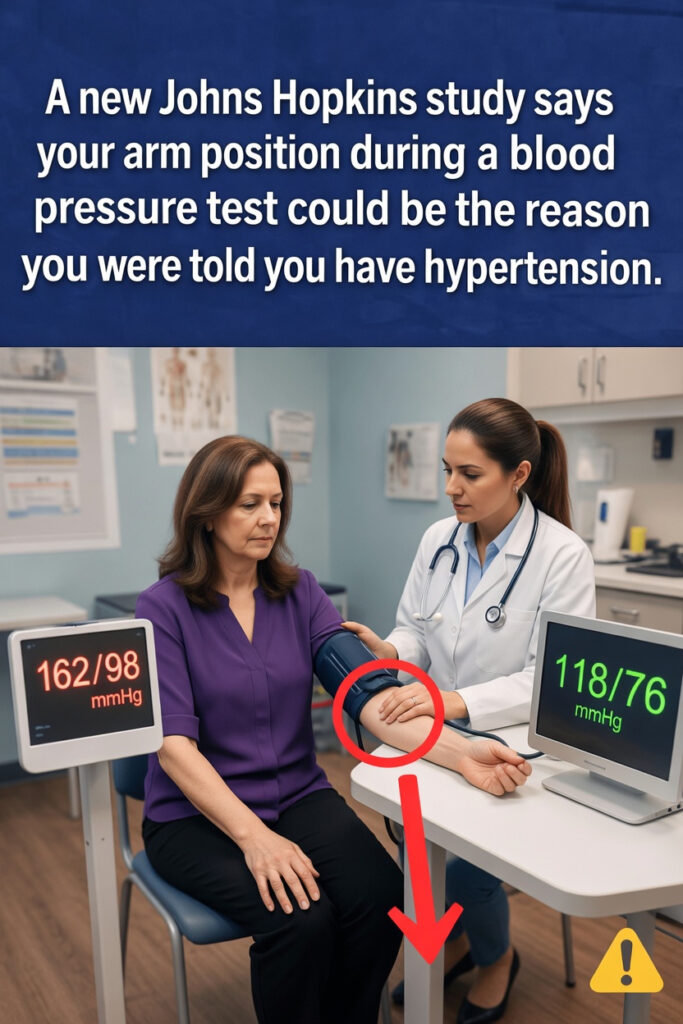
Why Arm Position Matters More Than You Think During a Blood Pressure Check
Most people go through blood pressure screenings without paying much attention to where their arm is placed. It seems like a minor detail, and many assume the reading is accurate no matter what. However, new medical findings suggest that this small factor can noticeably change the numbers and, in some cases, affect how your cardiovascular health is interpreted.
Recent research shows that one very common habit may be pushing blood pressure readings higher than they should be. If you want more reliable results, understanding proper arm position is essential.
The Basics of Blood Pressure Readings
Blood pressure is a quick measure of how well your heart and blood vessels are working at a specific moment. A reading includes two numbers:
- Systolic pressure: the top number, which reflects the force of blood when the heart contracts
- Diastolic pressure: the bottom number, which measures pressure in the arteries between heartbeats
These values help healthcare professionals evaluate heart health and monitor the risk of conditions such as hypertension.
Still, blood pressure is not fixed. It can change based on several factors, including:
- Time of day
- Physical activity
- Stress
- Recent caffeine intake
- Body posture during measurement
Among these, arm position is gaining more attention as an often-overlooked reason for inaccurate readings in both clinics and home settings.
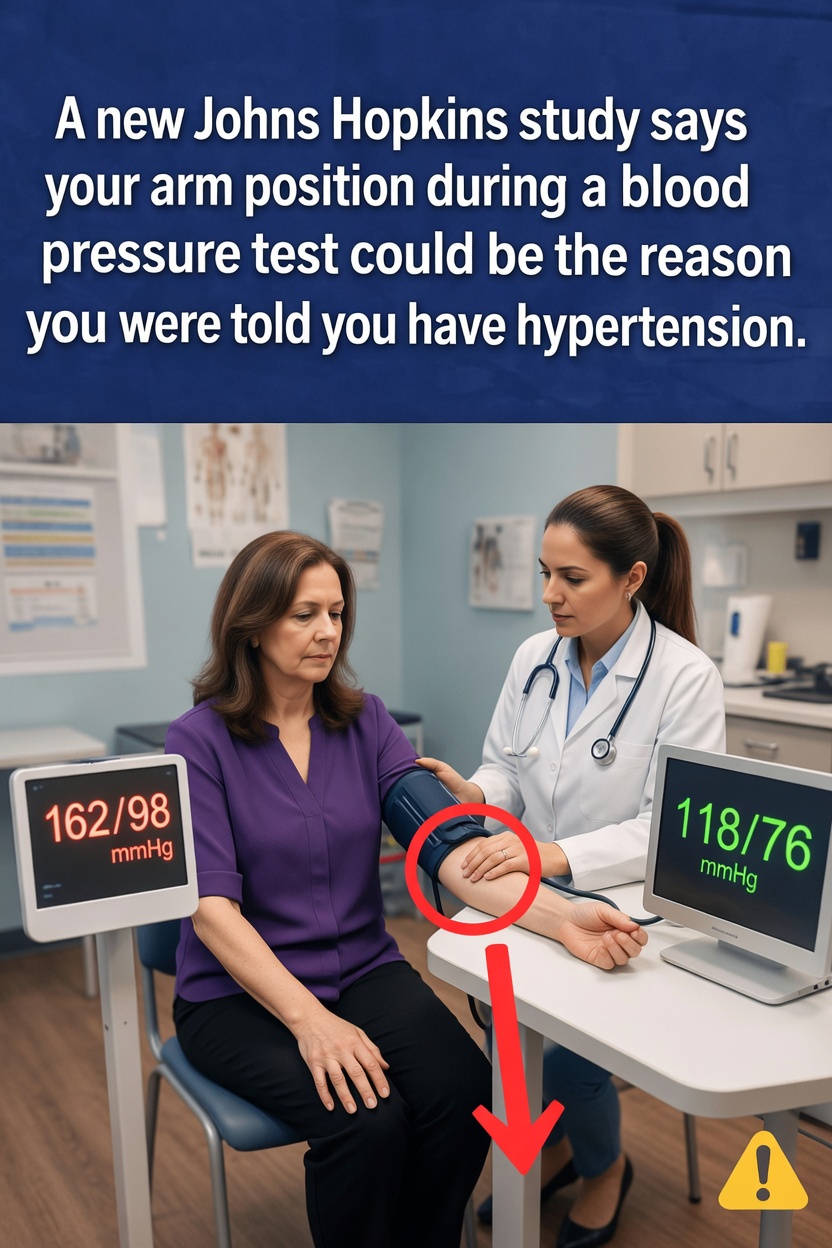
What the Johns Hopkins Study Found
A study conducted by Johns Hopkins Medicine explored how arm placement affects blood pressure measurements. The research included 133 adults, each tested in three common positions:
- Arm supported on a desk
- Hand resting on the lap
- Arm hanging freely at the side
The findings were significant.
Compared with the recommended desk-supported position:
-
Resting the hand on the lap increased average readings by:
- 3.9 mmHg systolic
- 4.0 mmHg diastolic
-
Letting the arm hang unsupported at the side raised readings even more:
- 6.5 mmHg systolic
- 4.4 mmHg diastolic
These differences are not minor. A change of just a few points can move someone from a normal range into a category that may trigger additional monitoring or concern.
The study also found that these effects appeared across different types of participants, suggesting the issue is not limited to a specific age group or background. This supports current medical guidance recommending that the arm be supported at heart level during measurement.
Why the Position of Your Arm Changes the Reading
The main reason arm placement matters is gravity. If your arm is not level with your heart, the pressure in the arteries can appear higher than it truly is.
For example, when the arm hangs down, blood is pulled lower by gravity. This creates extra pressure in the vessels and can make the reading look artificially elevated. In other words, the monitor may record a higher value that does not reflect your actual resting blood pressure.
Even small shifts in arm height can make a difference. Research over the years has shown that being off by just a few inches may increase readings by 4 to 7 mmHg.
This is especially important because many blood pressure checks are still done in rushed or casual positions. Being aware of this can help you ask for a more accurate setup during appointments.
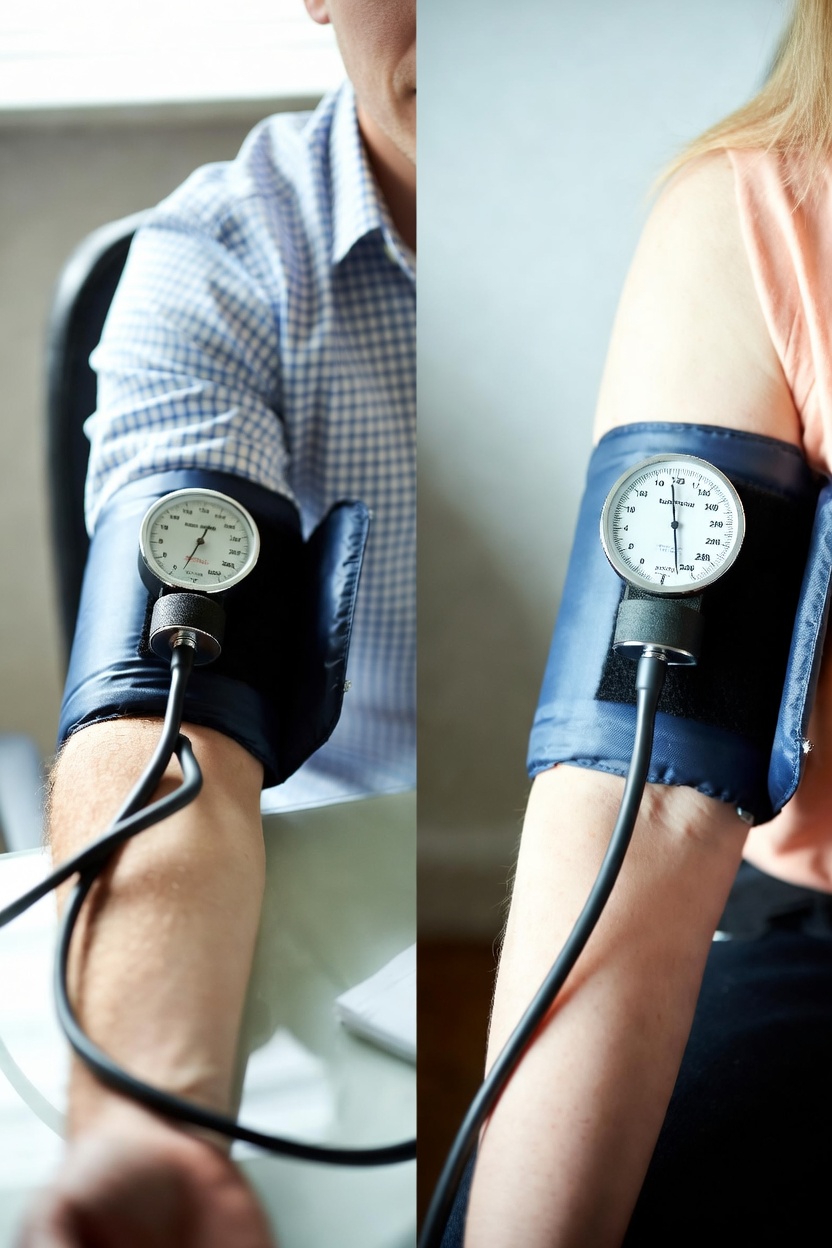
Comparison of Common Arm Positions
The table below summarizes the average differences reported in the Johns Hopkins study, using the desk-supported position as the reference standard.
| Arm Position | Systolic Difference (mmHg) | Diastolic Difference (mmHg) |
|---|---|---|
| Supported on desk | 0 | 0 |
| Hand on lap | +3.9 | +4.0 |
| Unsupported at side | +6.5 | +4.4 |
The desk-supported method remains the most reliable approach. Resting the hand on the lap may feel natural, but it can still produce moderately inflated results. Allowing the arm to hang at the side creates the greatest distortion.
Over time, repeated measurements taken in the wrong position can paint an inaccurate picture of your blood pressure trends.
How to Position Your Arm Correctly for an Accurate Reading
If you want more dependable results, follow these simple steps during your next blood pressure check.
-
Sit in a supportive chair
- Keep your back supported.
- Place both feet flat on the floor.
- Do not cross your legs.
-
Rest your arm on a firm surface
- Use a desk, table, or arm support.
- Make sure the cuff is positioned at heart level.
-
Keep your arm and hand relaxed
- Turn your palm upward if possible.
- Avoid making a fist or tightening your muscles.
-
Stay still and quiet
- Do not talk, move, or fidget during the measurement.
- Ideally, sit quietly for about five minutes first.
-
Ask for another reading if needed
- If your position felt awkward or unsupported, request a repeat measurement after adjusting properly.
These small steps can greatly improve consistency and help you get a more accurate view of your cardiovascular health.
Other Factors That Affect Blood Pressure Accuracy
Arm position is only one part of the equation. Several other issues can also change the reading.
Cuff Size
Using the wrong cuff size can lead to major errors. If the cuff is too small or too large, the reading may be misleading. Research suggests the wrong cuff can shift results by up to 10 mmHg in either direction.
Timing
Blood pressure can temporarily rise after:
- Eating
- Exercising
- Drinking coffee
- Smoking
- Feeling stressed
For more reliable tracking, measure at the same time each day, such as in the morning before caffeine.
Additional Tips for Better Accuracy
- Use a validated home blood pressure monitor
- Avoid caffeine and tobacco for at least 30 minutes beforehand
- Empty your bladder before taking a measurement
- Take more than one reading and average the results
How This Can Improve Your Health Routine
Paying attention to arm placement may seem minor, but it can make your blood pressure checks much more trustworthy. Better measurements lead to better decisions, whether you are monitoring your health at home or discussing results with a healthcare professional.
The Johns Hopkins findings reinforce an important point: accuracy matters in routine health assessments. Sharing this information with family members or friends may also help them avoid common mistakes.
When proper technique becomes part of your routine, you gain a clearer understanding of your real blood pressure pattern.
Final Thoughts
A simple change in arm position can significantly influence blood pressure readings. According to recent research from Johns Hopkins Medicine, placing the arm on a supported surface at heart level is the most reliable method. In contrast, resting the hand on the lap or letting the arm hang down can lead to falsely high numbers.
By making this small adjustment, you can take a more active role in monitoring your health and reduce the risk of misleading results.
Frequently Asked Questions
What is the best arm position for measuring blood pressure?
The recommended position is to have your arm supported on a flat surface, such as a desk or table, with the cuff placed at heart level.
Can poor arm placement really raise blood pressure readings?
Yes. Studies show that placing the arm on the lap or leaving it unsupported at the side can increase both systolic and diastolic readings by several mmHg.
Is home blood pressure monitoring useful?
Yes, home monitoring can help track long-term patterns. How often you should measure depends on your health status, so it is best to follow advice from your healthcare provider.
Why is consistency important when checking blood pressure?
Using the same technique, position, and time of day helps reduce variation and gives a more accurate picture of overall blood pressure trends.
This information is for educational purposes only and is not a substitute for professional medical advice.