Datura Plant Identification: How to Recognize It and Keep Your Outdoor Space Safer
Spending time outside is one of the simplest ways families relax, play, and connect with nature. Still, unfamiliar plants can raise concerns, especially when they look similar to ordinary flowers or common weeds. That uncertainty matters even more when children and pets are involved, since they often explore first and ask questions later.
Learning how to identify plants such as Datura can help you make your yard, garden, and neighborhood walks more secure. And by the end, you’ll discover one surprisingly simple everyday habit that can make plant awareness feel natural for everyone at home.
What Is Datura?
Datura is a group of flowering plants in the nightshade family. Several species appear throughout the United States and in many other regions of the world. These plants commonly grow in disturbed soil, including:
- Roadsides
- Gardens
- Empty lots
- Field edges
- Sunny, neglected spaces
They tend to do well in warm conditions and may appear as either annual or perennial herbs, depending on the species and growing environment.
Botanical descriptions note that Datura plants can grow up to about 5 feet tall. Their stems branch outward and may be hairy or have a purple tint.
The key takeaway is simple: spotting Datura early makes it easier to stay aware and maintain safer outdoor habits.
Main Features That Help Identify Datura
Recognizing Datura begins with looking at the plant as a whole, then checking a few standout characteristics.
Leaves and Stems
Datura leaves are usually large and noticeable, often measuring 3 to 8 inches long. Their shape ranges from oval to somewhat football-like, and the edges are often:
- Wavy
- Irregular
- Toothed or jagged
The leaves are generally dark green and may feel rough or coarse.
One especially distinctive trait is the smell. If the leaves are crushed, they can release a strong, unpleasant odor, sometimes compared to wet dog or stale peanut butter.
The stems are typically:
- Thick and sturdy
- Light green to purplish
- Sometimes covered with fine hairs
Some people may also react to the plant’s sap, so caution is advised.
Flowers
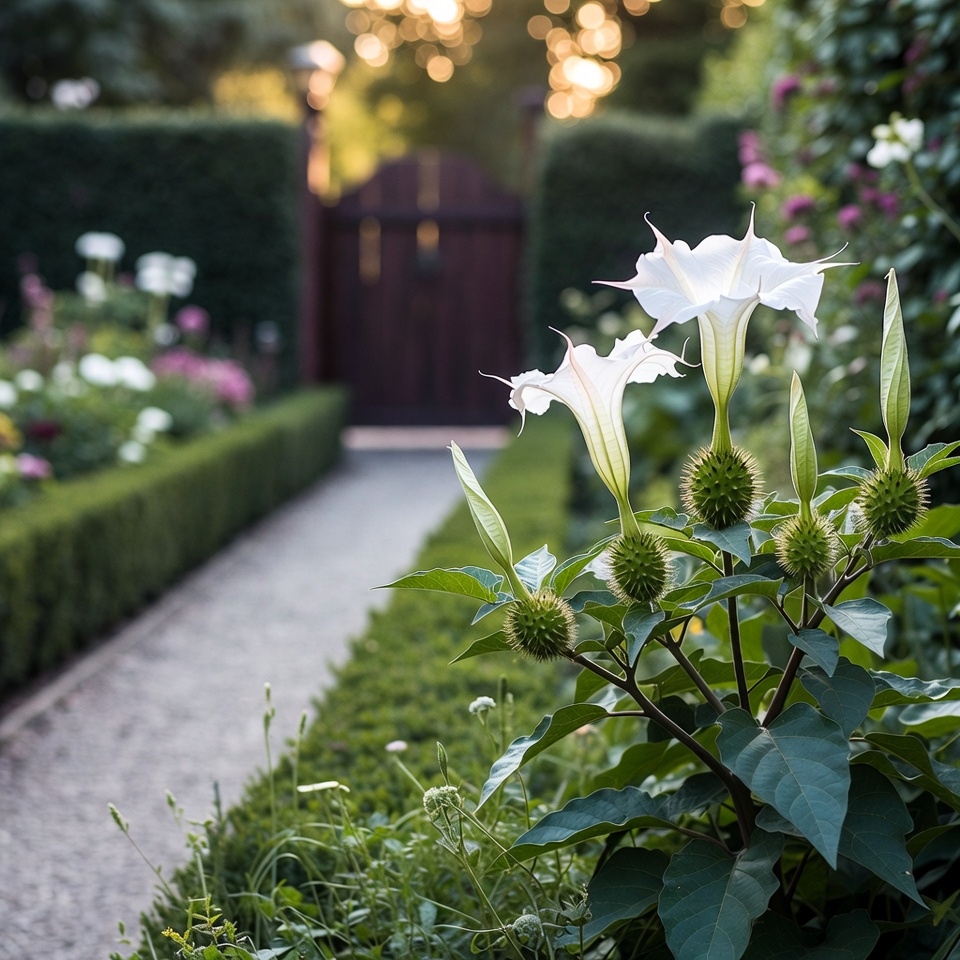
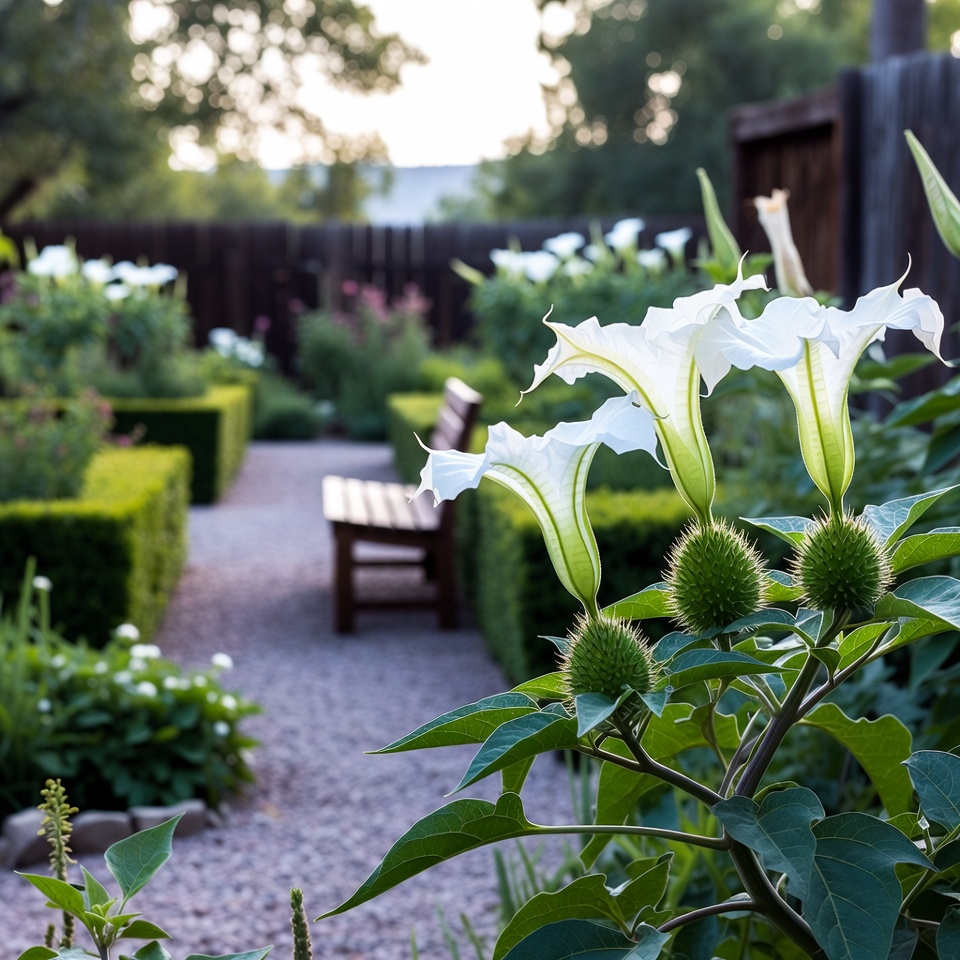
The flowers are often the easiest part of Datura to notice. They are:
- Large
- Trumpet-shaped
- White, pink, or purple
- Sometimes upright, sometimes drooping depending on the species
Their pointed lobes give them a dramatic, star-like look at the edges.
These blooms often open in the evening, releasing a sweet fragrance that attracts pollinators. Studies and botanical references report that the flowers can reach up to 8 inches long, making them particularly striking at dusk.
Datura commonly flowers from summer into fall.
Fruits and Seeds
Another major clue is the fruit. Datura produces a round, spiny seed capsule known as a thornapple.
Key features include:
- Green and spiky when immature
- Brown as it dries
- Splits into four sections when mature
- Contains many small, kidney-shaped seeds
Because the seed pods are so distinctive, they are often one of the easiest ways to recognize the plant. However, they should be treated carefully and never handled casually.
Datura vs. Similar Plants
Datura is sometimes confused with other ornamental or wild plants. Comparing a few details can help prevent mistakes.
| Feature | Datura | Morning Glory | Brugmansia |
|---|---|---|---|
| Flower shape | Trumpet-shaped with pointed lobes | Funnel-shaped | Large hanging trumpets |
| Flower position | Often upright or slightly hanging, depending on species | Usually upright/climbing vine flowers | Pendulous, downward-hanging |
| Leaf edges | Toothed, jagged, or uneven | Smoother or lightly wavy | Broad, often wavy |
| Fruit | Spiny thornapple capsule | Smooth seed pod | Smooth or lightly textured capsule |
| Odor | Unpleasant when leaves are crushed | Mild or little odor | Generally sweet and pleasant |
| Stem | Often purple-tinged and sometimes hairy | Green and smooth | Woody, shrub- or tree-like |
This side-by-side comparison highlights traits that are useful for more accurate identification.
Health Considerations Linked to Datura
All parts of the Datura plant contain compounds such as:
- Atropine
- Scopolamine
- Hyoscyamine
Research shows these substances can affect the body if they are ingested or, in some situations, absorbed through contact.
Reported symptoms of exposure may include:
- Dry mouth
- Blurred vision
- Fast heartbeat
- Skin dryness
- Digestive discomfort
- Visual disturbances
Medical sources and poison control data have documented accidental exposures, which is why awareness is so important.
For some individuals, skin contact may also cause irritation. If handling is necessary, gloves are recommended.
The important point is this: knowing what Datura looks like can significantly reduce accidental risk.
How to Identify Datura Safely
If you suspect a plant may be Datura, use a cautious approach.
Step-by-Step Identification Tips
-
Look first, don’t touch
- Notice the trumpet-like flowers and spiny seed pods from a safe distance.
-
Check the setting
- Datura often appears in sunny, disturbed ground such as roadsides, gardens, and vacant areas.
-
Notice the leaf shape
- Look for large, dark green leaves with uneven or toothed edges.
-
Be aware of odor
- Without direct contact, gently move your hand near the leaves to detect any strong unpleasant smell.
-
Compare with trusted references
- Use a plant guide or plant ID app to confirm visible features.
-
Take clear photos
- Photograph the leaves, flowers, stems, and seed pods for later comparison or expert review.
These simple steps support safer plant identification and help build better outdoor awareness.
Habits That Improve Plant Safety Over Time
Creating a safer outdoor environment is easier when plant awareness becomes part of your regular routine.
Try these habits:
- Take a weekly walk through the yard or garden to check for new growth
- Teach children a simple phrase such as “Spiky pod, trumpet bloom—give it room”
- Add native plants to your landscape to reduce invasive or unwanted growth
- Join a local gardening or botany group to learn from others
- Keep a small photo log of unknown plants you notice during walks
Research suggests that repeated observation helps strengthen environmental awareness over time.
How to Remove Datura Safely
If Datura is growing on your property, removal should be done carefully to limit contact.
Safe Removal Steps
-
Wear protective clothing
- Use gloves, long sleeves, and eye protection.
-
Remove the roots
- Pull young plants from moist soil or use tools to lift them out completely.
-
Seal the plant material
- Place removed plants in closed bags for disposal.
-
Watch the area afterward
- Check back over the next several weeks for regrowth.
-
Use manual removal when possible
- Avoid unnecessary chemical use to help protect pollinators and surrounding plants.
This method is commonly recommended in weed management guidance because it reduces direct exposure.
What to Do If Contact Happens
If there is accidental contact with the plant:
- Wash the affected skin with soap and water
- Avoid rubbing the eyes or face
- Watch for any unusual symptoms or irritation
- Contact a healthcare professional if symptoms appear or worsen
Prompt action is often helpful, according to poison control and medical guidance.
What Research Says About Datura
Scientific studies have examined Datura for both its ecological role and its safety concerns. Findings show that toxicity can vary based on factors such as:
- Plant age
- Species
- Plant part involved
- Amount of exposure
Some reports have pointed to different toxicity levels at different stages of growth. Animal studies have also shown effects on the nervous system, while human case reviews continue to emphasize the value of prevention and education.
Commonly reported effects in the research include:
- Dry skin and mouth
- Rapid heartbeat
- Changes in vision
- Digestive upset
These findings reinforce the importance of cautious identification and routine plant awareness.
Creating a Safer Outdoor Environment for Families
Plant safety does not have to feel stressful. In fact, it can become an engaging family habit.
A few practical ideas include:
- Explore plant guides together
- Ask children to describe leaf shapes and flower colors
- Turn walks into mini observation sessions
- Encourage questions about unfamiliar plants
- Practice identifying safe distance viewing habits
Research supports the idea that shared outdoor learning helps build long-term environmental awareness.
And that unexpected daily habit? Try making “plant spotting” part of your evening walk. Turning identification into a simple game can help everyone in the household become more alert, curious, and confident around unfamiliar plants.
Final Thoughts
Understanding how to identify Datura can make outdoor spaces feel more enjoyable and less uncertain. By learning to recognize key features such as:
- Large trumpet-shaped flowers
- Jagged leaves
- Hairy or purple-tinged stems
- Spiny seed pods
you can make better decisions in your yard, garden, or neighborhood.
Simple routines like regular checks, careful observation, and family plant-spotting walks can go a long way toward creating a more mindful and safer outdoor environment.
Frequently Asked Questions
What does a Datura plant look like?
Datura usually has large trumpet-shaped flowers, often white, purple, or pink, along with broad jagged leaves and spiky seed pods. It can grow as tall as 5 feet and is often found in sunny, disturbed areas.
How can I tell Datura apart from similar plants?
Look at the full combination of traits. Datura often has spiny fruit, large trumpet blooms, irregular leaf edges, and sometimes hairy or purple-tinted stems. These features help distinguish it from look-alikes such as morning glory or Brugmansia.
What precautions should I take around unknown plants?
It is best to observe first without touching. If handling is necessary, wear gloves. Children should be taught not to place any plant in their mouth, and uncertain plants should be checked using a trusted guide, app, or local expert.
Disclaimer
This article is provided for informational purposes only and should not be considered medical advice. If you have concerns about plant exposure or possible symptoms, contact a qualified healthcare professional. The information here is based on general research and is not a substitute for personalized guidance.