Why Walking Alone May Not Be Enough After 60
For many adults over 60, a daily walk is the go-to way to stay active and protect overall health. It is simple, familiar, and easy to fit into everyday life. Walking is undeniably helpful, especially for cardiovascular health, mood, and general movement. Still, specialists in orthopedics and senior fitness note that walking by itself may not fully address some of the physical changes that come with aging.
As the years pass, muscle mass naturally decreases, balance may become less reliable, and major joints such as the knees and hips often need more focused support. While walking offers low-impact aerobic exercise, it does not always place enough demand on muscles to preserve strength or improve stability in the ways older adults need most. That matters because weaker muscles and poorer balance can contribute to mobility limitations and a greater risk of falls.
Research suggests that pairing walking with a few gentle exercises can do more to support comfort, confidence, and independence over time. The good news is that you do not need a gym membership, complicated machines, or intense training sessions. Below are five easy, low-impact movements that health professionals often recommend, especially for people dealing with stiffness, reduced leg strength, or concerns about steadiness.
Why Walking May Need Extra Support After Age 60
Walking is excellent for circulation, heart function, and emotional well-being. It gently raises the heart rate and can be done almost anywhere, making it one of the most accessible forms of exercise. But after age 60, age-related muscle loss, often called sarcopenia, tends to speed up. At that stage, walking alone may not provide enough resistance to maintain or rebuild muscle in the legs and core.
Balance is another important issue. Staying steady requires coordination, muscle control, and joint stability that ordinary walking does not always train effectively. Organizations such as the CDC and Johns Hopkins have highlighted that older adults benefit most from a balanced routine that combines aerobic activity with strength and balance exercises. This combination can help lower fall risk, support healthier joints, and improve daily function.
Many older adults say they feel stronger and steadier when they add a few targeted movements to their regular walks. These exercises help activate muscles that walking often underuses while also improving control and support around the hips, knees, ankles, and core.
5 Gentle Movements to Add to Your Routine
These five exercises are commonly suggested for adults over 60 because they are simple, low impact, and easy to do at home. Some can be performed while seated, while others can be done standing with support. Together, they help strengthen muscles, improve balance, and support joint health. Start gradually and pay attention to how your body responds.
1. Seated Leg Lifts
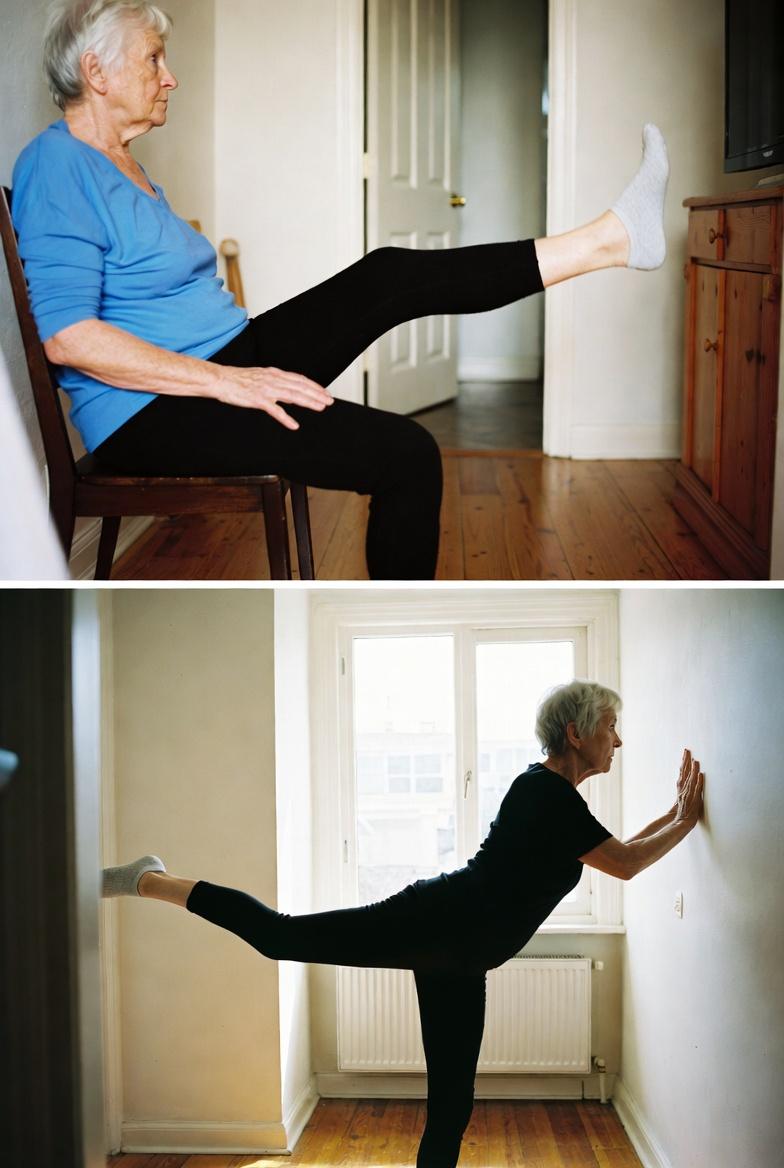
Sit in a sturdy chair with both feet flat on the floor. Slowly straighten one leg in front of you, hold it for 3 to 5 seconds, then lower it back down. Repeat 8 to 12 times on each side.
This movement strengthens the quadriceps, the muscles at the front of the thigh that help support the knees and make it easier to stand up from a chair. It can also encourage hip mobility without placing extra pressure on the joints.
2. Wall Push-Ups or Chair Push-Ups
Stand facing a wall, or use the back of a stable chair for support. Place your hands at chest height, about shoulder-width apart. Bend your elbows to lean in slightly, then press yourself back to the starting position. Try 10 to 15 repetitions.
This exercise helps build upper-body strength and engages the core without creating heavy impact on the joints. A stronger core can improve posture and support better balance during everyday tasks.
3. Heel-Toe Raises
While holding onto a wall or chair, slowly lift your heels so you rise onto your toes. Hold briefly, then lower down. You can also gently rock back onto your heels as a variation. Repeat 10 to 15 times.
Heel-toe raises strengthen the calves and improve ankle stability. Stronger ankles and lower legs can make walking feel steadier and may help reduce the chance of tripping or stumbling.
4. Seated Marching or Knee Lifts
Sit upright in a chair and lift one knee at a time as though marching in place. If you want an extra challenge, swing your arms naturally as you move. Continue for 1 to 2 minutes.
This simple movement works the hip flexors, supports circulation, and improves coordination. It is especially useful for people who want to stay active but have limited standing tolerance.
5. Single-Leg Balance Holds
Stand beside a wall or chair for support. Shift your weight onto one leg and lift the other foot slightly off the floor. Hold for 10 to 30 seconds, then switch sides. Use as much support as needed.
This exercise directly trains balance and strengthens the small stabilizing muscles around the hips and ankles. Studies have linked regular balance training with a lower likelihood of falls in older adults.
Walking Alone vs. Walking Plus Strength and Balance Work
Here is a quick look at the difference:
-
Walking only
- Great for heart health and stamina
- Low impact and easy to enjoy regularly
- May not fully target muscle loss or balance concerns
-
Walking plus these simple exercises
- Builds strength in key areas such as the knees, hips, and core
- Improves stability for daily activities
- Better supports long-term independence, based on senior fitness guidelines
The key is not intensity. Consistency matters far more. Even doing these movements 2 to 3 times per week can make a meaningful difference over time.
How to Start Safely
If you are new to strength or balance work, begin with just 1 or 2 exercises in a session. Aim for a total of about 10 to 15 minutes. Start with a gentle warm-up, such as arm circles or light marching in place, to prepare the body.
A few important safety tips:
- Breathe normally throughout each movement
- Never hold your breath
- Move slowly and with control
- Stop if you feel pain beyond mild muscle effort
- Speak with a healthcare provider if something feels wrong
Many people begin to notice everyday movements feel easier after a few weeks of regular practice. As your confidence grows, you can slowly increase the number of repetitions or the length of each hold. These exercises work best when paired with your normal walking routine rather than replacing it.
Common Questions About These Exercises After 60
How often should I do these movements?
Most experts recommend 2 to 3 sessions per week, with rest days in between. You can continue walking on other days to maintain a well-rounded routine.
Can I still do them if I have knee or hip discomfort?
In many cases, yes, especially if you begin with seated options and use support for standing movements. However, if you have joint problems, chronic pain, or recent surgery, it is best to check with a doctor or physical therapist first.
Do these exercises replace walking?
No. Walking still plays an important role in cardiovascular fitness and endurance. These movements are meant to complement walking by targeting strength and balance more directly.
Are they suitable for beginners over 70?
Yes, as long as they are started gently and done with proper form. Many senior fitness programs include similar exercises because they are practical, low impact, and effective.
Final Thoughts
Staying active after 60 is not just about moving more. It is about choosing the right kinds of movement for your body’s changing needs. Walking remains a valuable habit, but adding a few focused exercises can help support stronger muscles, better balance, and greater confidence in daily life.
These simple additions align with general fitness recommendations for older adults and can help protect mobility and independence over time. Before beginning any new exercise routine, especially if you have health conditions or ongoing concerns, talk with your healthcare provider. This article is for informational purposes only and should not replace professional medical advice.
Stay consistent, keep it gentle, and appreciate small improvements as they come. Over time, those small steps can lead to meaningful gains.