Onion Juice for Hair: A Simple Home Remedy Worth Trying
Many people feel discouraged when their hair seems to grow slowly or gradually loses fullness. Over time, this can affect not only appearance but also confidence in daily life. Because of that, it is common to look for easy, natural options that can be added to an existing hair care routine without much effort.
One home remedy that continues to attract interest is onion juice. It is often discussed in DIY beauty circles as a low-cost, accessible ingredient that may support scalp and hair care. Its growing popularity is not just about tradition, though. Much of the curiosity comes from the natural compounds found inside onions and how they may interact with the scalp.
Why Onion Juice Is Popular in Hair Care
Onions are found in kitchens around the world, yet they have also become a familiar topic in conversations about hair health. People are interested in them because they contain naturally occurring substances that may be helpful when used topically. This reputation comes partly from long-standing traditional use and partly from a small amount of scientific attention.
One reason onion juice stands out is its sulfur content. Sulfur plays a role in the formation of keratin, which is one of the main proteins that gives hair its structure. Onions also contain quercetin, an antioxidant that may help support a healthier-feeling scalp in some situations. Together, these qualities have encouraged many people to test onion juice as part of a broader hair care plan.
What Research Currently Says About Onion Juice for Hair
Interest in onion juice as a hair remedy has been around for years, but the scientific evidence is still limited. A small study published in the Journal of Dermatology in 2002 examined people with alopecia areata, a condition that causes patchy hair loss. In that study, participants who used raw onion juice twice a day showed more visible improvement than those who applied tap water.
Even so, the findings should be viewed carefully. The study was small, and it focused on a specific form of hair loss rather than general hair thinning or slow hair growth. Experts often point out that larger and more detailed research is needed before making broad claims about onion juice for everyone.
Here are the main compounds often mentioned in discussions about onion juice for hair:
- Sulfur: Helps support keratin production, which may contribute to stronger-looking hair.
- Quercetin: An antioxidant that may help maintain scalp comfort.
- Natural antimicrobial properties: May assist with scalp cleanliness as part of a regular routine.
These are some of the reasons onion juice continues to be explored, even though stronger scientific evidence is still needed.
How to Make Fresh Onion Juice at Home
Making onion juice is quick, simple, and requires only a few basic kitchen tools. The process usually takes around 10 minutes. Since freshness is important, it is best to prepare only the amount you plan to use right away.
Follow these steps:
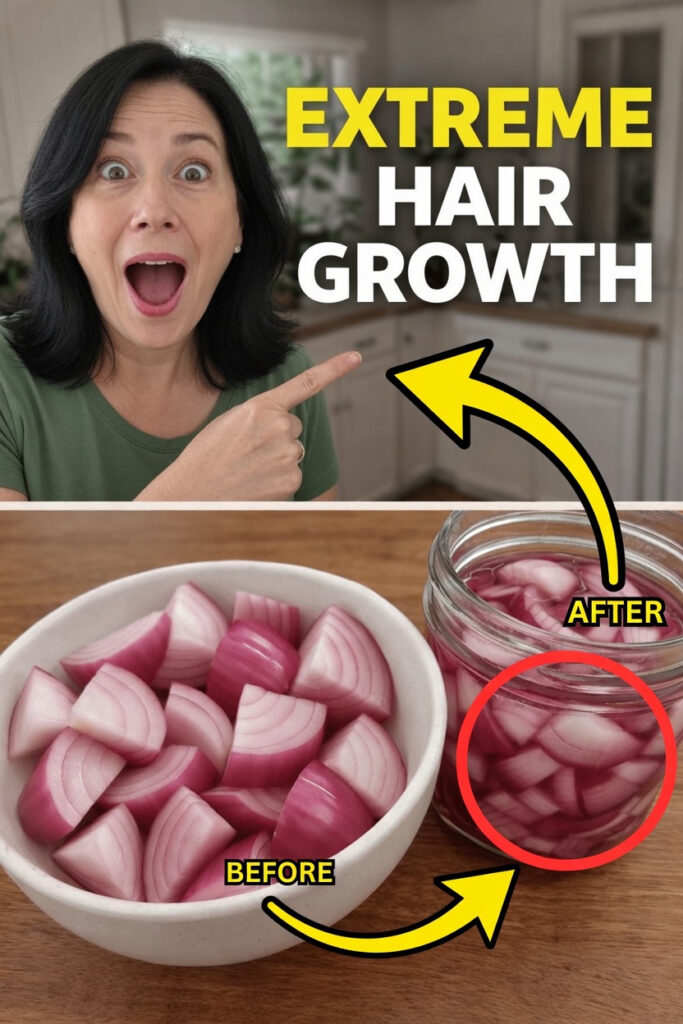
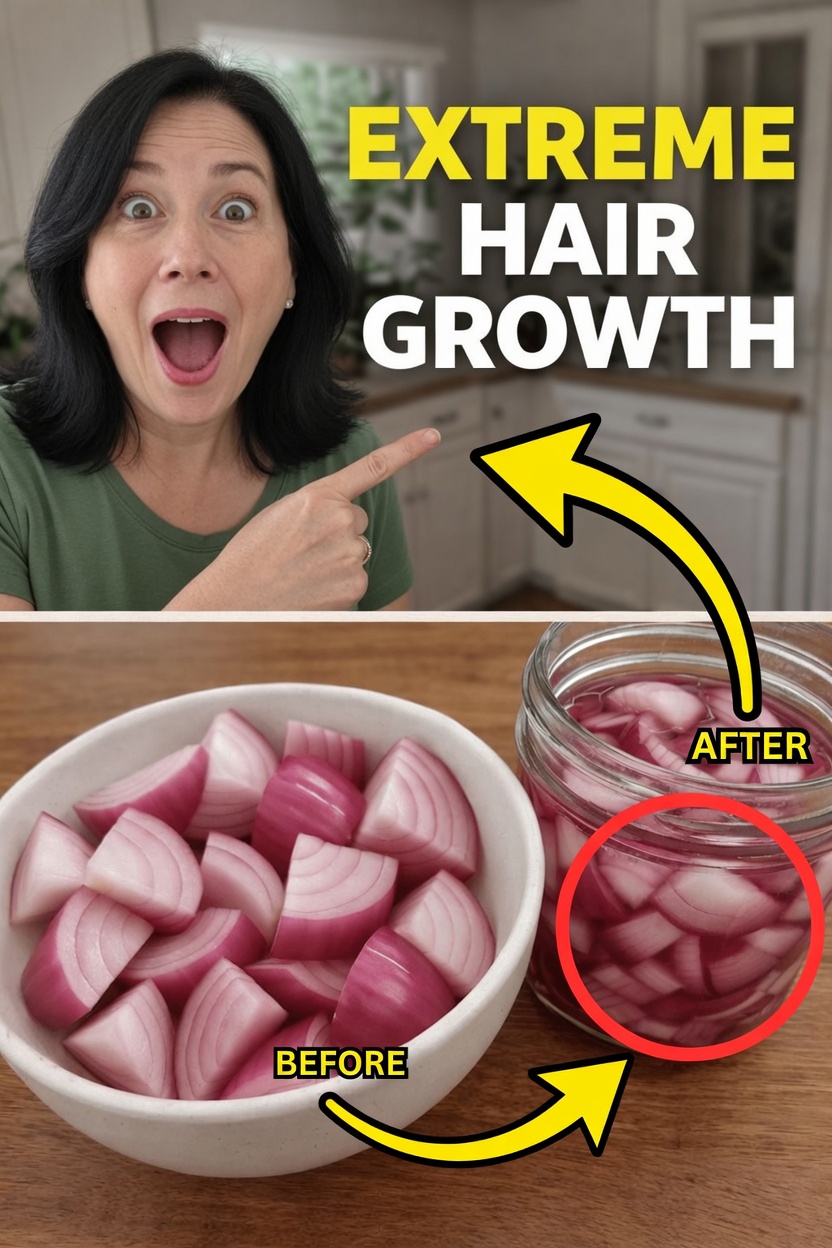
- Choose two or three medium red onions. Many people prefer red onions because they usually have a slightly milder odor and may contain a higher level of beneficial compounds.
- Peel the onions and cut them into small chunks.
- Add the chopped pieces to a blender or food processor and blend until they become a soft pulp.
- Place the pulp into a cheesecloth or fine strainer over a bowl.
- Press or squeeze the mixture well to separate the liquid from the solids.
- Keep the extracted juice in a clean container and discard the remaining pulp.
The juice is now ready to use. If needed, you can refrigerate leftovers for up to 24 hours, but freshly made juice is usually the best option.
How to Apply Onion Juice to the Scalp
Once the juice is prepared, using it is fairly easy. The key is not to overdo it. A gentle, regular routine is usually more practical than frequent or heavy application.
You can try this method twice per week for several weeks:
- Begin with clean, dry hair so the juice can reach the scalp more directly.
- Divide your hair into sections.
- Use your fingertips or a cotton ball to apply the juice directly to the scalp.
- Massage gently in circular motions for two to three minutes.
- Leave it on for 30 to 60 minutes. A shower cap can help prevent dripping.
- Rinse thoroughly with cool water.
- Shampoo twice if necessary to reduce the lingering smell.
Many people find the scalp massage itself soothing, which makes this step a pleasant part of the routine.

How to Minimize the Onion Smell
One reason some people hesitate to try onion juice is the strong smell. Fortunately, there are a few easy ways to make the process more comfortable without changing the routine too much.
Try these practical tips:
- Mix in a teaspoon of lemon juice or honey before applying the onion juice.
- After shampooing, rinse with a diluted apple cider vinegar solution to help reduce odor.
- Use the treatment in the evening, giving any mild smell time to fade overnight.
- Always perform a patch test on your inner arm before full use to check for sensitivity.
Small adjustments like these often make it easier to stay consistent.
How Often Should You Use Onion Juice?
Most people start with two applications per week and then adjust depending on how their scalp reacts. There is no universal schedule that works for everyone, so it is smart to begin slowly and see how your skin responds.
Some people also mix a small amount of onion juice into a mild shampoo to make application easier. If you decide to experiment, keep the process simple and watch for any signs of irritation.
A helpful idea is to track your routine in a notebook. Record:
- The date of each application
- How long the juice stayed on your scalp
- Any changes in texture, shedding, or overall appearance after four to six weeks
This makes it easier to notice patterns and adjust the method to fit your needs.
Frequently Asked Questions About Onion Juice for Hair
How long does it take to see results?
Some people notice minor changes in scalp feel or hair texture within a few weeks. Others may not observe much difference even with regular use. Results depend on individual factors such as hair type, scalp condition, and overall health.
Which type of onion is best?
Red onions are usually recommended because they tend to have a milder smell and may contain more sulfur. However, yellow or white onions can also be used if that is what you have at home.
Is onion juice safe for dyed or chemically treated hair?
In general, onion juice is considered fairly gentle, but a patch test is still important. Avoid using it on freshly colored hair until at least 48 hours after dyeing. If you have an existing scalp condition, it is best to speak with a dermatologist before trying new topical treatments.

How to Make Onion Juice Part of a Sustainable Hair Care Routine
Onion juice works best when it is treated as one part of a complete hair care approach. Healthy hair is influenced by more than topical products alone. A balanced diet, enough protein, essential vitamins, gentle styling habits, and regular scalp care all play an important role.
When combined with those basics, onion juice can serve as a simple extra step rather than a complicated project. The easier the process feels, the more likely you are to continue it consistently.
Final Thoughts on Using Onion Juice for Hair
Onion juice has become a popular DIY hair care option because it is affordable, easy to prepare, and simple to test at home. While research remains limited and results vary from person to person, many people are still interested in it as a supportive addition to their routine.
If you decide to try onion juice for hair, focus on patience, consistency, and scalp comfort. In most long-term hair care routines, steady habits matter far more than quick fixes.